
Someone wants to sell sunlight at night. I just want to see the stars.
The viral "sunlight after dark" demo was spotlights on the ground. What actually happened, the plan for tens of thousands of mirrors in orbit, and how to keep enjoying dark skies.

If you've been on social media this week, you've probably seen the clip of a beam of light pouring across the desert below Mount Whitney, captioned as a startup's "sunlight after dark" demo.
It has racked up well over a million views on X alone, and the replies split exactly the way you'd expect. Half of them call it the future. The other half call it the end of the night sky.
I'm firmly in the second camp's corner, but probably not for the reason you'd guess. I'm not anti-space; in fact I'm a little bit Astronomy/space obsessed; I love this stuff.
I'm out with my Seestar smart telescope a lot, lately and the darker the sky, the better the night. Which is exactly why this story caught my eye, and why I wanted to cut through the viral version to what actually happened.
First, the big correction: no mirrors in space have lit up California. What you're seeing in those clips was a test on the ground, using spotlights. Here's the real story, what the company is planning, why astronomers are worried, the case the company makes for it, and what you and I can do to keep enjoying properly dark skies.
If you purchase through links in this article, we may earn a small affiliate commission. For exclusive content, our newsletter, and more perks, become a member, it's free! -The Trail & Kale team ✌🏼
90 days of supplies? What governments actually recommend
Where the 90-day number really comes from, what governments actually tell households, and a tiered plan built from gear you already own.
 Alastair Dixon
What actually happened near Lone Pine on October 10
On the evening of October 10, 2026, a California company called Reflect Orbital set up powerful, generator-powered spotlights along Horseshoe Meadows Road, near Lone Pine and in the shadow of Mount Whitney.
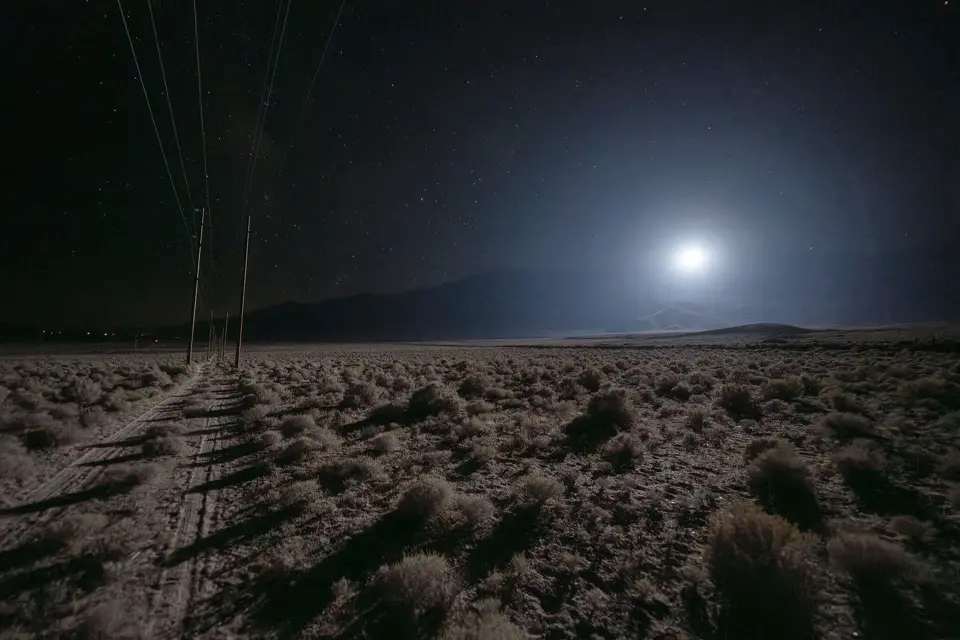
From roughly 7 p.m. to midnight, the lights simulated what the company's future orbiting mirrors might deliver to the ground.
It was a rehearsal, built around search and rescue. Volunteers from the China Lake Mountain Rescue Group and Inyo County Search and Rescue ran grid searches, stretcher carries and rigging drills, first by headlamp and then under the artificial light.
Phillip Cash, an operations leader with China Lake Mountain Rescue, told reporters the light was a little brighter than a full moon and let crews see roughly three miles in every direction. "It's easier to operate overall", he said, while also noting his crew is already effective at night without it, and he stayed noncommittal about whether it would change normal missions.
Not everyone nearby was so measured. One witness described the beams as "blinding". And the location stung for local stargazers; the nearby Alabama Hills have been pursuing official dark-sky certification, and a local DarkSky advocate called the choice of site "just even more upsetting and alarming".
What it was not: a satellite.
No Reflect Orbital mirror has launched yet. As Sky & Telescope put it in its headline, the company tested "sunlight as a service," and astronomers weren't told in advance.
In fairness to the company, Reflect Orbital has said the test was fully permitted and that it notified Edwards Air Force Base, local residents and the sheriff's department; Sky & Telescope added that statement to its story in an editor's note. A member of the Inyo County Sheriff's Office, who also serves as a search and rescue coordinator, attended the test.
The big plan: tens of thousands of mirrors in orbit
The spotlights were a stand-in for something much bigger. Reflect Orbital wants to put mirror-carrying satellites into low Earth orbit, angle them to catch sunlight after it has set for people on the ground, and bounce it down onto a chosen spot on demand.
Here's where things stand:
- One satellite is approved. In July 2026, the FCC approved a single demonstration satellite, called Eärendil-1, carrying a mirror about 18 by 18 meters (59 feet on a side), operating around 625 km up. There's no firm launch date: reporting has pointed to late 2026 or 2027.
- The long-term goal is enormous. The company has talked about operating 50,000 or more mirror satellites by 2035, with production mirrors around 54 meters across.
- Each mirror lights a small patch. The target spot is roughly 5 km (about 3 miles) across. Because each satellite is racing across the sky, it can only light a given spot for a few minutes, so steady light means many satellites taking turns.
That last point is what turns a single test into a much bigger question. One mirror passing over is a curiosity. Thousands of them, operating every night, is a change to the night sky itself.
Why astronomers and dark-sky groups are worried
The glow doesn't stay on target
Light doesn't arrive in a neat 5 km circle and stop. It scatters in the atmosphere and reflects off the ground.
A peer-reviewed study by Miroslav Kocifaj, Gáspár Bakos and František Kundracik, published in The Astrophysical Journal Letters, modeled exactly this for a single 54-meter mirror. Their findings:
- To someone directly beneath the beam, one mirror would appear about 40 times brighter than the full moon.
- From 14 km away, the sky glow would still exceed the brightness of a full-moon sky.
- The mirror would alter the nighttime environment up to about 30 km away.
- If 400 mirrors lit the same patch at once, the glow would be obvious from 80 km.
Reflect Orbital disputes the modeling. CEO Ben Nowack told MIT Technology Review that "some assumptions are simply inaccurate", while Kocifaj said the company hasn't provided data to back that up.
Does Starlink work in a power outage? Yes, with one catch
The satellites don't care about your local blackout, but your dish does. The real wattage numbers and the setup that keeps you online.
 Alastair Dixon
Wildlife runs on darkness
DarkSky International has argued that manipulating nighttime light could disrupt the circadian rhythms of people and wildlife alike.
Plenty of animals navigate, hunt, feed and migrate by the dark-light cycle, and a patch of artificial daylight that switches on and off overhead is new territory.
DarkSky, Environment America, the American Bird Conservancy and Public Employees for Environmental Responsibility have asked the FCC to reconsider the demonstration approval.
Telescope safety
This one is personal for anyone who looks up through glass.
Astronomers have warned that a sunlight-reflecting mirror seen through a telescope could appear almost as bright as the surface of the sun, risking permanent eye damage, should one pop on in your viewing location.
The American Astronomical Society expressed "dismay" at the FCC approval, citing harm to optical astronomy and flash-blinding risks.
My Seestar S50 Pro is a smart telescope that I view through a phone screen, so I'm not the one at risk right now, although I do have a couple of specialised scopes on my wishlist.
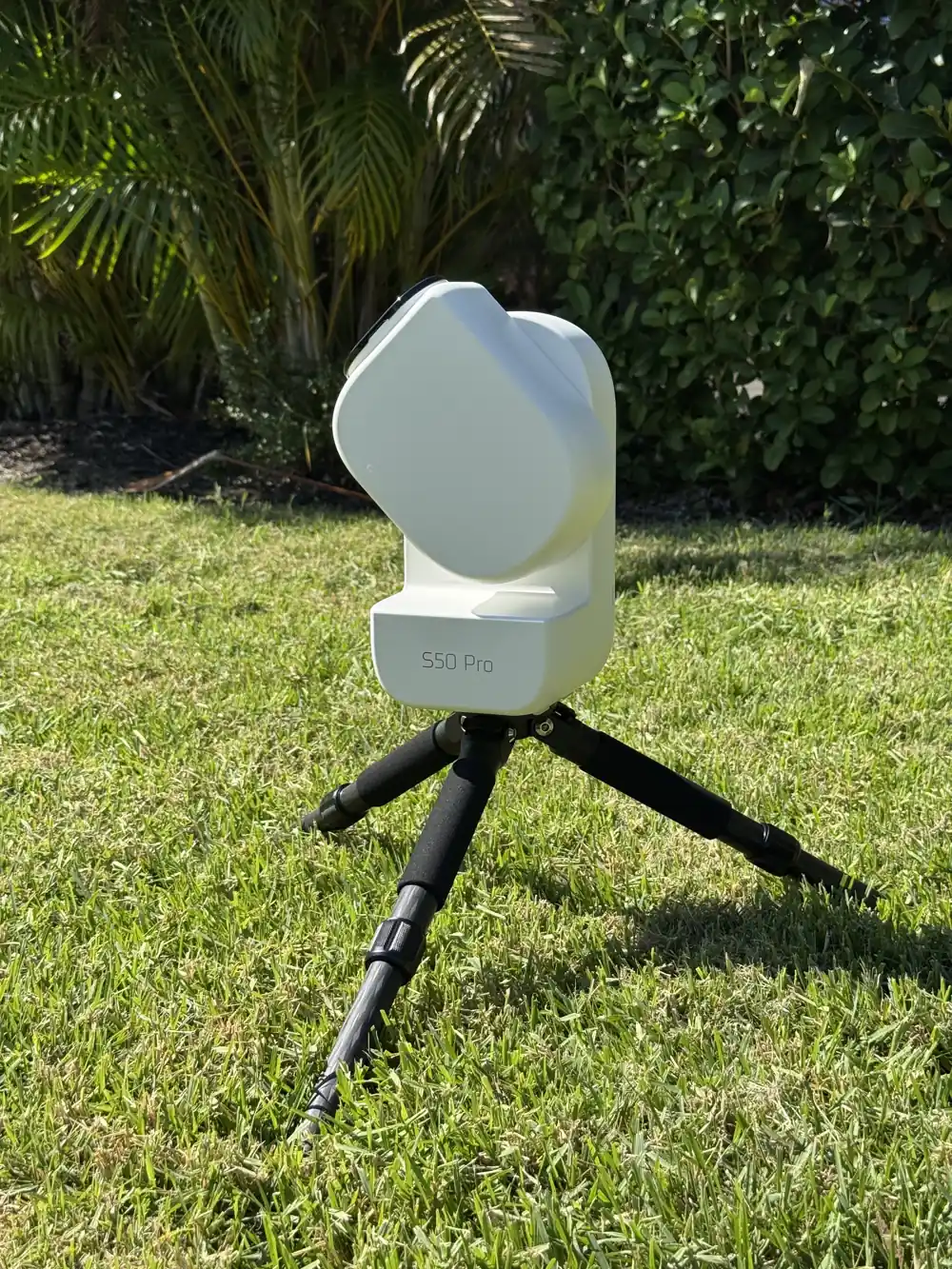
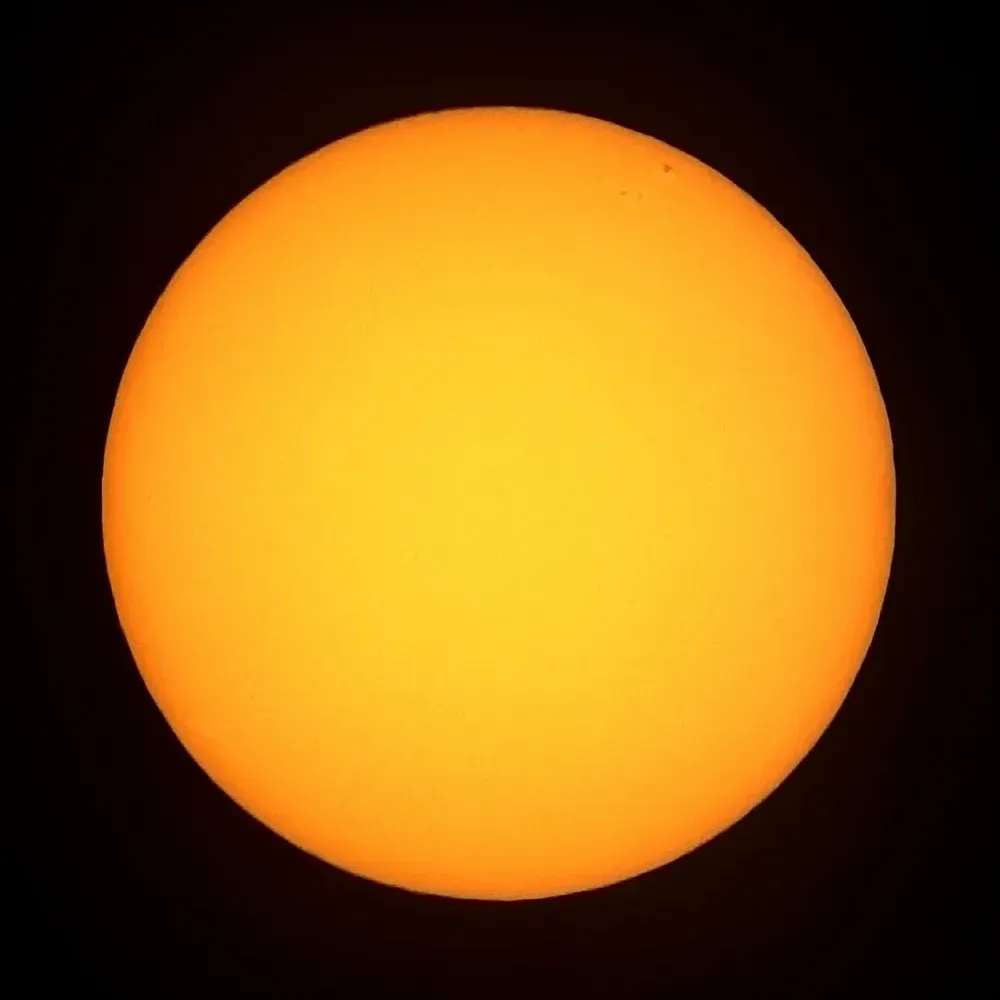
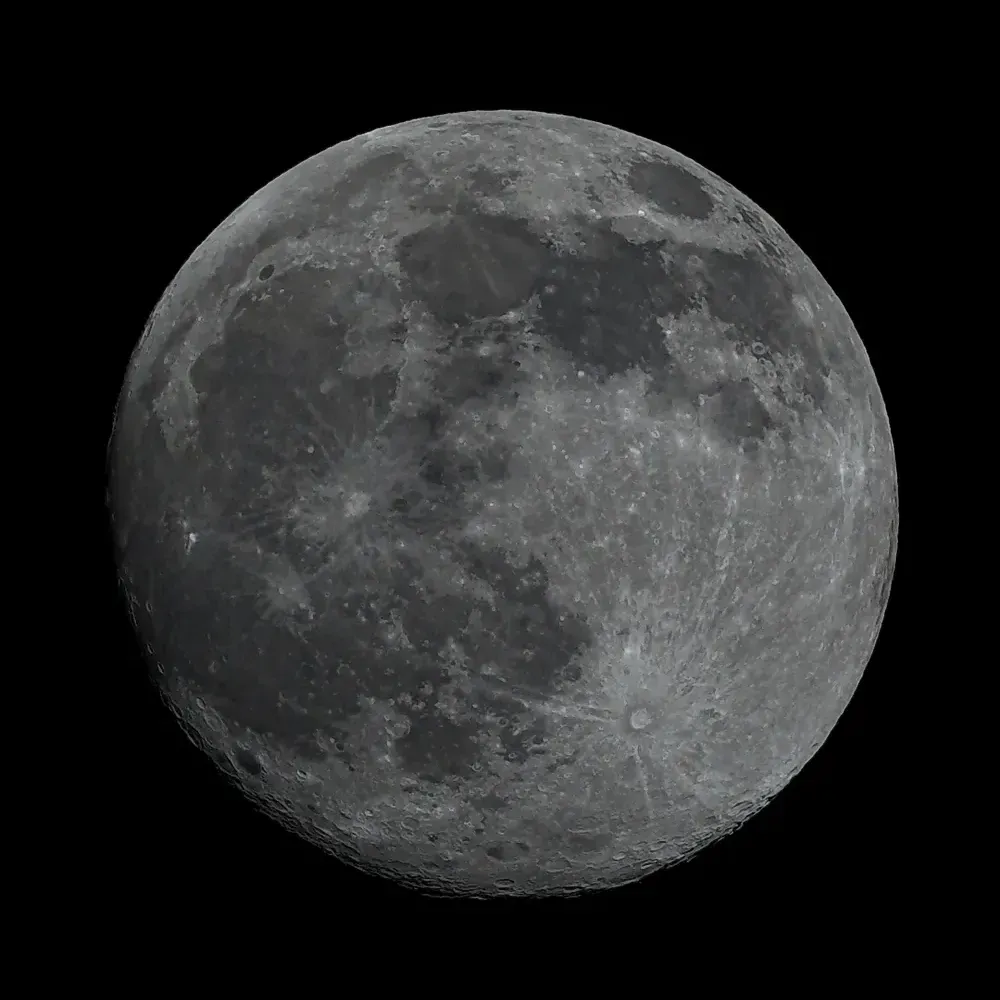
The Seestar with a shot of the Sun and Moon that I took recently - review coming soon!
But plenty of backyard astronomers still put an eye to an eyepiece, and a beam sweeping across a big aperture isn't a hypothetical anyone wants to test.
Imaging and the simple joy of a dark sky
Even without any danger, a sudden burst of light can wreck a long imaging session.
That's the part every astrophotographer will understand instantly; you spend hours collecting faint light, and a single bright intrusion can spoil the data.
And then there's the bit that's harder to measure. Light pollution already hides the Milky Way from more than a third of humanity, including nearly 80% of North Americans, according to the New World Atlas of Artificial Night Sky Brightness.
Dark skies are already rare. That's what makes the idea of adding light to them on purpose feel so jarring.
The case Reflect Orbital makes
It's worth hearing the other side properly, because it isn't frivolous.
- Search and rescue. A company spokesperson said search-and-rescue teams are expected to be its first customers, and described the Lone Pine test as "a hands-on test in a real search-and-rescue setting, coordinated with the people who would use our service". Cash suggested the light could be most valuable in large disasters, like helping crews reach people trapped in rubble after an earthquake.
- Solar power after sunset. The other big pitch is shining light onto existing solar farms in the hours around dusk and dawn, extending how long they generate.
- Other night work. The company has also pointed to construction, disaster zones and lighting in places that have no ground infrastructure.
- Mitigation promises. Reflect Orbital has said it will keep redirections brief, predictable and targeted, avoid observatories, share its satellites' locations, and work with astronomers.
If you've read my piece on how to call for help on the trail when there's no signal, you'll know I take rescue logistics seriously.
How to call for help on the trail without cell service
The viral "Starlink saves lives" rescue, told honestly, and the three ways a hiker can actually call for help with zero bars.
 Alastair Dixon
Anything that genuinely helps volunteers find people faster deserves a fair hearing. My worry is about scale: whether those benefits need tens of thousands of mirrors, and who gets a say in a night sky that belongs to everyone.
Where I land
I'm pro-space and pro-night, and I don't think those are in conflict. Satellites give us weather forecasts, GPS and the satellite SOS on my phone. I'll happily cheer for most of what goes up.
But the night sky is one of the last truly shared wild places. You don't need a permit or a plane ticket. You just need to step outside, somewhere dark enough, and look up. Whatever happens with space mirrors, I'd rather spend my energy helping more people experience that.
So here's the useful part.
How to find dark skies near you
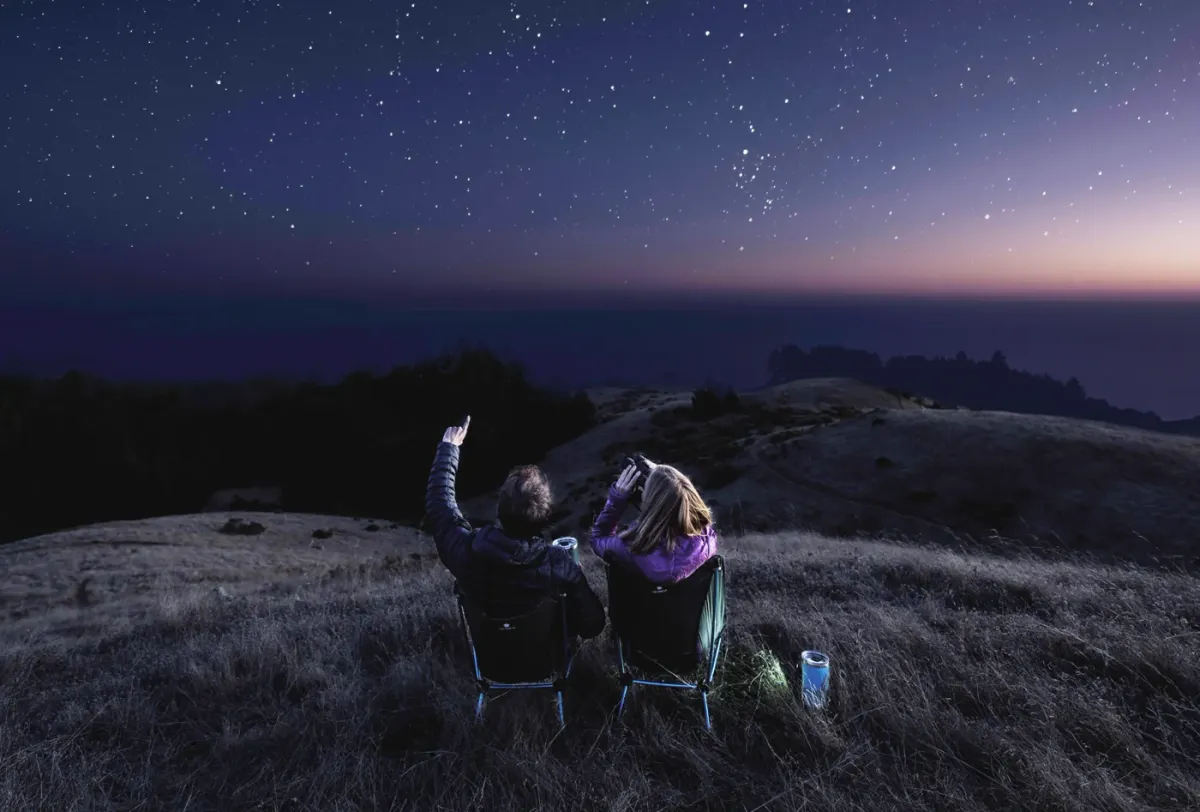
If you're brand new to looking up, start with my stargazing for beginners guide.
Stargazing for Beginners Guide 2026
No Telescope required. Learn when, where and how to stargaze, PLUS the best gear & apps for stargazing.
 Alastair Dixon
Then use these to find somewhere properly dark.
Check a light pollution map
Start with a light pollution map such as lightpollutionmap.info. The bright domes over cities are obvious, and the dark patches between them are your targets.
Many maps also show the Bortle scale, which rates sky darkness from 1 (pristine) to 9 (inner city). Even moving from a 7 to a 4 transforms what you can see.
Visit an International Dark Sky Place
DarkSky International certifies parks, reserves and communities that protect their night skies, and its Dark Sky Places finder lists them worldwide. A couple that bring this story full circle:
- Death Valley National Park, California: a Gold Tier Dark Sky Park in the same county as the Lone Pine test.
- Northumberland International Dark Sky Park, England: home to Kielder Observatory and some of the darkest skies in the UK.
Time it with the moon
The best nights are the week around the new moon, when moonlight isn't washing out the faint stuff. In the Northern Hemisphere, the bright core of the Milky Way is best from roughly late spring through early autumn, but a dark sky is worth the drive any time of year.
Let your eyes adjust
Your eyes need around 20 to 30 minutes in the dark to fully adapt, and one glance at a bright phone screen resets the clock.
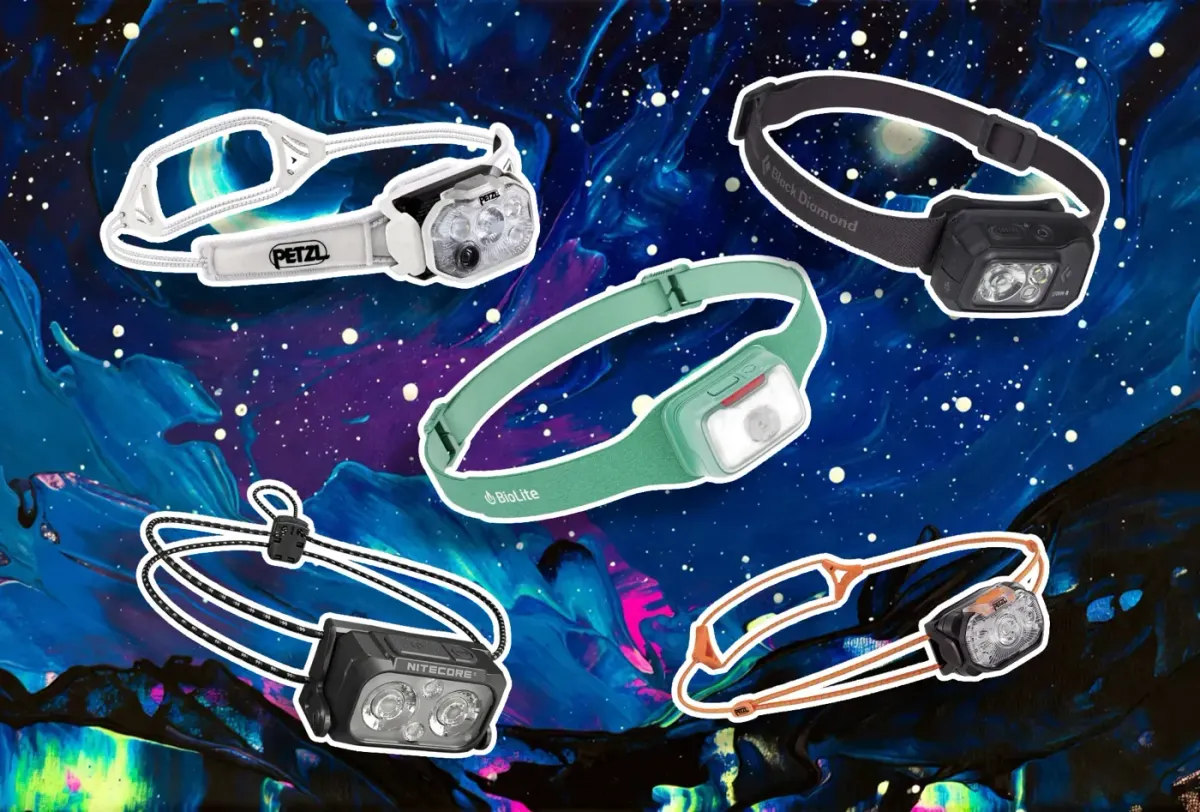
Switch your headlamp to red mode (my roundup of the best headlamps for hiking at night covers which ones have a good one), turn your screen brightness down, and be patient.
Best headlamps for hiking at night (2026 picks)
The five best headlamps for hiking at night, for pre-dawn starts, post-sunset descents, and full night hikes. Honest picks for every kind of hiker.
 Alastair Dixon
How to protect dark skies at home
You don't have to live near a dark-sky park to make a difference. DarkSky International's five principles for responsible outdoor lighting translate into a few easy changes:
- Only light what you need. If a light doesn't serve a clear purpose, switch it off.
- Shield your porch light. Use fixtures that point light down, where you need it, instead of out and up into the sky.
- Go dimmer. Use the lowest brightness that does the job.
- Add a timer or motion sensor, so lights are on only when someone is actually there.
- Choose warm bulbs. Warmer-colored light with less blue in it is kinder to the sky and to wildlife.
None of it costs much, and you might be surprised how many more stars show up from your own backyard.
Closing thoughts
The viral clip made it look like the sky had already been switched on. It hasn't.
What happened at Lone Pine was a ground rehearsal, one demonstration satellite is approved and waiting, and the giant constellation is still a plan.
That gives all of us time to pay attention. The company's search-and-rescue case deserves a fair hearing, and so do the astronomers, the wildlife groups and everyone who simply likes looking up.
For my part, I'll keep heading out with my Seestar to the darkest skies I can find, and I hope this nudges you to do the same.
Darkness is worth protecting, and the best way to care about it is to go and see it.
FAQ
Are space mirrors lighting up California right now?
No. The viral "sunlight after dark" clips show an October 10, 2026 test near Lone Pine, California, using spotlights on the ground. No Reflect Orbital mirror satellite has launched yet.
What is Reflect Orbital?
Reflect Orbital is a California startup planning satellites with large mirrors that would reflect sunlight onto chosen spots on Earth after dark. It has FCC approval for one demonstration satellite, Eärendil-1, and has talked about eventually operating 50,000 or more.
How bright would space mirrors be?
A peer-reviewed study modeling a single 54-meter mirror found it would look about 40 times brighter than the full moon to someone directly beneath it, with sky glow affecting the night environment up to about 30 km away. Reflect Orbital disputes some of the study's assumptions.
What is light pollution?
Light pollution is excess or misdirected artificial light that brightens the night sky, hides the stars and disrupts wildlife. It already hides the Milky Way from nearly 80% of North Americans.
How can I find dark skies near me?
Use a light pollution map to find dark areas near you, check DarkSky International's Dark Sky Places finder for certified parks, and plan your trip for the week around the new moon.
If you haven't already, signup to our free newsletter, for more quality outdoor content like this. -Alastair
Written by
Subscribe to new posts
Gear that earns its place, outdoors and at home | Reviews, Roundups, News









Member discussion