
Do you really need 90 days of supplies? Here's what governments actually recommend (and the plan I'm following)
Where the 90-day number really comes from, what governments actually tell households, and a tiered plan built from gear you already own.

There's a claim bouncing around social media right now where governments are telling people to prepare for 90 days of self-sufficiency.
I've seen outdoor influencers running with it, and I get why. It's a dramatic number, and preparedness content is having a moment.
But the 90-day figure isn't household advice, and I think you deserve the real picture before you panic-buy a pallet of freeze-dried lasagna.
So here's what the headlines actually say, what emergency agencies really recommend for families, and the tiered plan I'm following at home on Florida's Gulf Coast, where hurricane season makes preparedness an annual habit rather than a trend.
If you purchase through links in this article, we may earn a small affiliate commission. For exclusive content, our newsletter, and more perks, become a member, it's free! -The Trail & Kale team ✌🏼
Where the 90-day number actually comes from
The 90 days everyone is quoting is a Pentagon planning standard for military bases, not guidance for your pantry.
In late October 2026, reporting on internal Department of Defense planning documents revealed that the Pentagon is developing a requirement for major military installations in the continental US to sustain essential operations for at least 90 days without outside support. That covers power, water, fuel, and communications.
It sits under an initiative called FORTRESS (Federal Operations for Resilience, Troop Resources, Energy, Supply, and Survivability), which Defense Secretary Pete Hegseth unveiled on September 30, 2026.
In other words: the government wants its own bases to run for three months if the grid goes down. It has not told you to do the same.
What governments are actually telling households
Here's what official household guidance really looks like right now, and the numbers are a lot smaller than 90:
- United States: FEMA's Ready.gov recommends at least a three-day supply of non-perishable food, plus one gallon of water per person per day for at least three days.
- United States (Red Cross): The American Red Cross goes a step further: a 3-day supply if you need to evacuate, and a 2-week supply for sheltering at home.
- United Kingdom: The new Be Ready campaign, launched in October 2026, asks households to keep roughly three days of food and water, some cash, and a wind-up radio.
- Japan: Disaster Management Minister Goshi Hosono announced in late October 2026 that the government will formally ask every household to stockpile at least three days of food and water (a week if possible), timed to the November 2 launch of Japan's new disaster management agency.
So yes, governments around the world are nudging people toward preparedness more loudly than they have in years. That part of the story is true, and it's worth paying attention to.
But the actual asks range from three days to two weeks. Ninety days is the military's bar for itself, not the baseline for your family.
So how much should you actually prepare for?
My honest answer is to build in tiers, and stop stressing about the headline number.
A tiered approach means you're never starting from zero, every tier is useful on its own, and you can grow it gradually without a four-figure shopping spree.
Here's the structure to use:
- Tier 1: 72 hours. The official minimum everywhere. Covers most power outages, storms, and evacuations.
- Tier 2: two weeks at home. The Red Cross shelter-at-home standard, and in my view the sweet spot for most families.
- Tier 3: a month or more. A stretch goal for people who want deeper resilience, built by extending Tier 2 rather than buying anything exotic.
If you live somewhere with hurricanes, wildfires, earthquakes, or ice storms, Tier 2 isn't paranoid. It's just common sense.
The good news is that your outdoor gear is already half a kit
Here's the part the doom-scroll version of this story misses; if you camp, hike, backpack, or trail run, you already own a surprising amount of emergency kit, all that and most of my other recommendations can be found at REI.com.
A backpacking stove is an emergency stove. A water filter is a water filter whether you're beside an alpine stream or waiting out a boil-water notice.
Your headlamp, rain shell, first aid kit, sleeping bags, hydration pack, and sturdy boots all pull double duty.
So before you buy anything, do a gear audit. Lay out your camping and running gear and you'll probably find Tier 1 is mostly done already.
Tier 1: the 72-hour kit everyone should have
This is the classic emergency kit: the pack-and-go version, mirroring what FEMA and the Red Cross recommend. One per household, stored somewhere you can grab it fast.
- Water: one gallon per person per day, for three days. That's the standard drinking and sanitation figure.
- Food: three days of no-cook, non-perishable food you actually like eating.
- Light: a headlamp beats a flashlight because it keeps your hands free. My pick is the BioLite Range 400, 400 lumens with up to 200 hours on low, for $59.95. Any basic $20 headlamp still beats a phone flashlight; more options in my best headlamps for hiking at night roundup.
- Information: a battery-powered or hand-crank radio with NOAA weather alerts. Your phone dies; these don't.
- First aid kit, plus a week of any prescription medications.
- Power: a charged power bank or two, extra batteries for anything that takes them.
- Cash in small bills, because card readers need electricity.
- Documents: copies of IDs, insurance, and key contacts in a waterproof bag.
- Footwear and layers by the door. If you have to walk out of a situation, you want real shoes, not flip flops. My tested picks live in our best trail running shoes and best hiking boots buyer's guides.
That's it. One carload of common sense, most of which outdoor people already own.
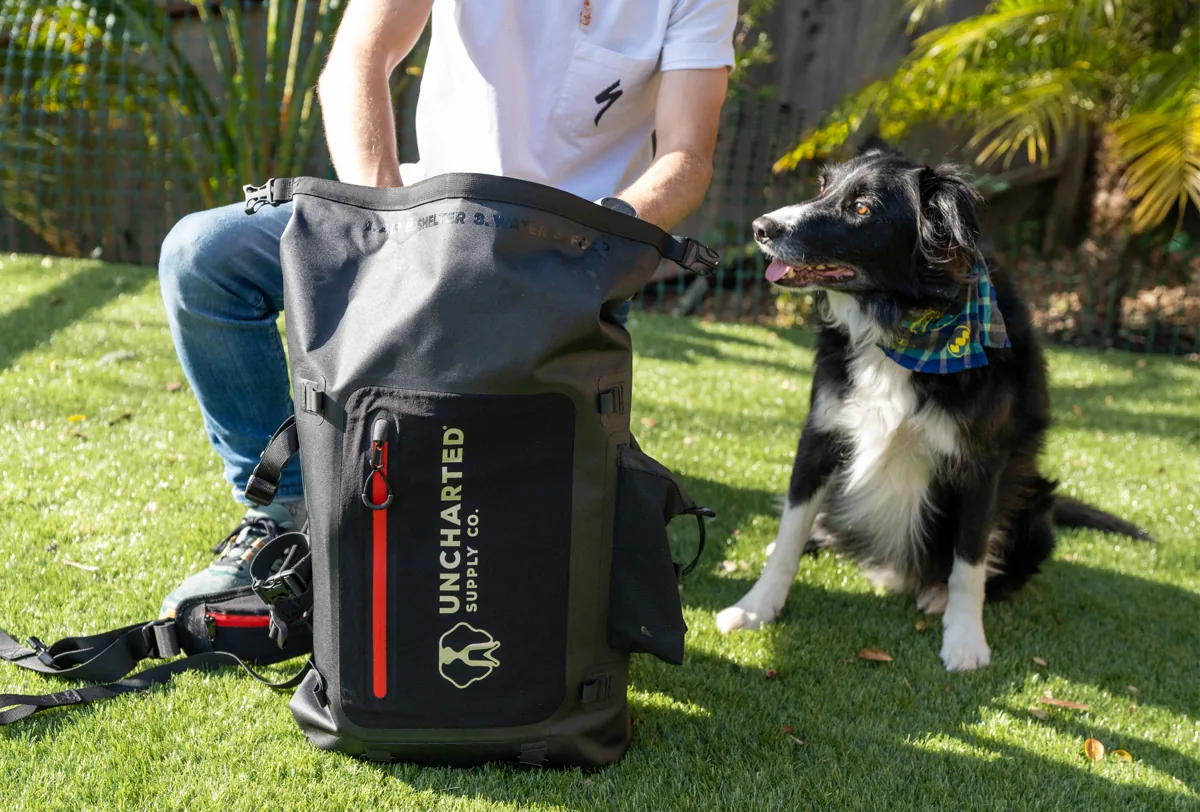
A kit like the SEVENTY2 Pro is a super easy way to get started as it covers 72 hours of survival for two people.
Uncharted Supply Co. SEVENTY2 Pro Survival System Review
A robust, practical survival kit built with professional-grade gear for organized, customizable emergency preparedness, and yes, it's worth it!
 Alastair Dixon
Tier 2: two weeks at home (the sweet spot)
This is where I'd focus most of your effort, because the realistic scenario isn't a wasteland. It's two weeks with no power, disrupted water, and closed stores after a major storm.
Emergency water storage and treatment
Two weeks at one gallon per person per day means 14 gallons each, so a family of four needs around 56 gallons.
Stackable 5 to 7 gallon water containers are the cheapest way to get there, refreshed every six months. Your hydration packs and bottles add a few more gallons on top.
Then add a way to make questionable water safe. A backpacking squeeze filter with a 0.1 to 0.2 micron membrane handles bacteria and parasites, and at home we run all tap water through a LifeStraw Home glass pitcher, which pairs a 0.2 micron membrane with a carbon and ion exchange filter.
LifeStraw Home 7-cup glass water filter pitcher review: Great tasting, microplastic-free water
A glass pitcher with a 0.2-micron membrane plus carbon/ion exchange filters for microplastics, PFAS, and taste. Filtering is slow but the clean drinking water is well worth the wait.
 Alastair Dixon

This free backup is worth writing on an index card now: a rolling boil for at least one minute. This also handles viruses, which most backpacking filters don't catch.
Building a two-week emergency food supply
Skip the 25-year survival buckets. The smarter method is "store what you eat, eat what you store": build a deeper pantry of the shelf-stable things already in your rotation, like rice, beans, pasta, oats, canned fish, peanut butter, and canned vegetables.
Every grocery run, buy one or two extra of something you use anyway. In a month or two you'll have two weeks of food you'll actually eat, with nothing going to waste.
And don't forget morale calories: coffee, tea, and treats matter more on day five of an outage than any protein bar.
Cooking
Your camping stove is your outage kitchen. Just store more fuel than you'd take on a weekend trip: three or four extra canisters, or a propane adapter for a two-burner.
Always cook outdoors or with serious ventilation. Carbon monoxide is the quiet killer in every extended outage.
Light and power
One headlamp per person, a lantern or two for shared spaces, and rechargeable batteries with a USB charger.
A power bank fleet covers phones for days, and your car is a giant backup battery if you keep the tank half full as a habit. A portable power station is the comfortable next step if your budget allows, but it's an upgrade, not a requirement.
Communication
This is the gap in most households, because people assume their phone will work. In a real grid-down event, it often won't.
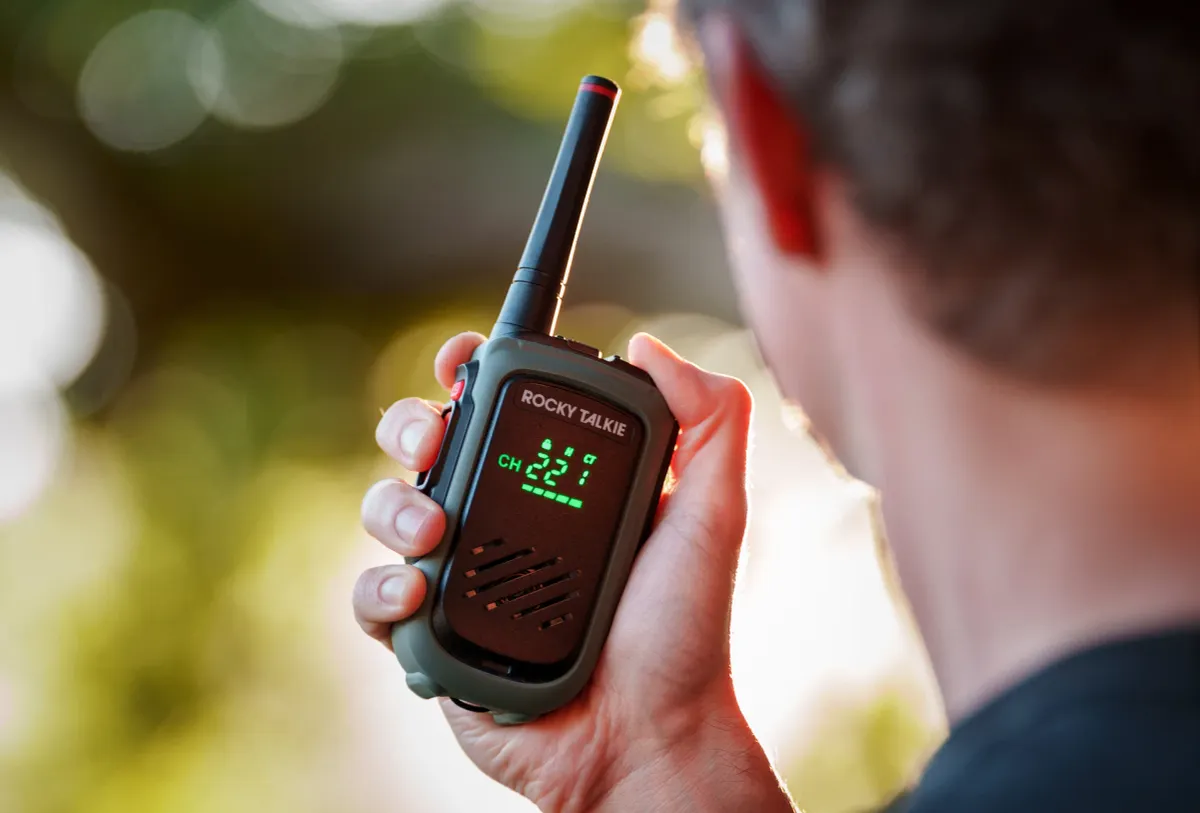
For staying in touch with family nearby without any infrastructure, handheld radios are the tool I trust. The Rocky Talkie 5 Watt Expedition Radio is my pick: IP67 waterproof, 4 to 6 days of battery, and no towers required, for $165. It's a GMRS radio, so one adult in the household needs a simple FCC license (a form and a fee, no test, and it covers your whole family).
Rocky Talkie 5 Watt Radio Review
This two-way radio redefines rugged, reliable communication with extended battery life, making it our top choice for outdoor adventurers.
 Alastair Dixon
If you'd rather skip the license, the smaller Rocky Talkie Mountain Radio is license-free and does the same job around town for less.
One honest caveat from my testing: LTE-based units like the ones in my Rapid Radios review are brilliant for everyday family comms at any distance, but they depend entirely on cell towers, so they are not a grid-down solution.
Agree on a family meeting point and an out-of-state check-in contact while you're at it. That part costs nothing.
Sanitation and health
Two weeks of toilet paper, soap, and trash bags; a camp toilet setup or heavy-duty bags with kitty litter if water service fails; a properly stocked first aid kit; and two weeks of prescriptions if your pharmacy and doctor can arrange it.
Tier 3: stretching toward 30 days and beyond
If the headlines have you wanting more than two weeks, I think that's a reasonable personal choice. Just build it as an extension, not a panic purchase.
- Food: keep widening the pantry with the same store-what-you-eat method, and add a few buckets of true staples (rice, beans, oats) only once your everyday pantry is deep.
- Water: at 30, 60, or 90 days, storage alone stops being practical for most homes. The answer is treatment capacity: a gravity or pump filter sized for groups, plus bleach or purification tablets, so you can safely process rainwater or surface water. Pool water is better saved for flushing and washing, since filters don't remove its chemicals.
- Power and fuel: more stove fuel, a larger power station or solar panel, and a full gas can rotated through your car.
- Skills: honestly, past two weeks, knowledge beats stuff. Knowing how to purify water, cook from staples, and keep a cooler cold is worth more than another gadget.
A true 90-day setup is a lifestyle project (think gardens, big water storage, and generators), and that's a different article. For almost everyone, a deep Tier 2 plus a stretched pantry is the realistic, useful version of "prepared."
What I'm doing at home this week
I promised myself I'd follow my own advice before publishing this, so here's my actual to-do list, written from my kitchen table in Florida:
- Gear audit: pulling our camping bins and consolidating stoves, filters, headlamps, and first aid into one labeled shelf.
- Water: topping our stored water up to the full two-week mark for the three of us, and dating the containers.
- Pantry: two extra shelf-stable item per grocery run through the end of the year.
- Charging day: the first of every month, all power banks, radios, and headlamps get topped up. Calendar reminder set.
- Paper copies: documents and emergency contacts printed and bagged, because a dead phone holds no phone numbers.
None of that took real money, and most of it was gear we already owned. That's the point.
A few things I'd skip
- Panic buying. Clearing shelves helps nobody, including you. Build gradually.
- Candles as your lighting plan. Lovely for ambiance, a well-documented fire risk during outages. Headlamps and lanterns, always.
- Generators or stoves indoors. Carbon monoxide kills quickly and silently. Outdoors only, away from windows.
- Survival kits in a bucket. Most bundle low-quality gear you'll never test. You'll do better assembling your own from gear you already trust outdoors.
- Doom. Preparedness done right feels like camping admin, not fear. If a piece of content is trying to scare you into buying something, close the tab.
FAQ
Is the government really telling people to prepare for 90 days?
No. The 90-day figure is a Pentagon planning standard for its own military bases under the FORTRESS initiative. Household guidance from FEMA, the UK's Be Ready campaign, Japan's new request, and the Red Cross ranges from three days to two weeks.
How much water should I store per person?
One gallon per person per day is the standard figure for drinking and sanitation. That's three gallons each for a 72-hour kit, and about 14 gallons each for a two-week home supply.
What food is best for an emergency supply?
Shelf-stable food you already eat: rice, beans, pasta, oats, canned proteins and vegetables, peanut butter, and some no-cook options. Rotate it through your normal meals so nothing expires unused.
Do I need special survival gear?
Mostly no. If you own camping gear, you already have a stove, filter, headlamp, and shelter. Fill the gaps (stored water, a radio, extra fuel, documents, cash) rather than starting over.
If you haven't already, signup to our free newsletter, for more quality outdoor content like this. -Alastair
Written by

Subscribe to new posts
Gear that earns its place, outdoors and at home | Reviews, Roundups, News









Member discussion