
How To Run Uphill: The Complete Guide to Technique, Benefits & Hill Workouts
The benefits of running uphill, proper uphill running technique, and effective hill training workouts to run up hills stronger and faster.


Most runners treat hills the way they treat dentist appointments, grudgingly, and only do it only when they really have to. That's a mistake, because hill running is one of the single highest-leverage things you can do with your training time, also go to the dentist!
It builds strength, speed, aerobic capacity, and running form all at once, and it does it with less impact stress than flat-ground speed work.
This is a complete guide to running uphill well. We'll cover proper technique (what to actually do with your body when the ground tilts), the real, measurable benefits of hill training, four hill workouts worth adding to your week, a four-week progression for runners who want a plan, and the gear that makes the difference between enjoying hills and merely surviving them.
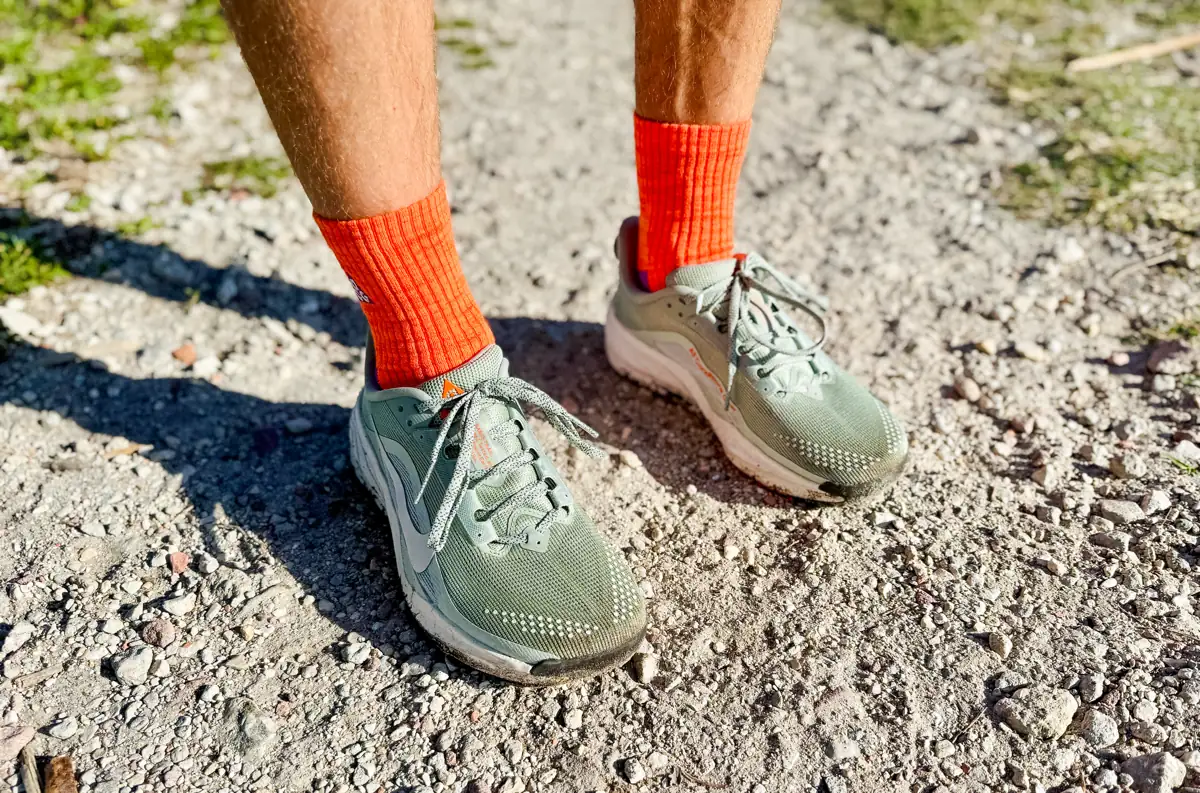
Before we get into technique — the right shoes make a real difference on hills. I've been doing all my hill training in the Nike ACG Pegasus Trail this season and the ATC 2.0 outsole grip on loose climbs and wet descents is genuinely noticeable. More on that below.
Nike ACG Pegasus Trail review: best road-to-trail shoe?
The Nike ACG Pegasus Trail is a versatile road-to-trail running shoe with improved grip, more cushioning, and a wider fit. Here’s who it’s for and how it runs.
 Alastair Dixon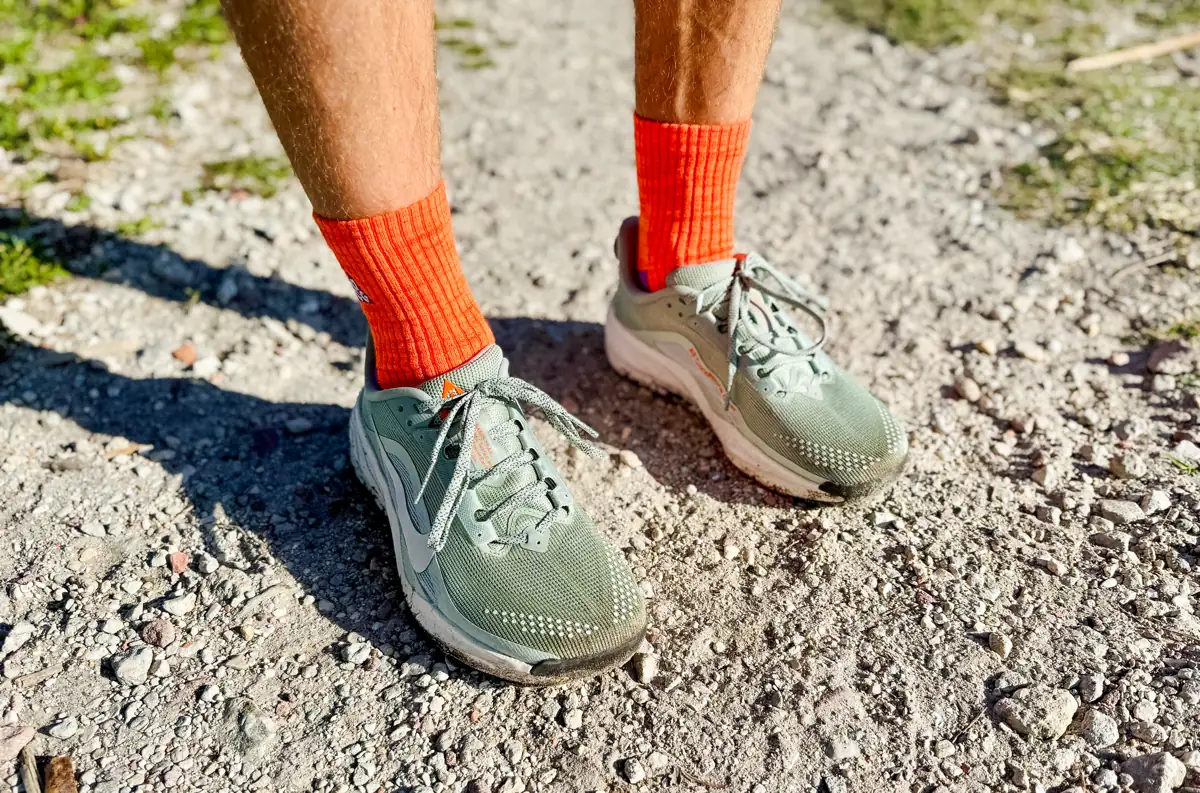
This article affiliate includes links. We were supplied with product for testing as part of a paid partnership with Nike ACG. All training opinions, workout structures, and performance observations are our own, based on real use on the hills we train on.
Recommended Shoes For Hill Running
Before technique, workouts, or training progressions, the shoes on your feet will shape every one of those things. The right outsole grip changes how confidently you push on loose climbs.
The right cushioning changes how your legs feel on rep six. It's worth getting this right first. You can run hills in any shoe. You will run hills better in the right one.

The specific demands of hill running are different from flat-ground running in three ways that matter for footwear:
- You need propulsion more than cushioning. Every uphill step is an active push-off. A flat, dead midsole drains your legs faster than almost anything else.
- You need grip you can trust on loose surfaces. Real hills, the ones worth training on, rarely have perfect pavement. They have gravel, dirt, damp grass, loose rock. A road-biased outsole turns every climb into a grip lottery.
- You need versatility. Most hill workouts start or finish on road, even if the actual reps happen on trail. You don't want two separate shoes for one session.
The shoe I've been testing recently is the Nike ACG Pegasus Trail, and it's genuinely built for this use case. Three things stand out on climbs:
The ReactX midsole is a propulsion platform, not just cushioning.

On hill repeats, the energy return you get on push-off is the difference between a rep that feels powerful and a rep that feels like wading. ReactX gives you back enough of what you put in that the fifth rep feels like the second, not the tenth.
The outsole handles mixed surfaces without complaining.
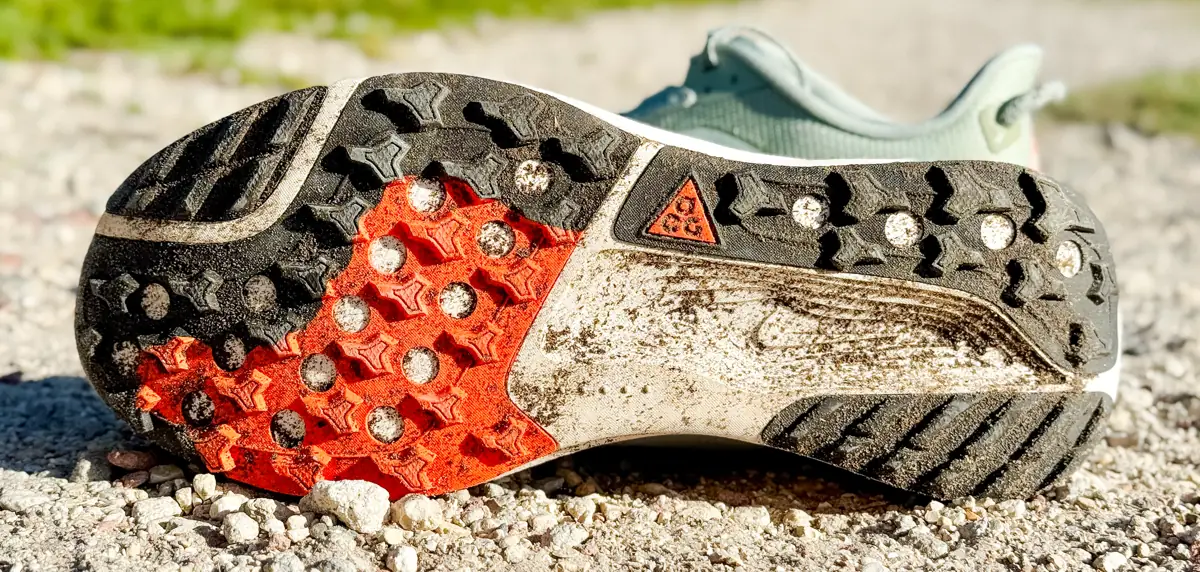
This is where a lot of trail-adjacent shoes fall apart, they're fine on dry packed dirt but lose their nerve on gravel or wet grass. The Pegasus Trail's ATC 2.0 outsole bites into the kind of loose, variable terrain you actually find on a real training hill, whether that's a fire road, a singletrack climb, or a grass verge off the back of your local park.
It moves from road to trail without a handover.

My typical hill session involves a 2-mile warmup on road/gravel, a set of reps on a dirt climbs, and a final road/gravel jog back to my car. A lot of trail shoes feel punishing on pavement and a lot of road shoes feel insecure on dirt. The Pegasus Trail sits in the middle on purpose, it's the every-surface shoe that the "all conditions" label actually earns.
Who it's for: runners doing mixed-surface hill work, road-to-trail sessions, or trail races with runnable climbs.
You can read my full Nike ACG Pegasus Trail review for the complete breakdown, see how it compares to its predecessor in the Nike Pegasus Trail 5 review, or head straight to the shoe at Nike's website. The Pegasus Trail also features as our top road-to-trail pick in the best trail running shoes for hiking roundup, and you can see the rest of Nike's hybrid trail line-up in our overview of Nike ACG's spring/summer trail running gear.
Gear Up for Spring/Summer Trail Running with Nike ACG
Nike ACG has rebuilt its trail running lineup from the ground up for SS26. Here’s how to wear it, and why each piece earns its place in your kit.
Alastair Dixon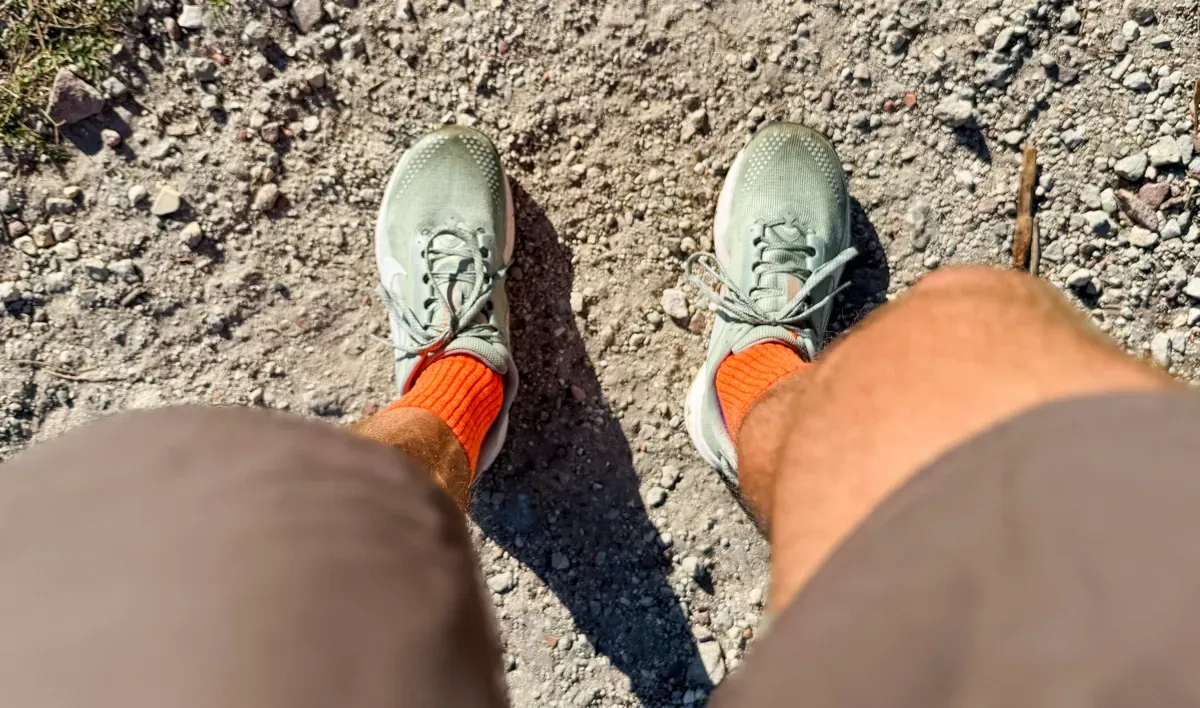
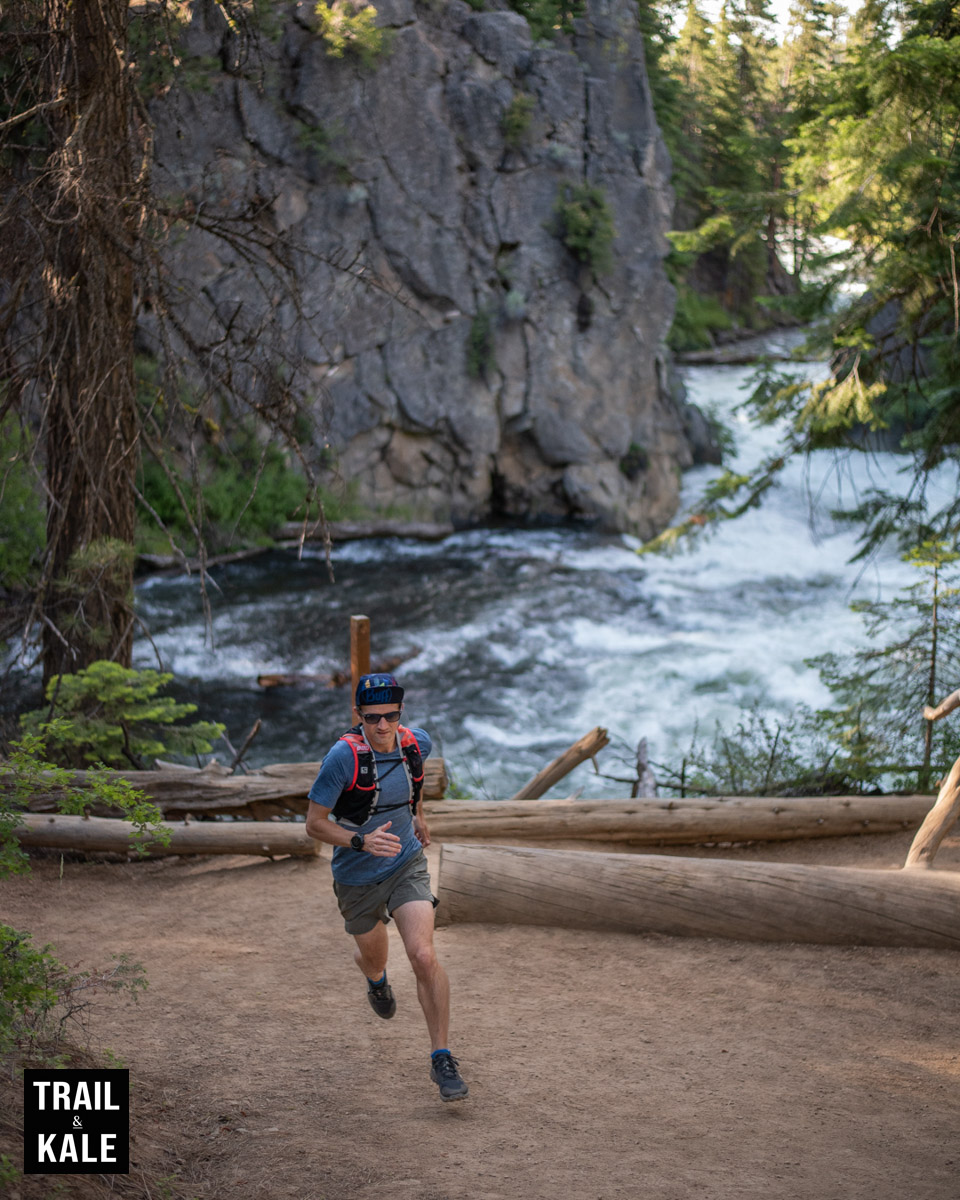
How To Run Uphill: Proper Technique
Running uphill feels hard because, biomechanically, it is hard. You're fighting gravity with every step, and the muscles doing the fighting (glutes, quads, calves) are being asked for roughly 10 to 30 percent more force than on the flat. That's non-negotiable. But how that effort feels is very much under your control, and it comes down to form, and breathing technique.
Here's what to do from the ground up.
Shorten your stride, raise your cadence
The single biggest mistake runners make on climbs is trying to use the same stride length they use on the flat. Don't. As the gradient kicks up, shorten your stride and let your cadence rise. Short, quick steps keep you moving forward without overloading any single push-off. If you normally run at 170 steps per minute, you might drift closer to 180 on a climb, that's fine. It's your legs finding efficiency, and not overloading themselves or your aerobic system.
Lean forward from the ankles, not the waist
This one is everywhere and almost always explained badly. You do want to lean into a hill. You do not want to fold at the waist, because that shuts down your hip flexors and your glutes, which are the exact muscles you need to drive you up the slope.
The right cue is to imagine a line running from your ankle through your hip to your shoulder, and tip that whole line forward a few degrees. Your torso stays tall. Your hips stay open. You're leaning into the hill, not collapsing over it.
Keep your eyes up
Looking at your feet feels instinctive on hard terrain. It also hunches your shoulders, closes your chest, and makes breathing harder.

Pick a point five to ten meters ahead and keep your eyes there. On a trail where you genuinely need to scan for footing, flick your gaze down briefly, then bring it back up. Eyes up keeps your airway open and your posture honest.
Drive your arms
On the flat, your arms are mostly along for the ride. On a climb, they're doing real work. Drive your elbows back with intent; the harder you pump your arms, the more your legs will answer. Keep the arm swing rhythmic and slightly more powerful than you'd use on flat ground. Don't let your hands cross the midline of your chest; that wastes energy rotating your torso.
Breathe on a rhythm
Hills punish ragged breathing. Lock into a pattern (two steps in, two steps out for a hard effort; three in, three out for a moderate climb) and stick with it. The point isn't to breathe less, it's to breathe with purpose. Rhythmic breathing also forces you to settle your cadence and relax your upper body, both of which pay off the longer the climb goes.
How To Breathe While Running To Improve Speed, Endurance & Mental Focus
Expert tips and techniques to help you run faster, easier and with enhanced mental focus.
Alastair Dixon
Run the effort, not the pace
Your watch will show a slower pace on a climb. Ignore it.
The Best Running Watches Under $450 in 2026
Whether you’re looking for your first running watch or in research phase for an upgrade, these are the best GPS watches for runners, under $450.
Alastair Dixon
Hill running is an effort-based discipline, you're holding a specific level of work, not a specific number on the screen. Trying to hit flat-ground pace on a climb is the fastest way to blow up on rep three of six. Match your effort to the workout you're doing (more on those below), and let the pace land where it lands.
Run through the top
When you crest a hill, don't stop. Don't coast. Run thirty meters past the top at the same effort, then settle into recovery. This is the single habit that separates runners who get faster from hill work from those who plateau.
The top of the climb is where the real adaptation happens — cresting and backing off teaches your body to quit the moment things get easier. Run through it.
The Benefits of Running Uphill
"Does running hills make you faster?" is probably the single most-asked question in trail running, and the answer is an unambiguous yes. But faster is only one of several reasons to do it. Here are the real benefits of running uphill, the ones that hold up under training science and under real miles.
1. It builds leg strength without the gym.
Every uphill step is a single-leg squat against resistance. Over a thirty-minute hill session, you're asking your glutes, quads, calves and hamstrings to do thousands of reps at loads you'd struggle to match indoors. This is why hill work is sometimes called "strength training in disguise"; because, functionally, that's what it is.
2. It improves running economy.
Multiple studies have shown that runners who include regular hill training use less oxygen at a given pace on the flat. In plain terms: the same effort takes you further, because your stride becomes more powerful and efficient. That's a benefit you carry into every race and every easy run for months afterwards.
3. It raises your VO2 max faster than flat running.
Because hills force higher cardiac output at a given pace, you reach the intensities that drive aerobic adaptation without needing to run flat-out on a track. For most runners, that's a far more sustainable way to build engine capacity.
4. It reduces injury risk compared to flat speed work.
Impact forces on a climb are lower than on the flat or downhill, because your foot is meeting the ground at a shallower angle and your vertical drop is smaller. You get the cardiovascular and neuromuscular benefits of fast running with less pounding.
5. It fixes your form by default.
It's almost impossible to overstride uphill, gravity won't let you. That means every hill rep reinforces the compact, forward-driving, high-cadence form you want on the flat too. Hill work is the cheapest form drill in running.
6. It builds mental toughness.
There is no coasting on a climb. You either keep pushing or you stop. Runners who train on hills consistently develop a specific kind of mid-race composure; the ability to keep working when it's uncomfortable, and that's hard to build any other way.
7. It makes you better at going down too.
Uphill training recruits and strengthens the eccentric control muscles you need for smooth, fast descents. If you race on rolling terrain or on trails, that second benefit is as valuable as the climb itself.
Hill Workouts: Four Sessions Worth Adding to Your Week
Hill "training" isn't one thing, it's a family of workouts that target different adaptations. Here are the four most useful types, from easiest to hardest, with what each one actually does for you.
1. Hill strides (the beginner's entry point)
- What: 6–10 reps of 10–15 seconds at a relaxed-but-brisk effort, walk or slow jog back down for full recovery.
- Gradient: gentle to moderate (3–6%).
- What it builds: form, leg turnover, and a baseline tolerance for uphill work.
- When to do it: at the end of an easy run, once or twice a week. This is the single best way to introduce hill running to a new runner or to someone returning from a break.
Hill strides are not a hard workout. They are form practice disguised as light speed work. The goal is to run well uphill with tall posture, quick feet, and driving arms; not to empty the tank. If you're gasping at the top, you went too hard.
If you're brand new to trail running, work through our beginner's guide to trail running first; hill strides are best added once you have a consistent base of easy running in place.
2. Short hill sprints (the power builder)
- What: 6–10 reps of 8–12 seconds all-out, 2–3 minutes of full walking recovery between reps.
- Gradient: steep (8–15%).
- What it builds: neuromuscular power, top-end strength, stride stiffness.
- When to do it: once a week, ideally on a dedicated hill day or tacked onto the end of an easy run.
This is the classic hill sprint workout, and the data on it is remarkable: the benefits of hill sprints include dramatic improvements in running economy and top-end speed, often in as few as four to six weeks of consistent work. The cost is low (the reps are short), the recovery between reps is full, and the injury risk is minimal because you're working against gravity instead of chasing pace.
A critical rule is that the recovery phase is not optional. Hill sprints are a power workout, not just a lung workout. If you cut the recovery short, you're just doing bad hill repeats. Let your heart rate come all the way down before the next rep.
3. Hill repeats (the classic)
- What: 4–8 reps of 60–90 seconds at 5K to 10K effort, jog down for recovery.
- Gradient: moderate (4–8%).
- What it builds: lactate threshold, VO2 max, and specific race fitness.
- When to do it: once a week as your hard session of the week.
Hill repeats are the workout most runners mean when they say "I did hills." They're the bread-and-butter session, and for good reason; they deliver threshold and VO2 max stimulus in a format that's almost impossible to get wrong. Find a hill that takes you 60 to 90 seconds to climb at a hard effort. Run up at that effort. Jog down. Repeat.
The single biggest mistake on hill repeats is going too hard on the first two reps and dying on the last two. You want every rep to look the same. If rep six is notably slower than rep one, you started too fast.
4. Long sustained climbs (the trail-specific session)
- What: 2–4 reps of 3–8 minutes at tempo effort, full recovery (walk or slow jog) down.
- Gradient: gentle to moderate (3–6%), sustained.
- What it builds: climbing endurance, mental stamina, trail-race-specific fitness.
- When to do it: every other week, or as race-specific prep for a trail race with significant vert.
This is the most overlooked hill workout, and it's the most important one for trail runners. Most actual climbs in a trail race aren't sixty seconds; they're a lot longer.

Your hill-repeat fitness doesn't automatically transfer; you have to train the duration specifically. If you're racing anything with serious elevation, long sustained climbs are the session that will pay off on race day.
If you're not sure how trail-specific demands differ from road, our guide to trail running vs road running breaks down the key differences.
A 4-Week Hill Training Progression
If you're new to structured hill work, don't skip to hill sprints on day one. Build into it. Here's a simple four-week introduction that works:
Week 1 — Groundwork. 6 × 15-second hill strides at the end of one easy run. Focus entirely on form: tall torso, quick feet, eyes up, driving arms. This week is about teaching your body the movement.
Week 2 — Add power. 8 × 20-second short hills at roughly 90% effort, full walking recovery between reps. Not all-out yet; you want to finish the session feeling like you could have done two more reps.
Week 3 — First real workout. 5 × 60-second hill repeats at 5K effort, jog down recovery. This is where the training adaptations start to stack. Log how you feel at the end, that's your baseline for week four.
Week 4 — Consolidation. 4 × 90-second hill repeats at 5K effort, plus 2 × 15-second strides as finishers. You should be noticeably stronger on the climbs than in week one. If you're not, you went too hard in weeks two or three.
After this four-week block, you can cycle in short hill sprints on a second weekly session, keep one classic hill repeat day, and add long sustained climbs every other week as race-specific prep. One or two hill sessions per week is plenty; more than that, and recovery becomes the limiting factor rather than training stimulus.
Running training plan generator (5K to 100-mile ultra)
Build a personalized half marathon, marathon, or ultra training plan around your race date and current mileage. Road and trail, any distance, any level.
Alastair Dixon
If you want this structured into a full plan with weekly mileage, easy-day pacing, and rest days mapped out, our running training plan generator builds a personalised schedule you can drop straight into your calendar; yes it builds in hill training into your plan.
Common Mistakes On Hills (And How To Fix Them)
1. Going out too hard on rep one. The most common and most costly mistake. If your first rep is noticeably faster than your last rep, you've wasted the session. Hold back on the first two, let the last two be your hardest.
2. Leaning from the waist instead of the ankles. Folding forward shuts down your glutes and makes the climb harder, not easier. If your lower back is taking the brunt of the work, you're bent wrong.
3. Looking down at your feet. Closes your chest, limits your breathing, slumps your posture. Eyes up, five to ten meters ahead.
4. Overstriding. Reaching your foot out in front of you on a climb is a brake. Keep the steps short and under your hips.
5. Stopping at the crest. Every time you coast the top, you're teaching your body that the hard part ends at the top. Run thirty meters past.
6. Neglecting the downhill. Recovery on a hill workout happens on the way down. Run it easy, don't race it, don't sprint it, but don't walk it unless the workout calls for full walking recovery. Easy downhill running builds eccentric strength and improves descending form.
7. Doing hill workouts too often. Two sessions a week is the ceiling for most runners. More than that and you stop adapting and start accumulating fatigue. Quality over quantity.


FAQ
Does running hills make you faster?
Yes — meaningfully, and measurably. Hill training improves running economy (you use less oxygen at a given pace), builds leg strength and power, and raises VO2 max. Runners who add a single weekly hill session typically see improvements in flat-ground pace within four to six weeks.
How often should I do hill workouts?
One to two hill sessions per week is the sweet spot. A typical structure: one short hill sprint or hill strides session on a lighter day, plus one hill repeat or sustained climb session as your weekly hard workout. More than two hill-specific sessions per week tips most runners into accumulated fatigue.
What gradient is best for hill sprints?
Steep, somewhere between 8% and 15%. A steeper hill forces the neuromuscular adaptation that short hill sprints are designed to produce, and keeps the reps honest (you can't just run faster on a mild gradient and call it a sprint).
Can you do hill sprints on a treadmill?
Yes, and treadmill hill sprints are a reasonable alternative when you don't have access to a real hill. Set the incline to 8–12%, sprint for 10–12 seconds, then step off to the side rails (or stop the belt) for 2–3 minutes of recovery. The main thing you lose is the downhill recovery and the varied terrain, but the power-building stimulus is largely intact.
Running uphill vs downhill — which is more important?
Uphill training is where the aerobic and strength gains come from. Downhill running (done deliberately and controlled) is where you build eccentric strength and the ability to run fast without breaking - your quads will thank you for the added strength in a race).
Serious runners do both. For most people, uphill work is the priority 80% of the time, with the remaining 20% being deliberate downhill work on rolling terrain or in specific race-prep sessions.
What shoes are best for hill running?
A shoe with a responsive midsole, grippy outsole, and versatility across road and trail surfaces. My current pick is the Nike ACG Pegasus Trail — the ReactX midsole gives you the propulsion you need on push-off, the outsole handles loose surfaces without drama, and it moves between road and trail inside a single session. For the full breakdown, see my Nike ACG Pegasus Trail review.
Can beginners do hill sprints?
Not as a first hill workout, no. Beginners should start with hill strides (short, relaxed, form-focused efforts) for two to three weeks, then progress to short hills at moderate effort, and only then to true all-out hill sprints. Jumping straight to maximal efforts without a build-up is the most common way new runners end up with calf strains or Achilles issues.
How to Start Running for Beginners: the Complete Guide (2026)
Everything you need to know to get started with running, including how to build up to a 5k with our free training plan generator.
Alastair Dixon
If you're brand new to running, our how to start running guide covers the foundational base you should build first.
How long before I see results from hill training?
Most runners notice improvements in perceived effort on climbs within two to three weeks. Measurable changes in flat-ground pace typically show up in four to six weeks. Structural strength adaptations (the kind that carry over into the next season) build over three months and beyond.
Related Reading
- Best trail running shoes for hiking — our top picks for trail shoes that handle mixed terrain
- Best trail running shoes right now — the broader trail shoe roundup
- Nike ACG Pegasus Trail review — the full long-term test
- Trail running vs road running — which one is right for you
- Best running watches — for measuring effort and elevation on climbs
If you haven't already, signup for our free newsletter, and subscribe to our YouTube Channel for more quality content like this. -Alastair
Written by

Subscribe to new posts
Gear that earns its place, outdoors and at home | Reviews, Roundups, News









Member discussion