
Best compact binoculars 2026: tested for hiking, birding, and travel
The best compact binoculars of 2026, tested for hiking, birding, and travel. Honest picks across budgets, with our editor's premium and value choices.

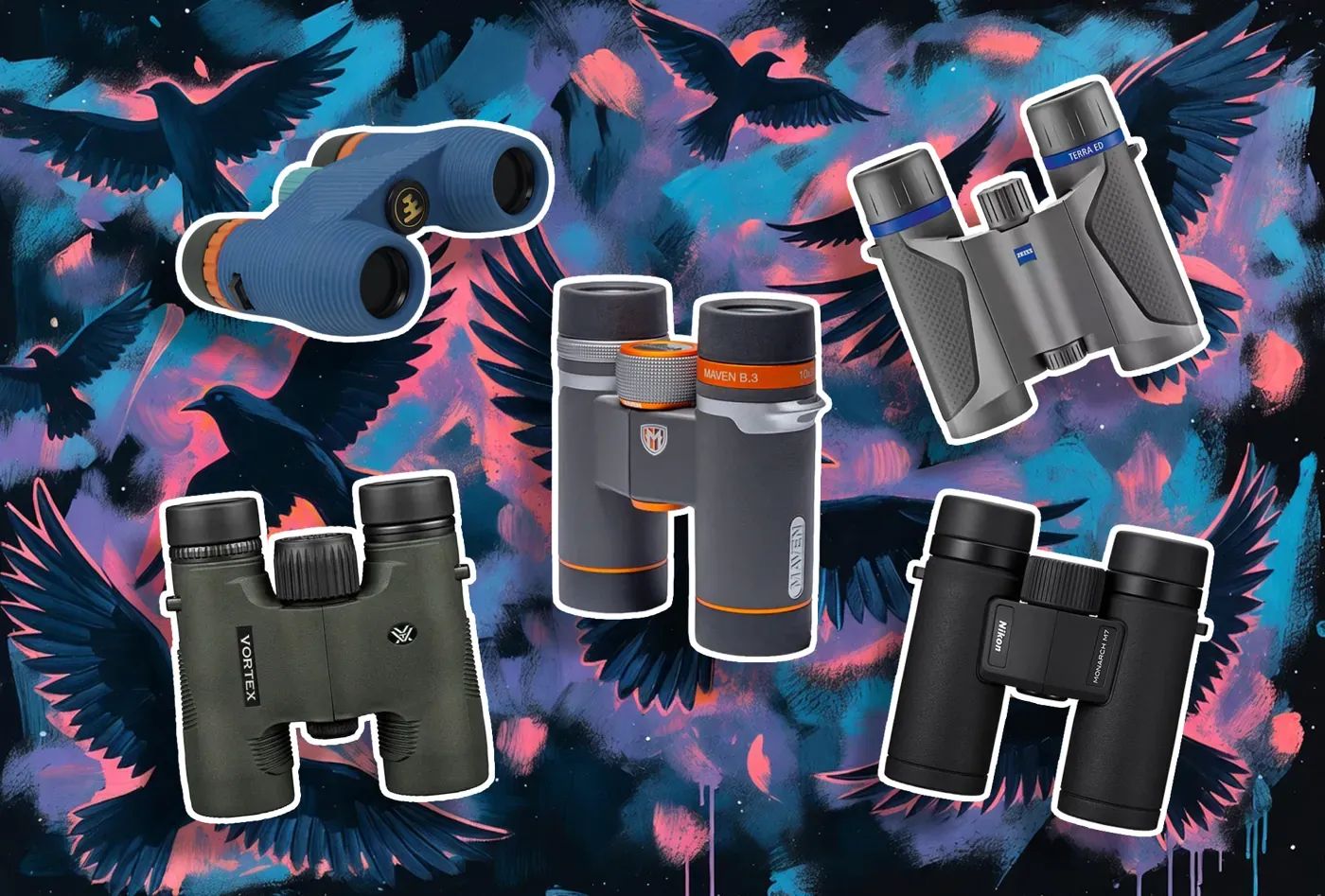
The best binoculars are the ones you actually have with you. This classic line is the genuine truth when it comes to optics: a $1,000 pair of full-size 8x42s left at home does nothing, while a $300 compact in your pack catches the soaring hawk, the elk in the brush, the sunset detail you would otherwise have missed.
Compact binoculars solve a specific problem. They give you usable optical performance in a body small enough to live on a pack strap, in a hip pouch, or in a daypack pocket.
The good ones get carried, and used. The best ones genuinely deliver the kind of image quality that used to require a full-size optic.
This is the shortlist I would actually buy from. I have tested several of these myself, drawn on the broader review consensus for the others, and built the list around the use cases that matter for the kind of active, outdoor-leaning life Trail & Kale readers actually live.
Bird Watching for Beginners – Easy Guide to Start Birding Locally
This guide shows you how to start birding locally. Discover beginner gear, simple identification tips, a first-week plan, and mindful ways to enjoy nature right outside your door.
 Alastair Dixon
Whether you are a casual birder, a hiker who wants to spot wildlife on the move, or a traveler who values pocketability, there is a pick here for you.
If you purchase through links in this article, we may earn a small affiliate commission. For exclusive content, our newsletter, and more perks, become a member, it's free! -The Trail & Kale team ✌🏼
What to look for in compact binoculars
Compact usually means an objective lens between 20mm and 32mm, with the binocular itself weighing under a pound and a half. Within that range, a few things matter more than the marketing line on the box.
Glass quality
Extra-low dispersion (ED) glass reduces chromatic aberration (the colour fringing you sometimes see on high-contrast edges) and is the single biggest indicator of optical quality on the spec sheet.
Phase-corrected, dielectric-coated prisms are the next tier of indicator: both improve brightness and contrast meaningfully.
Magnification
8x is the standard for general use, balancing detail with stability. 6x and 7x are more forgiving on the hand-shake front and offer wider fields of view, ideal for fast-moving wildlife and low-light conditions. 10x is for distance specialists but is harder to keep steady.
What do the numbers on binoculars mean? 8x42 explained
Learn what 8x25, 8x42, and 10x42 mean on binoculars, how magnification and lens size affect your view, and which numbers to look for when hiking or birding.
 Alastair Dixon
If you're comparing formats like 8x25 and 8x42, my guide to what the numbers on binoculars mean explains how magnification and lens size change the view before you spend anything.
Objective lens size
25mm is true pocket-sized but compromises low-light performance. 30-32mm is the sweet spot for most active uses, balancing portability against image brightness.
The exit pupil (objective ÷ magnification) tells you most of what you need to know about low-light capability.
Eye relief
If you wear glasses, look for at least 16mm of eye relief. Less than that and you will struggle to see the full field of view through your lenses.
Waterproofing and durability
IPX7 or better, nitrogen-purged for fogproof performance, and a rubber-armoured body. These are non-negotiable for outdoor use.
Warranty
The best optics brands back their products with lifetime warranties. Maven, Vortex, Nocs, and Nikon all do. That matters more than spec-sheet bragging.
With that framework in mind, here are our top picks.
At a glance: price comparison
| Pick | Format | Approx. price | Weight |
|---|---|---|---|
| Maven B.3 6x30 | Editor's pick | $575 | 16.1 oz |
| Nocs Standard Issue 8x25 | Budget compact | $99.95 | 12 oz |
| Zeiss Terra ED Pocket 8x25 | Birding compact | $400 | 10.9 oz |
| Vortex Diamondback HD 8x28 | Hunting/distance | $210 | 14.6 oz |
| Nikon Monarch M7 8x30 | Image quality value | $530 | 15 oz |
| Nocs Field Issue 32 | Mid-range all-rounder | $180 | 21 oz |
| Bushnell H20 8x25 | Ultra-budget | $55 | 13.4 oz |
Prices vary by retailer; check direct-from-brand for the most accurate current numbers.
1. Editor's pick: Maven B.3 6x30
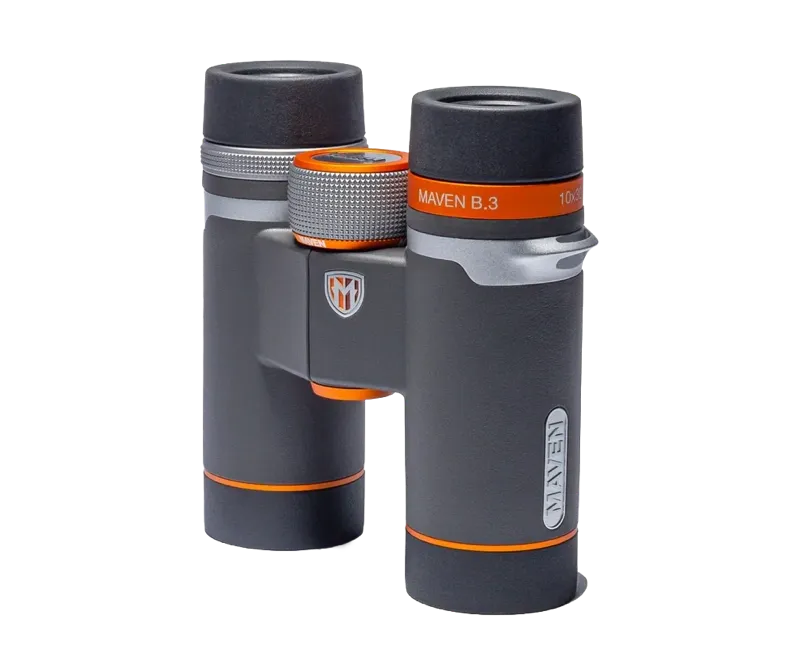
The Maven B.3 6x30 is the compact I tested from Maven, and the one I would buy again. Built by Maven Outdoor Equipment Company in Lander, Wyoming, using Japanese optical components and US assembly, the B.3 puts genuinely premium optics in a 16-ounce compact body that competes with binoculars costing two or three times more.
The clarity is the headline. Edge-to-edge sharpness, accurate colour, no chromatic aberration, and surprising brightness for a 30mm objective. The 6x30 specifically has the largest exit pupil of the B.3 lineup (5mm), which makes it the strongest low-light performer of the three magnifications, and the 18.3mm eye relief is the most comfortable for glasses wearers.
Worth noting that Maven's lineup also includes 8x30 and 10x30 variants in the same body and at the same $575 price. If you don't wear glasses and want one binocular to do everything, I'd recommend going for the 8x30 as the conventional all-rounder. The 6x30 is what I tested and the one I'd personally buy again, especially if you wear glasses, prioritise stability, or do a lot of low-light viewing.
The compromise is price. At $575, the B.3 sits well above casual-gift territory. But if you are upgrading from entry-level optics and want something that will last for decades and genuinely deliver, this is the right step.
Maven B.3 Review: Compact Binoculars With Stunning Clarity
Hands-on Maven B.3 review covering the 6x30, 8x30, and 10x30 compact binoculars, the optical clarity that stood out, and which to buy.
Alastair Dixon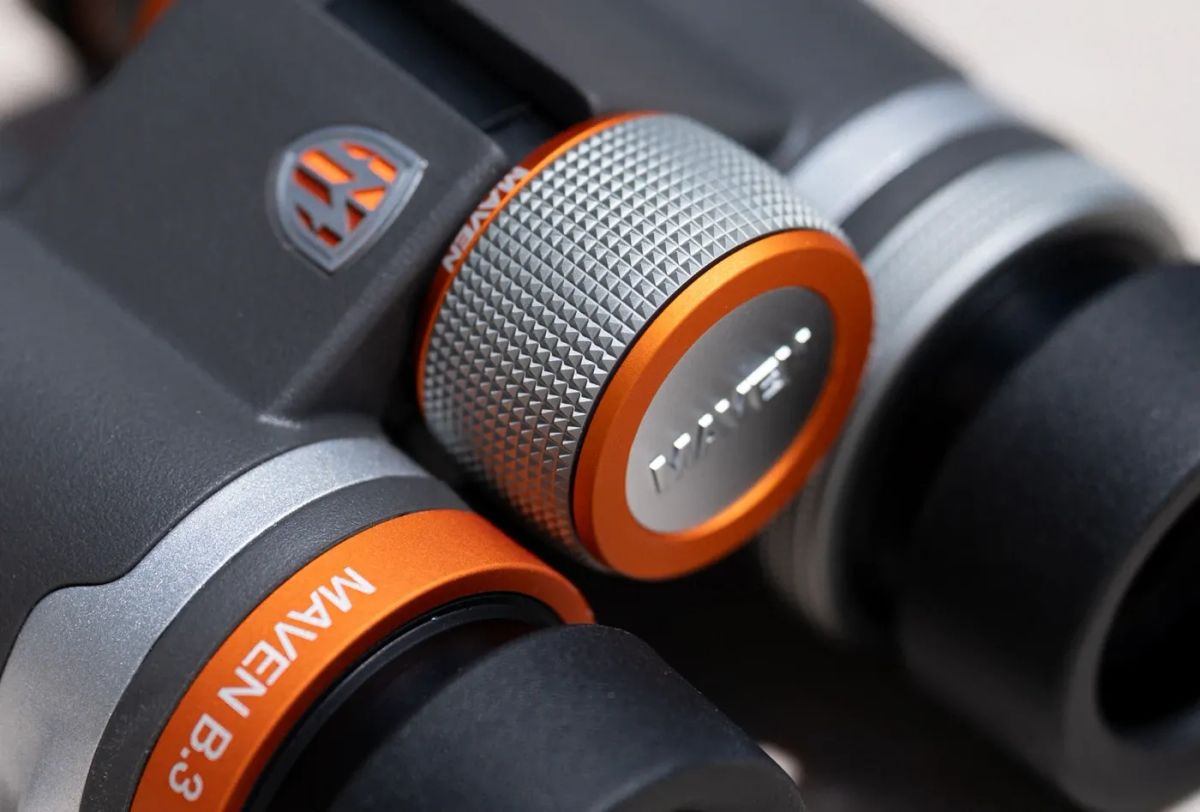
Best for: Anyone upgrading from entry-level compacts, glasses wearers, low-light viewing, and committed outdoor users who will keep these for life.
2. Best budget compact: Nocs Standard Issue 8x25
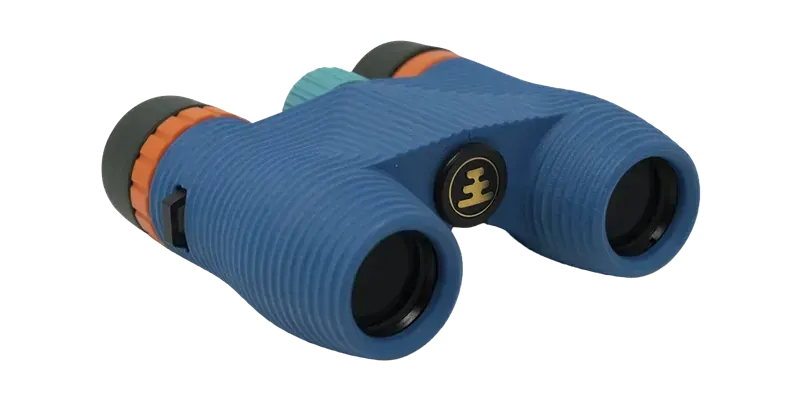
The Nocs Standard Issue 8x25 is the entry point that has earned its reputation. At $99.95, you get a fully waterproof, rubber-armoured 8x25 compact that punches well above its price point on optical clarity, comes in genuinely good colours rather than tactical greys, and feels properly built for the outdoors.
These are the binoculars I would put in the hands of anyone starting out with binoculars at all, anyone buying a gift for an outdoor person, or anyone who needs a reliable second pair to keep in a glove box or daypack pocket.
They are not going to compete with Zeiss or Maven on edge sharpness, but in the centre of the field, in good light, they deliver a sharp, clean image that will make most casual users genuinely happy.
Nocs Binoculars Review: Waterproof Compact Binoculars
Our Nocs binoculars review covers these budget-friendly, waterproof 8x25 compact binoculars for travel, hiking, surf-spotting and wildlife viewing.
Alastair Dixon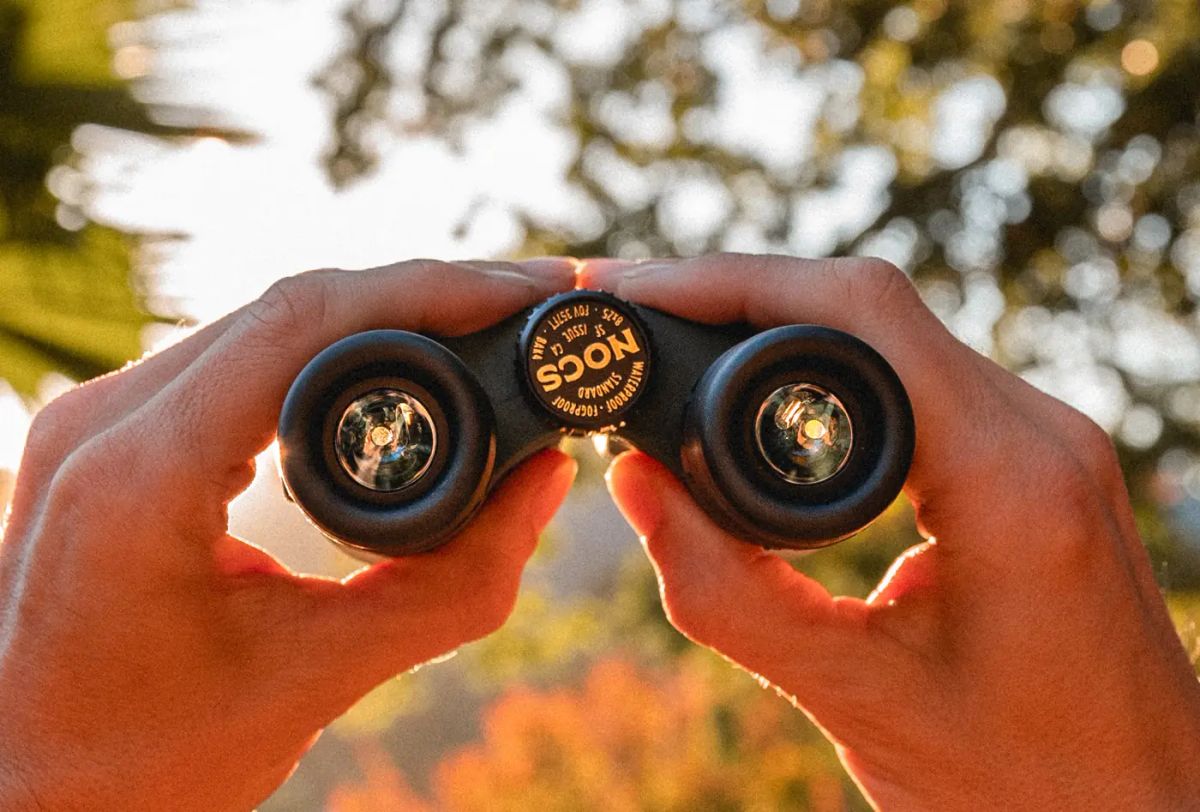
Best for: First-time binocular buyers, gifts, secondary pair for the car or pack, beach and casual outdoor use.
3. Best for birding: Zeiss Terra ED Pocket 8x25
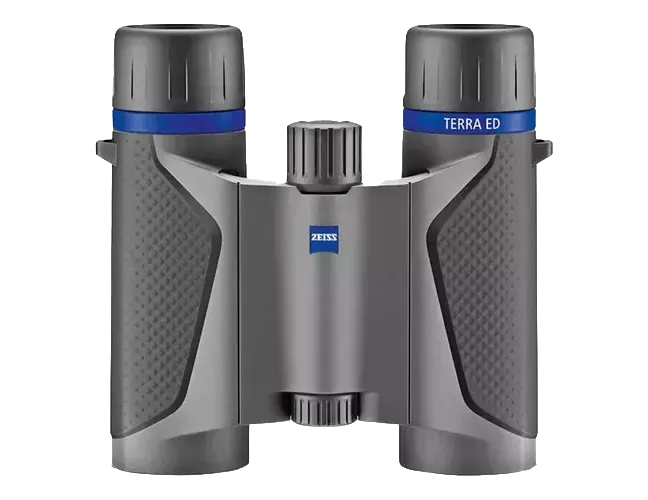
The Zeiss Terra ED Pocket 8x25 is the birder's compact pick. ED glass, hydrophobic Zeiss T* coating, and a 10.9-ounce weight make this one of the most genuinely pocketable serious-quality binoculars on the market. The image is crisp, the colour is accurate, and the close-focus performance is excellent for watching insects and small birds at close range.
The trade-off, honestly noted by many long-term users, is low-light performance. The 25mm objective lens limits brightness in dawn, dusk, and dense forest conditions, and the Terra ED specifically is not the brightest performer in its size class.
For a birder who does most of their viewing in good light, this is the high-end pocket pick. For dawn-and-dusk birding, you would be better served by a 30mm or 32mm option.
Best for: Casual birding in good light, travel where pocketability is essential, birders upgrading from no-name optics.
4. Best for hunting and distance: Vortex Diamondback HD 8x28
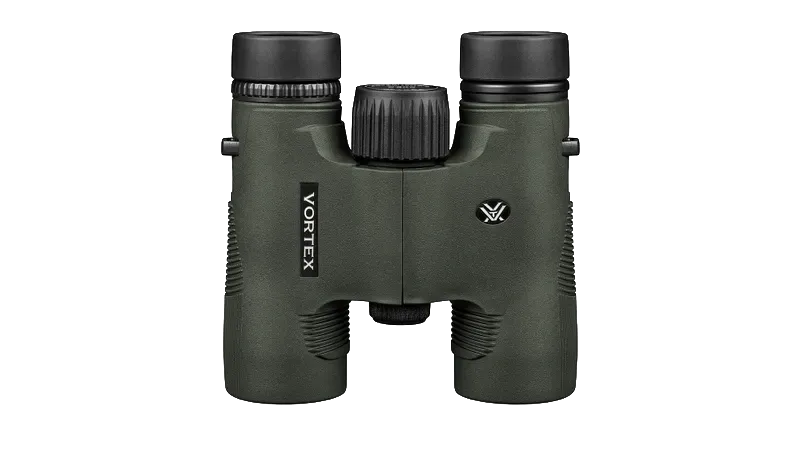
The Vortex Diamondback HD 8x28 is the value pick for anyone needing real reach in a compact body. HD optical glass, fully multi-coated lenses, and Vortex's legendary unconditional VIP warranty (no fault, no questions) make this a strong all-round option for hunting, scouting, and distance work where you want compact form without sacrificing too much on image quality.
At 14.6 ounces and around $230-280, the Diamondback HD 8x28 hits a price-to-performance sweet spot that few competitors match
The image is bright and clear in good light, the build is genuinely tough, and the lifetime warranty means you do not have to baby them. For hunters and distance scouters, this is one of the most-recommended compact picks for a reason.
Best for: Hunting, scouting, distance work, anyone who wants a compact but does not want to compromise on warranty support.
5. Best image quality on a budget: Nikon Monarch M7 8x30
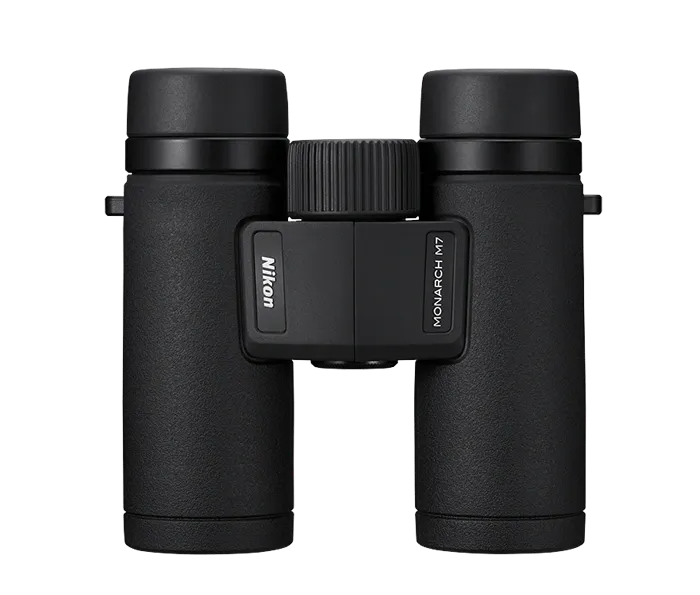
The Nikon Monarch M7 8x30 is a compact-leaning entry in Nikon's well-regarded Monarch line, and it consistently outperforms its price tag. ED glass, dielectric-coated prisms, fully multi-coated lenses, and a wide 8.3-degree field of view (one of the widest in the segment) deliver an image that competes with binoculars at twice the cost.
At around $530 and 15 ounces, the M7 8x30 sits right at the upper edge of "compact" and the lower edge of mid-size.
The eye relief at 17.1mm is comfortable for glasses wearers, and the build quality is the kind of dense, planted feel that suggests it will last decades. Cornell Lab's All About Birds reviewers specifically called out the Monarch line as a top pick for affordable mid-range optics.
Best for: Birders who want full-size optical quality in a compact-ish package, glasses wearers, all-day comfort.
6. Best mid-range all-rounder: Nocs Field Issue 32
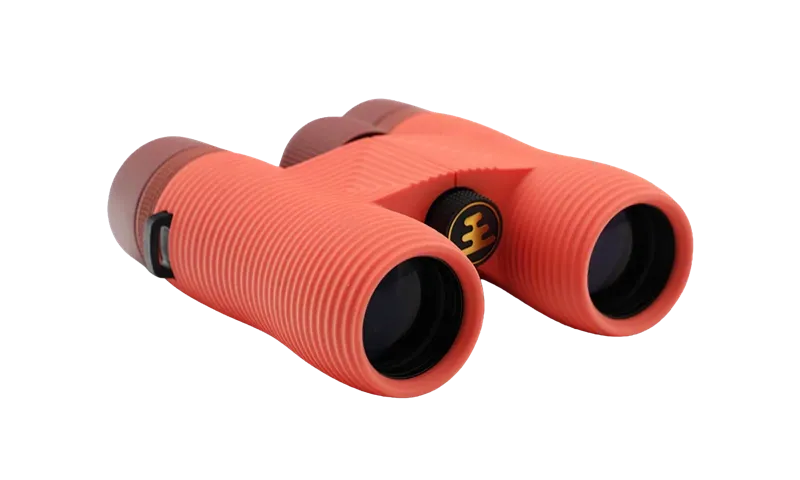
The Nocs Field Issue 32 is Nocs' mid-range step up from the Standard Issue, with a larger 32mm objective lens that meaningfully improves low-light performance while keeping the brand's signature wide focus dial, comfortable grip, and colour-led design language.
At around $245 and 21 ounces, the Field Issue 32 is heavier than a true compact but still firmly in pack-strap territory. The image is bright, the field of view is generous, and the ergonomics are some of the best in the price range.
If you want a single binocular that handles birding, sports, hiking, and travel without specialising in any one, this is a strong candidate.
Nocs Provisions launches the Field Issue 42 binocular | Trail & Kale
The Field Issue 42 packs 42mm optical power into a body the size of a 32mm, and it comes in four seriously good-looking colorways
Alastair Dixon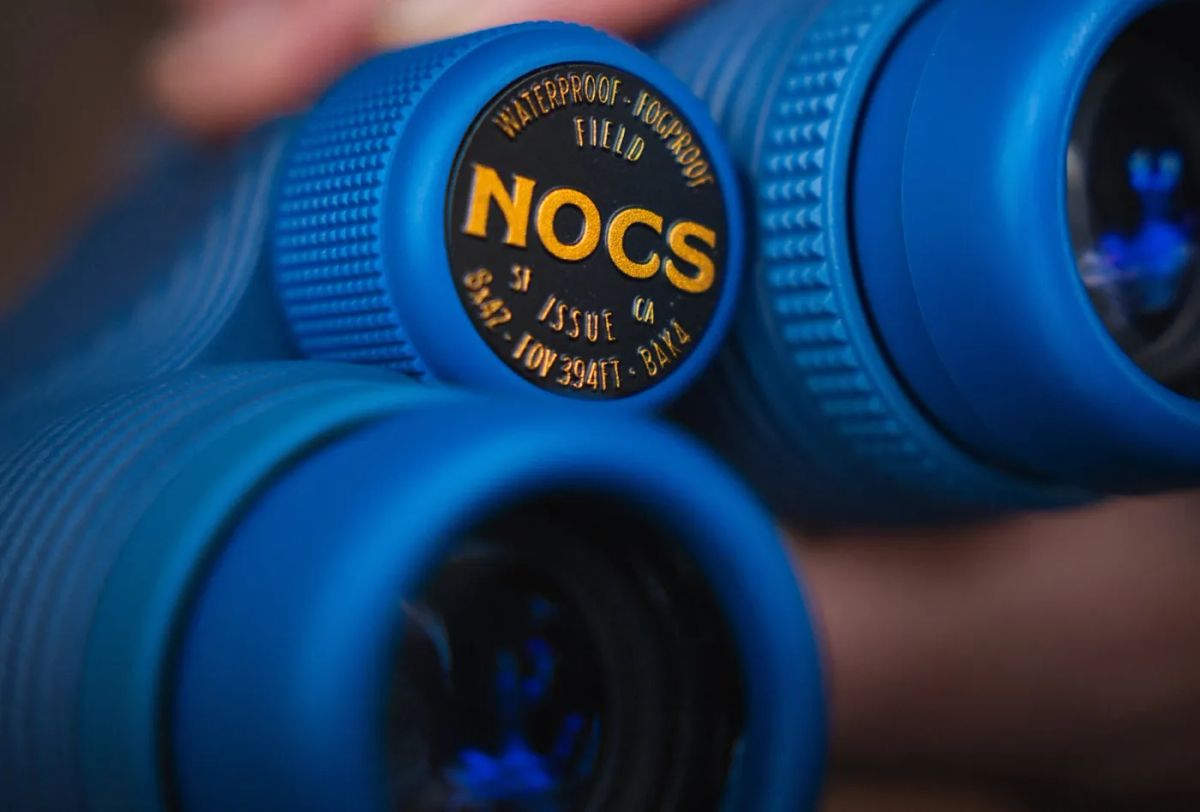
Best for: All-round outdoor use, sports and concerts, travel, anyone who wants a serious step up from entry-level without going premium.
7. Best ultra-budget: Bushnell H20 8x25
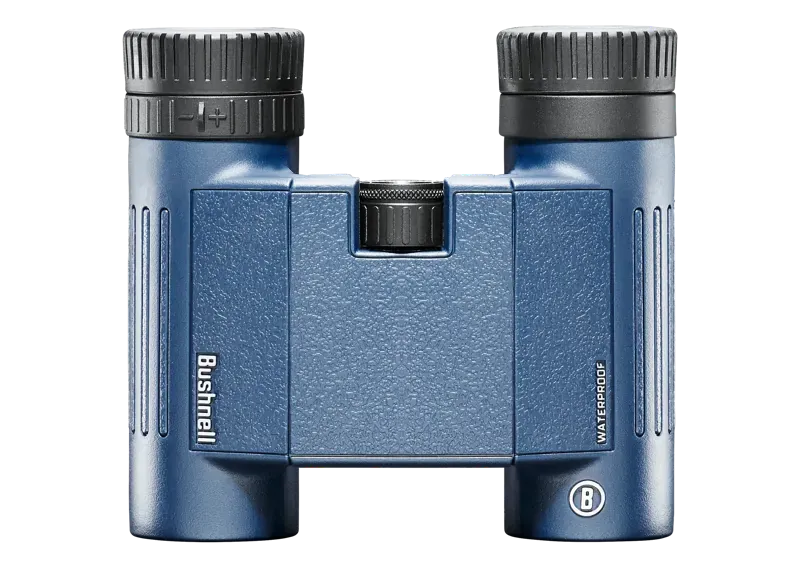
The Bushnell H20 8x25 is the under-$100 pick that is genuinely usable. Fully waterproof, fogproof, rubber-armoured, and built around a 25mm objective lens that handles good-light viewing well. At around $55 and 13.4 ounces, the H20 is the entry point for anyone who wants real binoculars without committing to a real budget.
You will not get edge-to-edge sharpness, ED glass, or premium coatings at this price. What you get is a competent, waterproof, durable compact that handles casual outdoor use, family camping, and starter birding without falling apart.
It's consistently rated as the best-value sub-$100 compact on the market, just don't expect to be blown away by optics when you're in the field.
Best for: Absolute entry-level use, kids' first binoculars, casual outdoor users, secondary pair for the car or boat.
How we tested
Every pick on this list has been used or evaluated in real-world conditions, and where I have not personally tested a model, I have leaned on the consensus from publications I trust.
For the picks I have personally tested (the Maven B.3 6x30, the Nocs Standard Issue, and the Nocs Field Issue), I assessed them across casual birding, hiking, trail scouting, and travel days, looking for a few specific things:
Image quality in real conditions. Edge sharpness, colour accuracy, contrast, and how the binocular performs at dawn and dusk rather than just in good light.
Build and ergonomics. Does the focus wheel feel right? Do the eyecups stay put? Is the diopter firm enough to hold position? Does the binocular feel planted in the hand?
Practical portability. Does it actually get carried? Does it fit a daypack pocket or hip belt without complaint? Is the weight a non-issue or does it become noticeable on a long hike?
Value for money. Per-dollar performance. Lifetime warranty terms. Whether the brand actually stands behind the product.
I run TAK as an editorially independent publication. Brands sometimes send products for review, but no pick on this list has paid for placement, and every pick has been chosen on merit.
Frequently asked questions
What does "compact" actually mean for binoculars?
Compact binoculars are generally those with objective lenses between 20mm and 32mm and a total weight under about 24 ounces. The smallest "pocket" compacts (8x25 and 10x25 designs) are genuinely pocketable; the larger 8x30 and 8x32 compacts are pack-strap or daypack-pouch territory but still meaningfully smaller than a full-size 8x42.
What magnification should I get for hiking?
For hiking and general outdoor use, 6x or 8x is the right answer. Lower magnifications are more forgiving on hand-shake (you do not need to brace against a tree to keep the image steady) and offer wider fields of view, which makes scanning brush, tracking moving wildlife, and spotting routes much easier.
10x is more demanding and better suited to glassing from a fixed position.
Are compact binoculars good for birding?
Yes, with caveats. Compact binoculars are ideal for casual birding, travel birding, and good-light conditions. For serious dawn-and-dusk birding, dense forest viewing, or detailed plumage work at distance, full-size 8x42s deliver more light and more detail.
The compact picks above all handle casual birding well; for committed birding, look at the Maven B.3 6x30, the Zeiss Terra ED 8x25, or the Nikon Monarch M7 8x30.
Are compact binoculars good for travel?
Compact binoculars are genuinely the best travel optics. They fit a daypack, a coat pocket, or a hip pouch without taking over the bag. The waterproof, rubber-armoured builds handle airport security, rain, and casual abuse.
The Nocs Standard Issue 8x25 and the Zeiss Terra ED Pocket 8x25 are the most travel-friendly picks for their pocketability; the Maven B.3 6x30 is the travel pick if you want one binocular that handles every outdoor situation you encounter for the next decade.
Do I need ED glass?
If you have ever noticed colour fringing on high-contrast edges (a dark bird against bright sky, snow against shadowed trees), ED glass solves that. The picks at $300+ on this list all use ED glass; the budget picks below that price point generally do not.
Whether the difference matters to you depends on how serious your viewing gets. For casual outdoor use, non-ED budget compacts are perfectly fine. For birding and serious wildlife work, ED is worth the upgrade.
What about waterproofing?
Every pick on this list is fully waterproof and nitrogen-purged for fog resistance. This is the minimum standard for any binocular you plan to use outdoors. Avoid anything that does not specify a waterproof rating; rain and fog will ruin them within a season.
My verdict: which compact binoculars should you buy?
If you want one product to start with, the answer depends on how committed you are.
For the committed outdoor user (casual stargazing, hiking, birding) who will keep these for decades, the Maven B.3 is the right pick. I tested the 6x30 and would buy it again; if you don't wear glasses and want the conventional all-rounder, the 8x30 in the same body is the more popular choice. Premium optics, lifetime warranty, US-made, and the kind of build quality that justifies the $575 price.
For the first-time buyer or casual user, the Nocs Standard Issue 8x25 is the right entry point. Real binoculars, fully waterproof, around $95, and good enough to genuinely impress.
For the dedicated birder, the Zeiss Terra ED Pocket 8x25 for travel and good-light birding, or the Nikon Monarch M7 8x30 if you want a step up in optical performance and low-light capability.
For the hunter or distance scouter, the Vortex Diamondback HD 8x28 with its unconditional warranty.
For the all-rounder who wants one binocular to handle birding, hiking, travel, and sports, the Nocs Field Issue 32 earns the slot.
Compact binoculars are not magic, and they are not a replacement for full-size 8x42s in every situation. But for the way most TAK readers actually live (out on trails, on hikes, in transit, in real conditions), they are the optic that will genuinely get used. That is the whole point.
If you haven't already, signup for our free newsletter, and subscribe to our YouTube Channel for more quality content like this. -Alastair
Written by

Subscribe to new posts
Gear that earns its place, outdoors and at home | Reviews, Roundups, News







Member discussion