
Portable power station vs generator: which is the right buy?
A practical, real-world breakdown of how the two technologies actually compare across camping, home backup, RV use, outages, and indoor power needs.

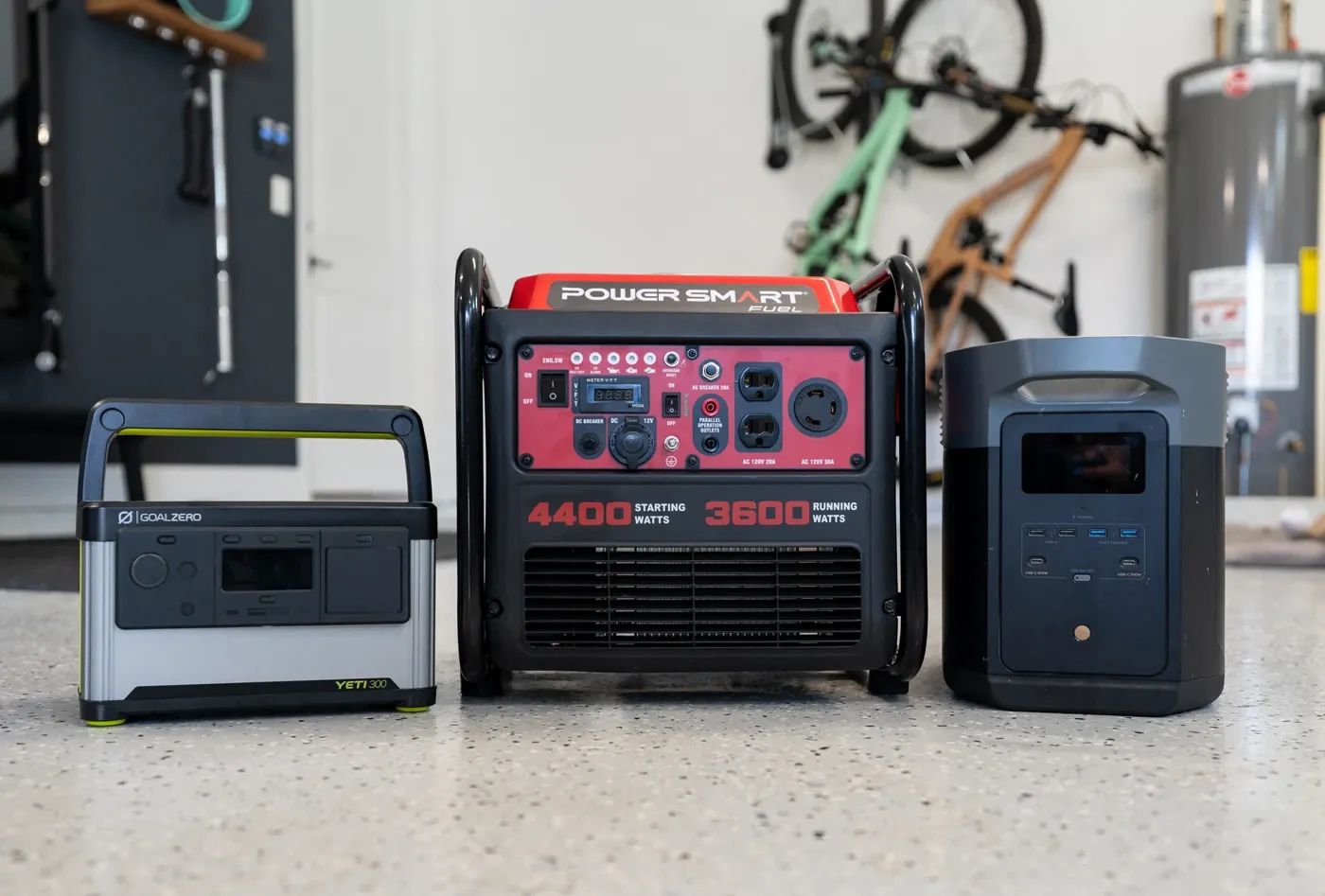
The way we think about portable power has changed pretty quickly. Five years ago, if you needed electricity off-grid or during an outage, the answer was almost always a gas generator.
Today, lithium battery technology has caught up enough that a portable power station can do a serious chunk of that same job, often more conveniently, and often more quietly.
But the conversation isn't as simple as "batteries have won." Generators still earn their place. They run essentially as long as you keep feeding them fuel, they handle heavy continuous loads more comfortably than most batteries, and they cost less upfront for the same usable output during emergencies.
I've spent serious time with both sides. On the power station front, I've tested everything from compact 300Wh units small enough to throw in a daypack right up to expandable 2,000Wh+ stations capable of running a fridge and lights for several days.
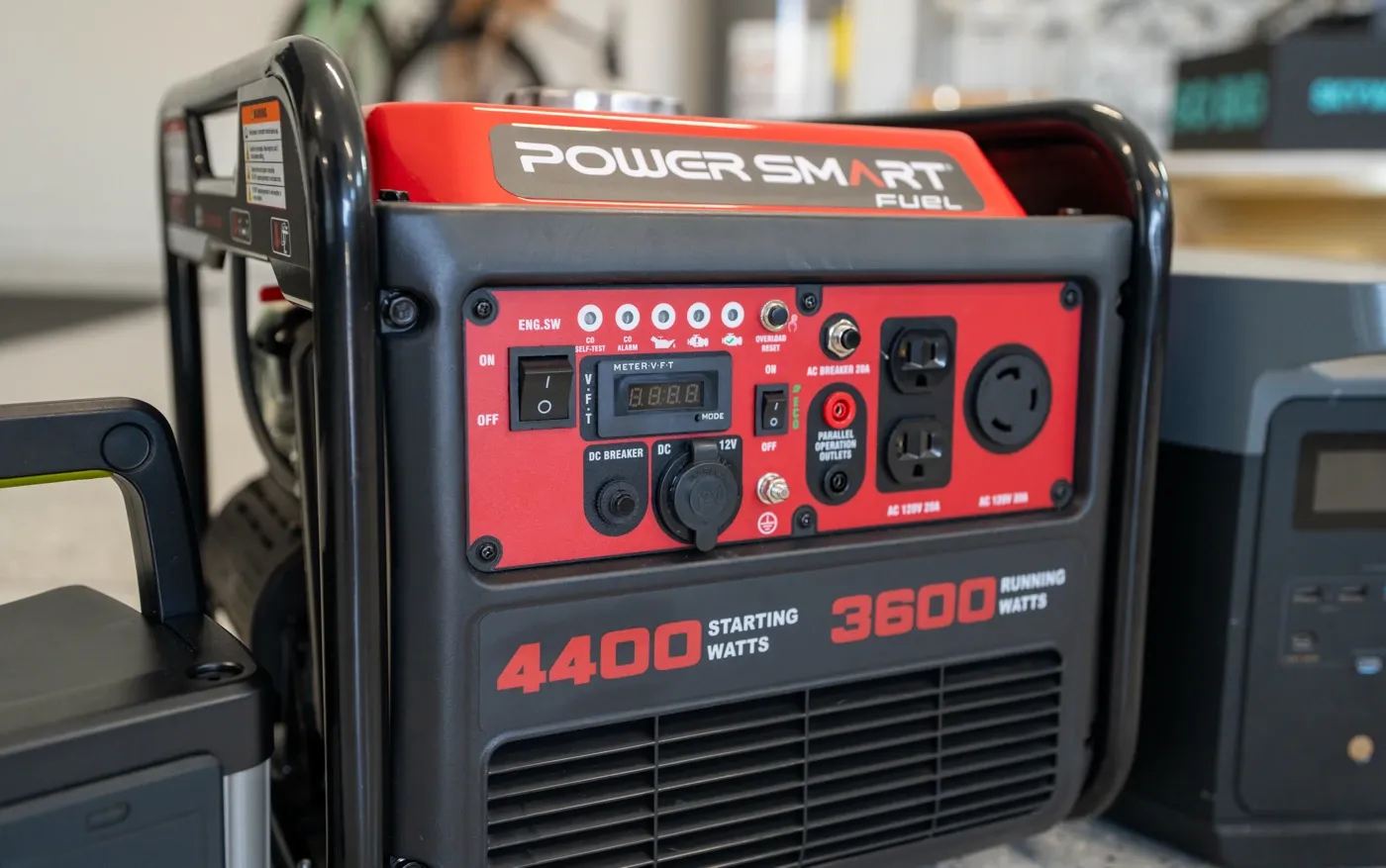
On the generator side, I've been running a PowerSmart 4500W open-frame inverter generator as my reference point for budget-friendly fuel-powered backup, a model that's been refined specifically with hurricane and wildfire preparedness in mind.
This guide isn't trying to crown a winner. It's trying to help you work out which one actually fits the way you live, the trips you take, the home you have, and the loads you genuinely need to power.
If you purchase through links in this article, we may earn a small affiliate commission.
The short answer
Here's the quick version. A portable power station is a battery in a case, with outlets on the front, that recharges from a wall outlet, your car, or solar panels.
A portable generator is a small engine and alternator that produces electricity by burning gasoline or propane.
For most people, most of the time, a portable power station is the better default.
It's silent, safe to use indoors, near zero maintenance, and the power output is clean enough for any modern electronics. A generator is the better choice when you need more sustained output than a battery can hold, you're in a multi-day outage without solar access, you're running heavy continuous tools on a jobsite, or you want lower upfront cost for emergency-only use.
Many people who take portable power seriously end up with both, in different sizes, for different jobs.
What a portable power station actually is
A portable power station is essentially a high-capacity rechargeable battery wrapped in a rugged case, with an inverter inside, and a set of outlets on the front. It looks a bit like a small cooler or a piece of vintage stereo equipment.
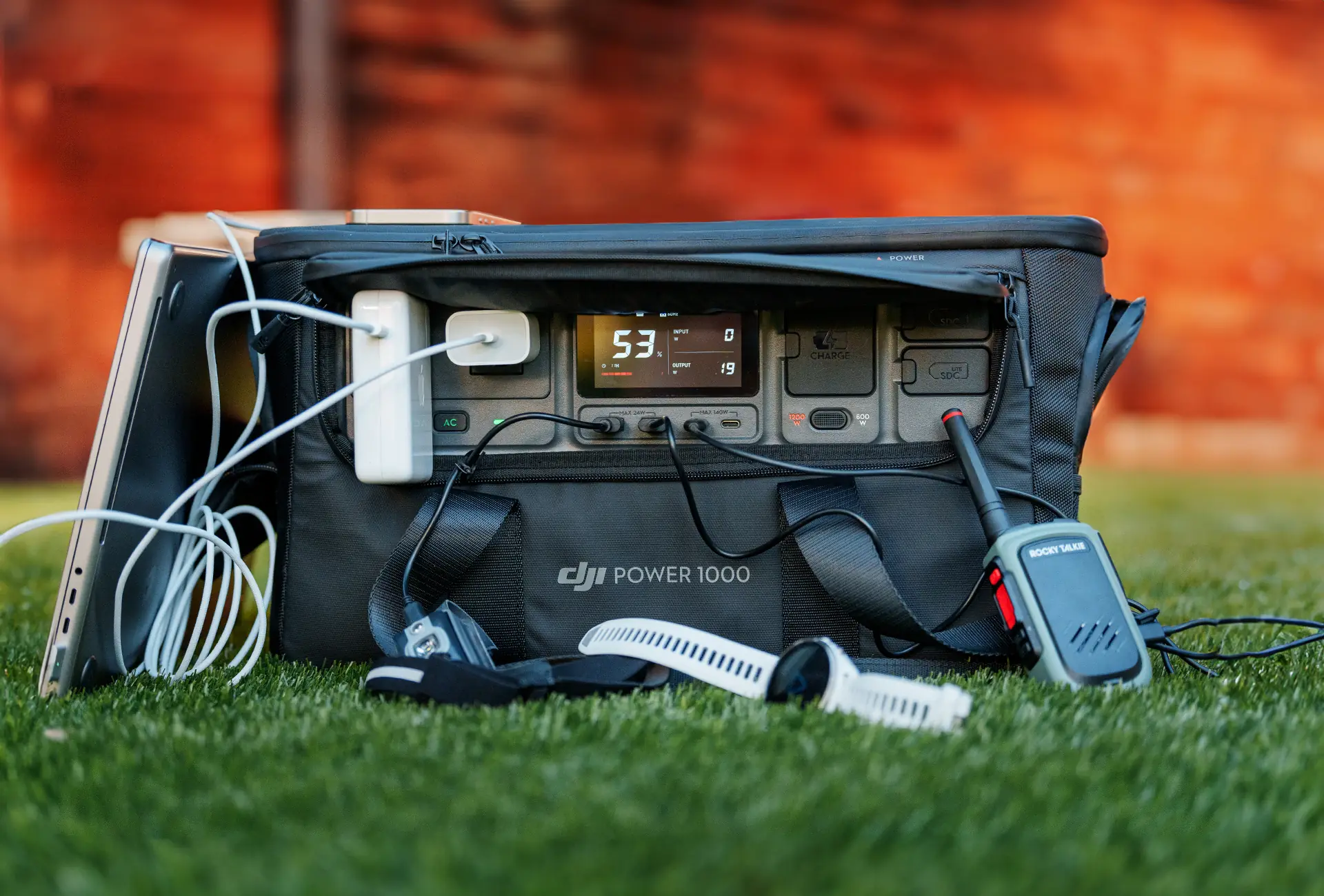
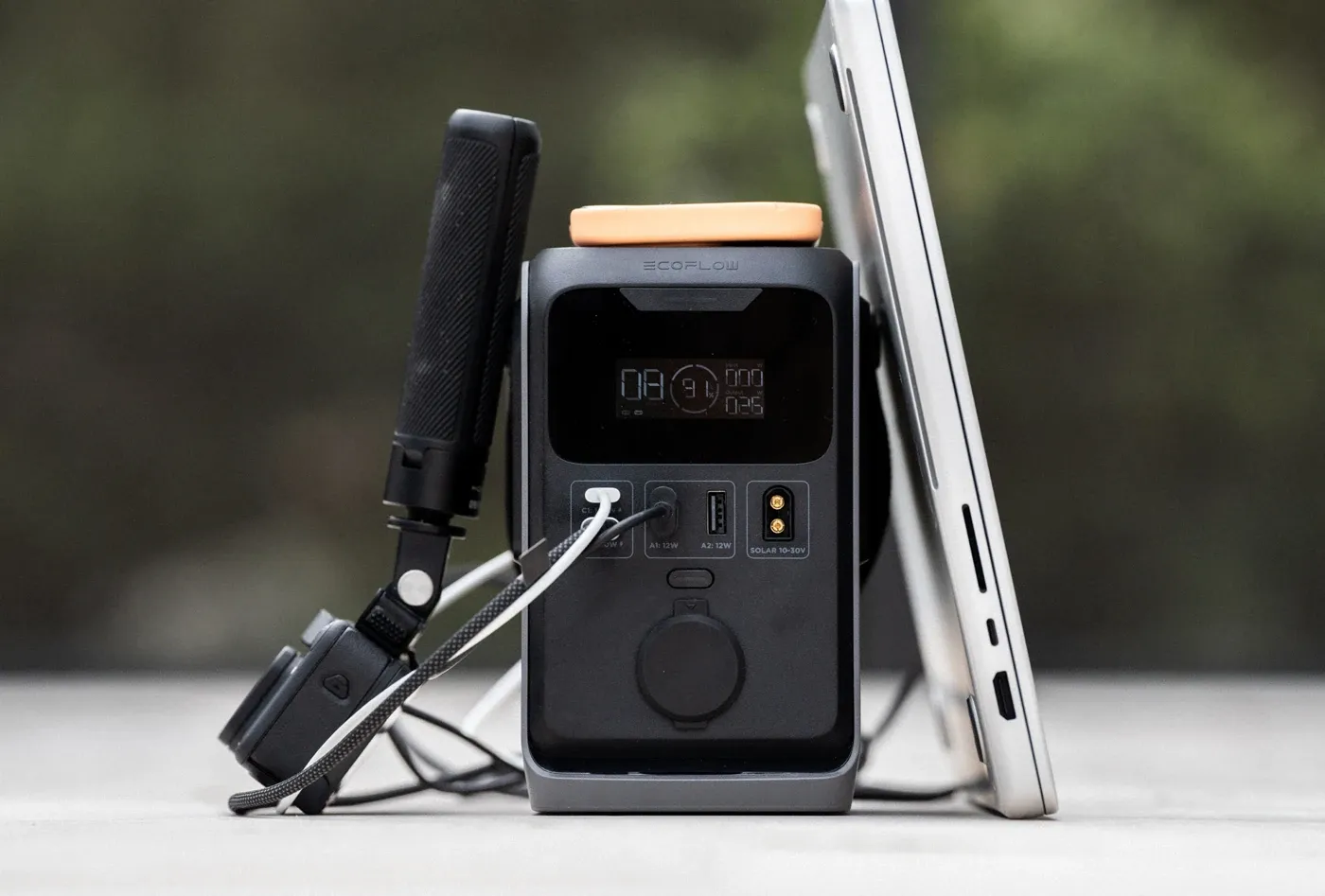
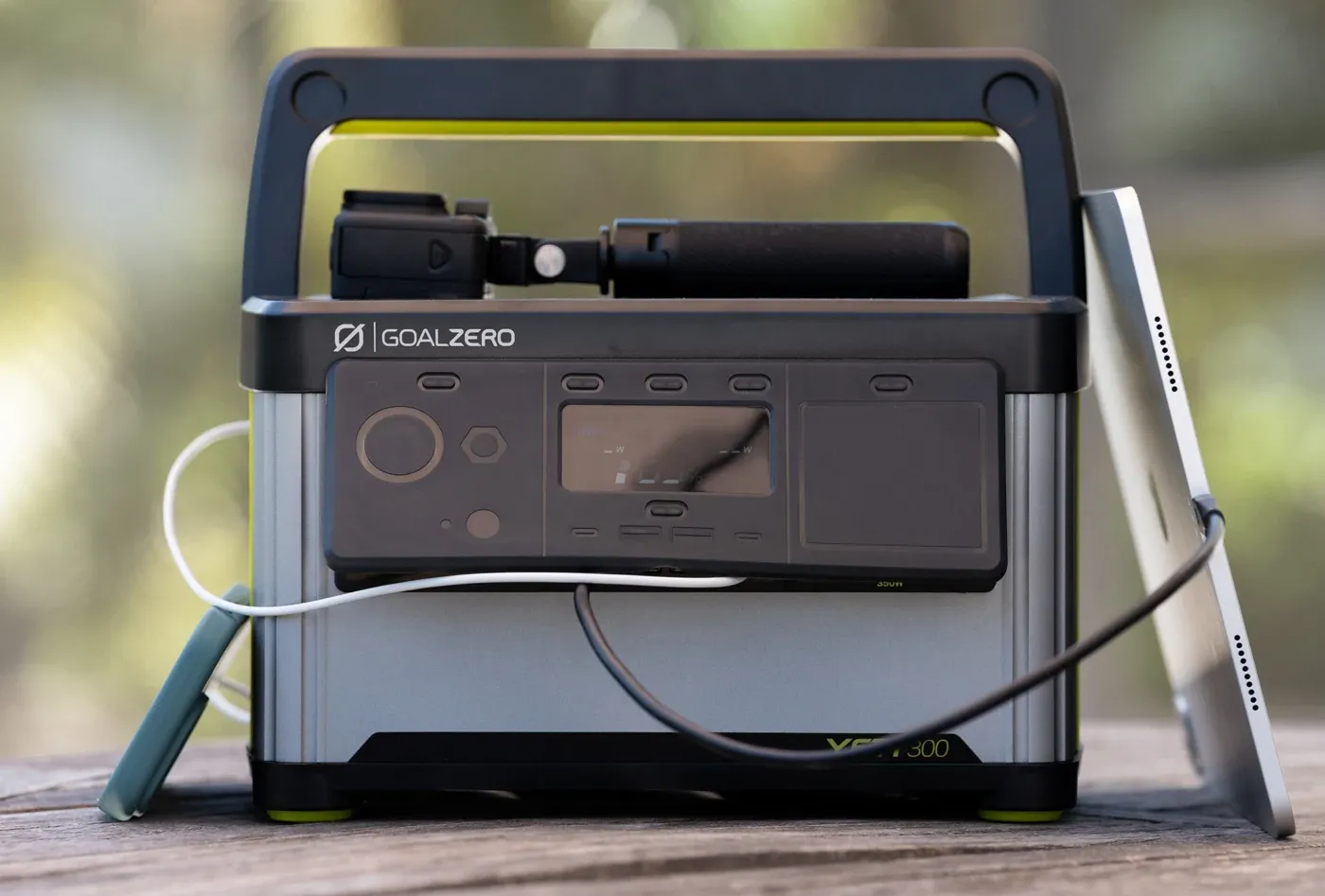
You charge it from a wall outlet, your car's 12V socket, or solar panels. Then you plug things into it, and it runs them off the stored battery until empty.
Capacity is measured in watt-hours (Wh).
Smaller units sit around 200-300Wh, which is enough for phones, laptops, lights, and small electronics across a weekend.
Goal Zero Yeti 300 review: compact portable power station
The Goal Zero Yeti 300 is a 297Wh LiFePO4 portable power station built for camping, travel, and backup use. Here’s why its build quality justifies the price.
 Alastair Dixon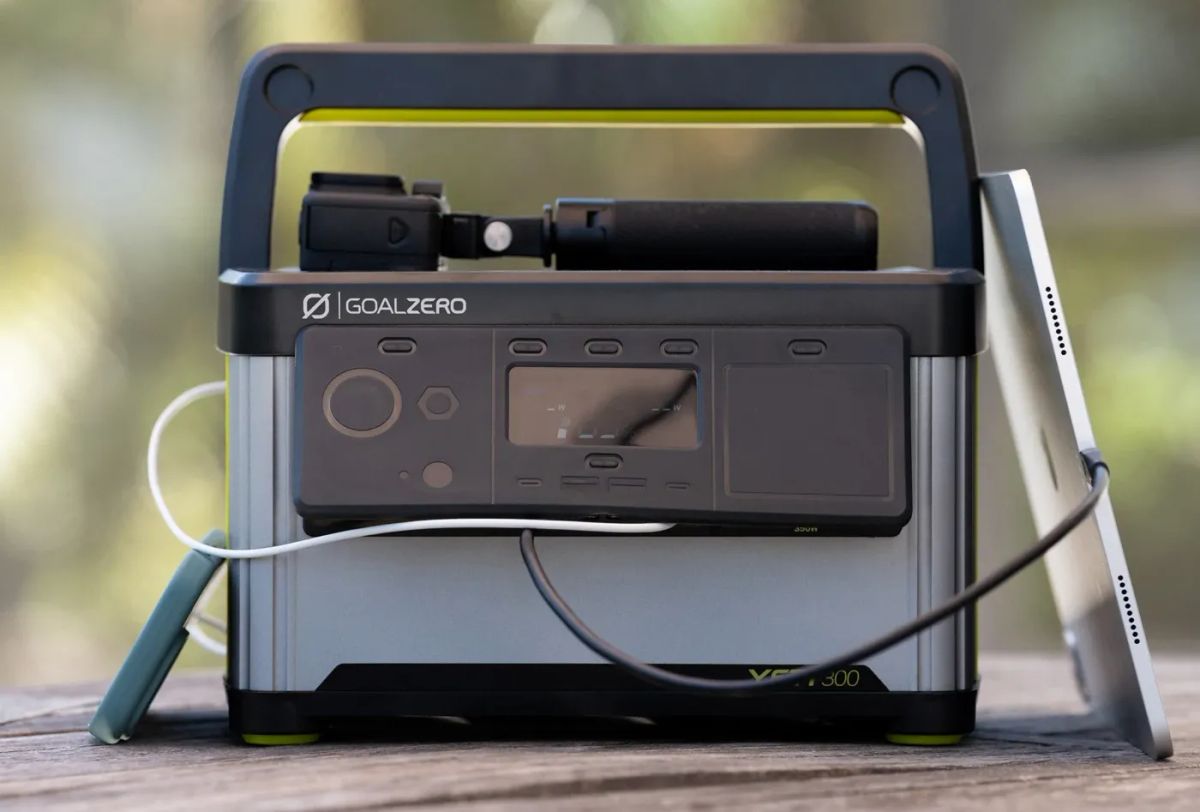
Mid-range models around 1,000Wh handle a CPAP through the night, a mini fridge for several hours, or a small projector.
EcoFlow DELTA 2 Max Review: The Most Versatile Portable Power Station Out There
This EcoFlow Delta 2 Max review covers the key features, performance for home backup, charging, battery life and more.
Alastair Dixon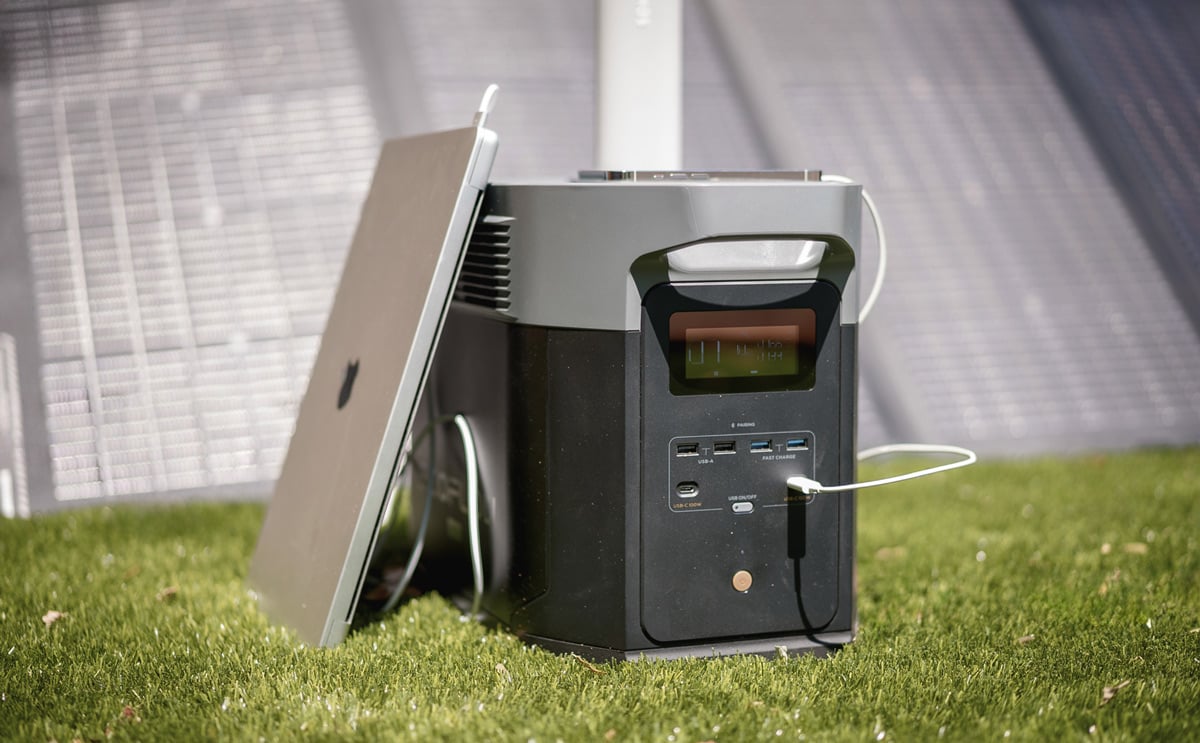
The larger 2,000Wh+ units start to become genuine home backup options, and the very largest expandable systems can be paired with extra battery modules to give you 5,000Wh or more, enough to keep a household's essentials running for several days.
Most modern stations now use LiFePO4 (lithium iron phosphate) chemistry, which gives 3,000-4,000+ charge cycles to 80% capacity. That means a quality unit will last most owners a decade of regular use without significant degradation. They produce clean, stable AC power that's safe for any modern electronic device, including laptops, medical equipment, and audio gear.
What a portable generator actually is
A portable generator is a small internal combustion engine, mechanically coupled to an alternator, all bolted to a frame and fitted with outlets.
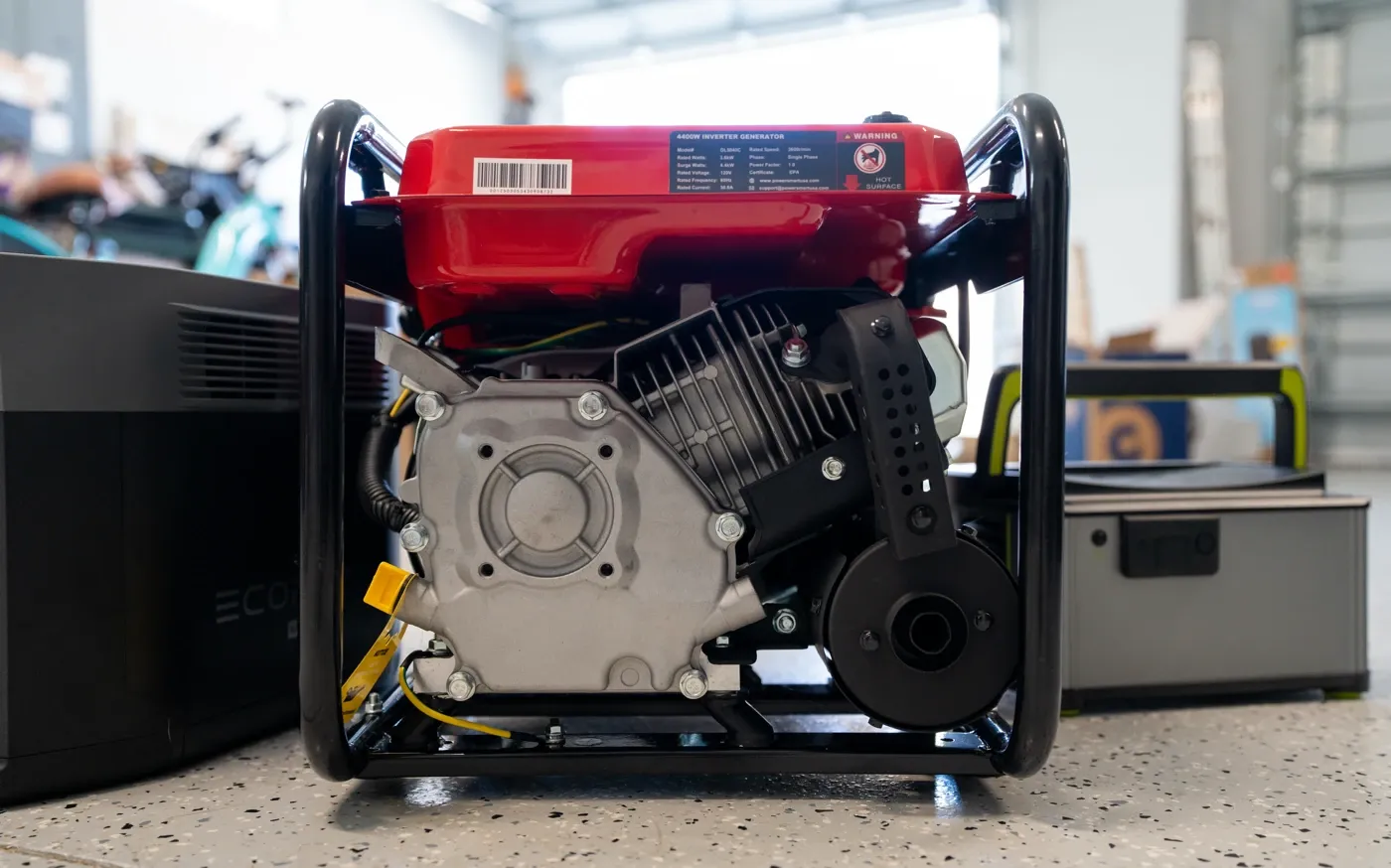
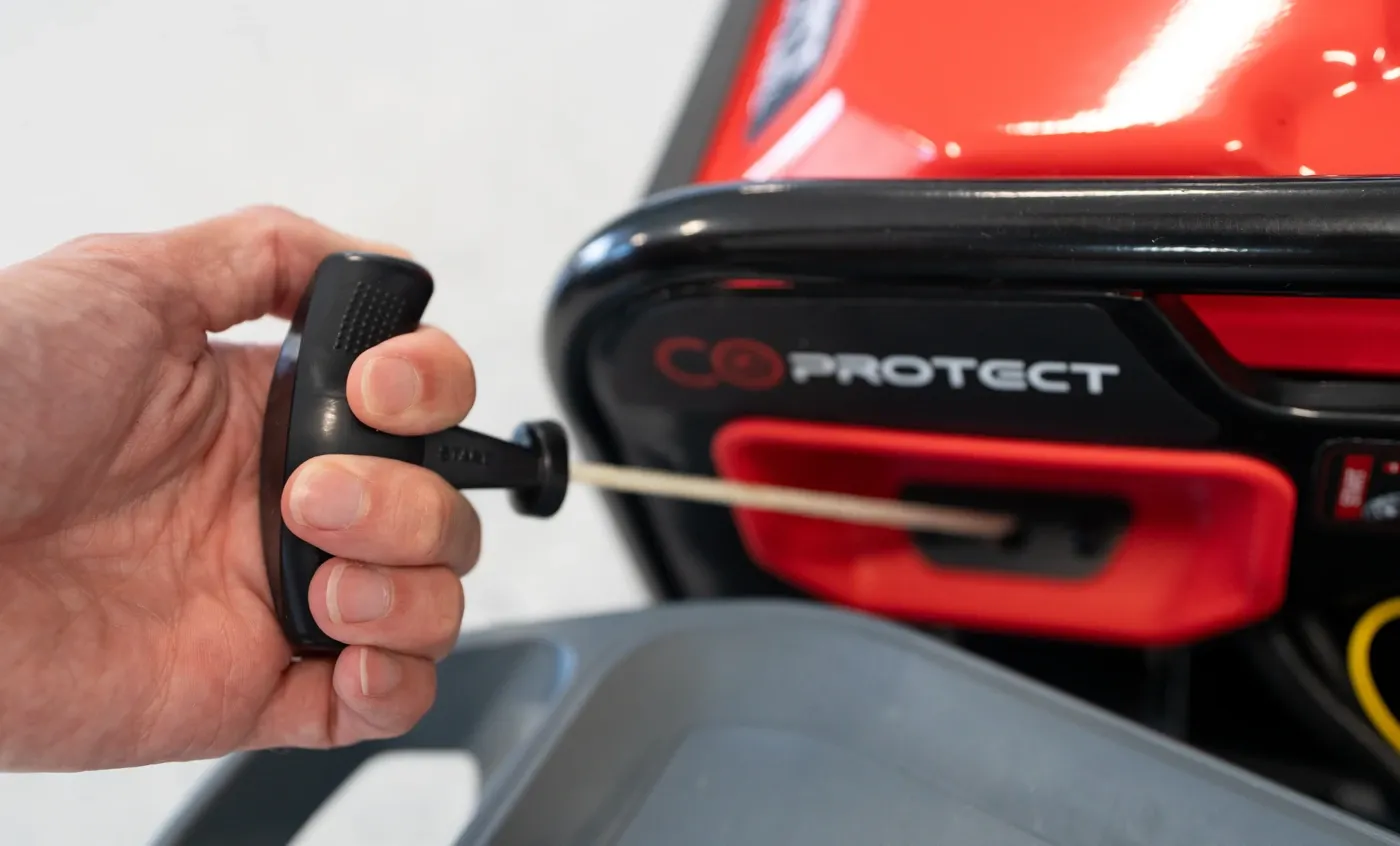
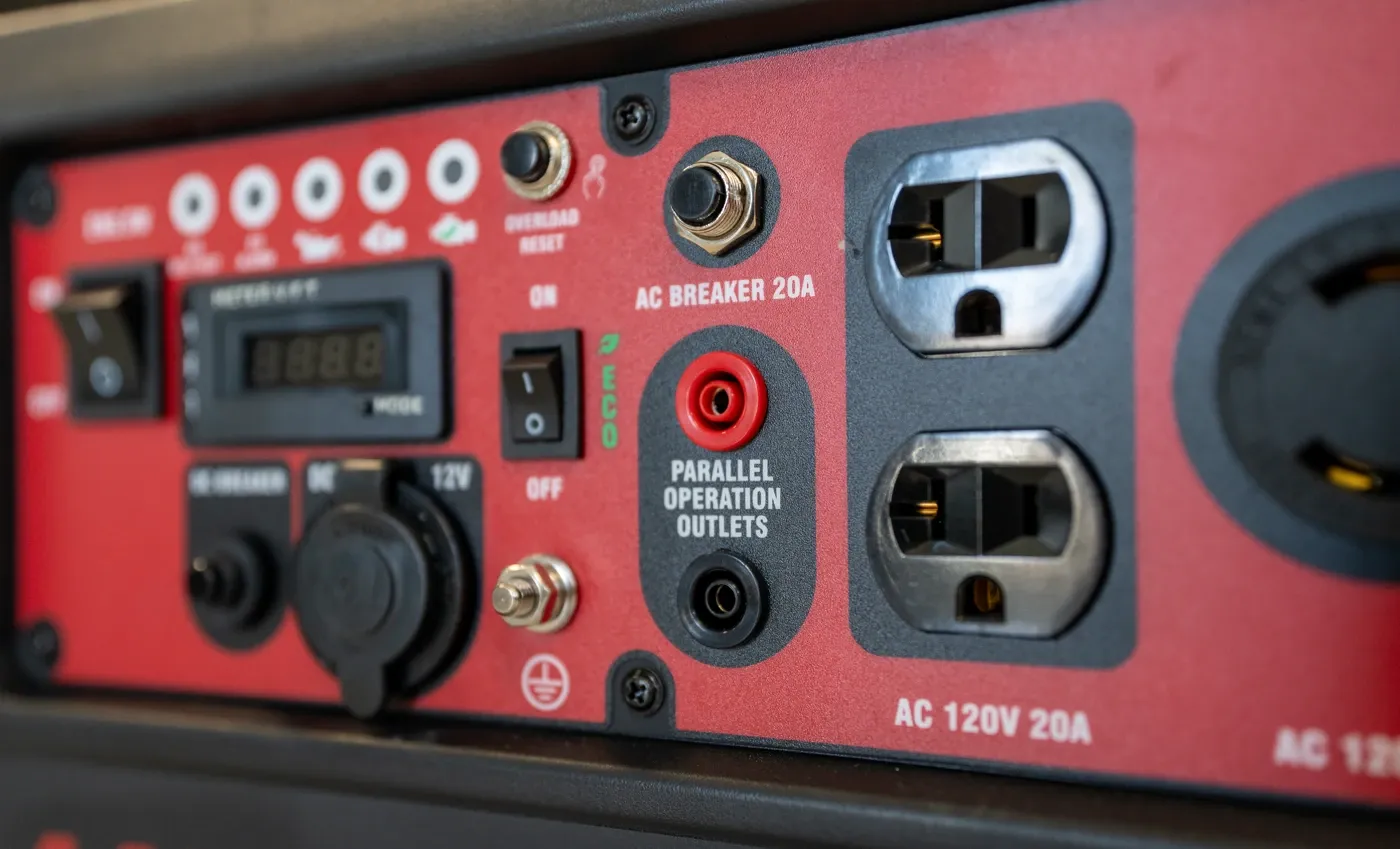
Pull the recoil cord (or push the electric start button on more expensive models), the engine fires up, and it produces electricity for as long as there's fuel in the tank.
Most modern portable generators sold for home and recreational use are inverter generators, which condition the raw AC output into clean, stable power suitable for sensitive electronics. Older or cheaper conventional generators produced rougher current that could damage modern devices, but inverter technology has more or less become the standard at any reasonable price point now.
The PowerSmart 4500W I mentioned earlier sits in a useful middle-of-the-road spot, so it's a fair benchmark for what a typical mid-range portable generator looks like.
It produces 3,800 running watts (4,500W surge), enough for a fridge, some lights, a TV, and several smaller loads simultaneously. The 1.98 gallon tank gives roughly 6.5 hours of runtime at 50% load. It weighs 63 pounds, sits at 72 dB(A) at 23 feet under load, and includes a 30A RV outlet plus a CO shutoff sensor for safety. The longer runtime and quieter operation, compared to earlier generations of the same product, were specifically aimed at multi-day storm and wildfire scenarios.
Output, runtime, weight, and noise figures will scale up or down across the category depending on price, but the general profile holds: small engine, real fuel tank, real noise, real weight, and real ongoing fuel and oil costs in exchange for the ability to keep producing power as long as you keep refueling.
The differences that actually matter
Spec sheets can make this comparison more confusing than it needs to be. Once you've used both, the practical differences come down to a handful of things that actually change how the product feels in real life.
Noise
This is the most immediate, undeniable difference. A portable power station is silent. There's no engine, only a fan that occasionally kicks in under heavy load or while charging. You can have one running next to your bed, on a quiet beach, or inside a tent.
A generator is loud. Even quieter inverter models hover around 55-65 dB(A) at low load, and open-frame units like the PowerSmart sit around 72 dB(A) at 23 feet under demand. That's not background noise, it's something you have to plan around: distance from the tent, distance from neighbors, and an honest read on how it'll feel running at 6am.
Indoor versus outdoor use
A power station can run anywhere. Inside the house, in an apartment, in a tent, in a van, in a closet during an outage. There's nothing combustible going on inside it.
A generator must run outdoors, in open air, away from windows, doors, and vents. This isn't a recommendation, it's a safety rule.
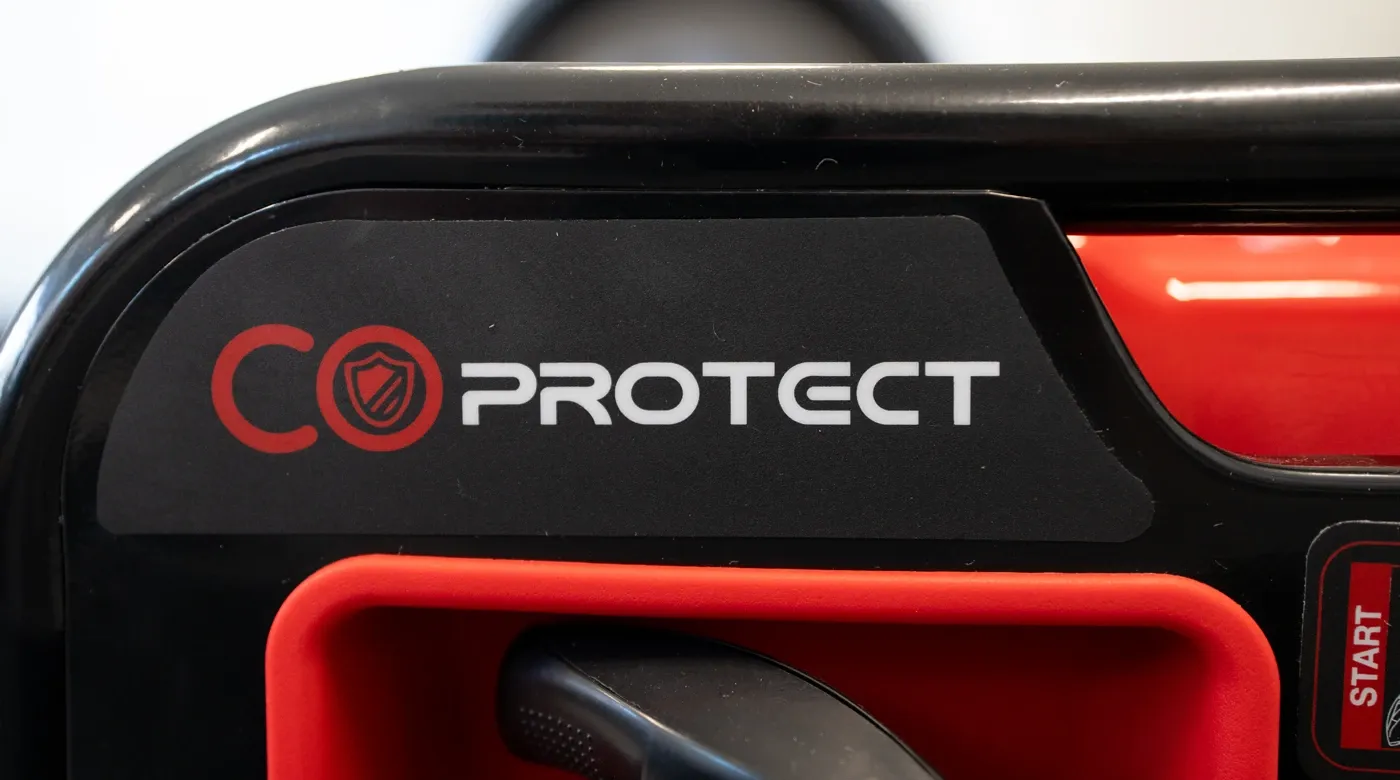
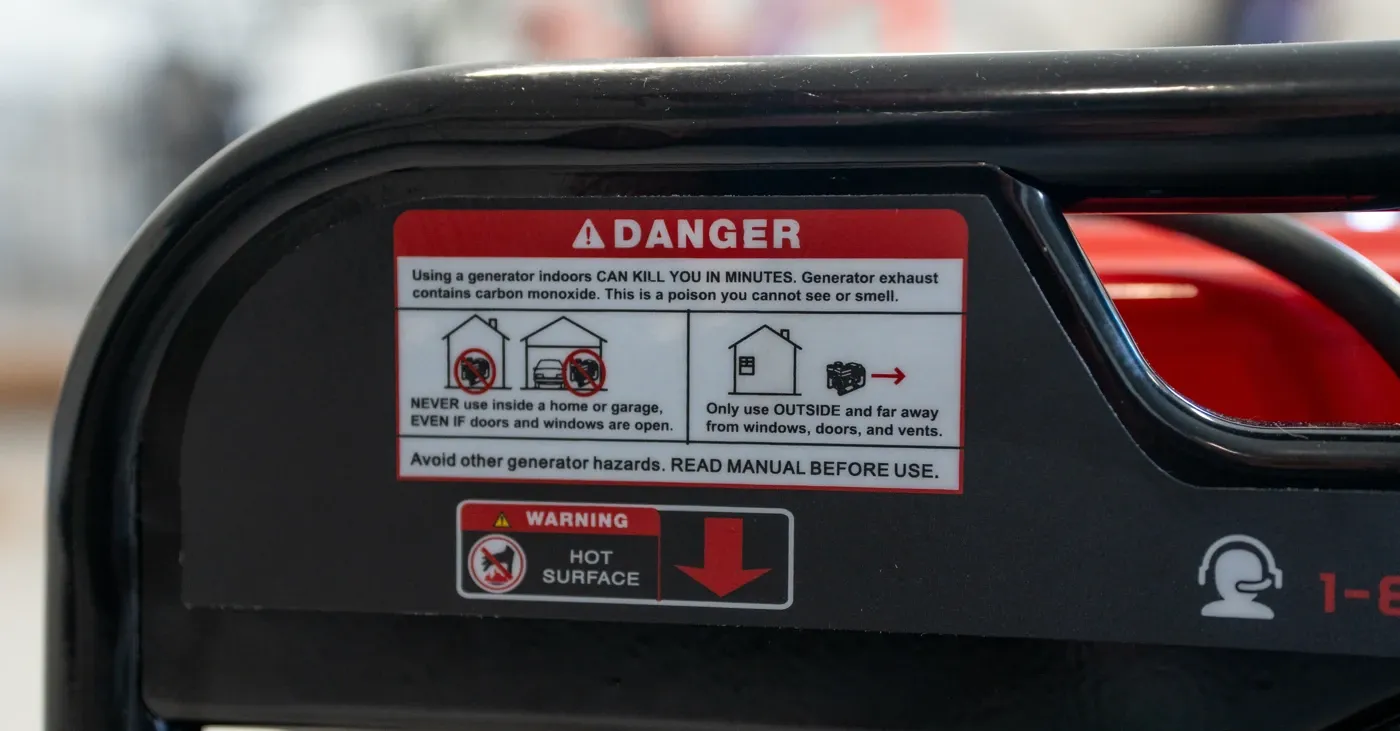
Internal combustion engines produce carbon monoxide, which is colorless, odorless, and lethal. Modern generators with CO shutoff sensors add an important safety layer, but the rule doesn't change. If you live in an apartment with no balcony or terrace access, or you need to run power inside an enclosed space, a generator is simply not an option.
Fuel versus charging
A generator needs gasoline or propane, and you need to keep some on hand if you're using it for emergencies. Gasoline degrades within months in storage, so unless you're rotating it through your car or treating it with a stabilizer, that "ready" fuel can quietly become a problem in itself.
A power station charges from the wall in a few hours. A solar panel array (sold separately, or in bundles with the station) lets you recharge anywhere there's sun. The energy is essentially free after the panel cost, and quiet.
Runtime versus capacity
This is the most fundamental practical split. A power station has a fixed energy budget. Once that 1,500Wh is gone, it's gone until you can recharge it. Period.
A generator has no real fixed budget. As long as you keep pouring fuel in, it keeps producing power. For a long outage with no solar access, that "infinite" runtime quality becomes a meaningful advantage that batteries simply cannot match.
Refueling versus recharging speed
Refueling a generator takes a minute and a jerry can. Recharging a power station from the wall takes anywhere from 1 to 6 hours depending on the unit, though modern fast charging is genuinely impressive, with some 1,000Wh+ units now hitting 80% in under an hour.
Solar charging is much slower, depending on panel wattage and sun conditions, often taking a full sunny day to fill a larger station.
Weight and portability
For small loads, the power station wins decisively. A 300Wh unit can weigh as little as 5-13 pounds and fit in a daypack. The PowerSmart 4500W weighs 63 pounds with no fuel and isn't really one-person friendly to lift in and out of a vehicle.
For larger loads, the comparison shifts. A 2,000Wh power station capable of running a fridge for a day or two often weighs 50-60 pounds with no convenient way to make it lighter, while a similarly-capable generator weighs roughly the same but has effectively unlimited energy (assuming you keep fuel on hand).
Upfront cost versus lifetime cost
A 4,500W class portable inverter generator like the PowerSmart can be had for around $350 new. A 2,000Wh class portable power station sits closer to $1,500-$2,000 for similar usable output during a single charge.
But the generator costs money to run. Gasoline isn't free, oil changes add up, and mechanical wear depreciates the unit faster than a battery does. The power station has near-zero ongoing cost, especially if you can charge it from solar panels you already own.
Maintenance
A power station needs basically nothing. Charge it occasionally if you're storing it for long stretches, and it'll be fine.
A generator wants real attention. Fresh fuel, regular oil changes, occasional spark plug and air filter checks, proper run-in for new units, and sensible storage between uses. None of this is hard, but it's not optional. The owners who get the most years out of generators are the ones who treat the routine care as part of ownership, not as an afterthought.
Where each one wins
The headline differences are useful framing, but the right answer depends almost entirely on how you actually plan to use it. Here's how the choice changes by scenario.
Camping
For tent camping, weekend trips, and car camping in quiet sites, a portable power station almost always makes more sense. Silent operation matters more here than almost anywhere else, both for your own comfort and for the people camped nearby. A 500-1,000Wh station keeps a fridge, lights, phones, a fan, and a projector running comfortably across a weekend, especially with any solar input.
The exception is longer trips with heavy loads. If you're car camping for a week and running a portable AC unit, an electric kettle, and similar high-draw appliances daily, a generator's "as long as there's fuel" runtime becomes attractive again, particularly without strong solar access.
RV trips
Both work, and many RVers run both. For shorter trips and standard RV park hookup support, a power station's silence and clean output is hard to beat. The 30A RV outlet on a generator like the PowerSmart matters for boondocking or sites without shore power, and it's still the more practical option for extended dry camping where you'll need to keep an air conditioner running for hours at a time.
Short home power outages
For outages under 24 hours, a 1,000-2,000Wh power station is the more graceful answer. It runs silently inside the house, keeps the fridge cold, supports lights, internet, phones, and entertainment, and you don't have to think about fuel storage at all. After the storm passes, charge it back up and put it away.
For anyone living in hurricane-prone parts of the country (Florida, the Gulf Coast, the Carolinas), this scenario covers the vast majority of what we actually deal with. Tropical weather knocks power out for a few hours fairly often, and a power station handles those windows with no fuss.
Extended power outages
For outages that stretch into multiple days, the calculation changes. Even a large 2,000Wh power station has a finite budget, and without solar charging access during the outage (gloomy weather, tree-shaded property, limited setup space), you'll run out.
This is where a generator earns its keep. A few gallons of stabilized fuel and a sensible run schedule (a few hours in the morning to chill the fridge, a few hours in the evening for cooking and lights) can keep household essentials going indefinitely, far cheaper than a power station setup with the same effective capacity.
This is also exactly the scenario where the recent generation of mid-range generators has improved noticeably, with longer per-tank runtime and lower decibel ratings making multi-day hurricane and wildfire prep more livable than it used to be.
The other answer is an expandable power station system with solar panels. A larger 2,000-3,000Wh station with one or two add-on battery modules and a set of solar panels can give you several days of household essential coverage, silently.
It costs significantly more upfront, but it eliminates the fuel logistics entirely.
Apartments and indoor use
If you live in an apartment, a condo, a dorm, or anywhere without a way to safely run a generator outdoors, a power station is the only real option. Period. This is also true for short-term scenarios like running power for a fridge during a kitchen renovation, backup for a CPAP machine during travel, or emergency electricity for a home office during a localized outage.
Off-grid living and remote work
For off-grid scenarios with reliable sun, a properly-sized power station and solar panel array can replace a generator entirely.
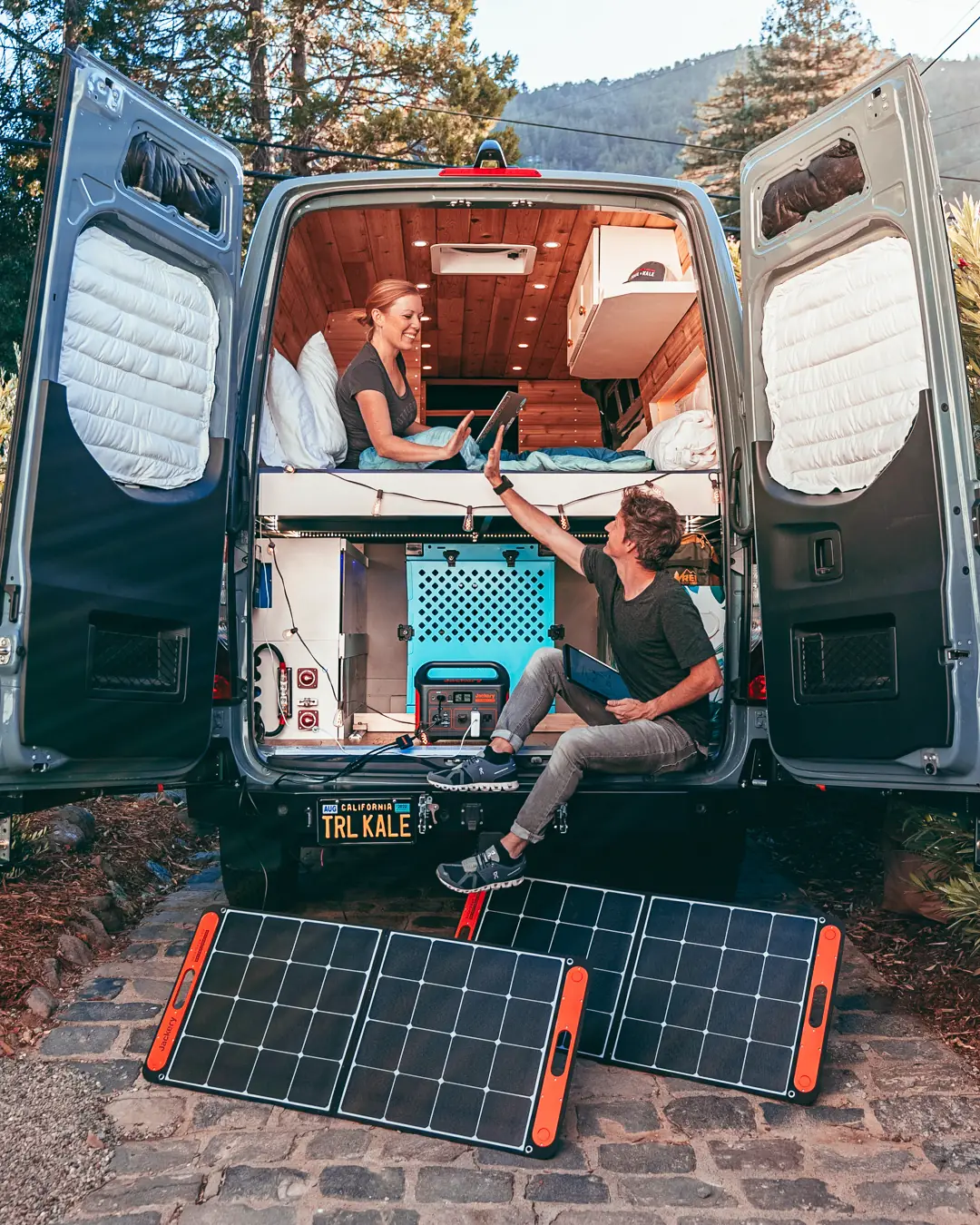
The energy is free, quiet, and fully renewable. For off-grid scenarios with poor sun, dense forest cover, or extended cloud cover, a generator (or a generator and power station combination) remains the more reliable answer.
Jobsite and heavy tool use
For jobsites that need to run circular saws, miter saws, compressors, and similar high-draw equipment all day, a generator is still the better tool. The continuous high output, the ability to refuel quickly, and the comparative cost of mid-size generators all favor this scenario. A power station can absolutely handle short bursts of heavy tool use, but a full workday of sustained power tool work will drain any reasonable battery capacity quickly.
Tailgating, outdoor events, and short trips
A portable power station wins almost every time here. The silence, the indoor-friendly nature, the freedom from fuel concerns, and the modest power demands of these scenarios all favor batteries.
Hurricane prep and storm season
Living in Florida means hurricane season is a real, recurring consideration, not a hypothetical. My honest answer for this scenario is "both, if your budget allows."
A 1,500-2,000Wh power station handles the routine 6-12 hour outages without any fuss, while a portable generator covers the rare extended event when the grid is down for several days. Treating them as complementary rather than competitive tends to give the most resilient setup.
The solar generator question
You'll see "solar generator" used a lot in product marketing, especially when bundled offers come up. It's worth knowing what that term actually means.
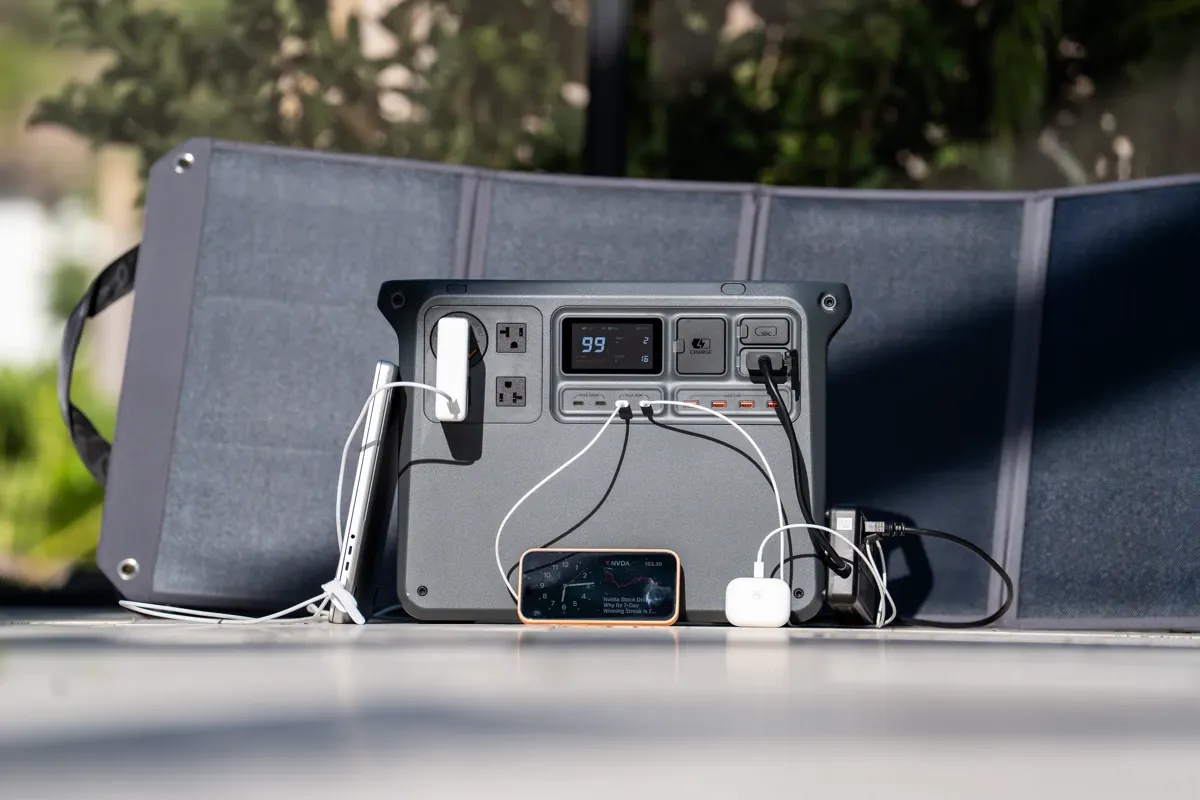
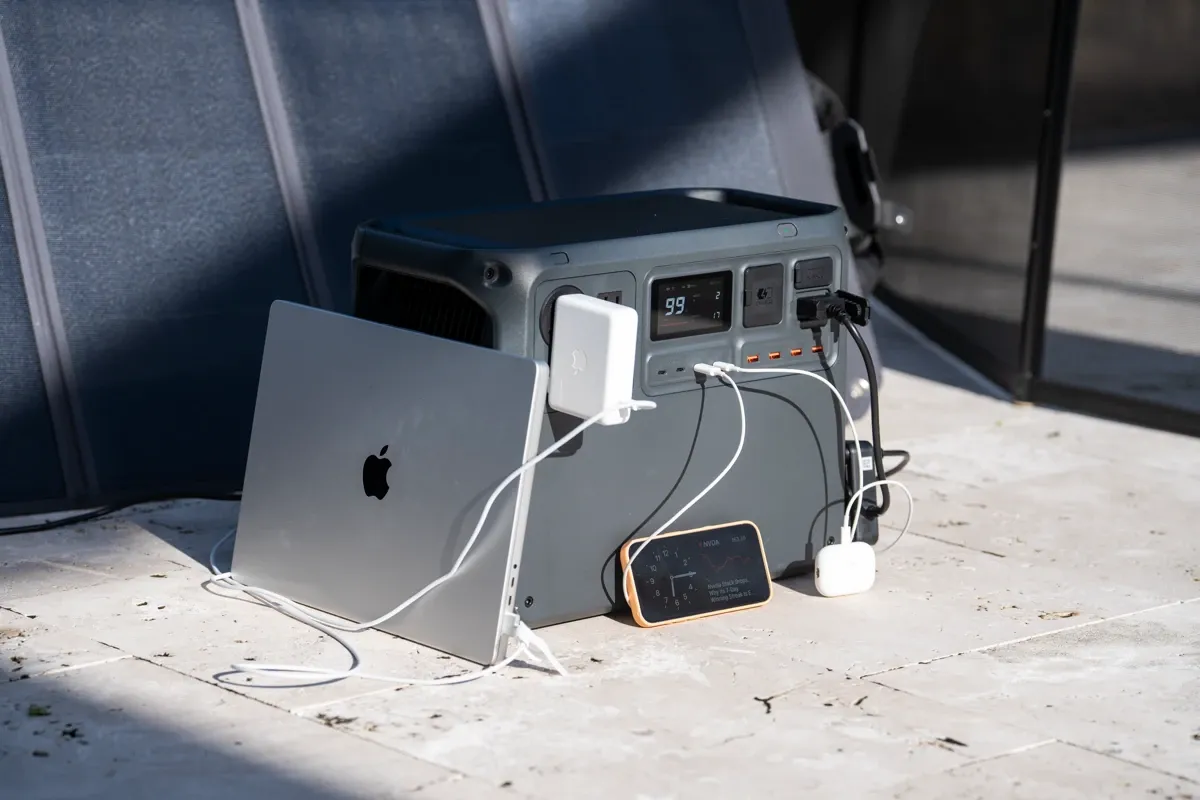

A solar generator is just a portable power station packaged with one or more solar panels. There's no separate technology category. The "solar" part refers to the charging method, not the unit itself.
The combination genuinely makes sense if any of these apply: you want multi-day off-grid capability without fuel logistics, you live somewhere with frequent outages and reliable sun, you do a lot of overlanding or van life, or you simply don't want to deal with gasoline.
It makes less sense if you're a casual camper who can recharge from the wall before each trip, you have only short-duration outages to worry about, or your property is heavily shaded. The solar panels add real cost (and weight), and they only earn back their value if you actually use them often enough to skip multiple recharges or fuel purchases.
Buying as a bundle is usually better value than buying the station and panels separately. If you're on the fence, look at how often you'd realistically have the panels deployed across a year. If the answer is "a handful of weekends," the bundled extra cost may not pay back. If the answer is "most weekends, plus during outages," it likely will.
How to choose: a simple framework
If you're staring at this decision and want a straightforward way through, work down this list of questions in order.
How often do you plan to use it? If it's for occasional emergencies and you want to spend the least money up front, a generator wins on cost-per-watt. If it's regular use across camping, RV, and home backup, a power station's near-zero running cost makes the math work over time.
How long do you need it to run? For runs under a day, a power station is fine. For multi-day continuous use without solar access, you'll either want a generator or a much larger expandable power station system.
Where will you use it? Indoors, in apartments, around tents, in any quiet setting: power station. Outdoors only, on a jobsite, in an RV park: either works, with a generator possibly preferable.
What loads will you run? Standard household electronics, a fridge, lights, laptops, a CPAP machine, small appliances: a power station handles this comfortably. Heavy continuous tools, large AC units, multiple high-draw appliances: a generator is better.
What's your budget? Lower upfront, willing to pay for fuel and maintenance: generator. Higher upfront, near-zero ongoing: power station.
If you can answer those five honestly, you'll usually find one or the other clearly fits. If both feel close, that's a sign you might be the kind of user who genuinely benefits from owning both at different sizes for different purposes.
My verdict
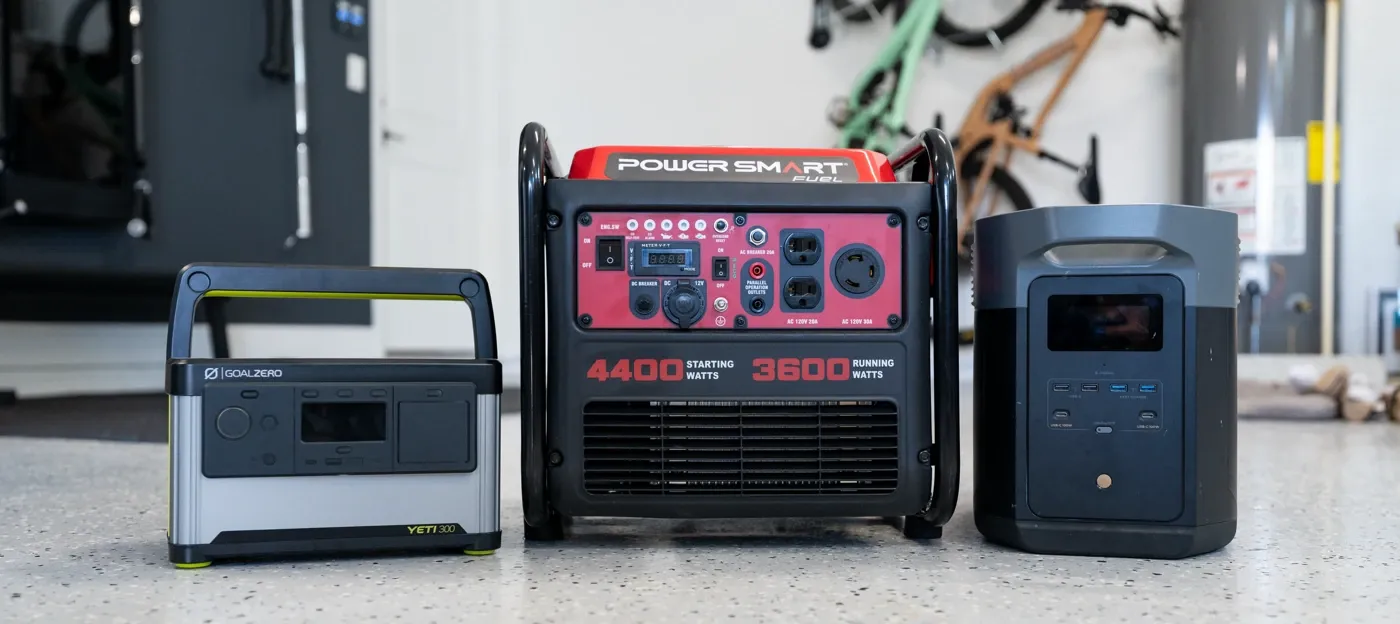
For most readers in 2026, a portable power station has become the more sensible default for the majority of real-world use cases: camping, RV trips, short outages, indoor power needs, tailgating, and weekend off-grid use.
Battery technology has improved enough that the trade-offs that used to make generators the obvious answer no longer apply for those scenarios. They're quiet, safe indoors, near zero maintenance, and the new LiFePO4 chemistry gives them real longevity.
Generators still earn their spot. For extended outages without solar access, for jobsite work, for budget-constrained emergency-only scenarios, and for anyone who wants the simplicity of unlimited fuel-fed runtime, a portable inverter generator like the PowerSmart 4500W Generator with CO Alert remains a sound buy, and the recent generation has been quietly upgraded with hurricane and wildfire prep in mind: longer runtime per tank, lower noise output, and the same CO safety package.
The most resilient setup, if budget allows, is owning both. A power station for the routine 90% of cases, and a generator on standby for the 10% extended scenarios where battery capacity isn't going to cut it. That combination handles essentially any portable power situation you'll realistically face, and lets each tool do the job it's actually best at.
If you haven't already, signup for our free newsletter, and subscribe to our YouTube Channel for more quality content like this. -Alastair
Written by

Subscribe to new posts
Gear that earns its place, outdoors and at home | Reviews, Roundups, News










Member discussion