
Can you use trail running shoes on the road? An honest answer
Trail shoes on pavement: when it's fine, when it isn't, how many road miles you can mix in, and the hybrid shoes worth considering.


Short answer: yes, you can. I do it fairly often myself, and so do most trail runners I know. The longer answer is more interesting, because how often you do it, what shoes you do it in, and how many road miles you stack up on those shoes all matter more than the simple yes or no.
I've spent years reviewing, and rotating between dedicated road shoes, dedicated trail shoes, and the growing category of hybrids that try to do both. My runs from home rarely start on dirt. Most of mine begin on a few miles of pavement, hit a dirt road, climb something, and finish back on pavement. That mix is normal for a lot of trail runners, and it's why this question gets asked so often.
Here's what actually happens when you wear trail shoes on the road, when it's fine, when it isn't, and what to do about it.
If you purchase through links in this article, we may earn a small affiliate commission.
The short version
Trail shoes on road work well for short stretches: warm-ups, cool-downs, the connector between your front door and the trailhead, the section between two pieces of singletrack. They're also fine for occasional full road runs of a few miles if your trail shoes are on the lighter, less aggressive end of the spectrum.
What they're not built for is regular high-mileage road training. Lug wear accelerates fast on asphalt, the ride feels firmer than a road shoe, and the heavier weight will cost you energy and pace if you're trying to run hard.
If your typical run is more than half on pavement, get a road shoe or a road-to-trail hybrid. If it's less than half, your trail shoes will handle it without much complaint.
Best Trail Running Shoes (2026) — Tested & Reviewed
My personal top picks across all-mountain, road-to-trail, ultra running, and trail racing; plus the best trail running shoes for women. No filler, no shoes I haven’t run in.
 Alastair Dixon
What actually happens to trail shoes on pavement
Three things, in order of how quickly you'll notice them.
Lug wear speeds up dramatically
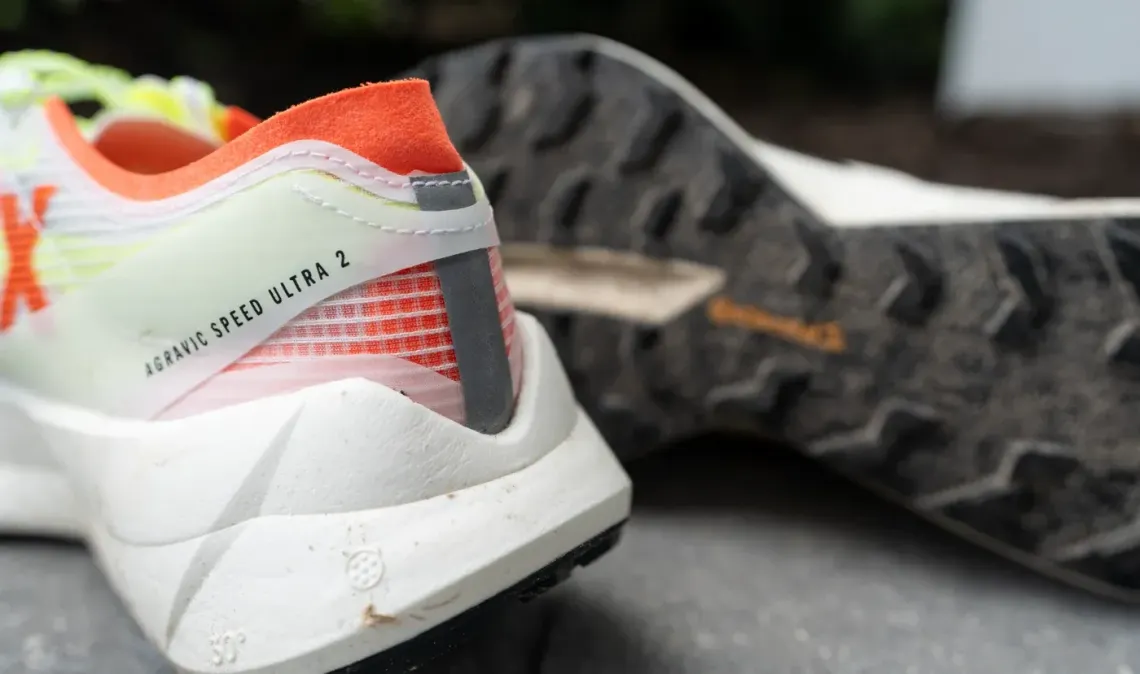
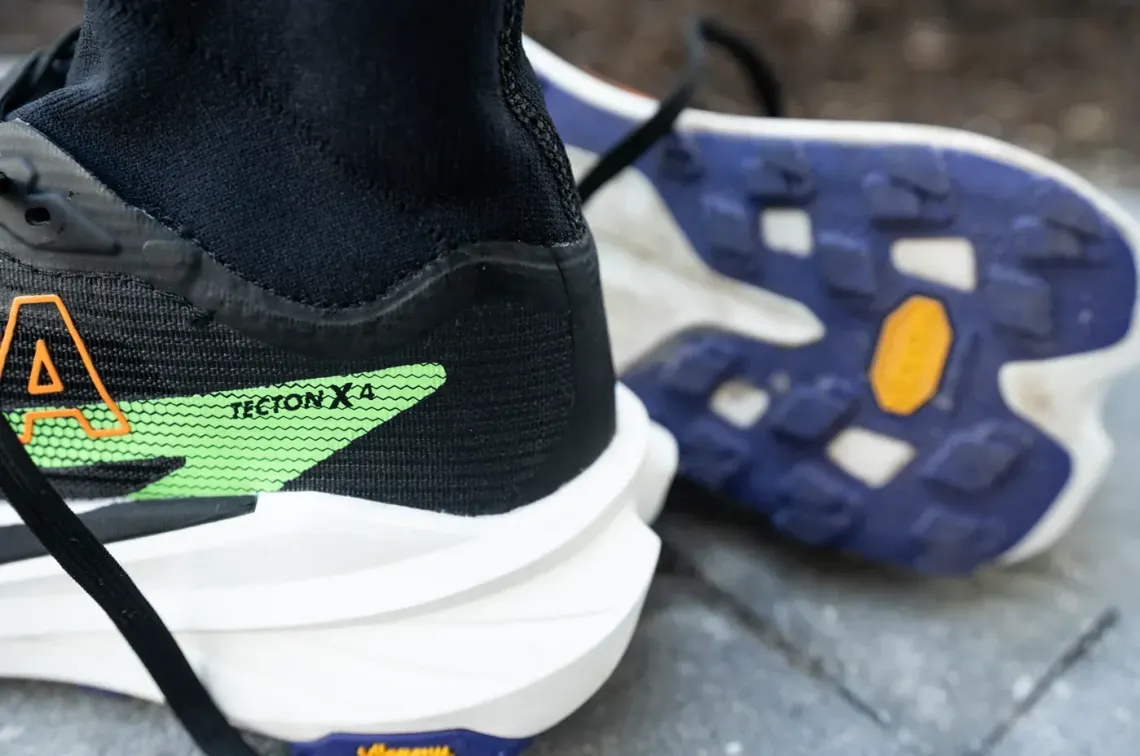
This is the biggest practical issue. Trail outsoles use deeper lugs with softer, stickier rubber compounds (Vibram Megagrip is the most common premium example). That softer rubber bites into dirt, mud, wet rock, and roots. On asphalt, those same lugs grind down at roughly two to three times the rate of a road shoe outsole.
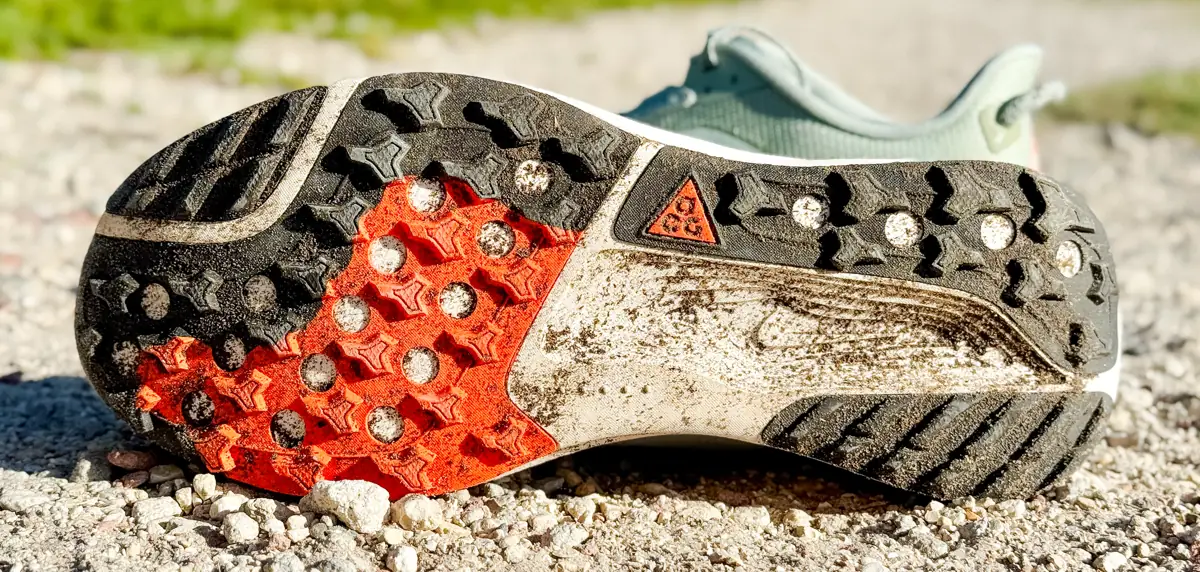
How much faster depends on the lug depth, runner gait, and runner weight.
A 4mm lug on a road-to-trail hybrid like the Nike ACG Pegasus Trail will hold up reasonably well to mixed use. A 5mm lug on something like the Saucony Peregrine will wear noticeably after a few hundred road miles. A 6mm aggressive lug on a Salomon Speedcross or similar all-mountain shoe is going to lose its bite quickly if you put it on tarmac regularly.
The trade-off: those flattened lugs will then be less effective when you go back to actual trail. So you're not just shortening the shoe's life, you're degrading what makes it good off-road.
The ride feels firmer than a road shoe
Trail shoes are built to protect you from sharp rocks and roots. That protection comes from rock plates, denser midsole foams in the forefoot, and a generally stiffer overall build (but not always).
On dirt, that stiffness disappears because the ground gives. On pavement, it doesn't, and you feel every step a little more.
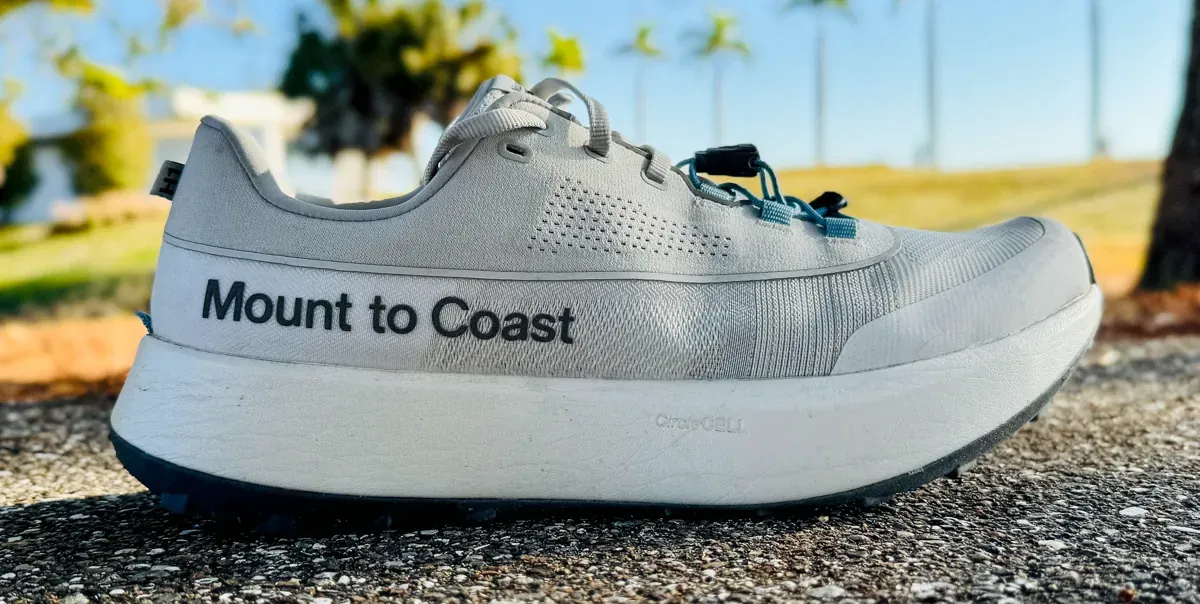
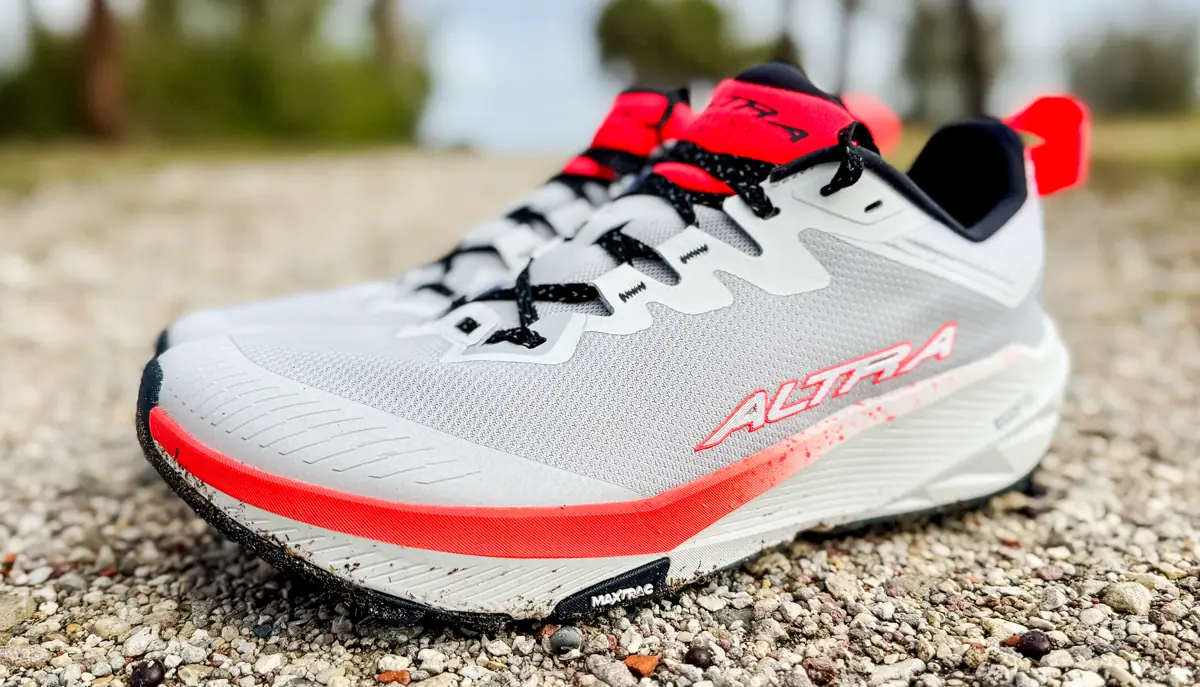
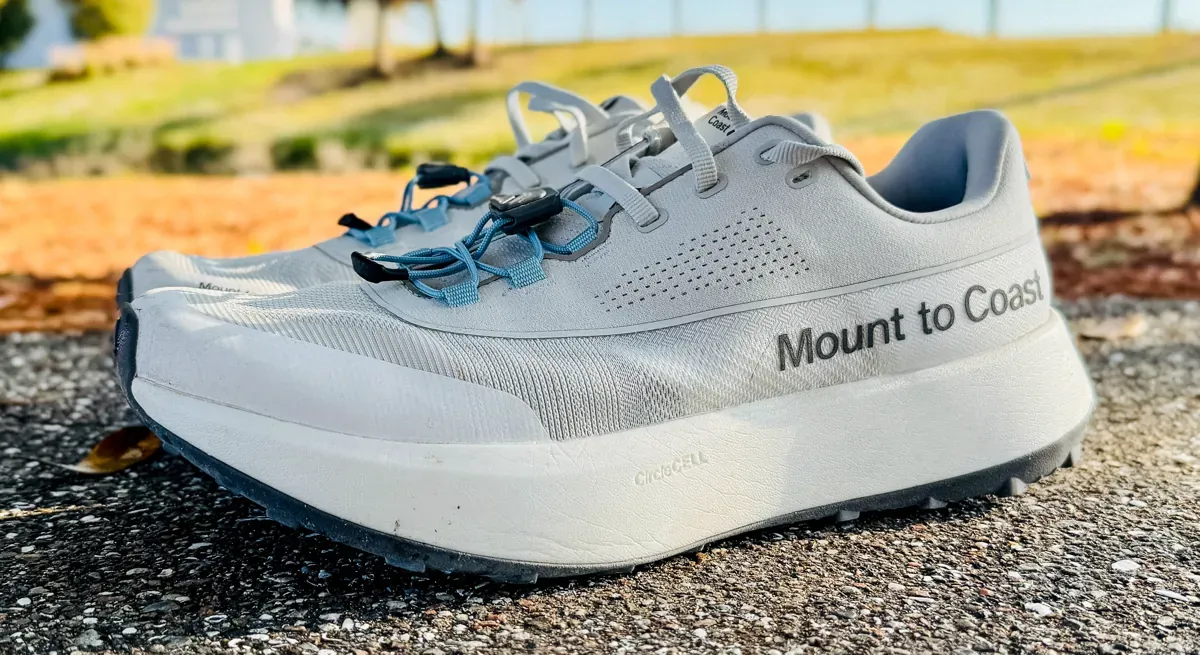
This isn't always a problem because some modern trail shoes ride beautifully on road. The Mount To Coast H1, the Altra Experience Wild 3, and the Nike ACG Pegasus Trail all transition to pavement smoothly because their midsoles are tuned closer to road specs and their lugs are shallow. More aggressive shoes (Hoka Speedgoat, Saucony Peregrine, anything with a serious rock plate) feel noticeably firmer and more deliberate on tarmac.
Heavier weight costs you energy
Most trail shoes weigh somewhere between 9 and 11 ounces in a US men's size 9. Most road shoes sit between 7.5 and 9.5 ounces. That's not a huge gap, but it's enough to feel after a few miles, especially at faster paces.
Research generally suggests roughly a 1% increase in energy cost per 100g of added shoe weight. In practical terms: you'll be a touch slower at the same effort, or a touch more tired at the same pace. For an easy run, you won't really notice. For a tempo or long road effort, you probably will.
When trail shoes on the road are completely fine
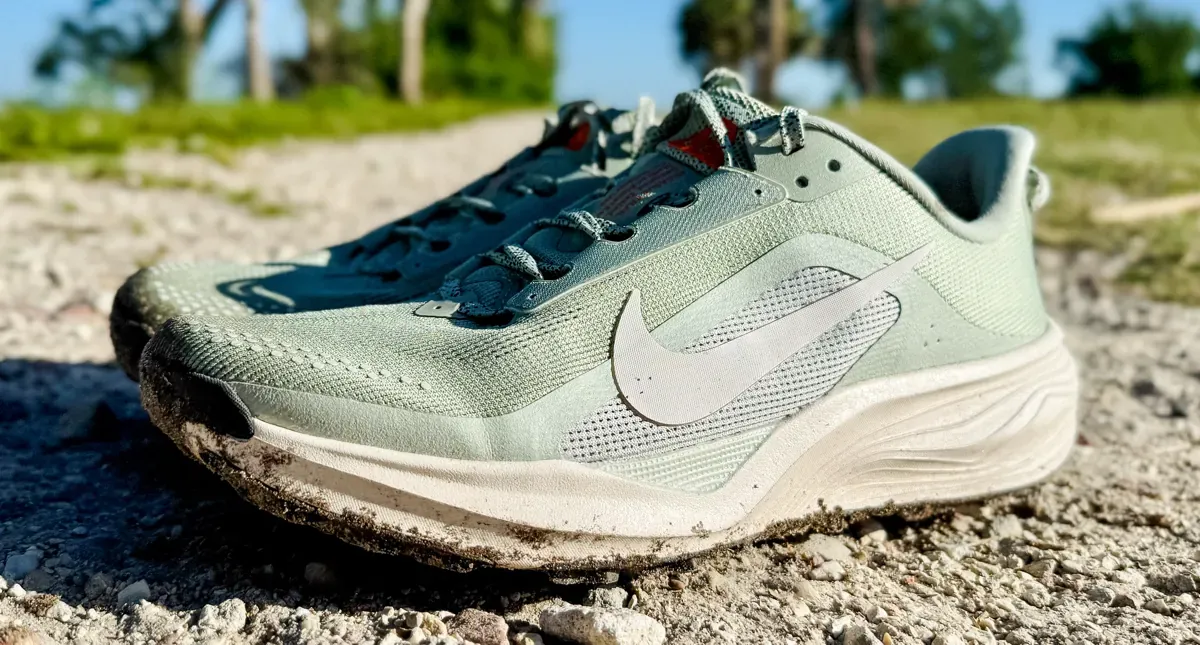
Plenty of scenarios where I genuinely don't bother changing shoes:
Pavement-to-trail connectors. If your run starts and ends with road but the middle is dirt, run the whole thing in trail shoes. The road sections aren't long enough to matter for wear or comfort.
Easy recovery runs on mixed surfaces. If you're running easy and you'd rather not own two pairs, your trail shoes will handle it.
Wet, icy, or rough urban surfaces. Trail shoe traction is genuinely useful in winter or on poorly maintained pavement. I've run through ice and wet leaves in trail shoes that would have had me skating in road shoes.
Travel. One pair of shoes for a trip means trail shoes most of the time, since they handle everything road shoes do plus more.
Lighter, lower-lug trail shoes. Anything with shallow lugs and a softer ride (the Nike ACG Pegasus Trail, KEEN Roam, Altra Experience Wild 3, On Cloudsurfer Trail, the Mount To Coast H1) is genuinely fine for full road runs in the 3-6 mile range without compromise.
When you should wear road shoes instead
A few situations where trail shoes are the wrong tool:
Tempo runs, intervals, or anything fast on pavement. You're paying for that extra weight and stiffness with every stride.
Long road runs, half marathons, marathons. Road shoes are built for repeated impact on hard surfaces. You'll be fresher in the legs and you'll be kinder to your trail shoes.
Track sessions. The lugs on a trail shoe interact poorly with track surfaces and can damage both.
Treadmill running. Heat and friction from the belt accelerate outsole wear faster than asphalt does, and the belt's smooth surface gives you nothing to grip.
Long-term road training where you don't want to wreck your trail shoes. This one is just practical. Trail shoes are expensive. If you're putting hundreds of road miles a month through them, you're going to replace them faster than you should.
The road-to-trail hybrid solution
The most useful category for runners who do both is the road-to-trail hybrid. These shoes use lower-profile lugs (usually around 3-4mm), road-tuned midsoles, and harder outsole rubber that can handle pavement mileage without disintegrating. They're not as good as a pure road shoe on road, or a pure trail shoe on technical singletrack, but they're more capable than either on mixed terrain.
The three hybrids I'd start with right now are the Altra Experience Wild 3, Mount To Coast H1, and Salomon Aero Blaze 4 GRVL, all ranked in my trail running shoe roundup; more on those below:
The Altra Experience Wild 3 ($150) is one of the most approachable hybrids out there. EGO P35 midsole, 4mm drop, roomy FootShape toe box, and the smoothest road-to-trail transitions in this price bracket.
Altra Experience Wild 3 review: a road-to-trail hybrid tested
The Altra Experience Wild 3 is a versatile hybrid trail running shoe with lively new midsole foam, a roomy fit, and confident grip across mixed terrain. Here’s what you need to know.
Alastair Dixon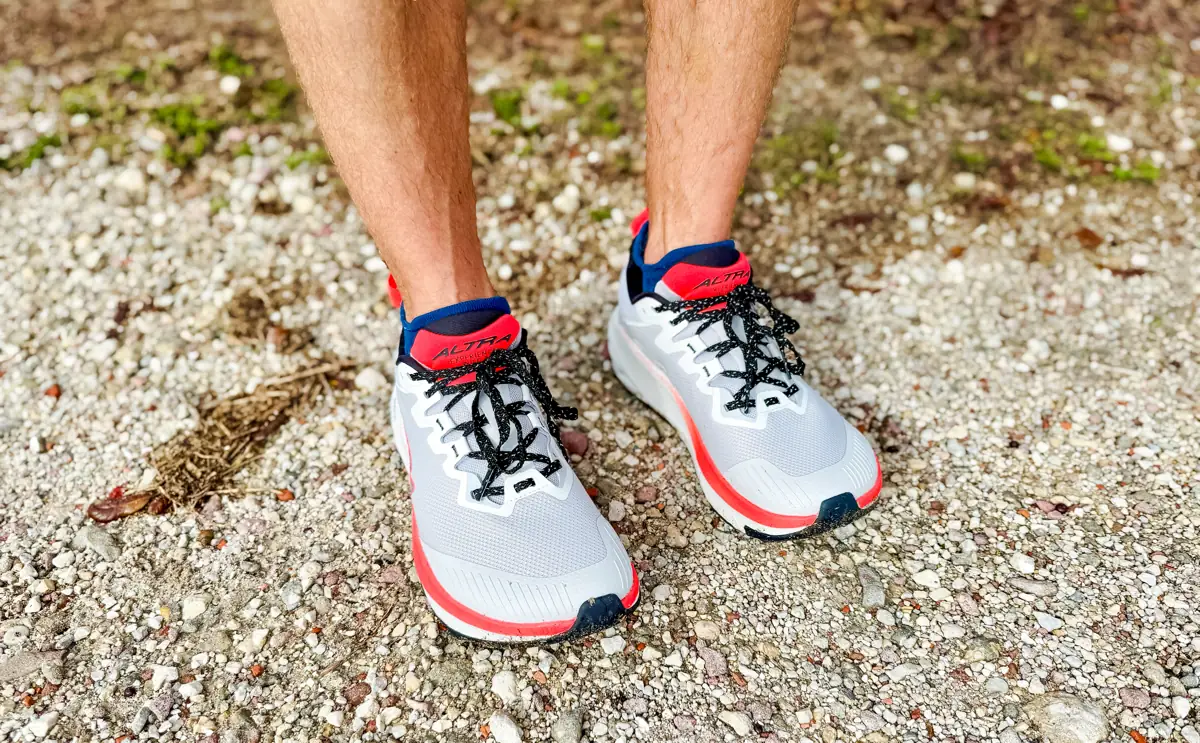
The Mount To Coast H1 ($160) leans more toward the road end of the hybrid spectrum and is excellent for runners whose mix is mostly pavement with light trail thrown in. CircleCELL midsole, 2mm lugs, very long-lasting build.
Mount to Coast H1 review: a modern hybrid with smooth road feel, excellent durability
A closer look at the CircleCELL™ midsole, VersaGrip™ outsole, and real-world performance that make the H1 a compelling door-to-trail option.
Alastair Dixon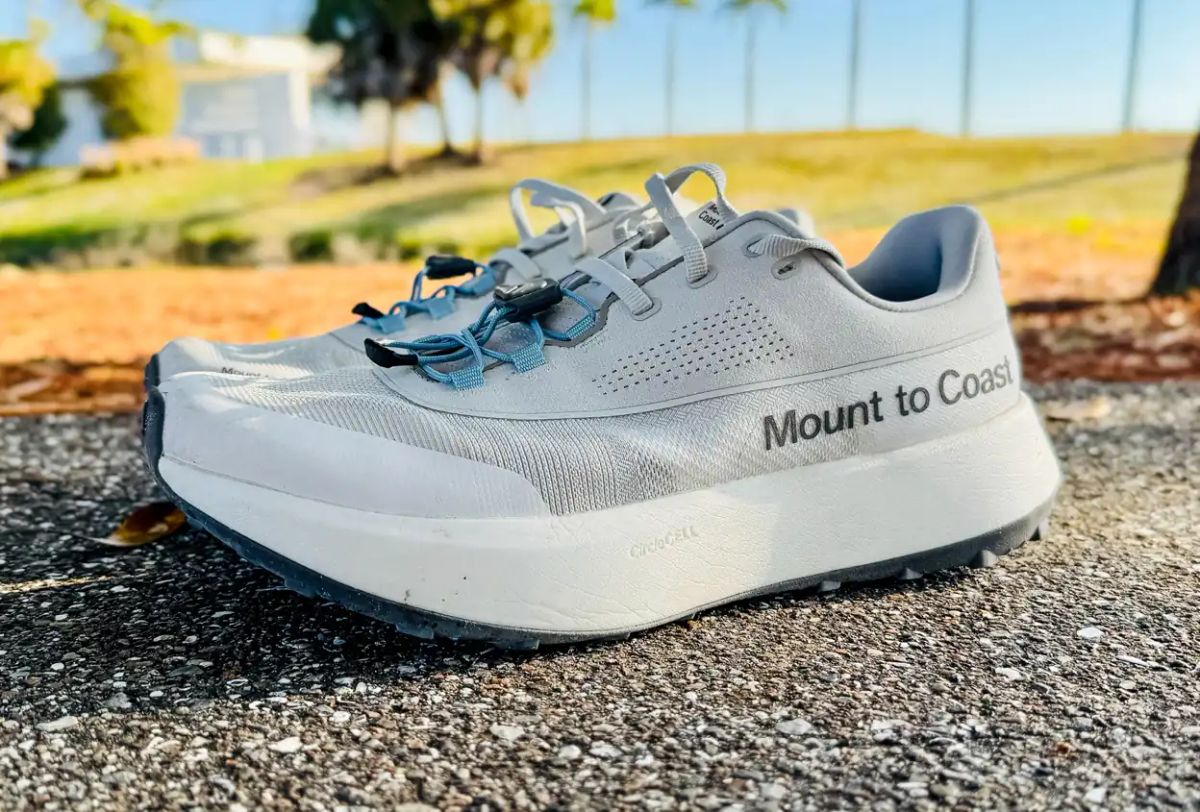
The Nike ACG Pegasus Trail ($155) is my current top road-to-trail pick. ATC 2.0 outsole, ReactX foam, wider toe box than the previous version, and it genuinely feels like a 50/50 shoe across surfaces.
Nike ACG Pegasus Trail review: best road-to-trail shoe?
The Nike ACG Pegasus Trail is a versatile road-to-trail running shoe with improved grip, more cushioning, and a wider fit. Here’s who it’s for and how it runs.
Alastair Dixon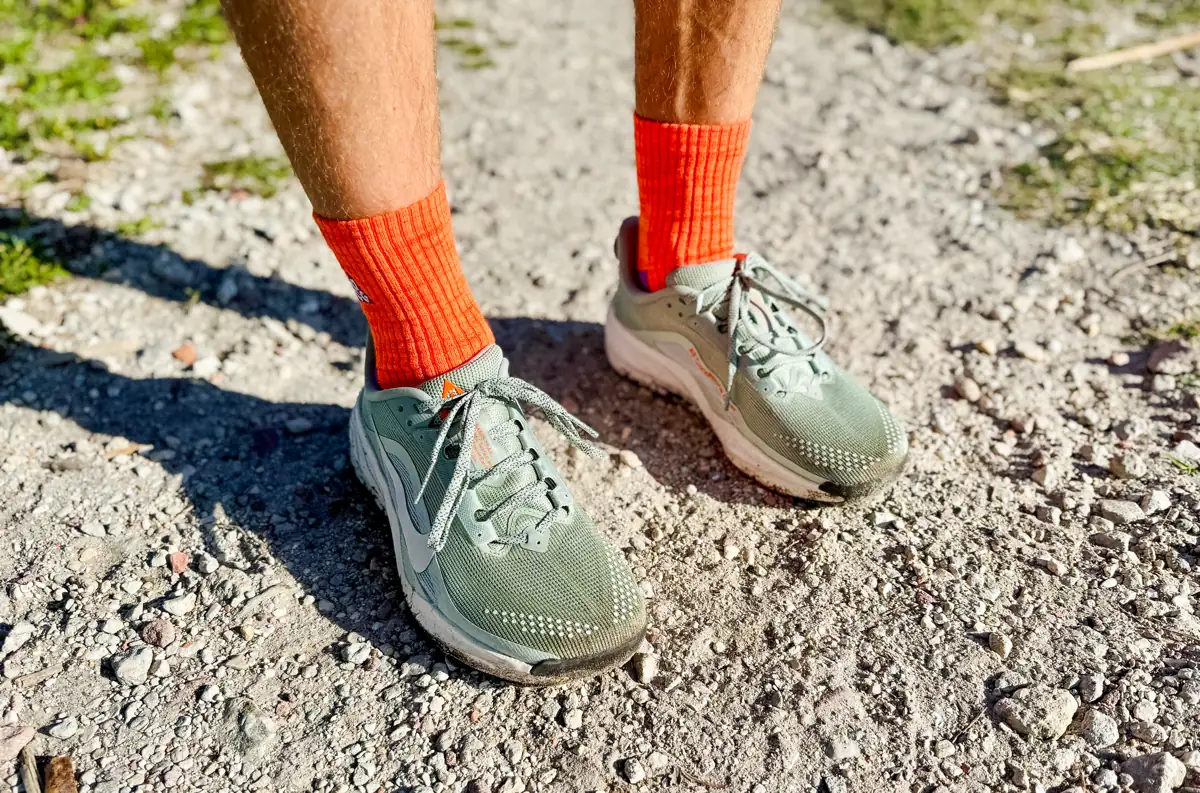
The KEEN Roam ($165) is the most underrated hybrid I've tested in the last year. QuantumFoam midsole, surprisingly versatile, durable build, and confident on both light trail and full road sessions.
KEEN Roam review: the most underrated road-to-trail hybrid I’ve tested this year
The KEEN Roam blends QuantumFoam cushioning, confident traction, and all-day comfort into a durable shoe built for real-world road-to-trail running.
Alastair Dixon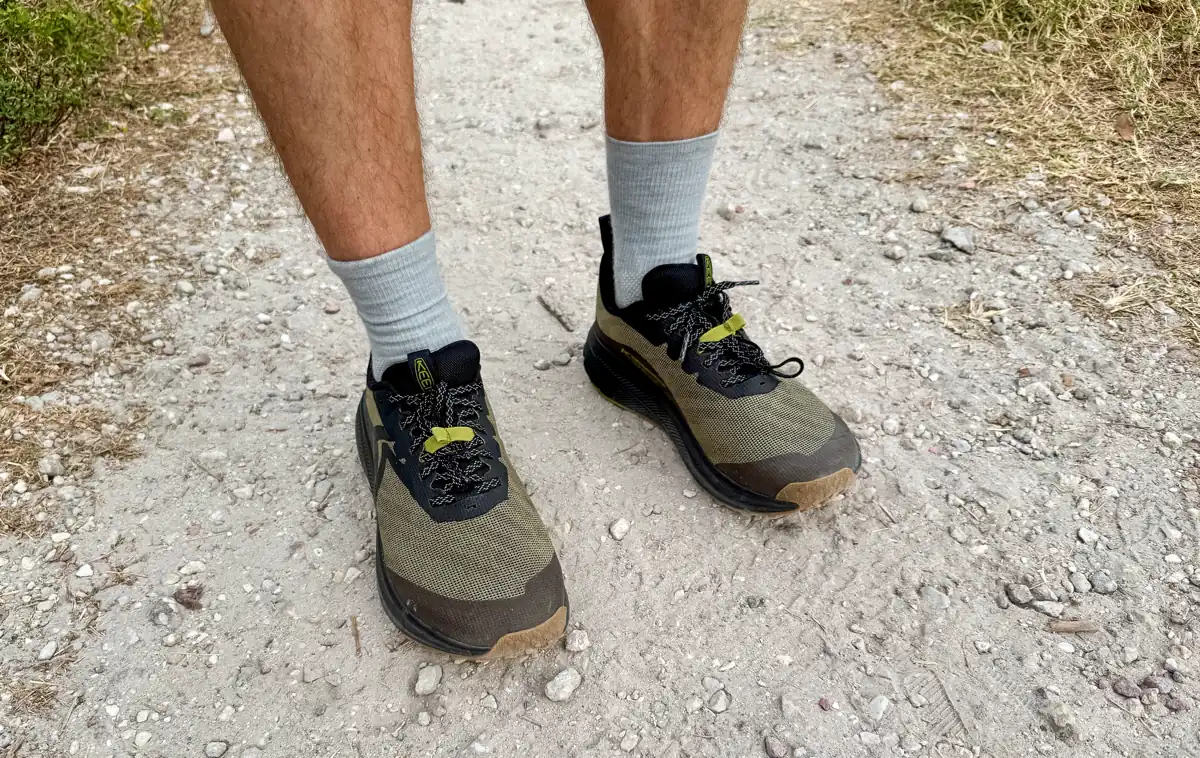
If you regularly run mixed surfaces and you're tired of owning two pairs of shoes that each handle half the route, this is the category to look at first.
How many road miles can my trail shoes handle?
A rough rule I use: if more than 30% of a given run is on pavement, I'd rather be in a hybrid or a road shoe. Below that, trail shoes are fine.
For total shoe lifespan, I treat road miles in a trail shoe as worth about 1.5 trail miles in terms of outsole and midsole foam wear. So if a trail shoe is good for 400-500 trail miles, mixing in regular pavement use brings that closer to 300-400 mixed miles before the lugs start losing their bite or responsiveness.
Watch for three signs: lugs visibly flattened or rounded off, traction noticeably degraded on the trails you know well, and whether you're shoes feel dead underfoot with no bounce. When any of those signs show up, that shoe's done as a serious trail tool, even if it still feels fine on pavement.
My verdict
Trail shoes on the road are fine. Not optimal, but fine. The internet has a tendency to make this feel more complicated than it is, with strong opinions about exactly what you can and can't do.
The reality, after years of rotating shoes across every surface combination, is that the rules are pretty simple, exercise caution and use your common sense.
For short road sections inside a trail-dominant run, don't bother changing shoes. For occasional easy road runs in lighter trail shoes, go ahead. For regular road training, fast workouts, or long road races, use road shoes. For everything in between, get a road-to-trail hybrid and stop worrying about it.
Shoes are tools. Match the tool to the job, and don't overthink it.
If you want to dig further: my best trail running shoes for hiking roundup covers the more rugged end of the spectrum, and my trail running vs road running comparison goes deep on the discipline differences.
If you haven't already, signup for our free newsletter, and subscribe to our YouTube Channel for more quality content like this. -Alastair
Written by

Subscribe to new posts
Gear that earns its place, outdoors and at home | Reviews, Roundups, News









Member discussion