
What is a via ferrata? A beginner's guide to the iron path
The viral photos make it look casual. Here's what the iron path really is, where it came from, and how to try your first one the right way.

If your feed served you photos this week of a certain pop star clipped to a cliff face for her birthday, you've seen a via ferrata, even if the caption never used the words.
The photos make it look casual; big views, big smiles, a cable conveniently out of frame. And that's exactly the part worth slowing down on, because a via ferrata is one of the best days out in the mountains you can have, and it is absolutely not a hike with a handrail.
I've made my way through via ferrata and cabled sections many times (no clips because I'm usually mountain running), on the Chamonix VK and on trail running adventures in the Italian Alps, and it's some of the most fun I've ever had in the mountains.
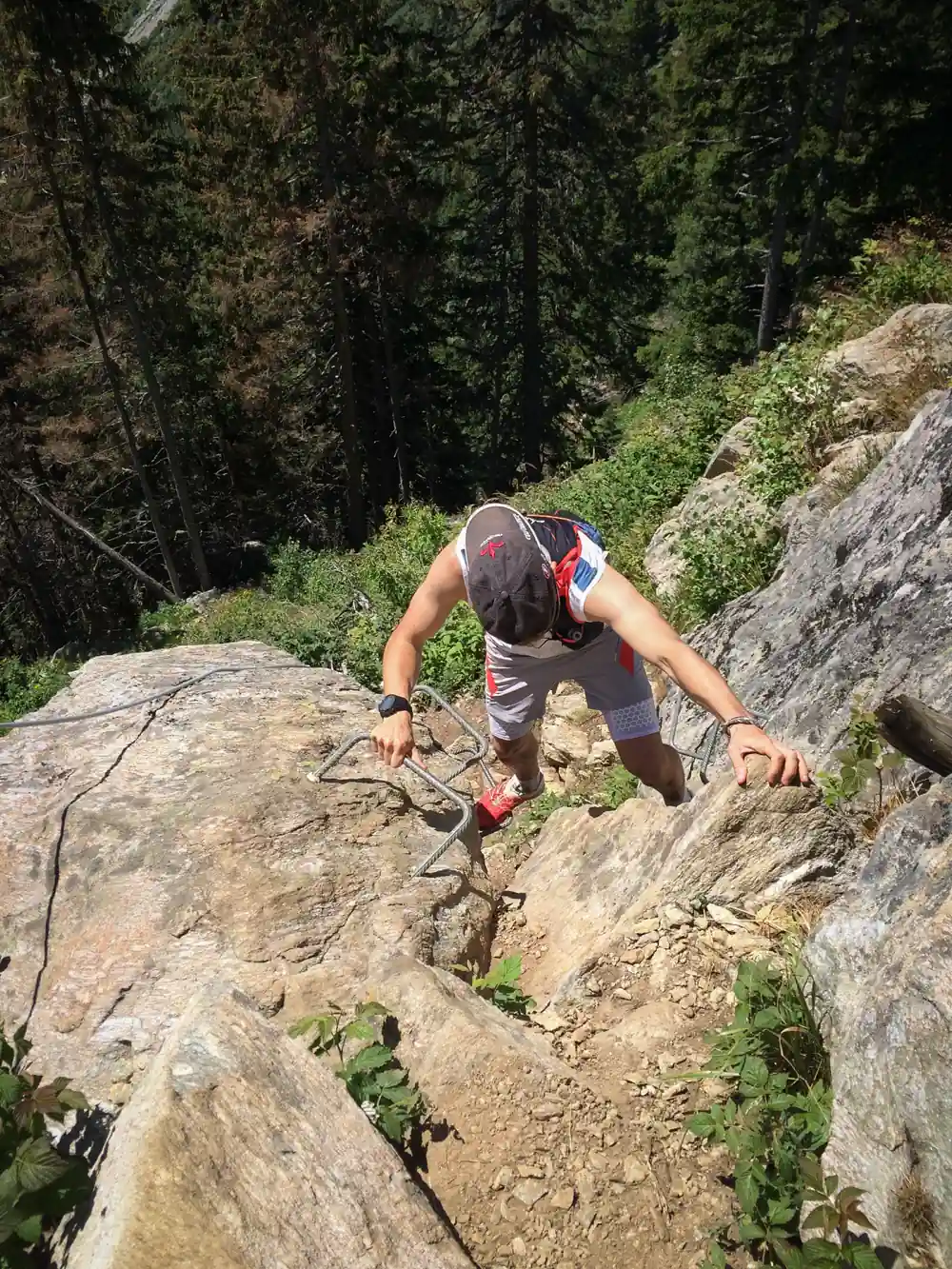
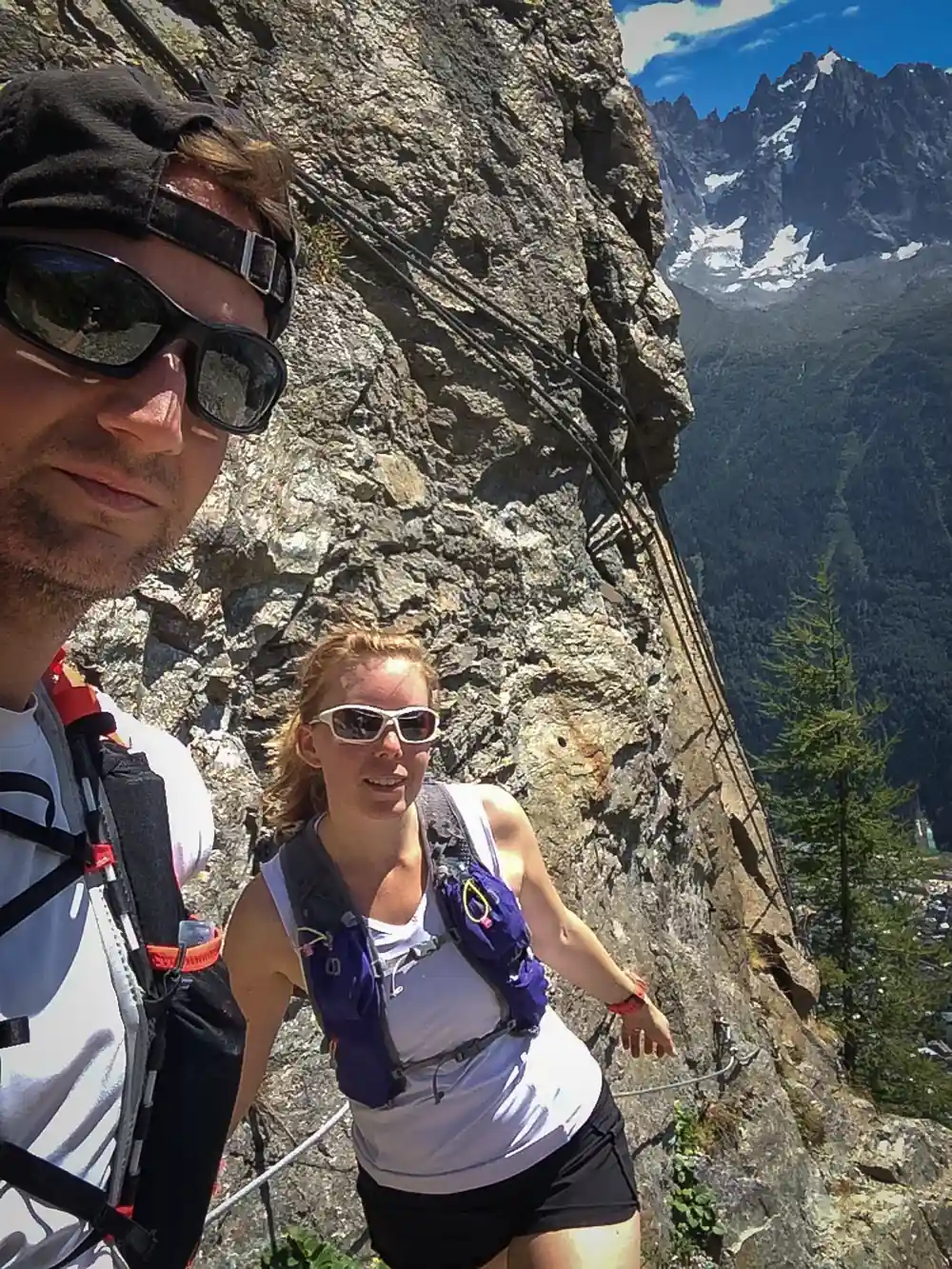
So here's what a via ferrata actually is, why it's so tempting, and the right way to try your first one.
If you purchase through links in this article, we may earn a small affiliate commission. For exclusive content, our newsletter, and more perks, become a member, it's free! -The Trail & Kale team ✌🏼
What a via ferrata actually is
Via ferrata is Italian for "iron path", and that's a literal description.
The UIAA (the international climbing federation) defines it as a route that is permanently fitted with equipment fixed to the rock: steel cables, iron rungs, ladders, pegs, and sometimes full-on suspension bridges.
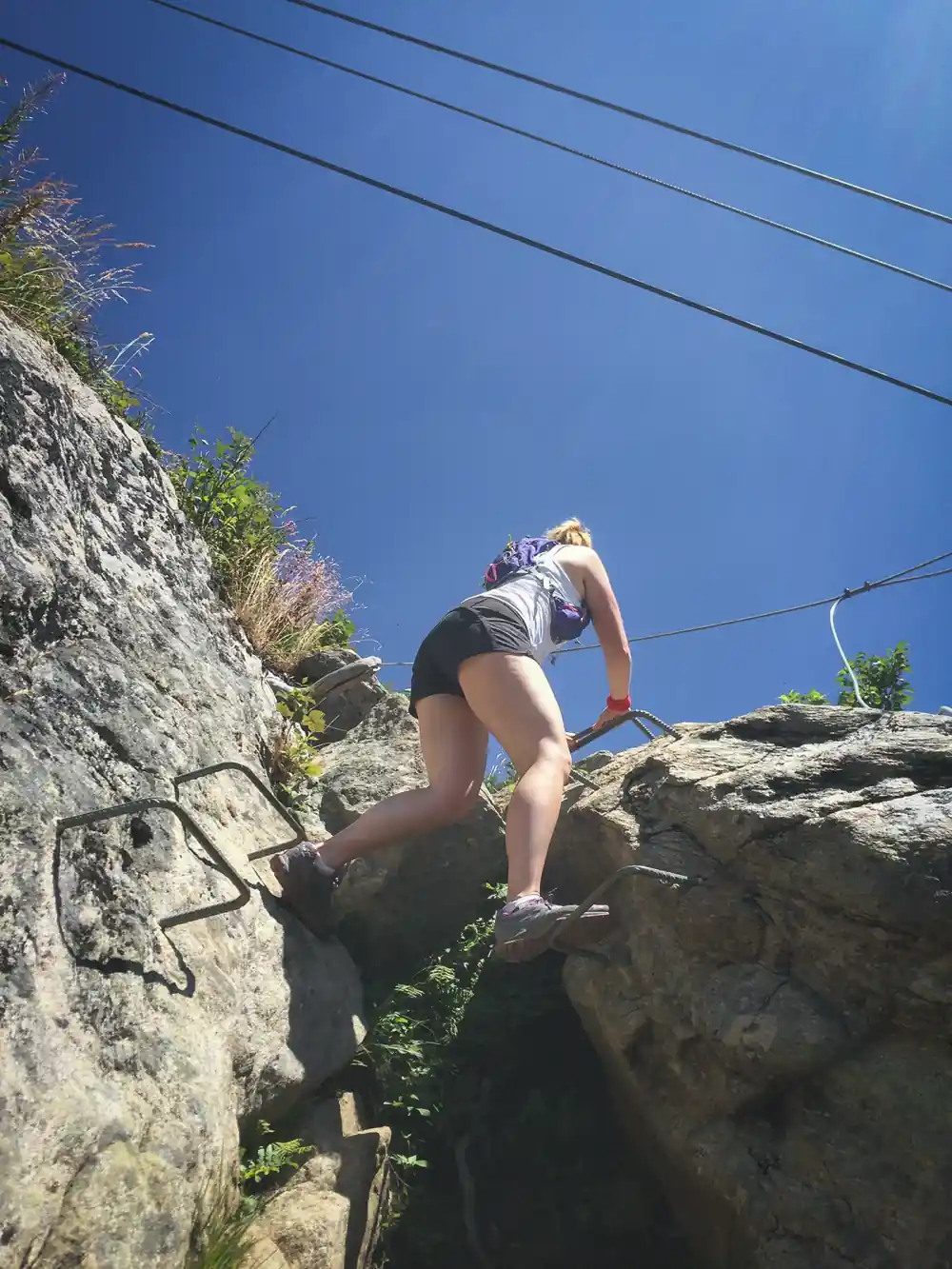
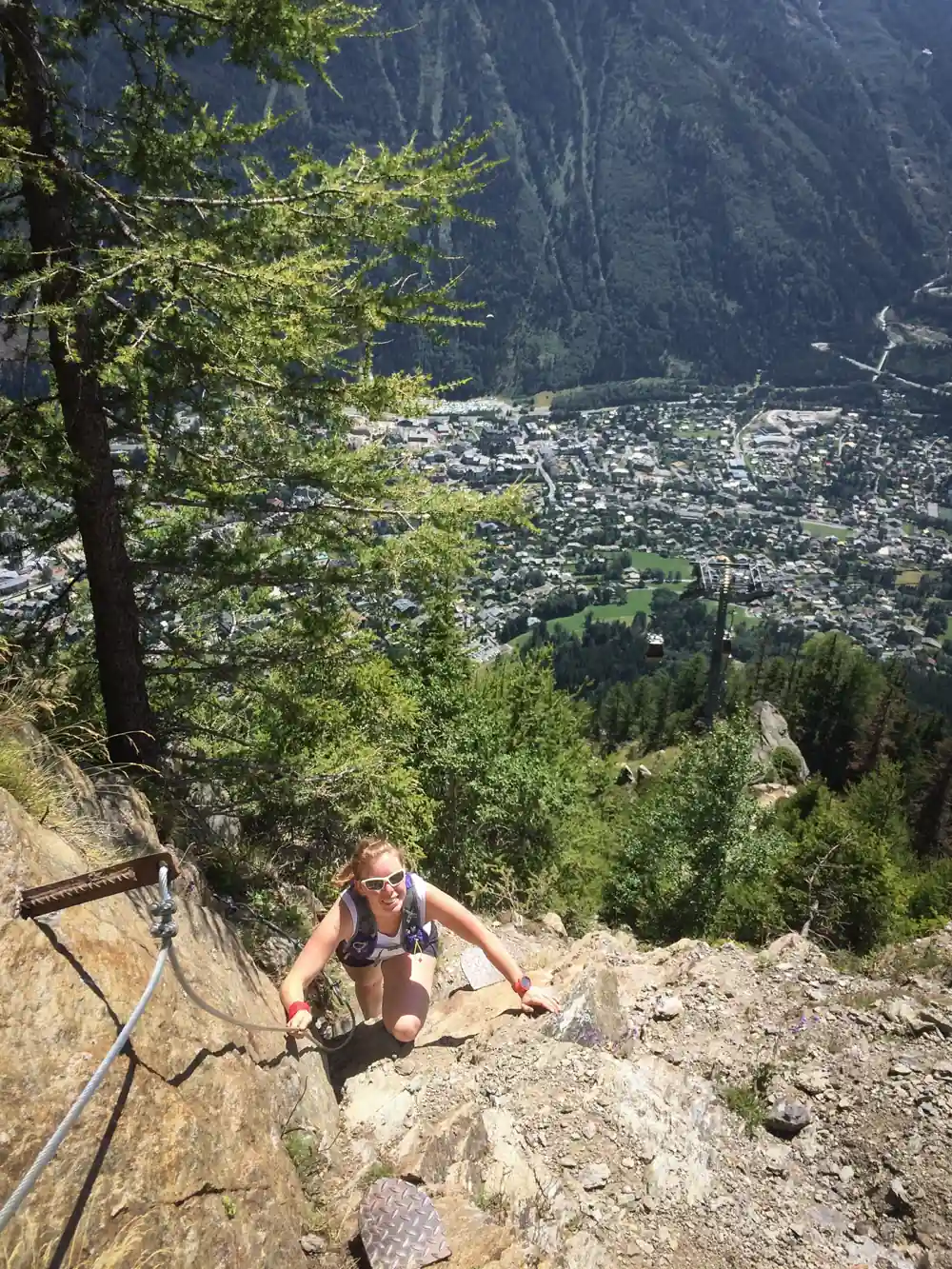
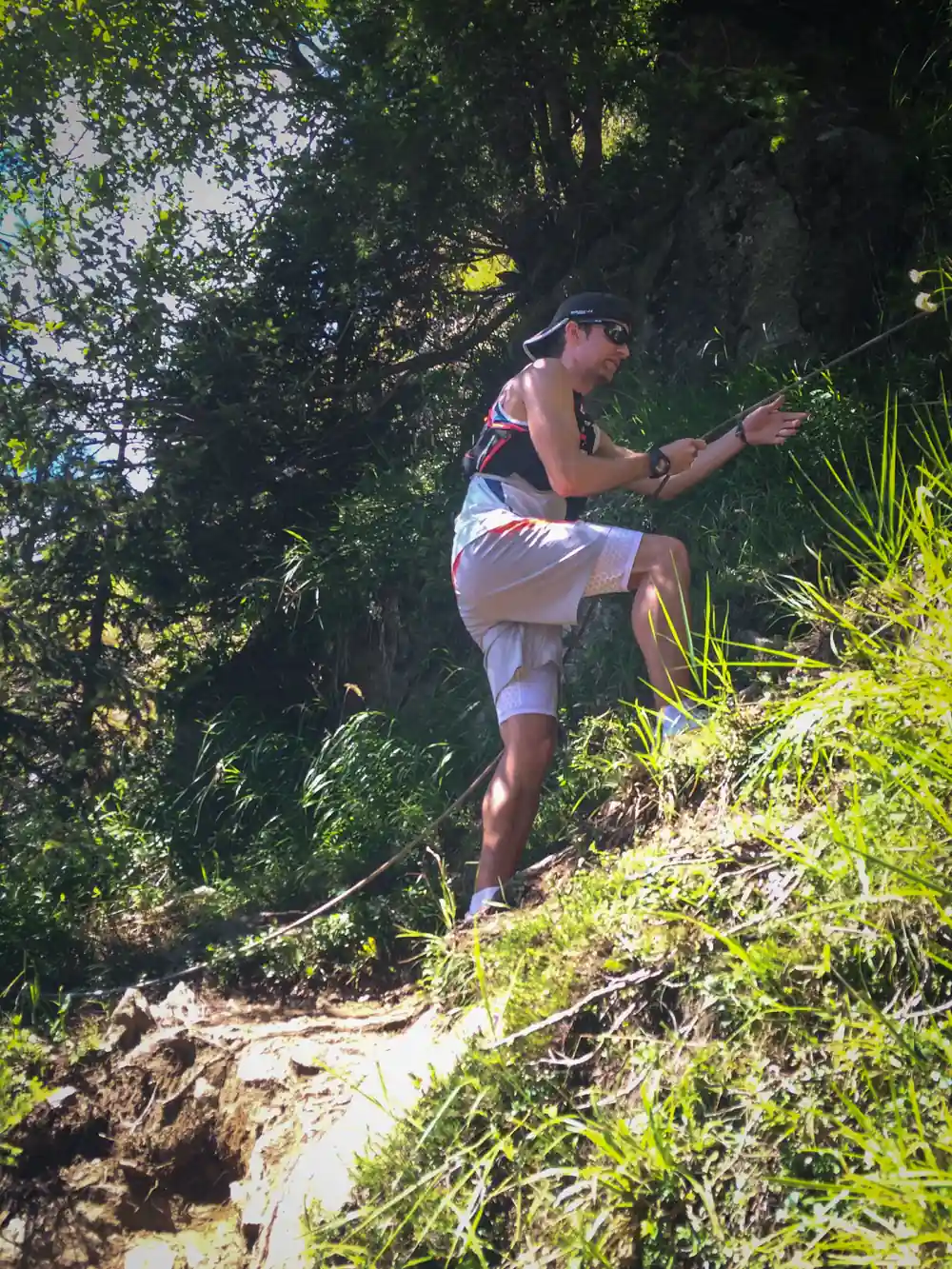
You usually wear a harness with a special two-armed lanyard, and you clip both of its carabiners onto the steel cable.
As you climb, you move one carabiner at a time past each anchor point, so you are always attached to the mountain by at least one arm.
That system is what makes via ferrata its own thing. It's not hiking, because you're on genuinely steep, exposed rock where a slip without the cable would be catastrophic. And it's not rock climbing, because the iron does the technical work for you; you don't need to read the rock or place protection.
It sits in the gap between the two, which is exactly why people love it; real alpine exposure and summit positions that would otherwise take years of climbing experience to reach.
Where the iron paths come from
The idea is older than you'd think.
One of the earliest protected routes went up the Dachstein in Austria in 1843, built under the direction of scientist Friedrich Simony with iron pins, carved footholds, and ropes.
The big expansion came during World War I, when Italian and Austrian troops fought along a mountain front in the Dolomites. To move soldiers and supplies across high alpine terrain, both sides fixed permanent lines and ladders to the rock faces.
After the wars, those military routes were restored for recreation, with steel cables replacing ropes and metal rungs replacing wooden ladders.
Today Italy alone has hundreds of routes (more than half of them in the Dolomites), Austria has even more, and purpose-built via ferratas have been spreading across the US, from Colorado to state parks and resorts in the East and South.
Why it's so tempting (and the part the photos hide)
I get the appeal completely, because it's the same thing that keeps me going back, even if it's just to experience it on the Chamonix VK. Via ferrata compresses the best part of alpinism (position, exposure, that electric feeling of being somewhere birds live) into a day that a fit beginner can do with a guide.
What the glamorous photos hide is the discipline underneath. The cable only protects you if you're clipped to it correctly, every meter, the whole way. The gear only protects you if it's the right gear. And the mountain still brings everything it brings: weather, loose rock, tired legs, and no easy way off halfway through.
The US routes are refreshingly blunt about this. The Ouray Via Ferrata rules in Colorado open with "This activity can kill you! Inexperienced users should hire a Professional Guide". That's not drama; it's the correct framing for an activity like this.
The gear that keeps you alive
For serious via ferrata routes, three items, all certified, no substitutions:
- A climbing helmet (certified to the mountaineering standard, EN 12492). Rockfall is a real hazard on popular routes.
- A climbing harness (EN 12277).
- A via ferrata lanyard, formally an energy-absorbing system (EN 958). This is the one piece people don't know they need. A fall on a via ferrata can be short but violently abrupt, and a plain sling or leash transmits enough force to cause serious injury even over a small distance. A proper via ferrata set has a tear-out absorber that rips open progressively to soak up that energy.
This is why operators like Ouray explicitly ban improvised leashes made from climbing slings, and warn that non-certified gear "may result in death or serious injury".
The good news for your first time: you don't need to buy any of it. Guides and route operators rent certified kit, it's inspected regularly, and they'll fit it properly.
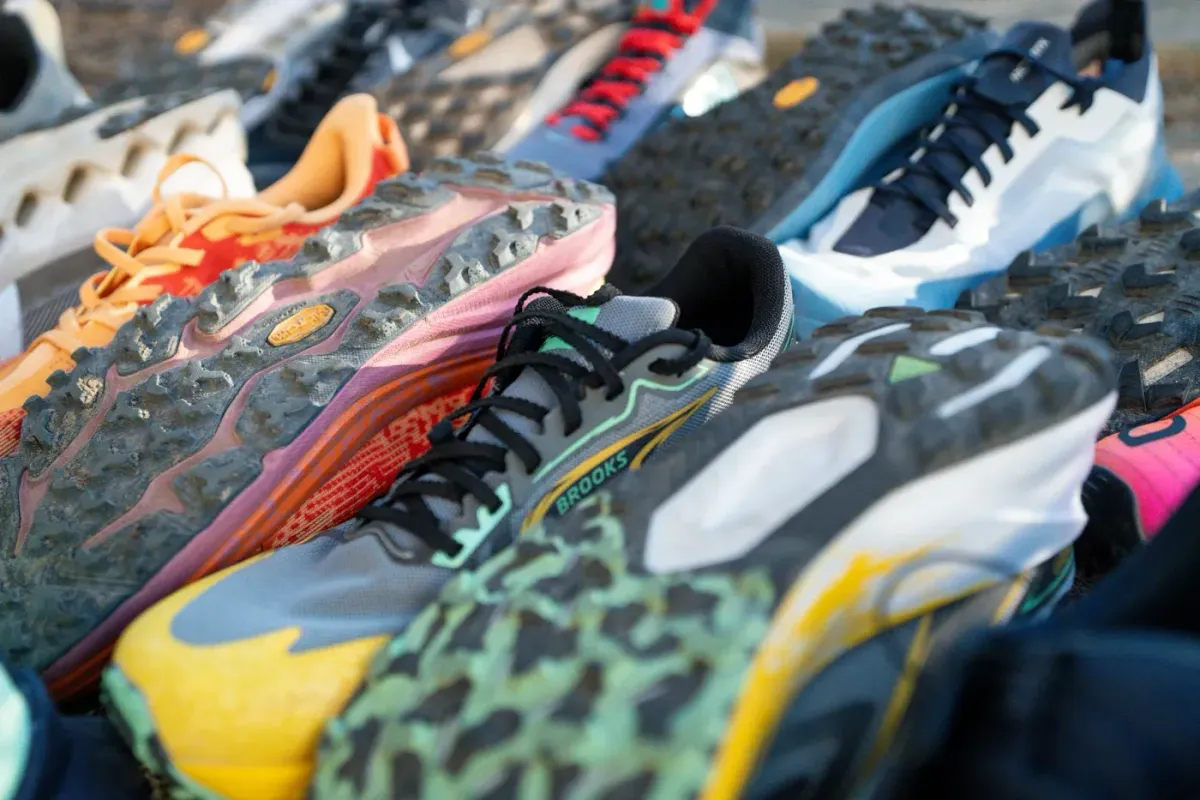
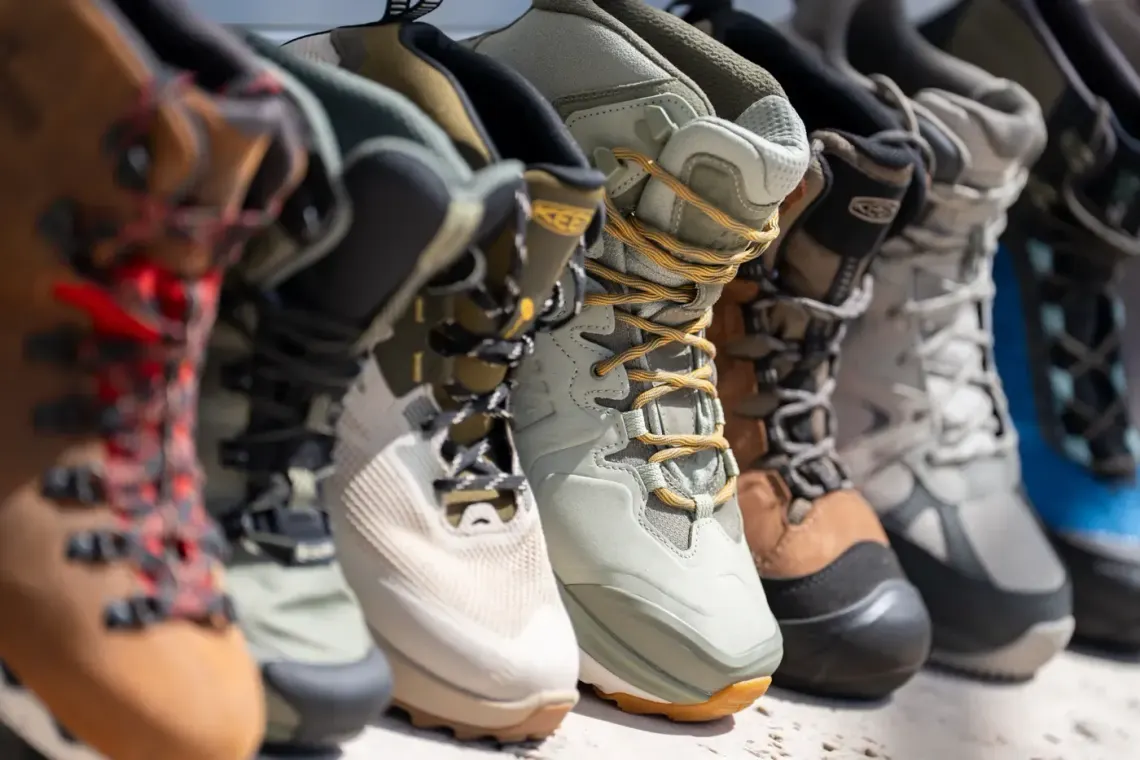
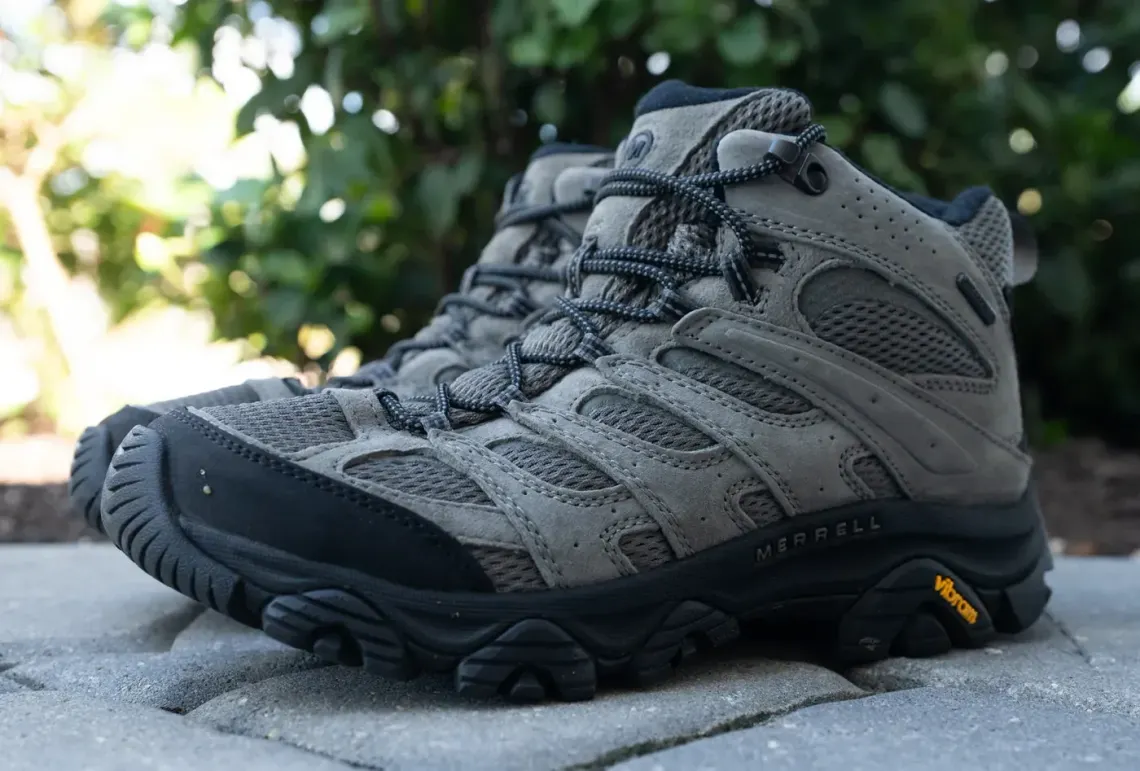
On your feet, grippy trail shoes are ideal for most beginner routes; my picks in my best trail running shoes roundup all fit the bill.
Best Trail Running Shoes 2026: 15 Tested Picks (Men & Women)
My picks across all-mountain, road-to-trail, ultra, trail racing, and women's, every shoe tested firsthand. Updated September 2026.
 Alastair Dixon
How to actually try your first via ferrata
Here's the simple version, and it's how I'd start anyone:
- Book a guided outing. Every serious operator says the same thing: beginners go with a guide. The guide handles route choice, weather calls, gear fit, and teaches you the clipping rhythm in the first ten minutes.
- Rent the certified kit from the guide or operator rather than improvising anything.
- Pick an easy route. Via ferratas are graded (the UIAA adopted the Italian scale, roughly A for easy through to seriously athletic). Your first should be firmly at the easy end; the views are just as good.
- Start early and respect the unpredictability of mountain weather. You're attached to a steel cable on exposed rock, which is nowhere to be when an afternoon thunderstorm arrives. Alpine routes above 1,000 meters carry weather warnings for a reason, and summer mornings are the classic window.
- Learn the one unbreakable rule: at least one carabiner on the cable at all times. Never both off. Routes also commonly limit each cable span to one or two people and ask you not to unclip to overtake.
Do it that way and your first via ferrata is one of the highest reward-to-skill days the mountains offer. The clip-clip rhythm becomes second nature faster than you'd expect, and by the first ladder you'll understand why people fly to the Dolomites just for this.
Let's close this out
A via ferrata deserves both halves of its reputation: it really is accessible, and it really can kill the unprepared. Those aren't contradictory; they're the deal.
Treat it like the mountain sport it is (guide, certified kit, easy route, early start) and you get the kind of day the viral photos only hint at. Treat it like a photo op, and you're the reason rescue teams stay busy.
If you've been curious since those photos crossed your feed; be curious. Book the guide. It's worth it.
FAQ
What does via ferrata mean?
It's Italian for "iron path": a mountain route permanently equipped with steel cables, rungs, ladders, and bridges fixed to the rock, which you clip into with a harness and energy-absorbing lanyard.
Is via ferrata dangerous for beginners?
It carries real risk, which is exactly why operators tell inexperienced climbers to hire a guide. With a guide, certified equipment, an easy route, and good weather, it's a well-managed risk that fit beginners handle every day in the Alps.
Do I need climbing experience to do a via ferrata?
No, and that's the point: the fixed cable and rungs replace technical climbing skill. You do need a head for heights, reasonable fitness, and a guide for your first outings.
What gear do you need for via ferrata?
Three certified items: a climbing helmet (EN 12492), a harness (EN 12277), and a via ferrata energy-absorbing lanyard (EN 958). Rent them from the operator or guide for your first routes; never improvise with slings.
If you haven't already, signup to our free newsletter, for more quality outdoor content like this. -Alastair
Written by

Subscribe to new posts
Gear that earns its place, outdoors and at home | Reviews, Roundups, News










Member discussion