
The UTMB Index just got its biggest update in 15 years, here's what changed and why it matters
New parameters for gradient, altitude, and race competitiveness, plus a full five-year recalculation and the first transparency campaign since 2010

If you're working toward a UTMB qualifying race, or you've ever looked at your UTMB Index score and wondered exactly how it's calculated, this week's announcement from Chamonix is worth your attention.
UTMB Group has just rolled out a significant update to the UTMB Index, the performance scoring system that underpins entry qualification for UTMB races worldwide.
It's the most substantial evolution of the model since the Index launched in 2010, developed through working groups with ten trail running stakeholders, professional athletes, and a representative panel of beta testers. And for the first time since launch, UTMB is also publishing a detailed explanatory note on how the model actually works; a transparency move that's long overdue.
What the UTMB Index is, briefly
The UTMB Index is a performance score, running from 0 to 1,000 points, that reflects how well you've run across trail races. It's recognized by more than 7,000 races worldwide, covers more than three million runners, and draws on a database of over ten million recorded results.
Your personal UTMB Index is a weighted average of your best race scores from the past three years. More recent and higher-scoring results carry more weight. A single race score is calculated by modeling what your finishing time should have been based on your history in comparable events, then comparing that prediction against what you actually ran.
"Do better than expected, score higher."
For anyone working through how to qualify for UTMB, the Index is the backbone of the whole system; it's not just a number, it's what determines which race categories you're eligible for.
How To Qualify For UTMB: Your Easy-To-Follow Guide To Making It To The Start Line
From Running Stones to Race Index, here’s how to navigate the UTMB entry process like a seasoned pro.
 Alastair Dixon
Why the model needed updating
Trail running has changed considerably since 2010. The sport has grown rapidly, and the gap between a fast-advancing elite and a much larger recreational base has widened significantly. Not to mention factors like there being more challenging races with high elevation in the World Series catalogue now.
That structural shift was beginning to strain the statistical model in a specific way. The widening spread between top performers and the pack was causing top-end scores to be slightly attenuated, meaning the fastest performances weren't being fully reflected in the Index.
In plain terms: elite runners were being slightly undersold by the numbers, and certain race formats (fast and runnable courses, high-altitude events, races with very competitive front-of-field dynamics) weren't being assessed with enough precision.
What's actually changed
The core statistical model hasn't been replaced; the same fundamental methodology applies. What's been added are three new parameters:
Gradient is now factored in more precisely, allowing the model to better assess faster, more runnable courses versus technical mountain terrain. A flat-ish 50K and a high-mountain ultra shouldn't be assessed the same way, and now they aren't.
Maximum altitude is incorporated directly, recognizing that physiological performance at elevation is genuinely different from sea level racing. High-mountain formats now have a fairer weighting. I appreciate this one particularly after racing Big Bear, and Speedgoat (two high elevation races in the US).

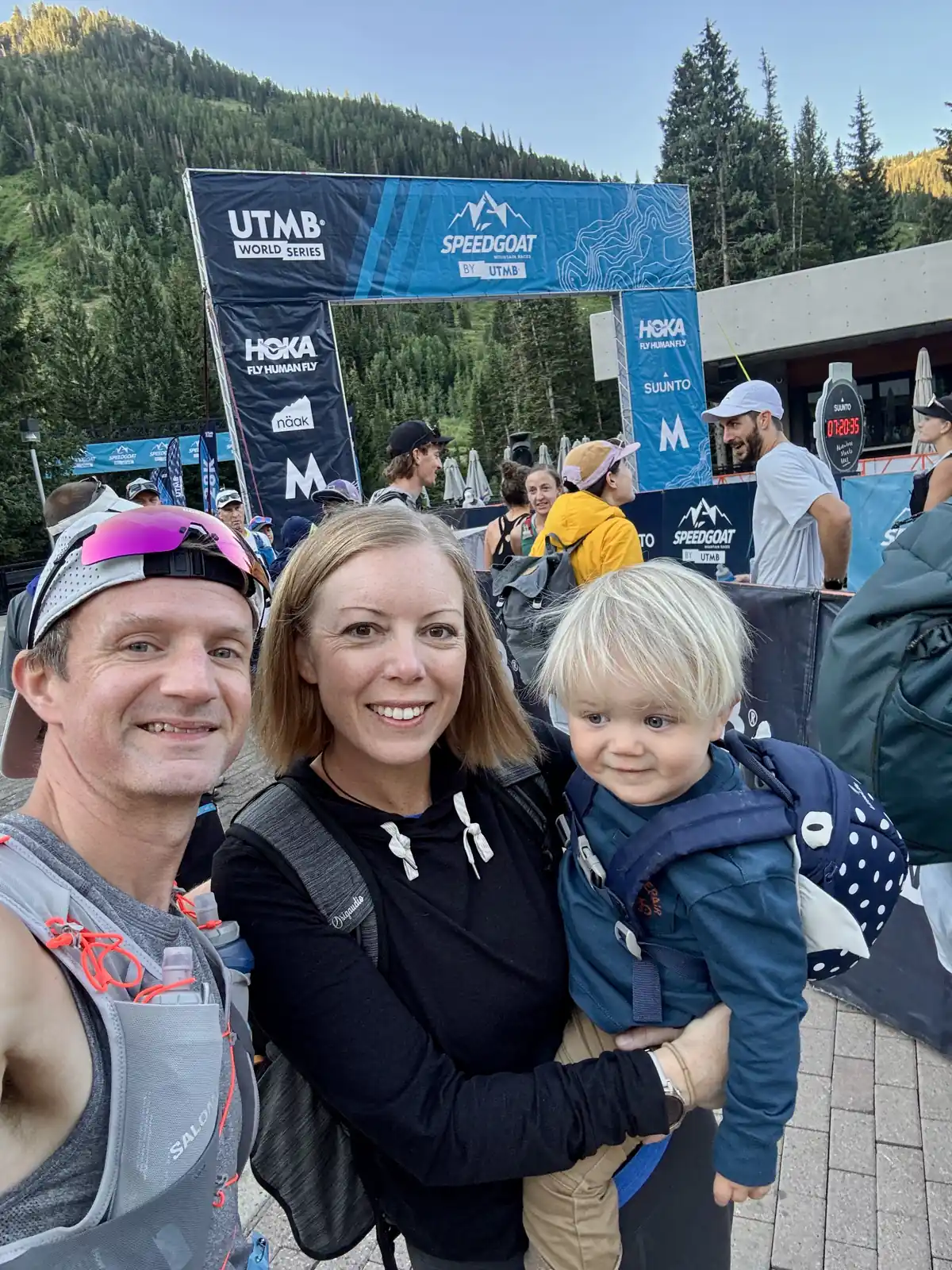
Big Bear 50k (left), Speedgoat 30k (right)
Competitive dynamics at the front gets its own index, calculated from the gaps between the top ten finishers, weighted by position and adjusted for total race duration. A five-minute gap between first and second means something very different on a two-hour trail race versus a 20-hour ultra, and the model now accounts for that.
A tightly-bunched elite field signals a high-stakes, high-effort race; a scattered one may signal less competitive depth. Both situations now influence how everyone's scores in that race are assessed.
AI has been used in the development of these enhancements, according to UTMB's Head of Athlete Services Adrian Vincent, who described the update as leveraging recent technological advances to make the tool both more reliable and more representative.
Your score may have changed, but probably not by much
To ensure consistency across the board, UTMB has recalculated every score from the past five years using the updated framework. If your Index number looks slightly different, that's why.
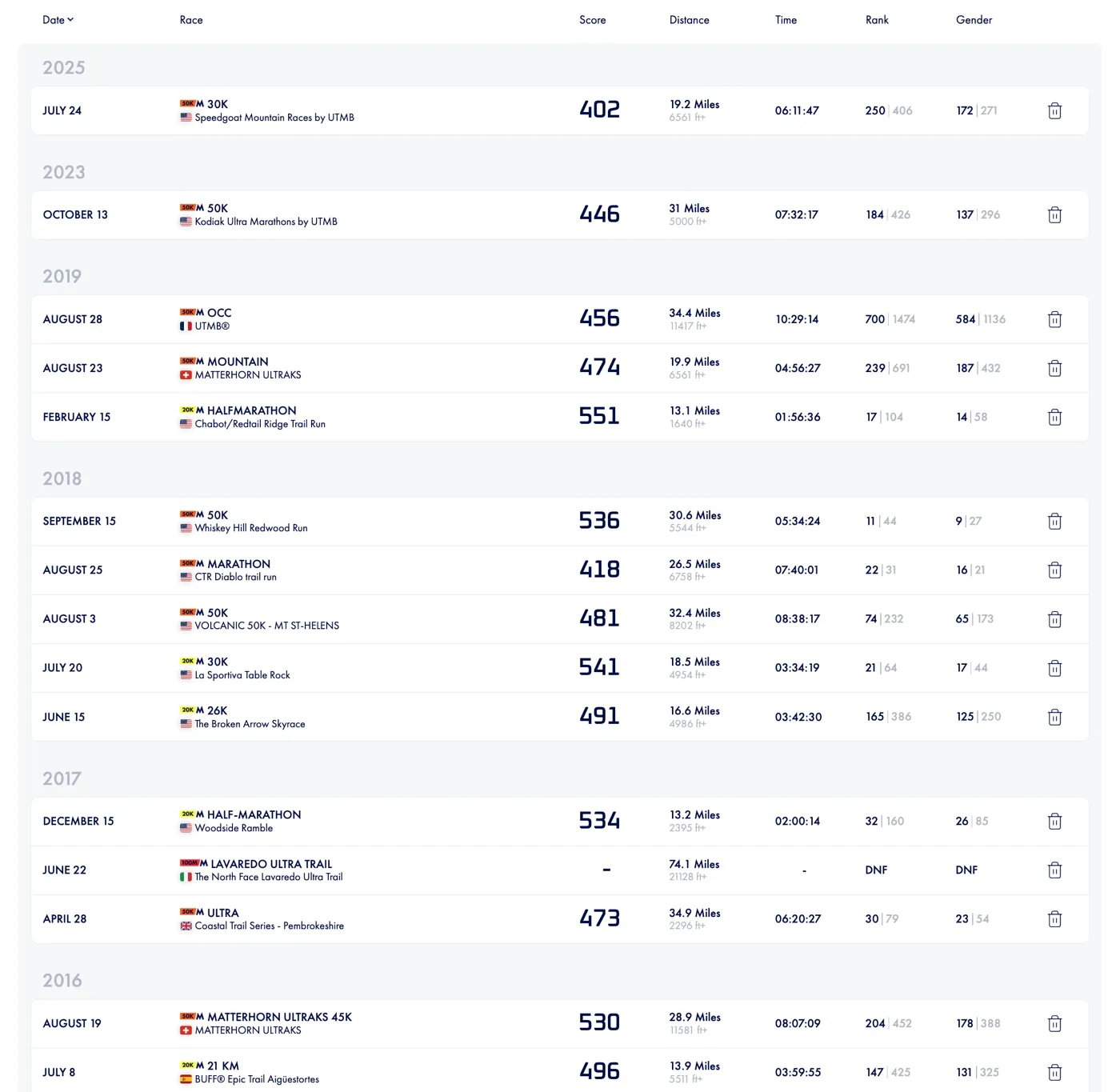
Average variations are around 2%, so most runners will see marginal shifts rather than dramatic changes but it's worth checking your profile on utmb.world.
What it means if you're chasing qualification
For most recreational runners building toward a UTMB World Series entry, the practical impact is modest; the ~2% average adjustment isn't going to move you across a qualification threshold unless you're right on the edge of one.
But the new parameters do mean that high-altitude races and fast, competitive courses will now generate scores that more accurately reflect what it actually took to run them. If you've been targeting those kinds of events specifically for points, that's a modest tailwind.
The bigger picture is that the Index is now a more honest instrument, which matters as UTMB's qualification system becomes increasingly central to how races worldwide are structured and valued.
For a deeper look at how the score is actually calculated, including a detailed anatomy of the model's logic, UTMB has published a thorough explainer on Medium, and a CCC 2024 case study showing the model in action. Both are worth reading if you want to understand more than just the headline numbers.
And if all of this has you dreaming about Chamonix again — same.
Written by

Subscribe to new posts
Gear that earns its place, outdoors and at home | Reviews, Roundups, News













Member discussion