
Suunto Core 2 review: Suunto revived a legend, and mostly nailed it
The first true successor to the 2007 Suunto Core keeps the offline ABC tool watch formula, adds real durability and battery upgrades, and costs just $179. Here's who should buy it, and who shouldn't.

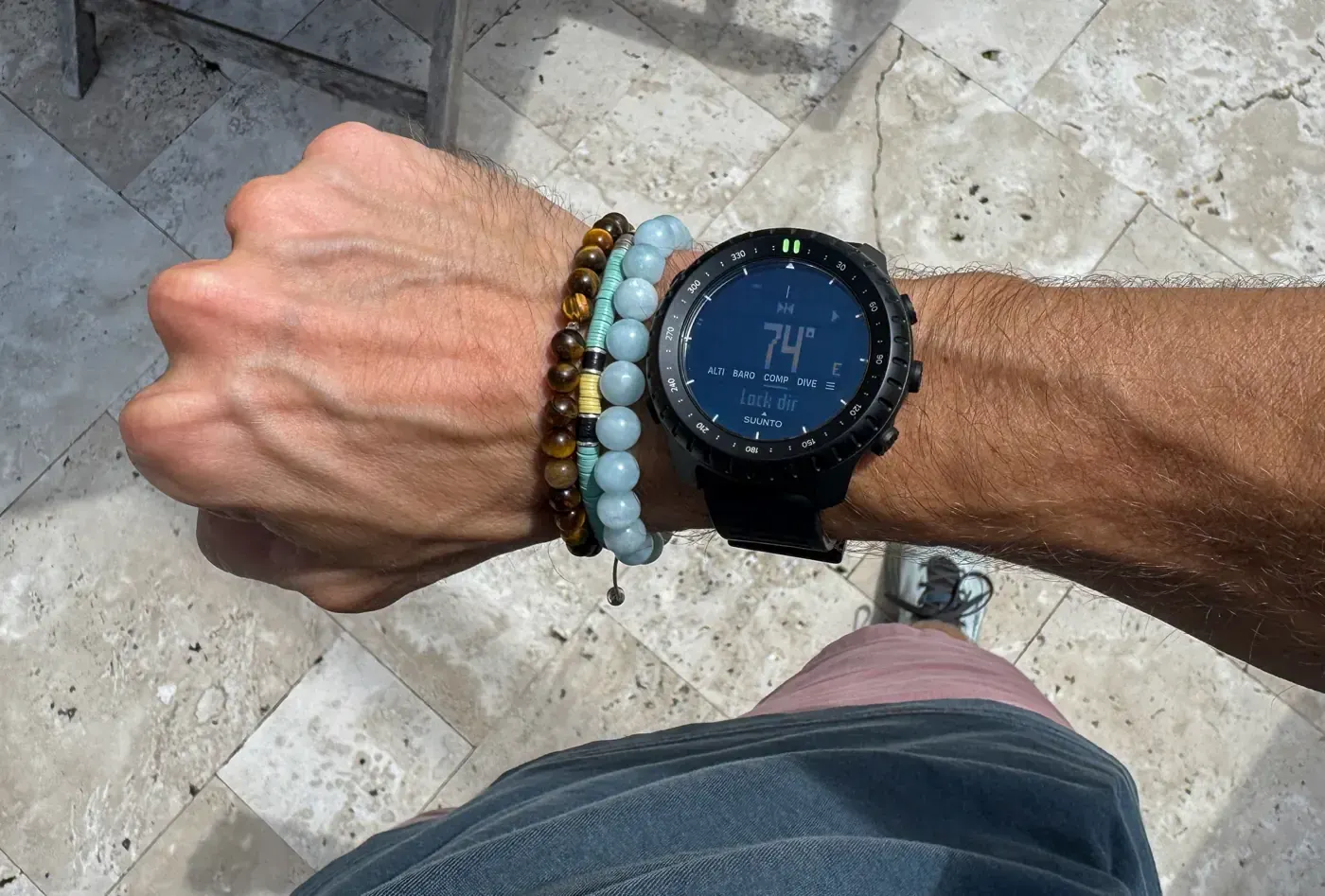
Nineteen years is a long time to wait for a sequel; but in this case, the Core 2, is worth the wait.
The original Suunto Core launched in 2007, and it became the default wrist tool for thru-hikers, anglers, overlanders, and anyone who wanted altitude, weather, and direction without a charging cable in their pack.
The new Suunto Core 2 is the first true successor to that watch, and Suunto has resisted every temptation to turn it into another GPS smartwatch.
Use code AFFR15TAK for 15% off your order!
There's no GPS, no heart rate sensor, no maps, and no notifications. It's a pure offline ABC watch (altimeter, barometer, compass) with a rotating steel bezel, a replaceable coin cell battery, and a $179 price tag.
That restraint is the whole story for me, and after wearing it for the last couple of months, I think it's the right call.
People’s mindset around wearable tech seems to be coming full circle. After years of wanting more connectivity, I think a lot of people are starting to get tired of being constantly connected; and of having another device that needs charging every day if you use an Apple Watch, or even every few weeks with something like a COROS.
This is a tool, not a training device, and it's a genuinely good one.
Launched globally on July 21, 2026, with US availability from August 11, it's already showing out of stock regularly on Suunto's site, which tells you something about demand for this kind of simplicity.
If you purchase through links in this article, we may earn a small affiliate commission.
Key specifications
- Price: $179 at suunto.com (Use code AFFR15TAK for 15% off your order!)
- Weight: 74 g with strap (Suunto's product deck lists the case alone at 56.5 g)
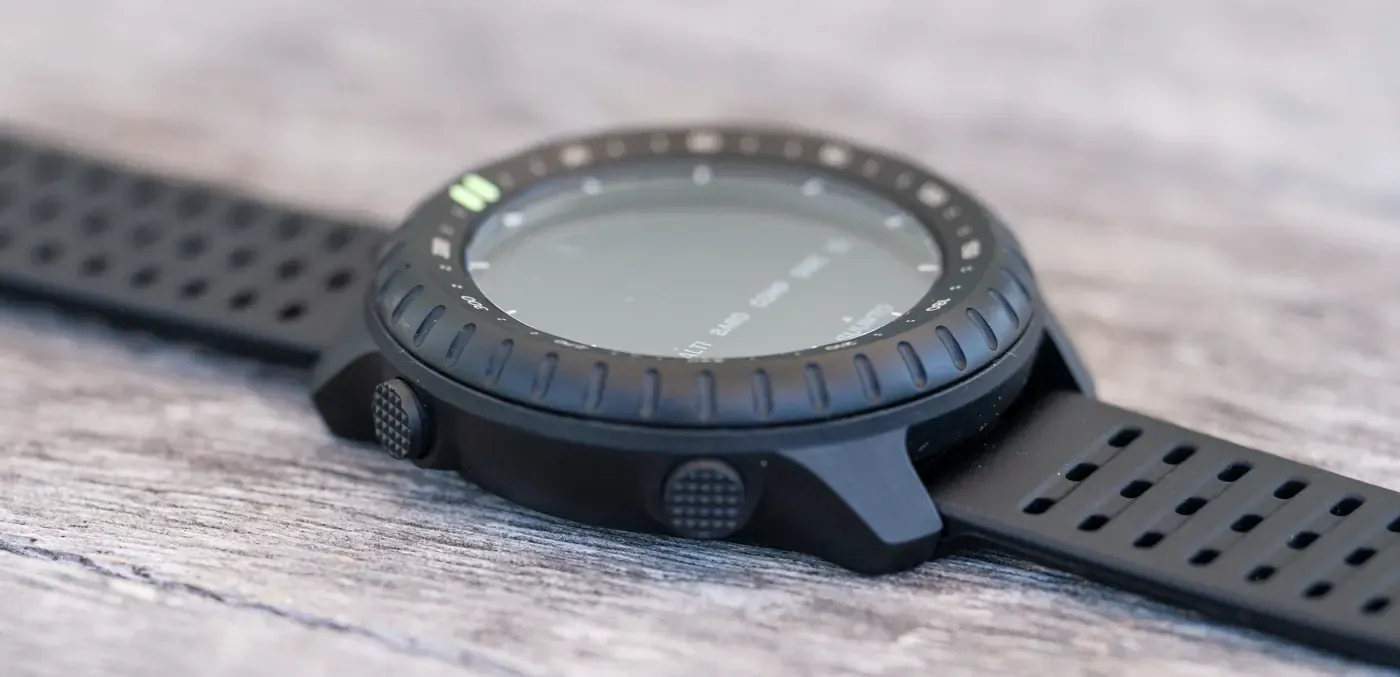
- Case: 49 × 49 × 14.84 mm, reinforced composite with a rotating stainless steel bezel
- Display: 1.3" high-contrast monochrome dot-matrix, 40% brighter than the original, Corning Gorilla Glass, switchable red/green backlight with raise-to-wake
- Sensors: Barometric altimeter, barometer, digital compass, thermometer
- Battery: User-replaceable CR3032 coin cell, up to 15 months in time mode
- Water resistance: 10 ATM / 100 m (up from 3 ATM on the original)
- Durability: MIL-STD-810H tested across seven procedures (heat, humidity, salt fog, solar radiation, low pressure, icing, dust)
- Extra attributes: Moon phase, sunrise/sunset times, daily step counter, dual time zones, storm alarm, dive/snorkeling mode (2 m max), Bluetooth for time sync and firmware updates only
Sizing and fit
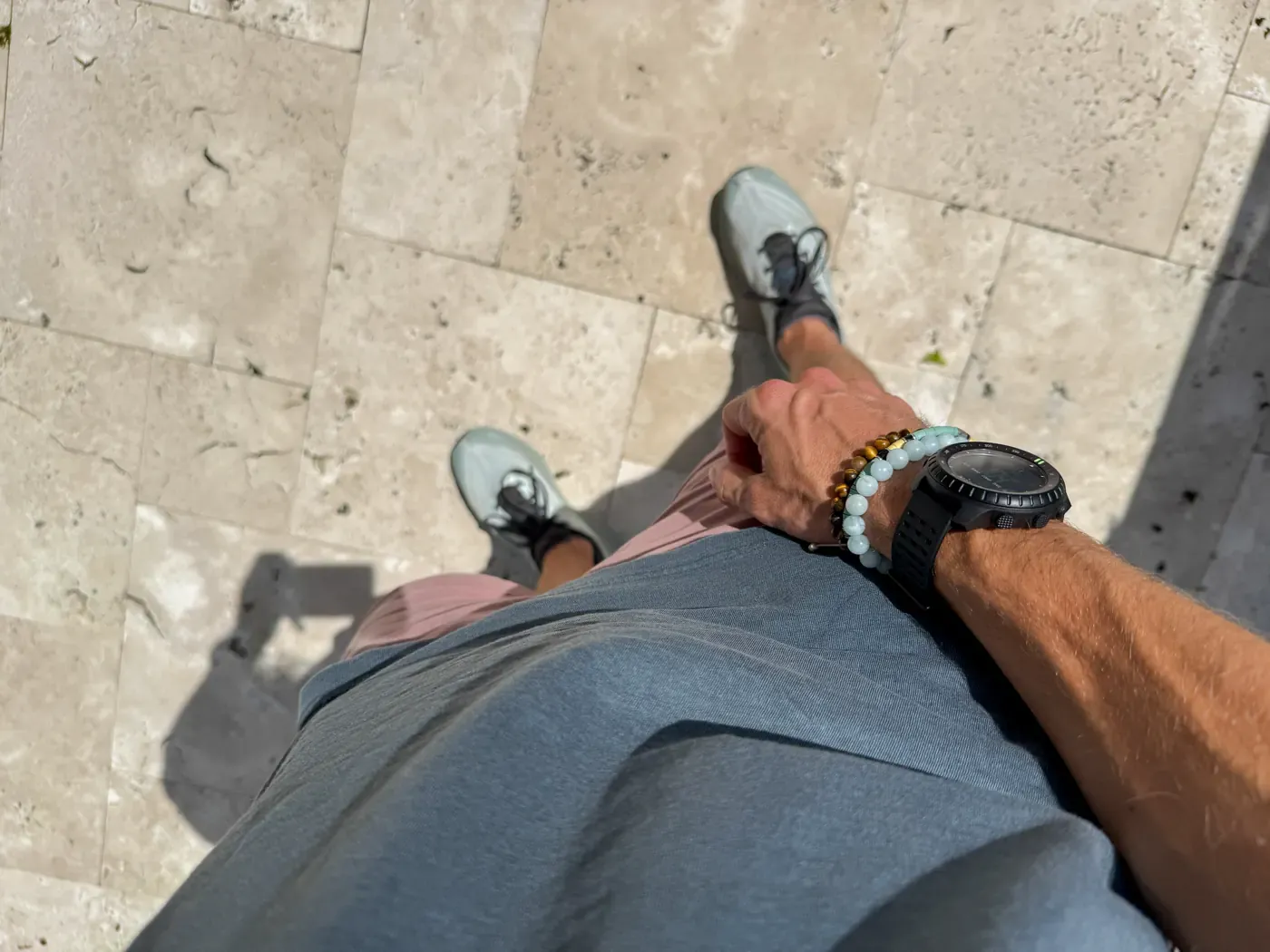
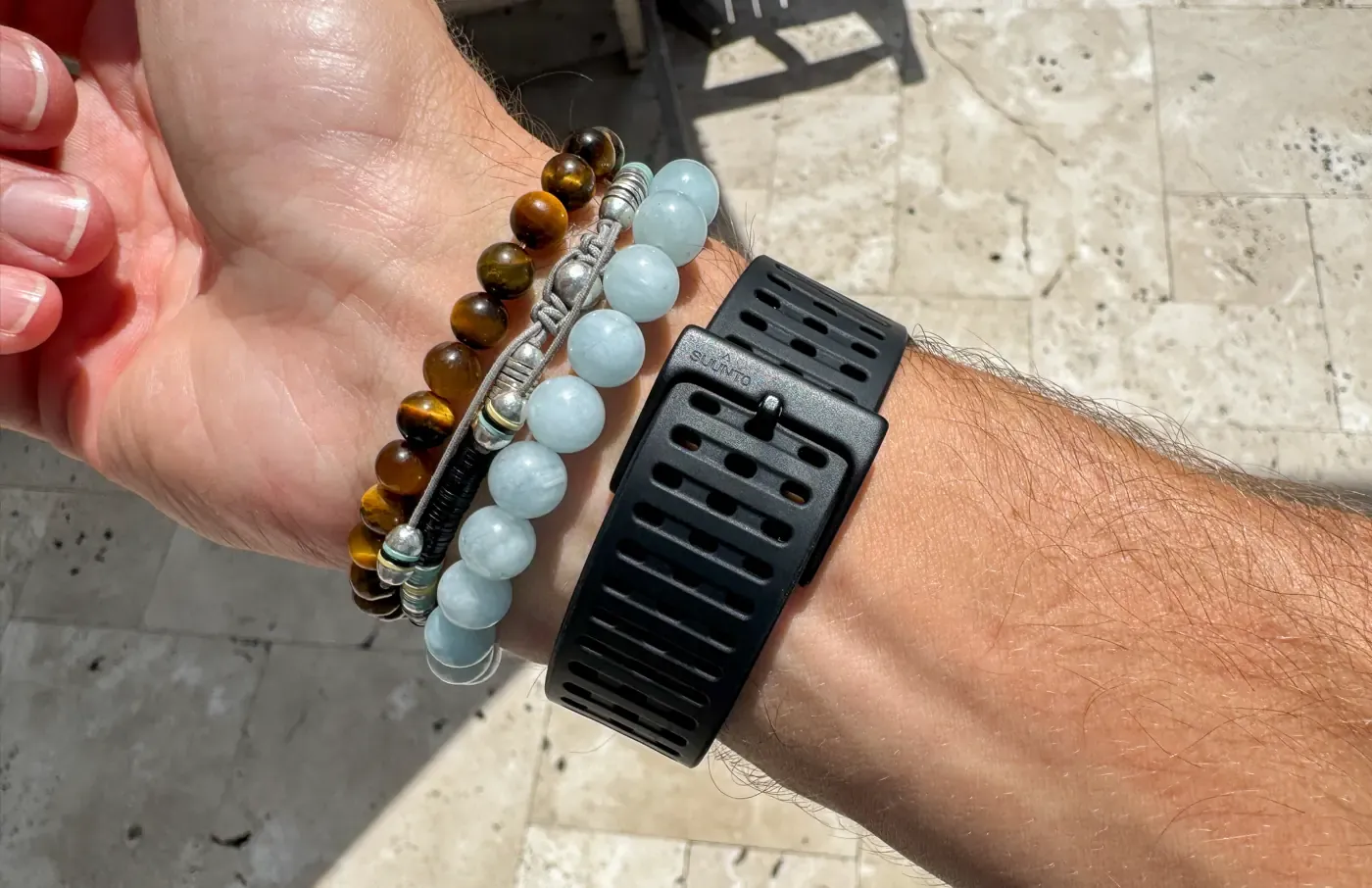
On paper, 49 mm sounds like a lot of watch, but the flat caseback and reasonable 74 g weight mean it wears much smaller than the dimensions may suggest.
The 22 mm silicone strap fits wrists from roughly 125 to 175 mm, and longer accessory straps are available if you need to wear it over a jacket cuff or wetsuit.
The five buttons are larger than I remember the original Core's being, with noticeably better tactile feedback, and that matters more than it sounds: this is likely a watch you'll be pressing with cold fingers, wet hands, or gloves on.
Performance review
Altimeter: accurate, but calibration is key to that accuracy
The barometric altimeter reads from –100 m to 10,000 m at 1 m resolution, with real-time altitude, total ascent and descent, and an altitude difference measurer for tracking vertical progress against a reference point.
Because it's purely barometric, with no GPS to cross-check against, calibration is on you. You set it to a known elevation from a topo map or trailhead sign, and you do that regularly.
In stable conditions at a fixed location, I have observed around 10 m of drift over 24 hours, which is typical of any pure pressure-based instrument. When a weather front moves through, that drift accelerates, so recalibrating at every known point along a route is the habit you should build with this watch. Setting your reference also takes longer than I'd like as the scroll increments are not very large.
The automatic alti/baro profile switching is smart in practice: it treats pressure changes as altitude when you're moving vertically and as weather when you're stationary.
One real limitation is that there's no user-accessible altitude or pressure history on the watch or in the app. Suunto's marketing highlights cumulative elevation tracking, but you can't export or review a log afterward, which stings a little if you like post-hike analysis.
This is the trade off for simplicity, and for that job I'd reach for the more capable Suunto Vertical 2 instead.
Suunto Vertical 2 Review: AMOLED Clarity Meets Epic Adventure Endurance
Offline maps, a real flashlight, and Always-On Display for uninterrupted data, makes this Suunto’s toughest, smartest watch yet.
 Alastair Dixon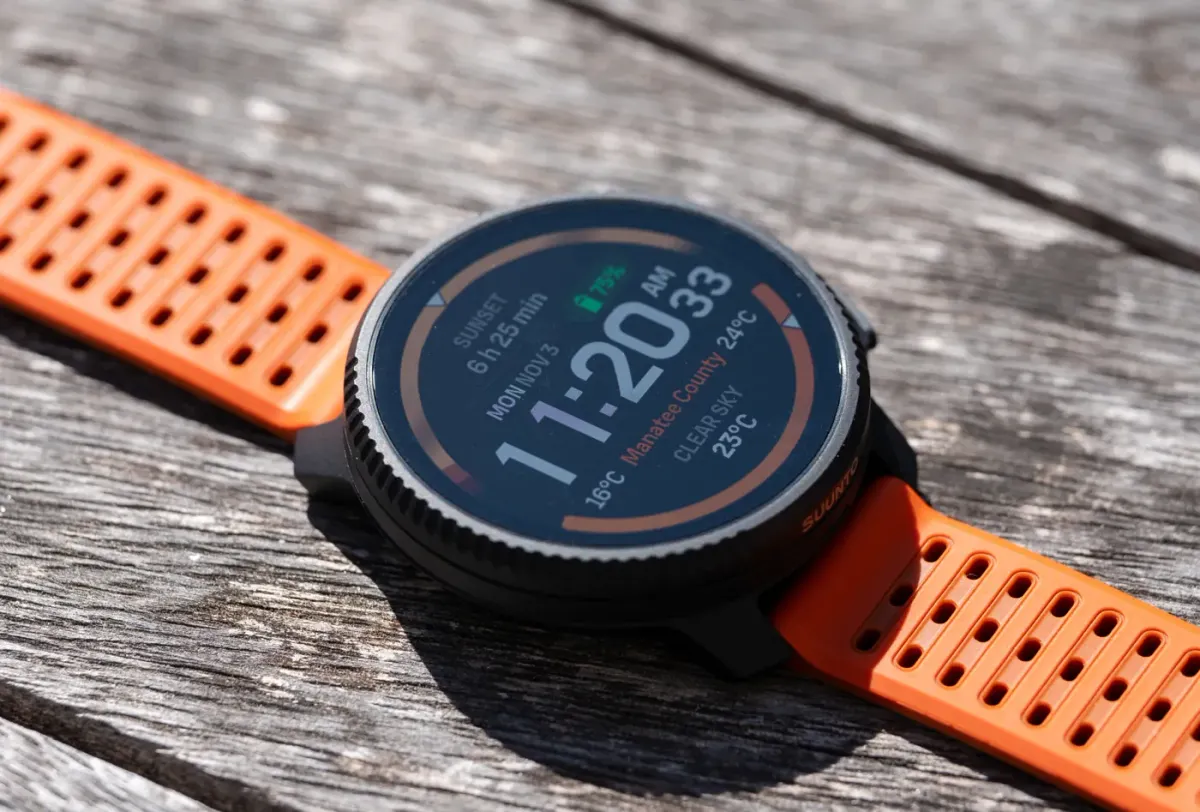
Barometer and storm alarm: the feature that earns its keep
This is the heart of the watch for backpackers and anglers.
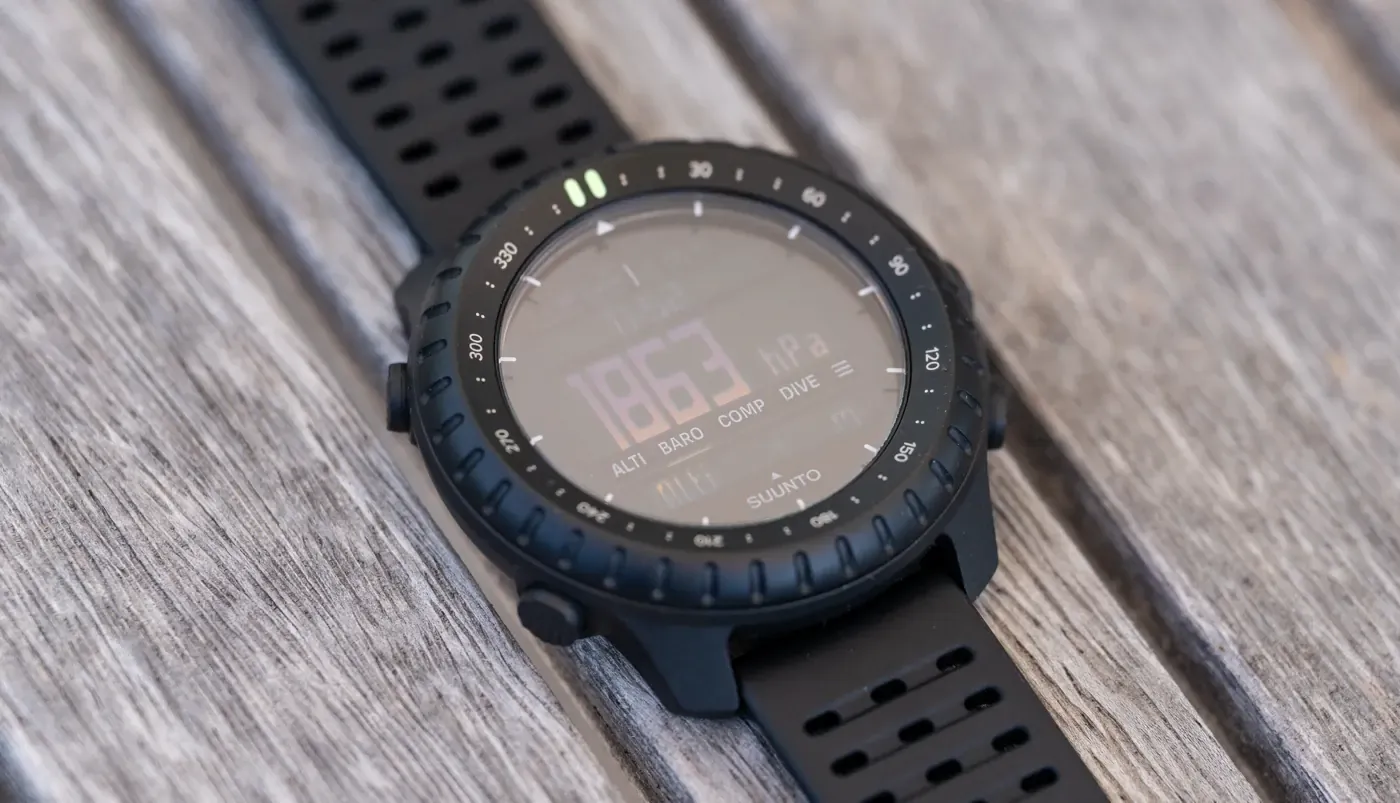
The barometer displays sea-level pressure from roughly 920 to 1080 hPa at 1 hPa resolution, with a trend arrow built from recent pressure movement and up to seven days of rolling internal weather data.
The storm alarm triggers on a rapid pressure drop (the commonly cited threshold is 4 hPa in 3 hours) and flashes a warning for about 20 seconds. Suunto has added automatic pressure filtering to cut down on false alarms, and it's a meaningful improvement over the original's more trigger-happy behavior.
Two caveats worth knowing. The alarm is primarily active in the barometer profile, so if the automatic profile switching flips you into altimeter mode on a climb, storm detection can be interrupted.
I also noticed a possible alarm artefact after hard exercise triggered a profile switch (I accidentally left it on my wrist; this is not a sport watch), so treat the alert as a prompt to look at the sky, not a verdict on it.
Compass: meets the claim
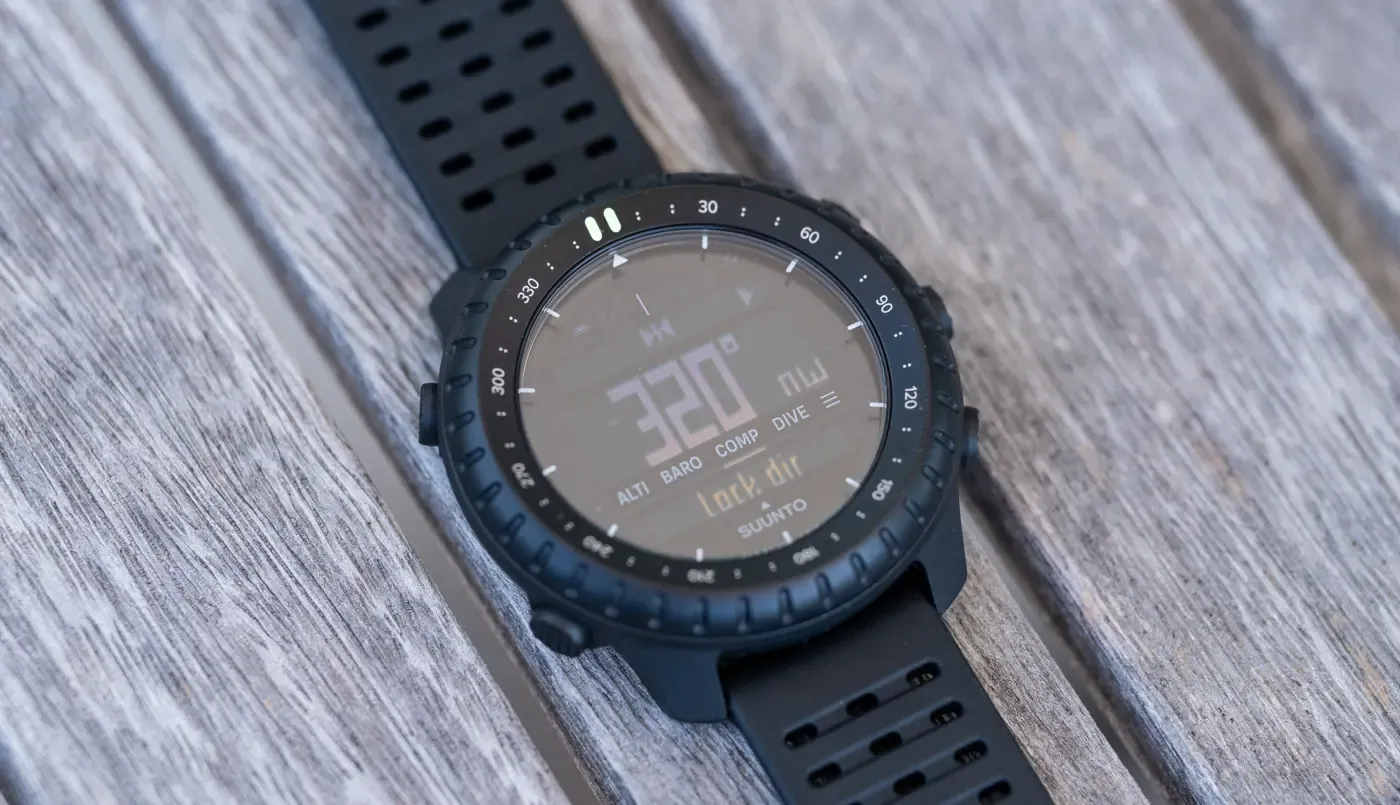
The digital compass reads at 1° resolution with a stated accuracy of ±5°, plus bearing lock, orienting indicators, and magnetic declination adjustment.
In my checks it held calibration well and agreed with smartphone compasses to within a couple of degrees, comfortably inside Suunto's claim.
You calibrate by rotating the watch on a level surface, which it prompts on first use and after a battery change. Recalibrate regularly and keep it away from magnets, and it's dependable.
Display and backlight: better, not perfect
The 1.3 inch monochrome display is 40% brighter than the original, and the Gorilla Glass is a genuine upgrade over the old mineral crystal for scratch and impact resistance.
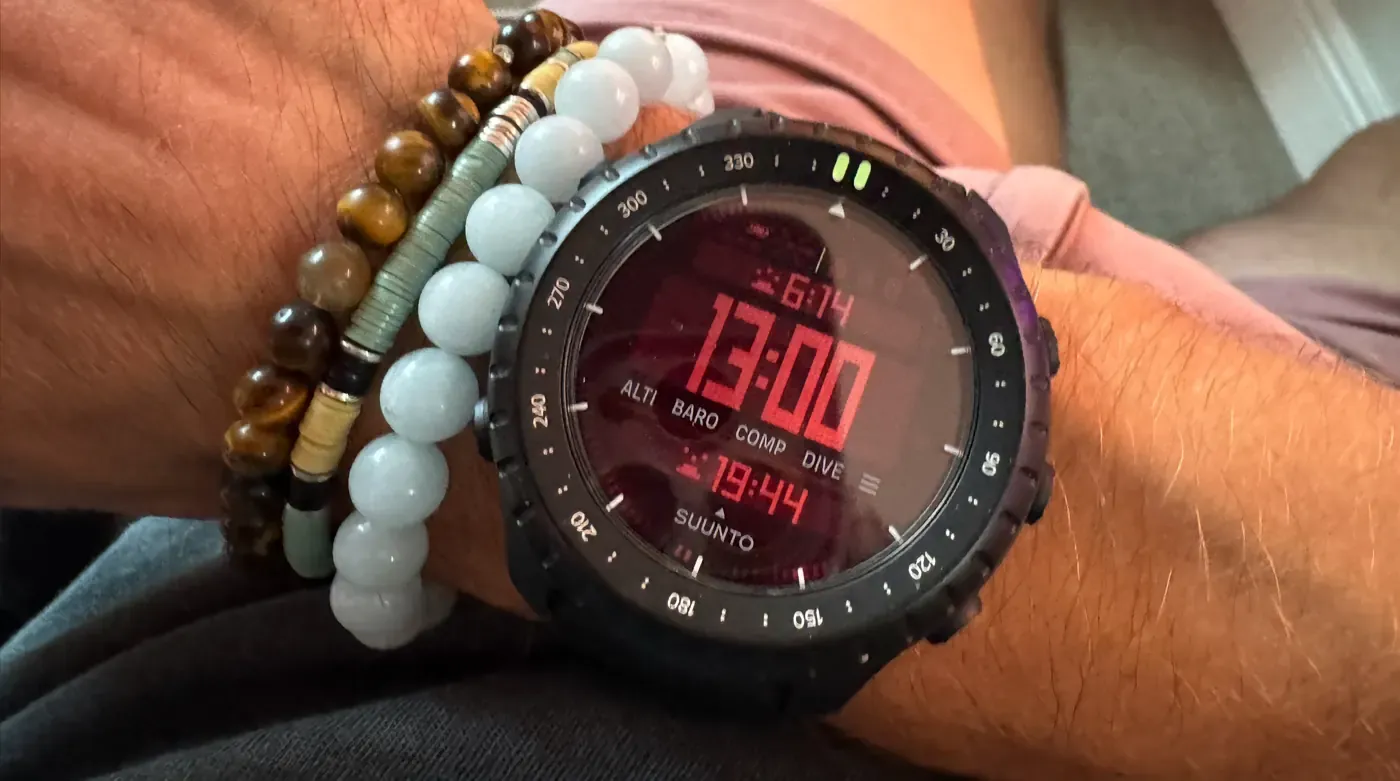
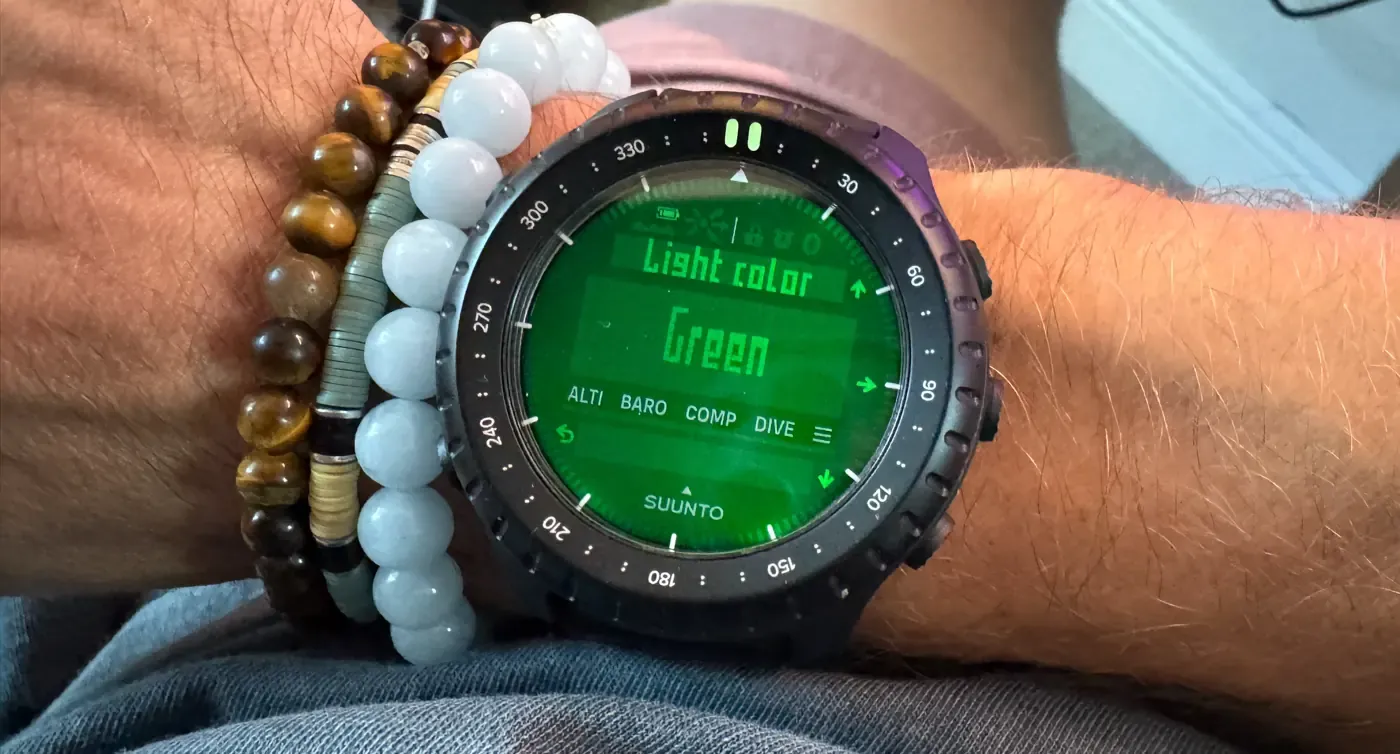
The switchable backlight is my favorite quality-of-life addition. Green gives you higher visibility in low light, while red preserves your night vision and is night-vision-goggle compatible, which is exactly what you want at a 4am alpine start or on the water before dawn.
The honest caveat is that in bright, direct sun the display can still be a challenge to read at a glance. It's better than before, but this is still a low-resolution segment-style screen, not an AMOLED.
Battery life: the whole philosophy in one spec
Up to 15 months from a user-replaceable CR3032 coin cell, with a low-battery alert before it dies.
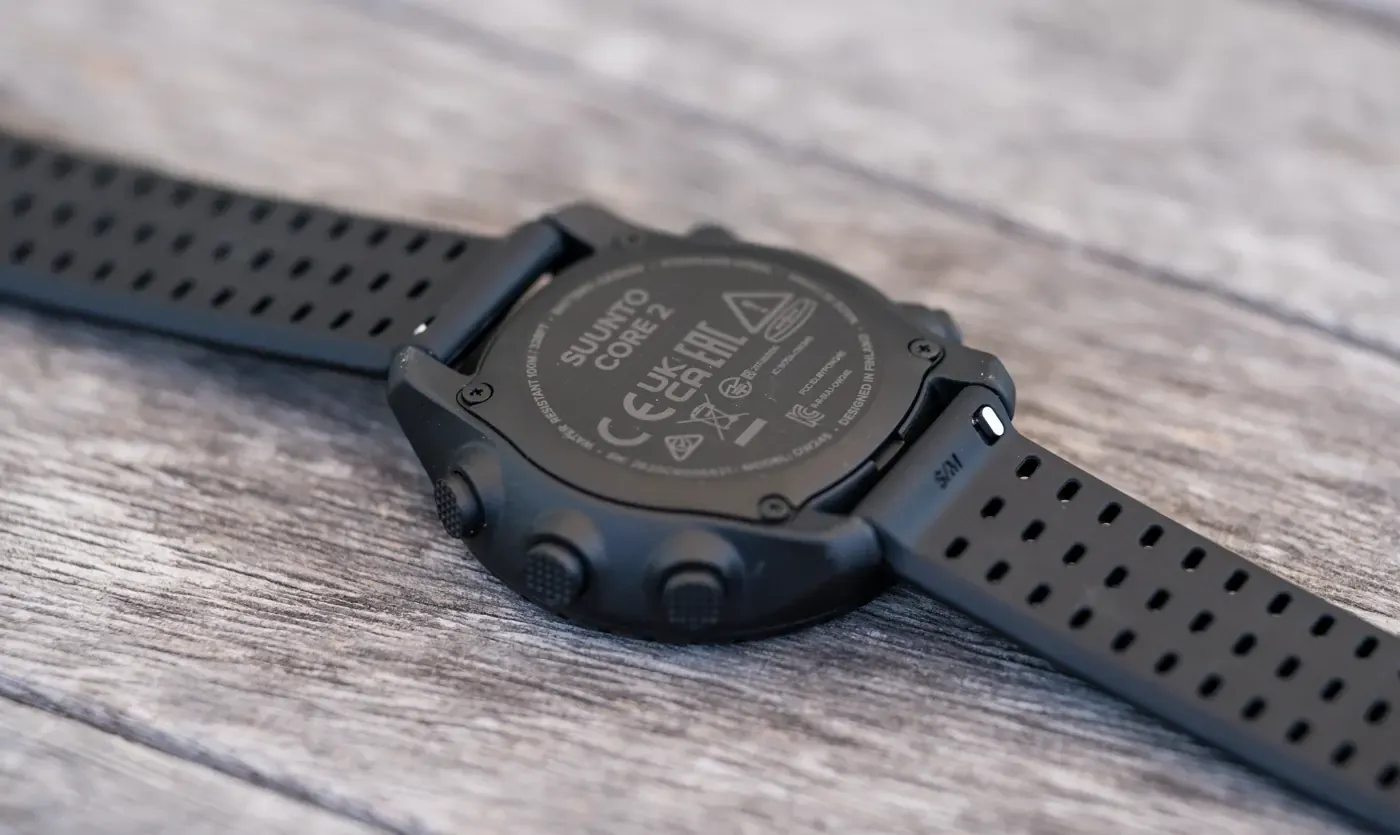
That's the entire argument for this watch in a single line. No charging cable, no sensors or amoled screen gobbling up battery life, no dead watch on day six of a thruhike, no battery anxiety at all.
Real-world life will depend on how often you hit the backlight, the storm alarm, and the step counter, but even a pessimistic outcome is measured in months, not days.
The one friction point is that swapping the cell requires a small tool, and Suunto recommends official replacement kits to preserve the 10 ATM seal and warranty. Fair enough, but it's not the coin-slot swap of a Casio.
Moon phase, steps, and the extra tools
The new moon phase display sounds like a novelty until you use it to plan a night hike, judge camp lighting, or time a fishing session around tides.
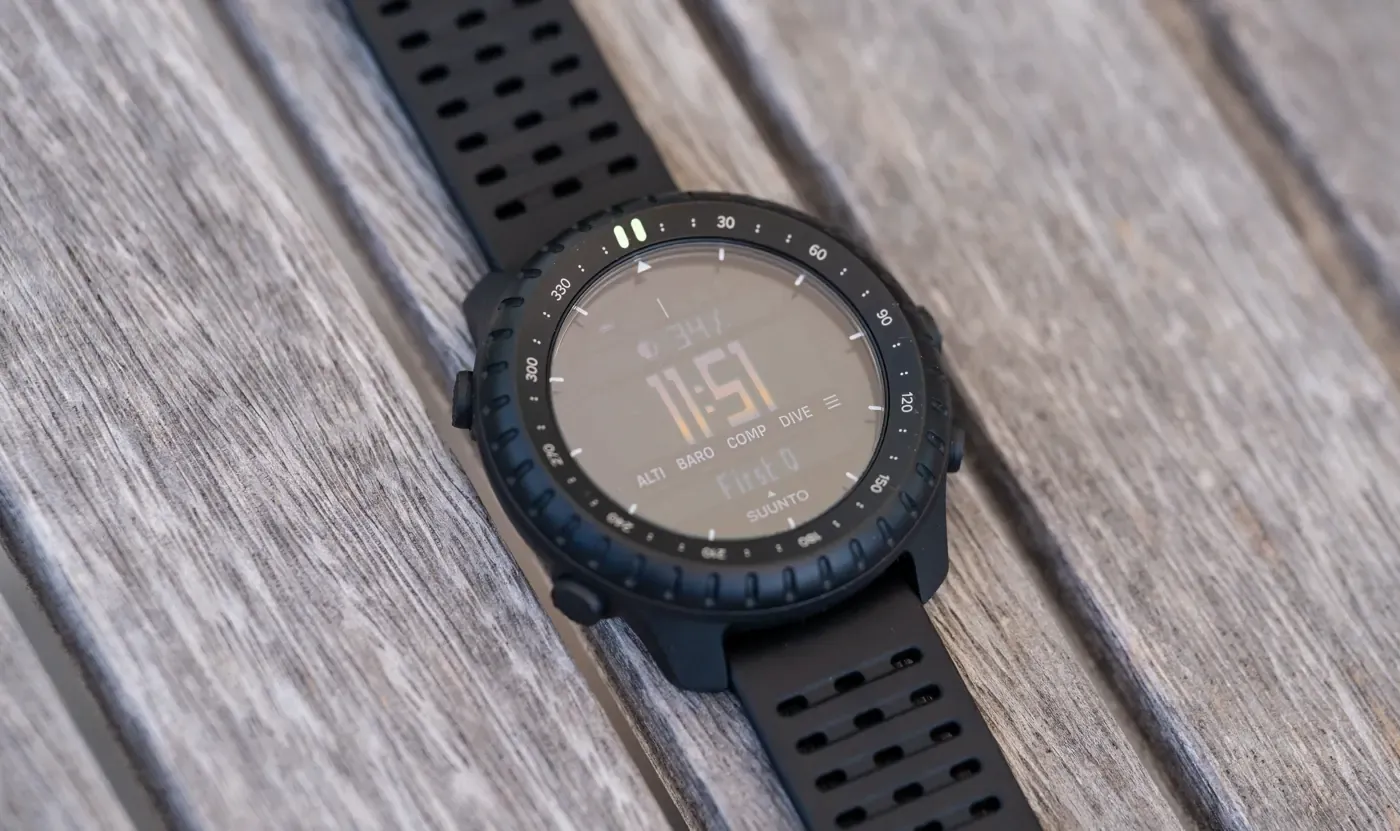
Pair it with the sunrise/sunset times (which need a one-off location sync via the app) and you have a genuinely useful daylight planning setup. On dark trailhead starts, one of the picks from my hiking headlamps roundup covers the rest.
Best headlamps for hiking at night (2026 picks)
The five best headlamps for hiking at night, for pre-dawn starts, post-sunset descents, and full night hikes. Honest picks for every kind of hiker.
 Alastair Dixon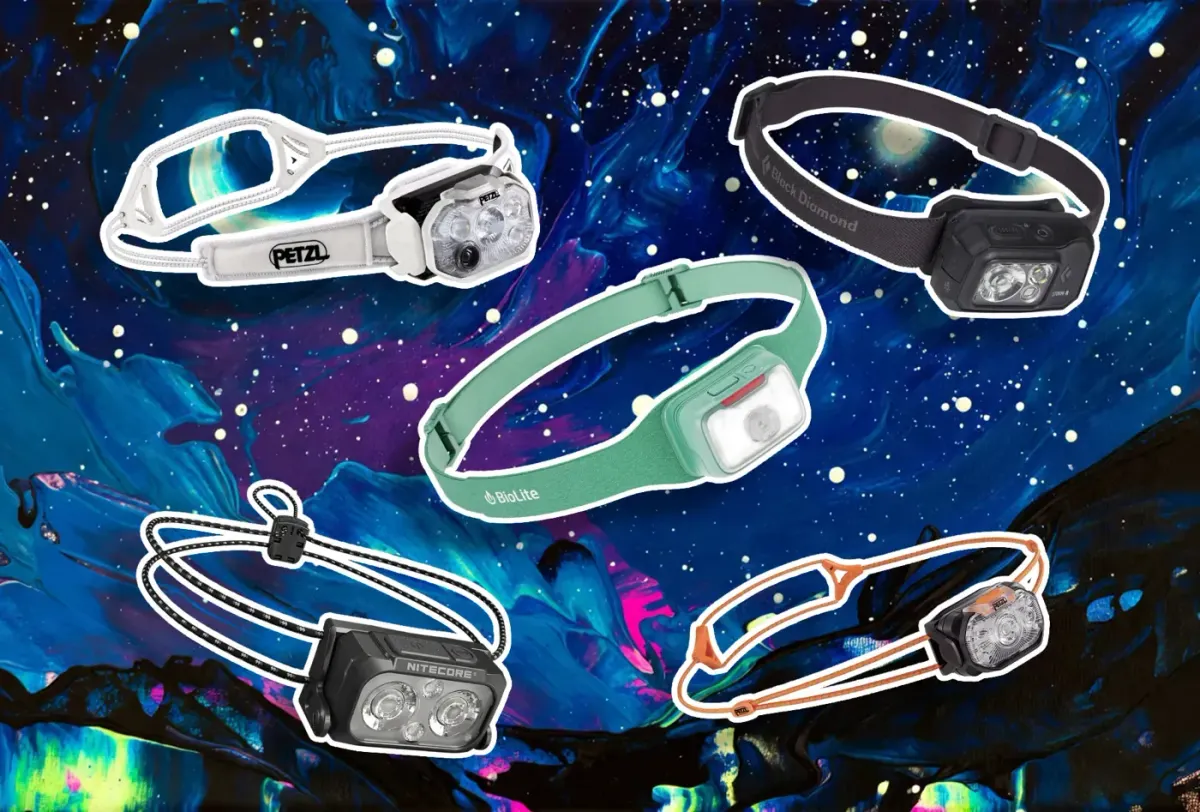
The daily step counter with goal setting is fine, and it syncs to the Suunto app if you care. Dual time zones, a 0.1 s stopwatch, countdown timer, alarms, and a button lock round out the toolkit.
The dive mode is the one clear regression here; it now reads depth to a maximum recommended 2 m for snorkeling, down from the original Core's 10 m. Casual snorkelers are fine; freedivers should look elsewhere.
What the Core 2 deliberately isn't
There's Bluetooth on board, but it's limited to time sync, location data for sunrise/sunset, step uploads, and firmware updates. Every core function works fully offline, forever.
That also means no GPS tracks, no pace, no maps, no heart rate, and no training metrics of any kind. If you need those, this isn't your primary watch; something from my best running watches roundup is, and the Core 2 slots in as the reliable backup on your other wrist or your pack strap.
The Best Running Watches Under $450 in 2026
Whether you’re looking for your first running watch or in research phase for an upgrade, these are the best GPS watches for runners, under $450.
 Alastair Dixon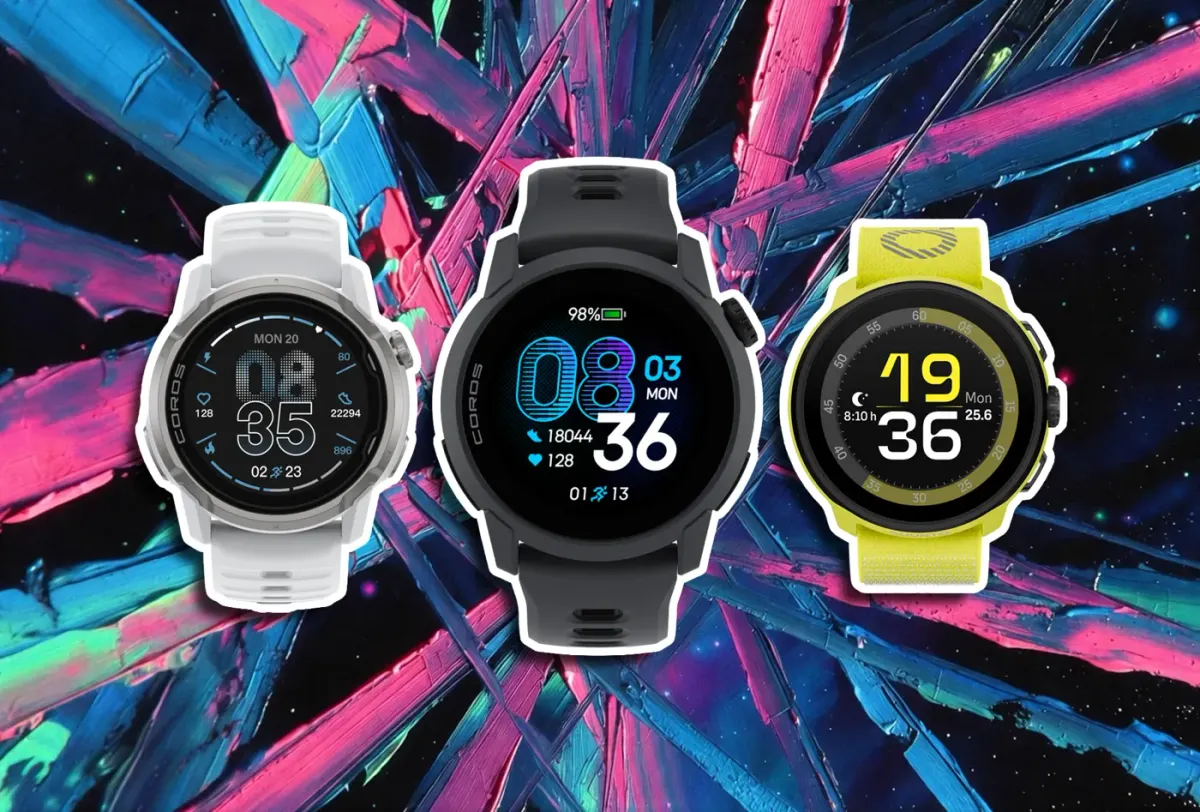
One more niche note is that the Bluetooth radio may rule it out for buyers with strict tactical or military equipment requirements, even though the red backlight clearly courts that crowd.
My verdict
The Suunto Core 2 succeeds because of what Suunto refused to add.
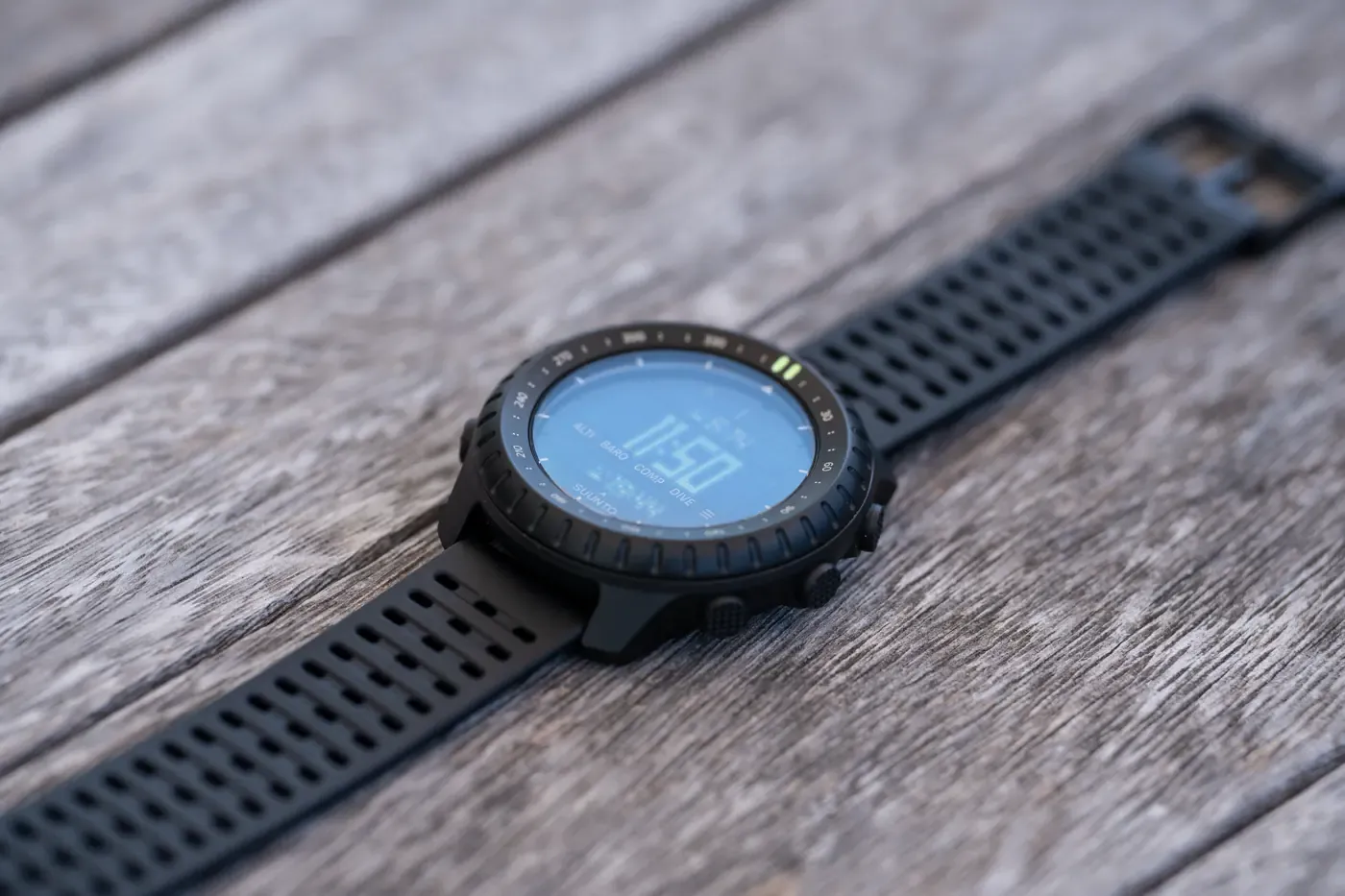
It takes a 19-year-old icon and upgrades everything that matters (10 ATM water resistance, Gorilla Glass, a brighter display with red/green backlight, better buttons, MIL-STD-810H testing, and a 15-month replaceable battery) while keeping the offline, set-and-forget soul intact.
Buy it if you are:
- A backpacker or thruhiker who wants weather trends, storm warnings, and altitude without ever thinking about charging
- An angler, overlander, or camper who'll actually use the moon phase, sunrise/sunset, and barometer daily
- you want an affordable military style wristwatch
Skip it if you need GPS tracks, maps, pace, or heart rate as your primary training data, or if you want post-activity logs to analyze; the Core 2 keeps no accessible altitude or pressure history; see my other Suunto watch reviews to find the right one for you.
Use code AFFR15TAK for 15% off your order!
At $179 it's sensibly priced for a specialist instrument, and it pairs naturally with the rest of a simple, durable kit, much like the boots in my best hiking boots guide; gear that just works, year after year.
If you want the opposite philosophy in a similarly adventure-first package, my COROS NOMAD review covers a $349 watch that adds full maps and GPS while keeping the rugged tool character.
I tried the COROS NOMAD for a month: Pros, cons, and key takeaways
A rugged adventure watch with big battery, full maps, and fishing tools that make more sense for trail days, hikes, and off-grid trips than for everyday smartwatch fans (unless you just love the style, like I do!).
 Alastair Dixon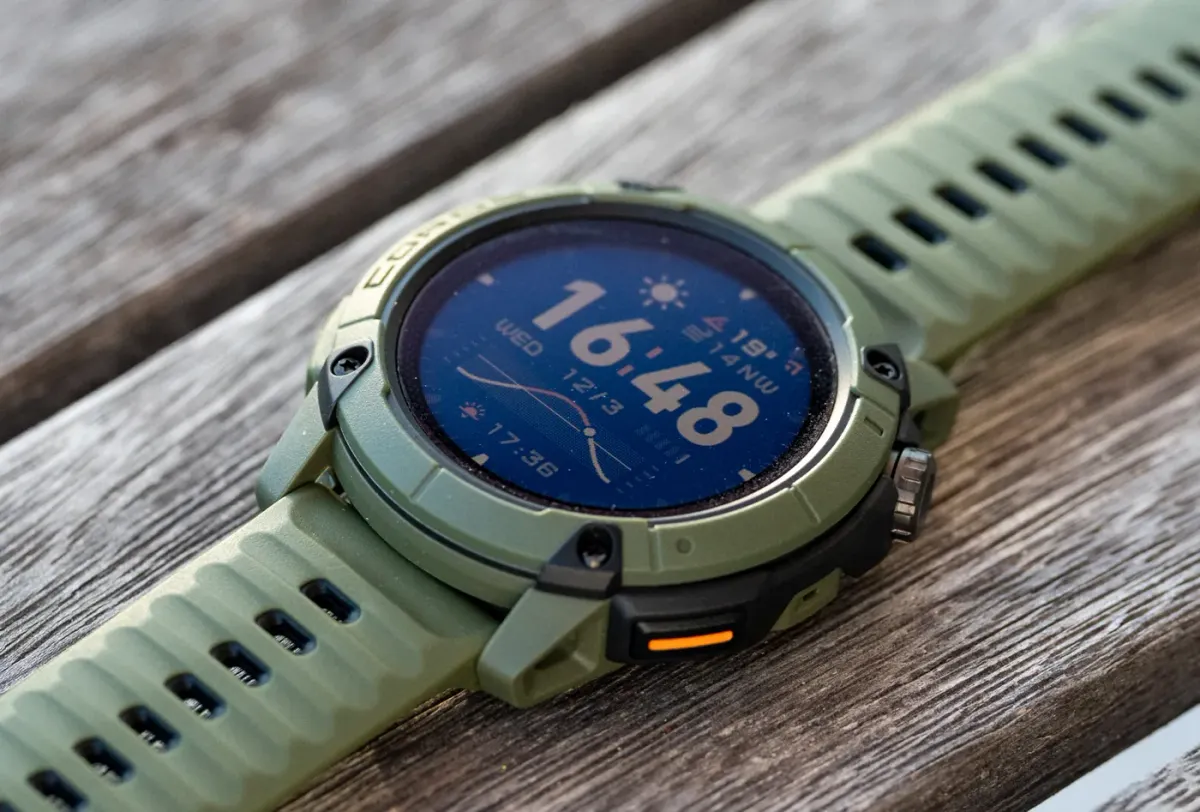
If you haven't already, signup to our free newsletter, for more quality outdoor content like this. -Alastair
Written by

Subscribe to new posts
Gear that earns its place, outdoors and at home | Reviews, Roundups, News







Member discussion