
Shibumi Shade and Shibumi Chair review: our Gulf Coast beach setup
We tested the Shibumi Shade Classic in Sea Glass and the Shibumi Chair in Sky Blue on Gulf Coast beach days, including setup time, practicality, and comfort.

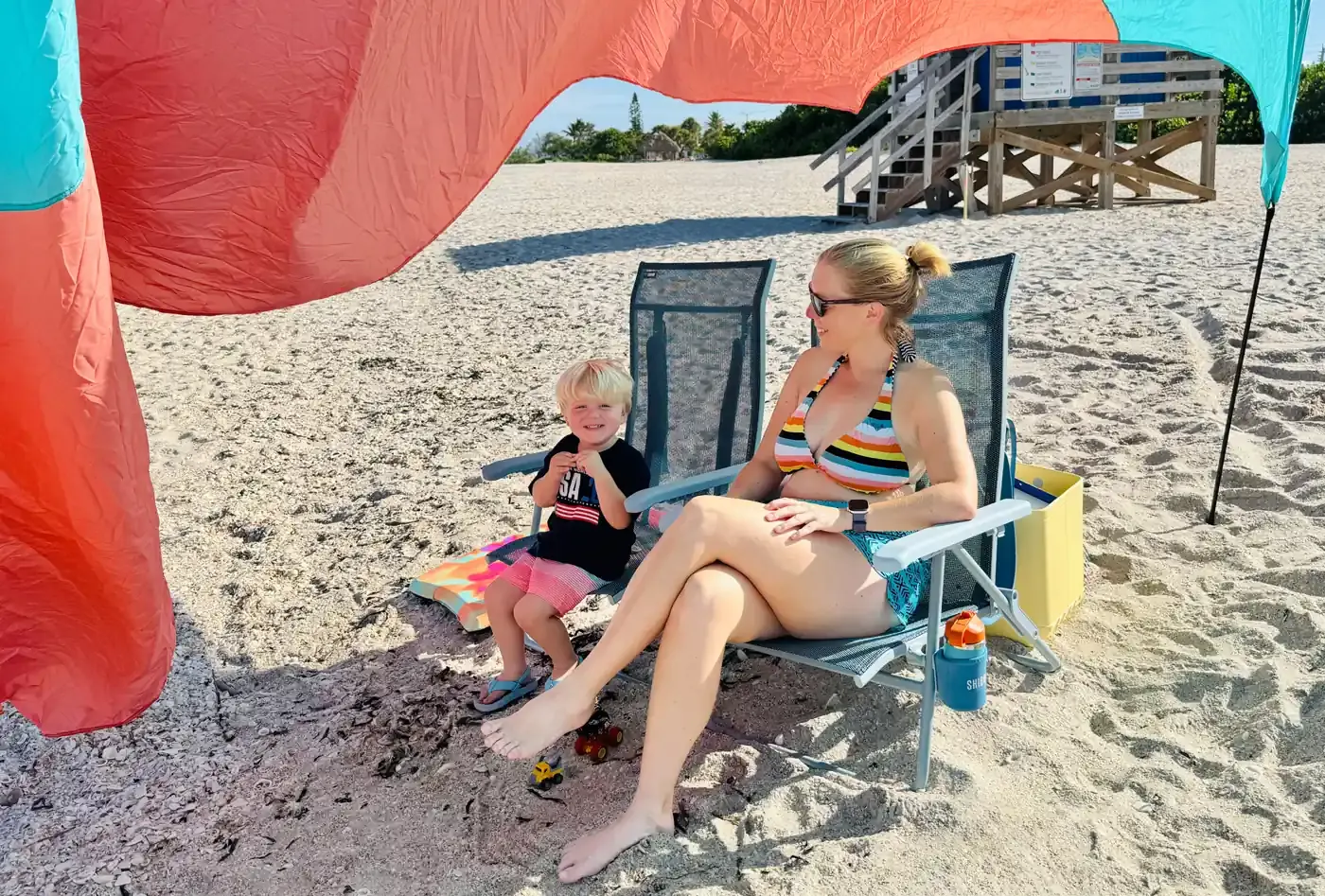
We have spent so many beach days testing gear that promises to make sand, sun and wind less annoying, and so much of it fails at the first gust.
The Shibumi Shade Classic, a wind-powered beach canopy in Sea Glass, and the Shibumi Chair, an anti-rust beach chair in Sky Blue, have been our go-to setup for Gulf Coast beach days for weeks now, and this is everything we have learned testing both.
If you purchase through links in this article, we may earn a small affiliate commission.
Who is Shibumi
Shibumi was started in 2016 by three UNC-Chapel Hill graduates, brothers Dane and Scott Barnes and their friend Alex Slater, after years of fighting flipped umbrellas and bulky pop-up tents on family trips to Emerald Isle, North Carolina. They taught themselves to sew and hand-built the first 32 shades on a home machine.
The name comes from shibumi, a Japanese aesthetic concept built on simplicity and understated elegance, mixed with the name of their old Chapel Hill apartment complex.
Word of mouth carried the brand along the Carolina coast for a few years before the founders went full-time in 2019. Shibumi has now sold over 300,000 shades, shows up on more than 800 beaches worldwide, and runs a 33-person team out of Raleigh, North Carolina.
The whole philosophy is simple: beach days should be effortless, and gear should work with the wind instead of fighting it.
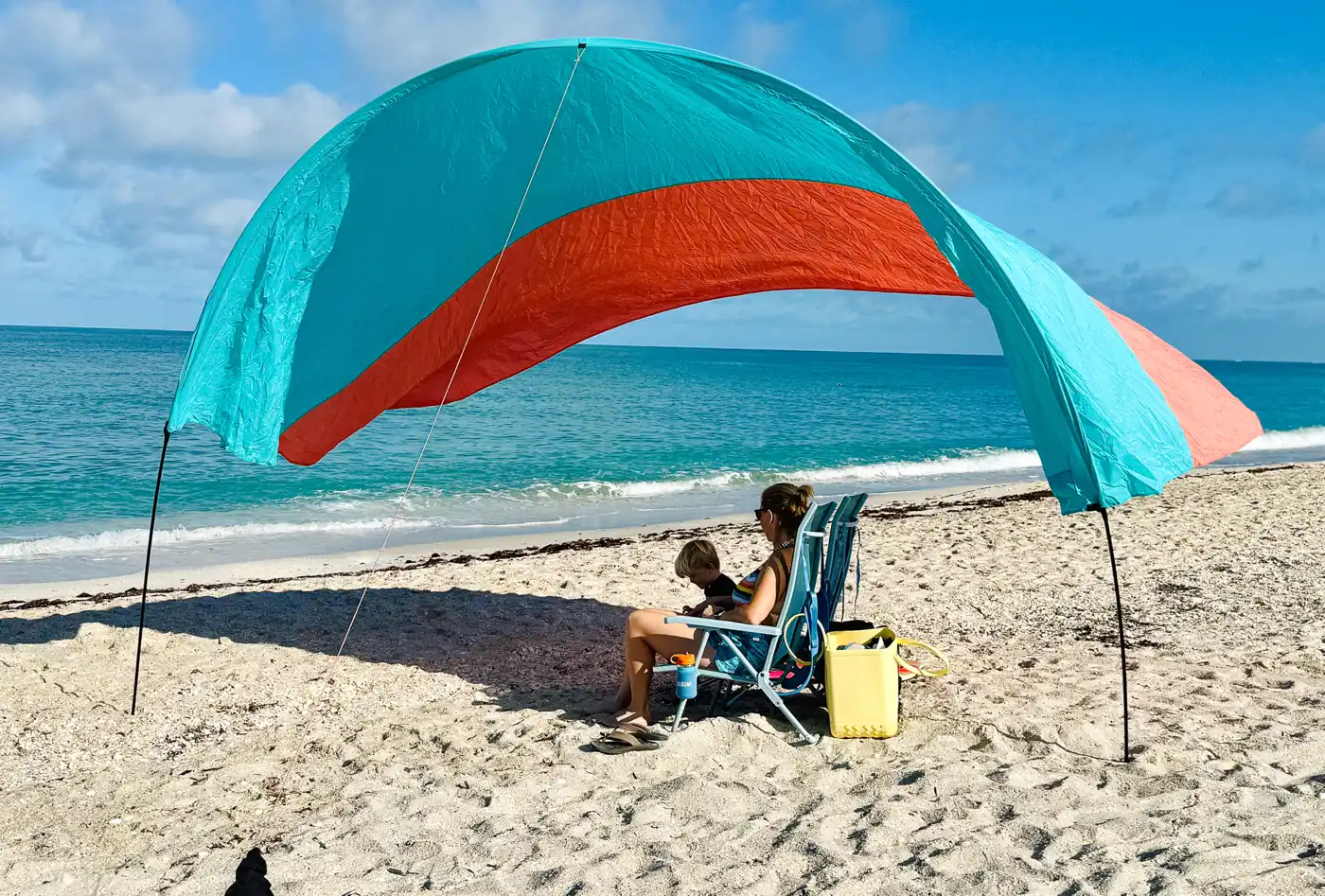
Shibumi Shade Classic with Quiet Canopy review: key specifications
- Price: $295 - Available at Amazon
- Weight: under 4 lbs
- Packed size: roughly 26 x 5 inches, fits easily in a car trunk or suitcase
- Shade coverage: 150 square feet, for up to 8 people plus gear, although I'd say it suits 4 people most comfortably
- Sun protection: UPF 50+, blocking 98% of harmful UV rays
- Wind performance: stable from light breezes of around 3 mph through strong gusts
- Included: Quiet Canopy, collapsible poles, carry bag, Wind Assist sandbag anchors
How the Shibumi Shade actually works
Most beach shade is built to resist wind. Shibumi built theirs to use it.
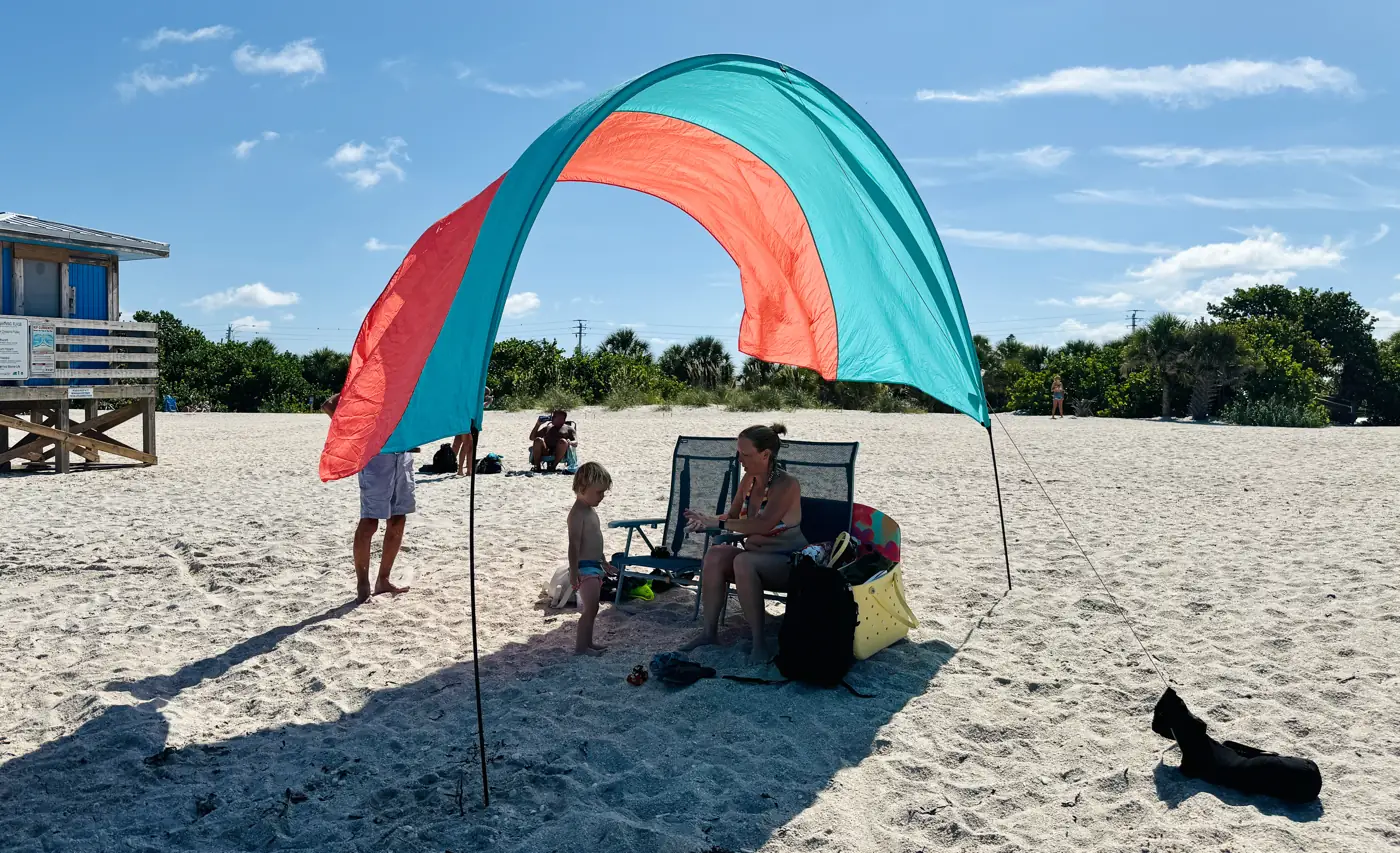
There is no rigid frame, so instead of acting like a sail and tipping over or tumbling down the beach (the thing every umbrella owner has experienced at least once), the canopy catches the breeze and billows out like a giant windsock. The more wind there is, the better it holds its shape.
That sounds like a gimmick until you have watched a neighbor's pop-up tent cartwheel past you while your Shibumi just sits there, gently moving and throwing shade.
Setup takes us under three minutes, solo although I highly recommend you get someone to help to make things easier.
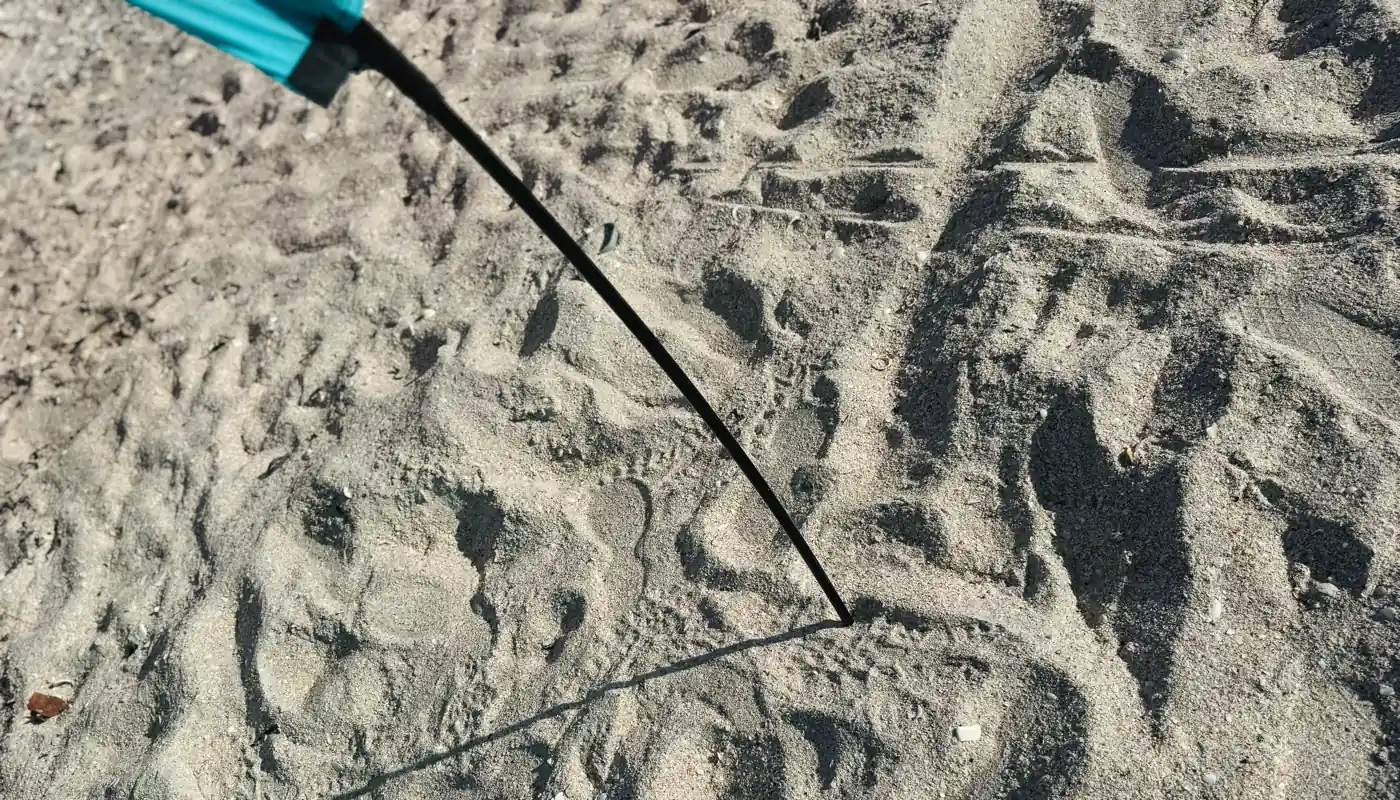
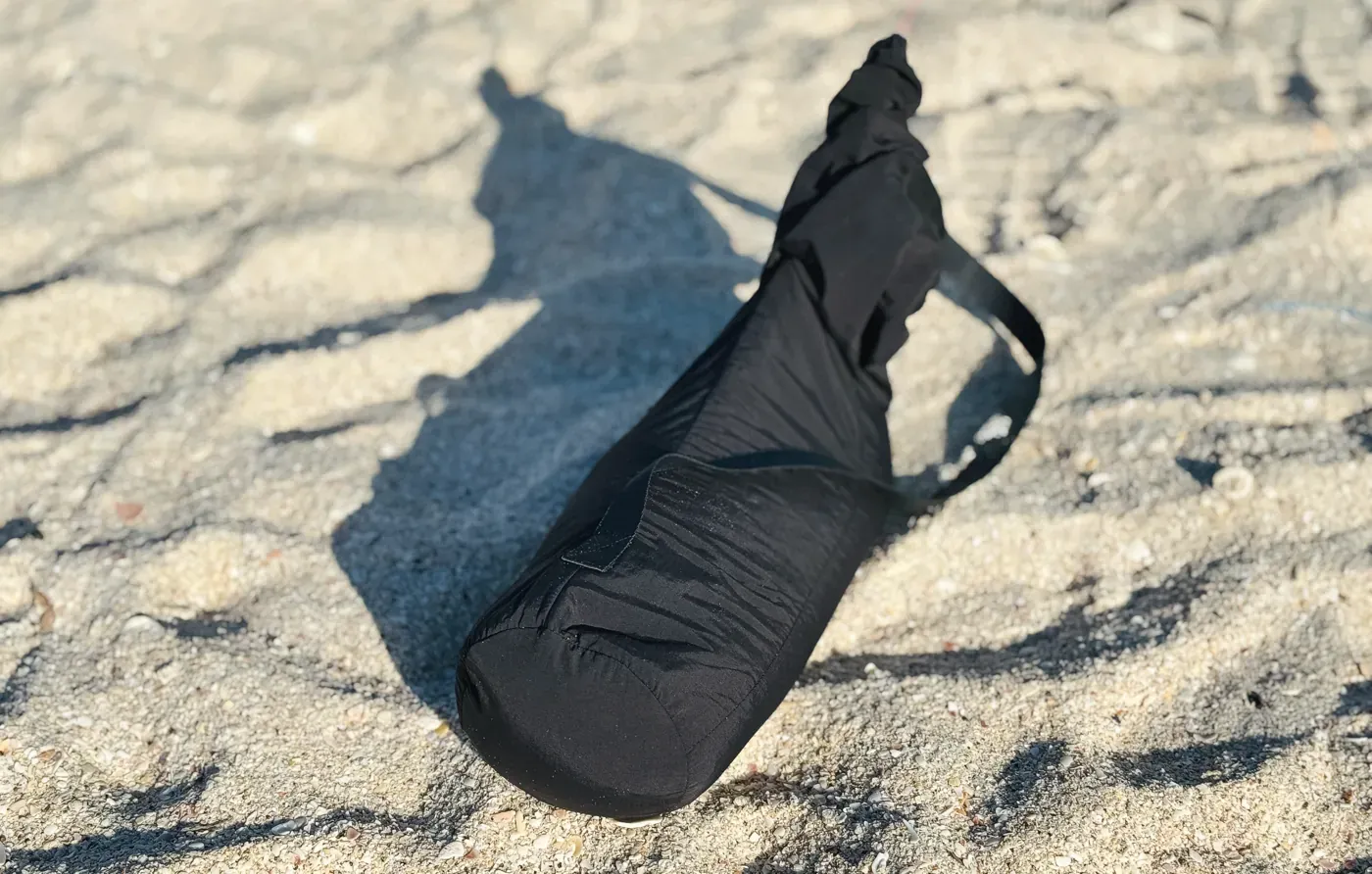
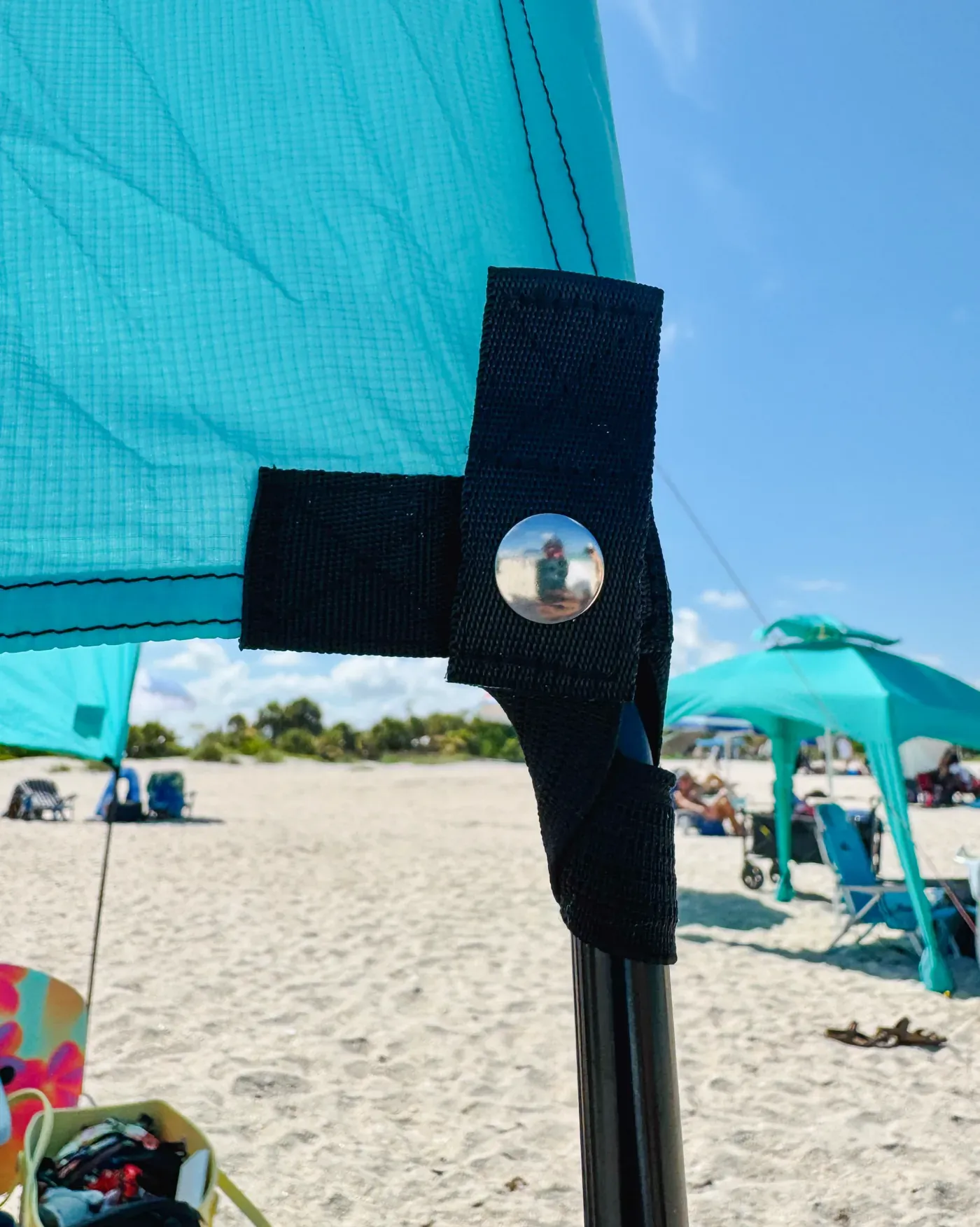
Connect the poles, thread them through the canopy's sleeve, plant the ends in the sand roughly perpendicular to the wind and 6 inches deep, fill up the sand bag which is also the bag the shade comes in, and extend it out, in the opposite direction of the wind; and let the shade fill out.
Sebastian likes carrying the pole bag from the car, which tells you everything about how light this thing actually is (4lbs).
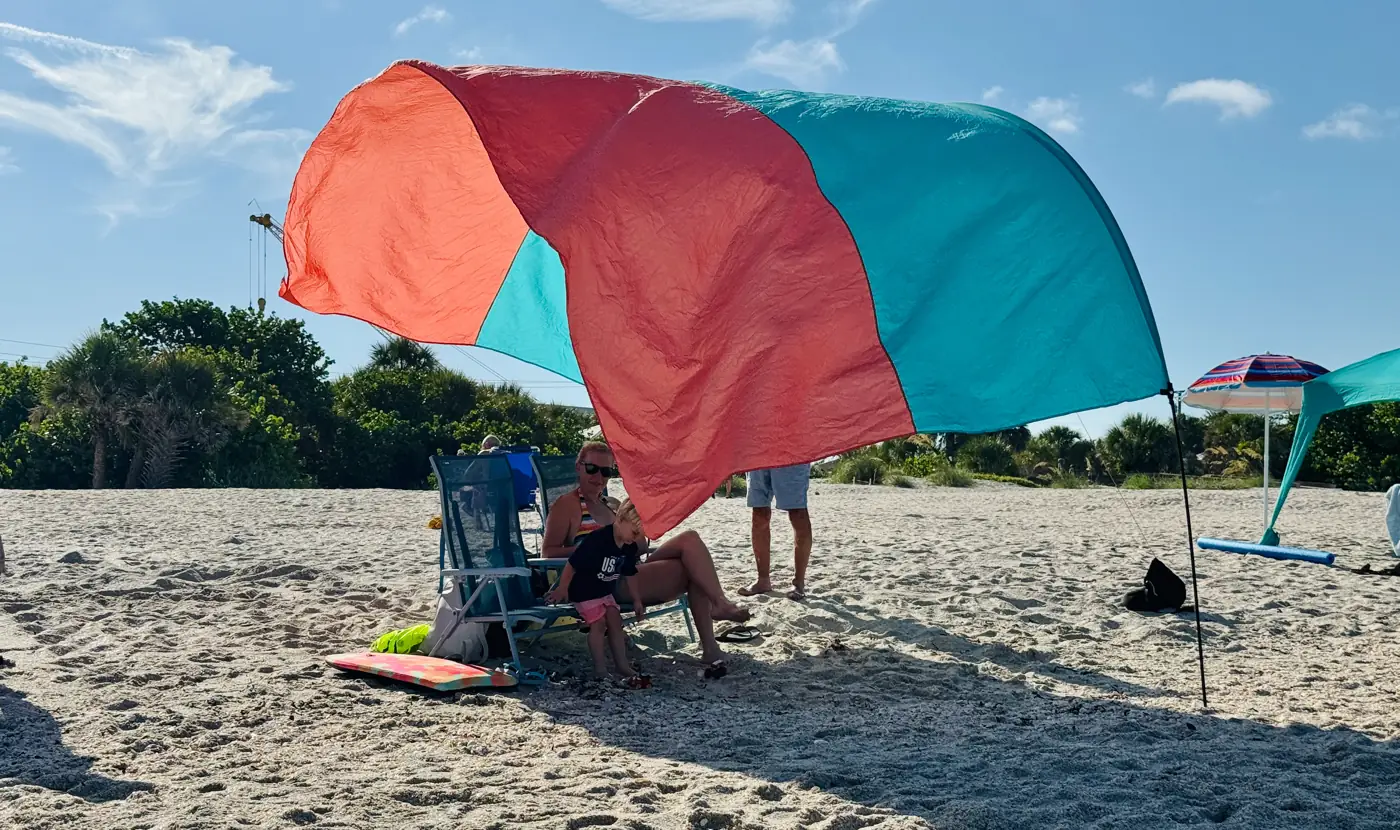
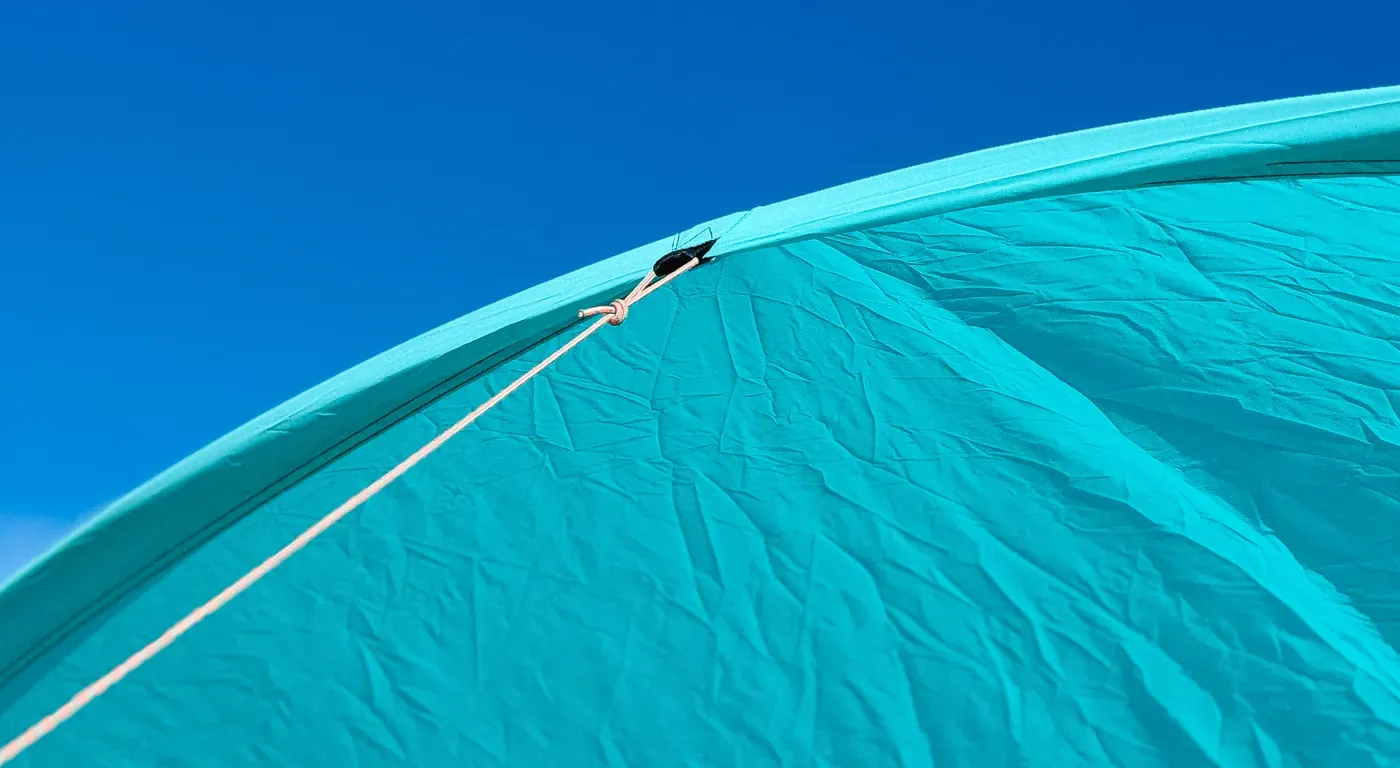
How to set up the Shibumi Shade (more detail)
- Pull the collapsible poles from the carry bag and connect them into their full length.
- Thread each pole through the canopy's fabric sleeve until it sits centered.
- Position the shade roughly perpendicular to the wind direction. the wind direction changes throughout the day so you'll need to micro adjust the poles and sandbag placement for optimal shade and performance during a long day at the beach.
- Plant both pole ends firmly into the sand (at least 6 inches) - softer sand further from the water seems to be easier to plant them into.
- Fill up the sandbag attached to the center chord, and extend outwards so that that poles are perpendicular to the ground and stay put against the pull of the wind.
- Let the wind catch and shape the canopy. On calm days, clip the Wind Assist sandbags to the back corners for a more tent-like hold.
That is the whole process, and it genuinely takes under three minutes once you know the drill.
The newer Quiet Canopy fabric is the detail that matters most if you have used an older Shibumi or a flapping umbrella before.
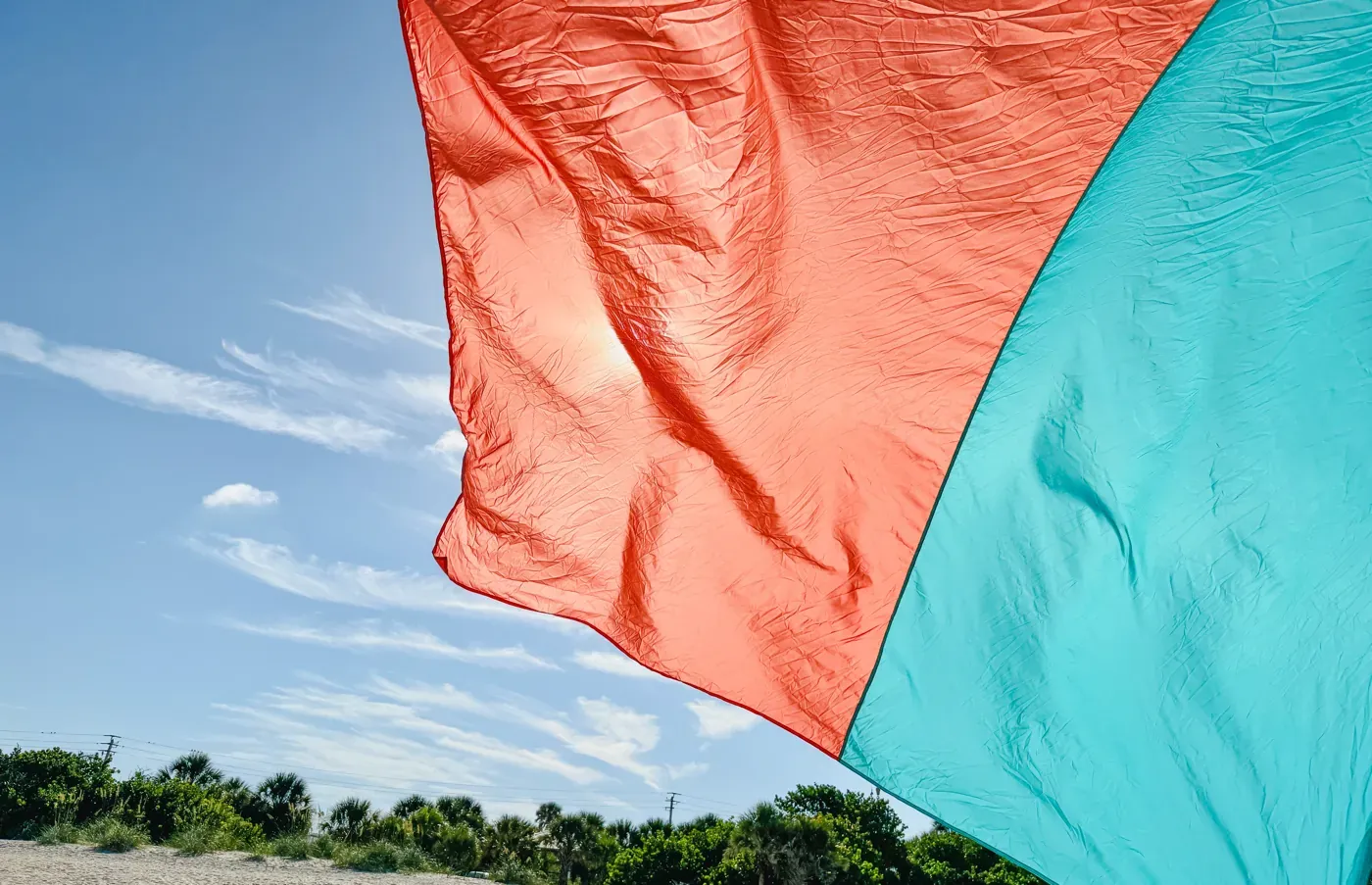
It is softer, with more stretch, and it dramatically cuts down the loud flapping noise that used to be the most common complaint about wind-powered shades.
On a breezy Gulf Coast afternoon, that is the difference between a peaceful afternoon and feeling like you are camping next to a sail.
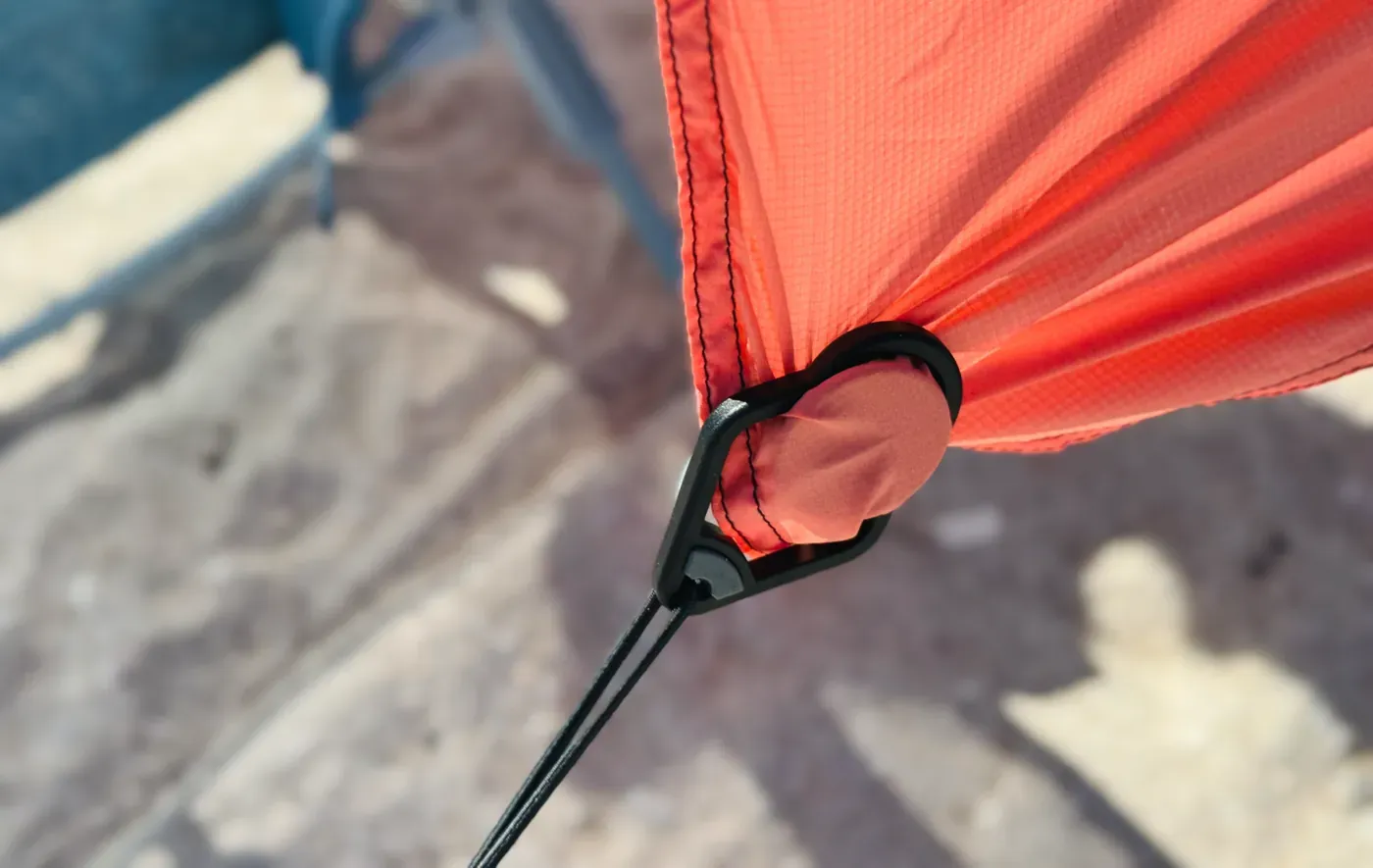
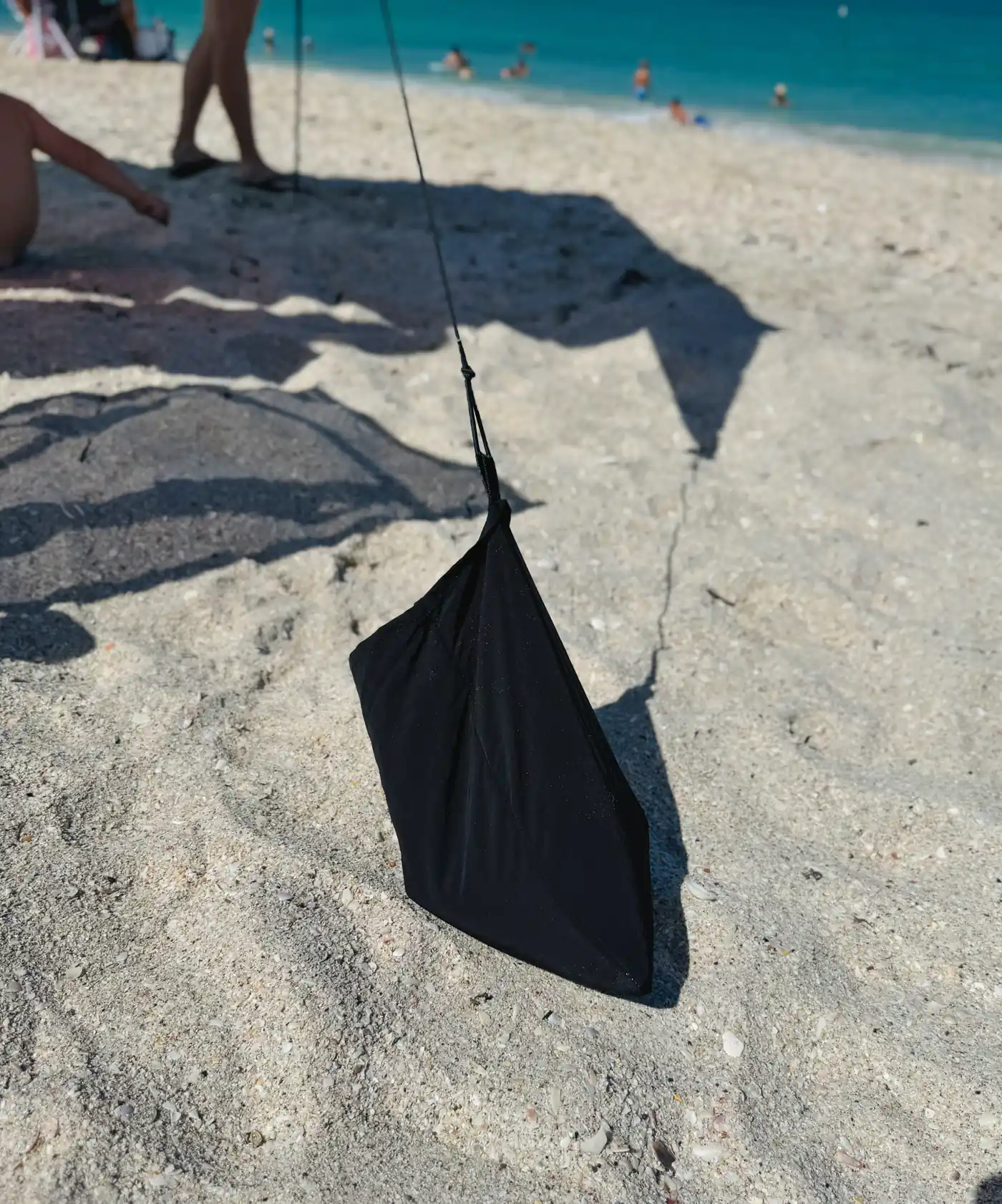
A wind assist sand bag attached to one of the rear corners
For dead-calm days, the included Wind Assist sandbags clip to the back corners and pull the canopy into a more tent-like shape, so you are not stuck with limp fabric when the wind drops out completely, which happens often on Florida mornings.
Stand Up Paddleboarding For Beginners Guide
Paddle your way into adventure this summer with our easy, fun and beginner-friendly guide to stand up paddleboarding.
 Alastair Dixon
Sizing, fit and coverage in practice
The 150 square feet of coverage is genuinely generous, and during first use it actually felt like it was too much for the three of us but we have grown to love all the extra space and shade it provides. If there are just two of you or your beach is more crowded, there's also a Shibumi Shade Mini option available.
We have fit our full crew, towels, a cooler and Kepler's blanket underneath with room to spare.
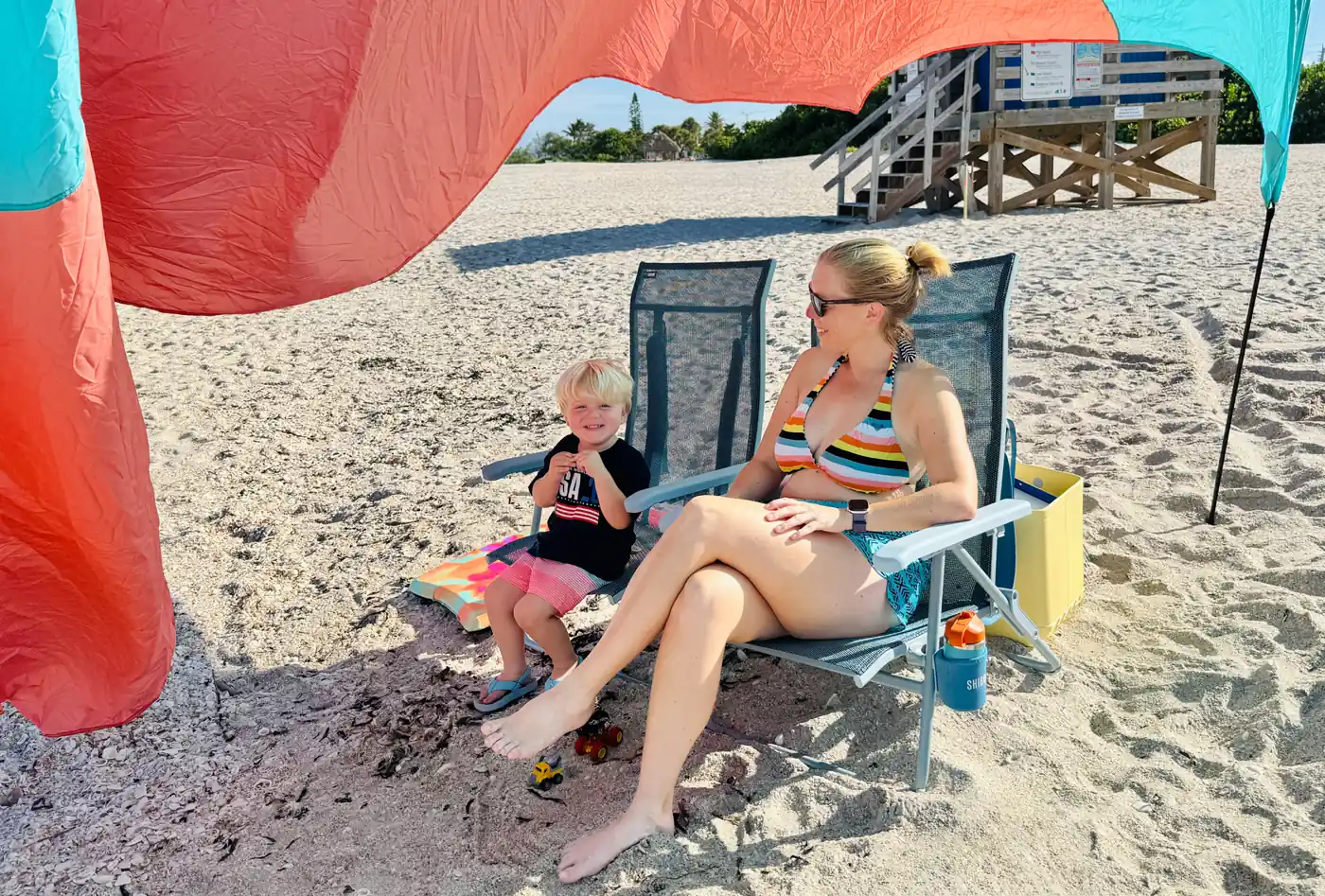
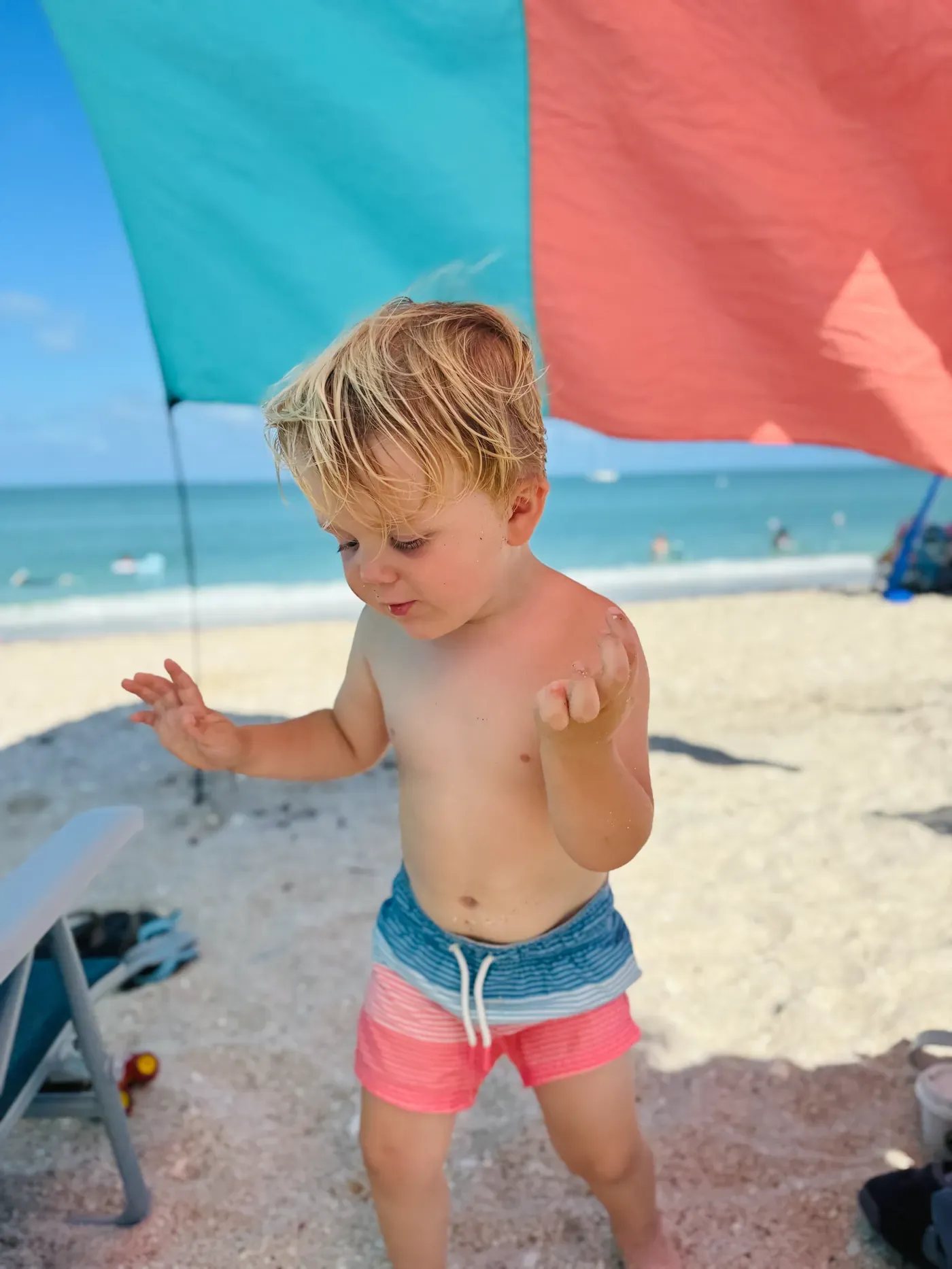
It is taller and more open than a beach tent, so there is no crouching to get in and out, and no obstructed views out toward the water, which matters more than it sounds on a long beach day with a toddler who wants to see everything.
Features we love about the Shibumi Shade
It is genuinely a quick set up
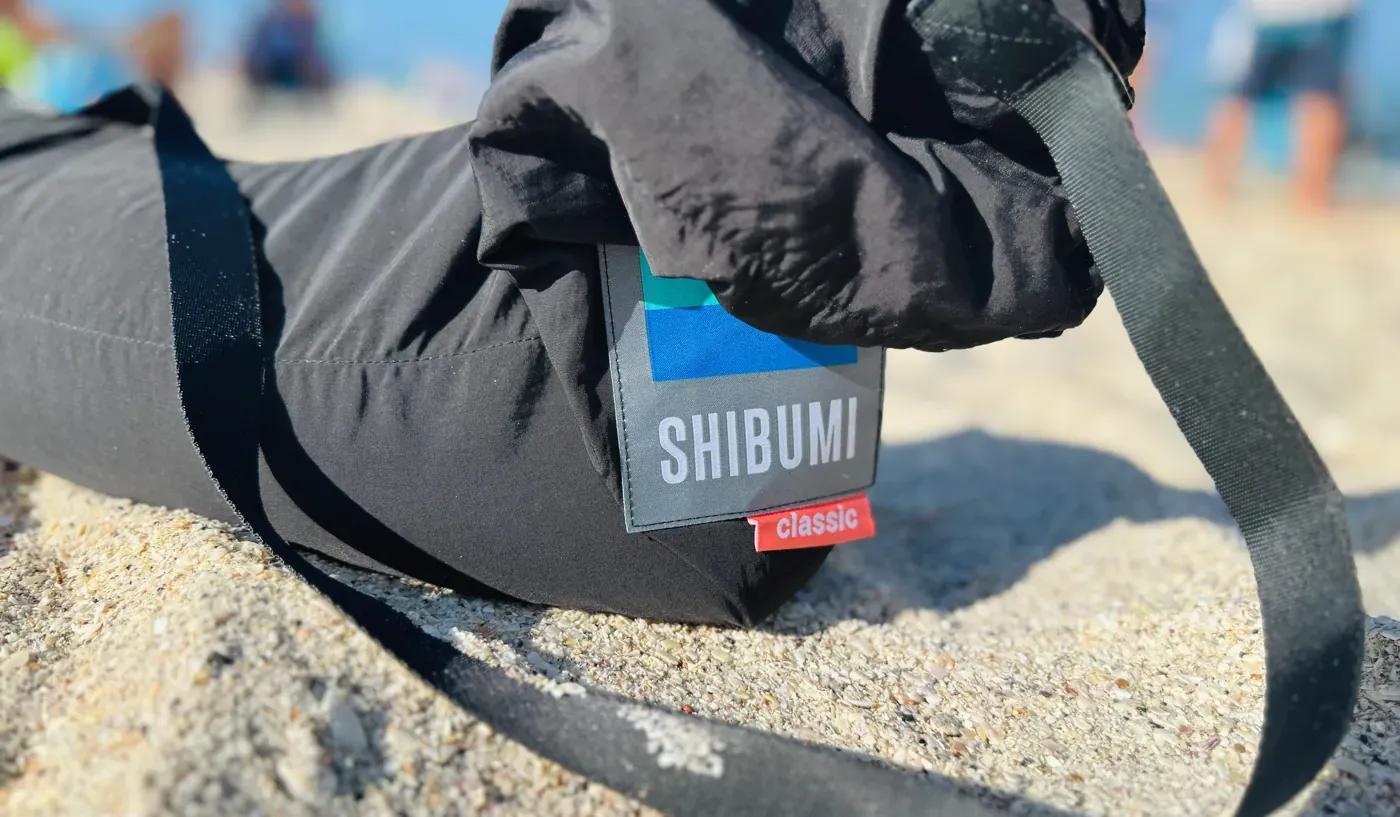
It's super easy to set up and it packs down into a tiny sling bag (the same bag that you put sand in to pin it down when in use).
The Sea Glass color looks beautiful
It is a soft aqua-teal that looks fantastic against Gulf water, and it does not scream for attention the way some beach gear does.
Quiet Canopy solved the one real complaint
If you tried an older Shibumi and found the flapping annoying in wind, the redesigned fabric is worth knowing about. It is a meaningfully different experience now.
It travels like nothing else in this category
Packed size is suitcase-friendly, and at under 4 lbs it does not add real weight to a beach bag or car trunk, which matters if you are also hauling chairs, a cooler and a toddler's worth of sand toys.
5 Benefits Of Running On The Beach PLUS Learn How To Run On Sand Properly
Running on the beach tips including how to run on sand properly, what shoes to wear, barefoot running tips, how to get sand out of your shoes & more!
 Helen
Helen
What could be improved
Premium pricing is the most common pushback, and it is a fair one. At around $295 for the Quiet Canopy version, this costs more than a basic umbrella or pop-up tent.
Having dealt with our share of flipped umbrellas and collapsed pop-up tents, we think the difference in durability, wind performance and noise level justifies it, but it is not a budget buy.
Hard-packed sand can occasionally make planting the poles a little trickier without a small shovel or anchor tool. It is a minor fix, not a design flaw, but worth knowing before you go.
Are Shibumi Shades banned anywhere
If you have searched around before buying, you may have seen some mentions about Shibumi Shades being restricted.
That story is real, but it is VERY specific: Myrtle Beach and Horry County, South Carolina, voted on rules restricting large wind-powered shades like the Shibumi after complaints about beach crowding and safety.
It is a local ordinance issue tied to that stretch of the Carolina coast, not a nationwide or Florida restriction. We have never run into an issue using ours on Gulf Coast beaches, but if you are traveling to the Carolinas, it is worth checking local beach rules before you pack it.
Shibumi Chair in Sky Blue: key specifications
- Price: $190 - Available at Amazon
- Weight: 8 lbs per chair
- Folded size: 30.7 x 24.8 x 3.75 inches
- Seat height: elevated, around 12 inches off the ground
- Weight capacity: 300 lbs
- Recline positions: 4
- Frame: marine-grade powder-coated aluminum with stainless steel hardware
- Fabric: DreamWave breathable mesh, suspended rather than stretched over a crossbar
Sizing and fit
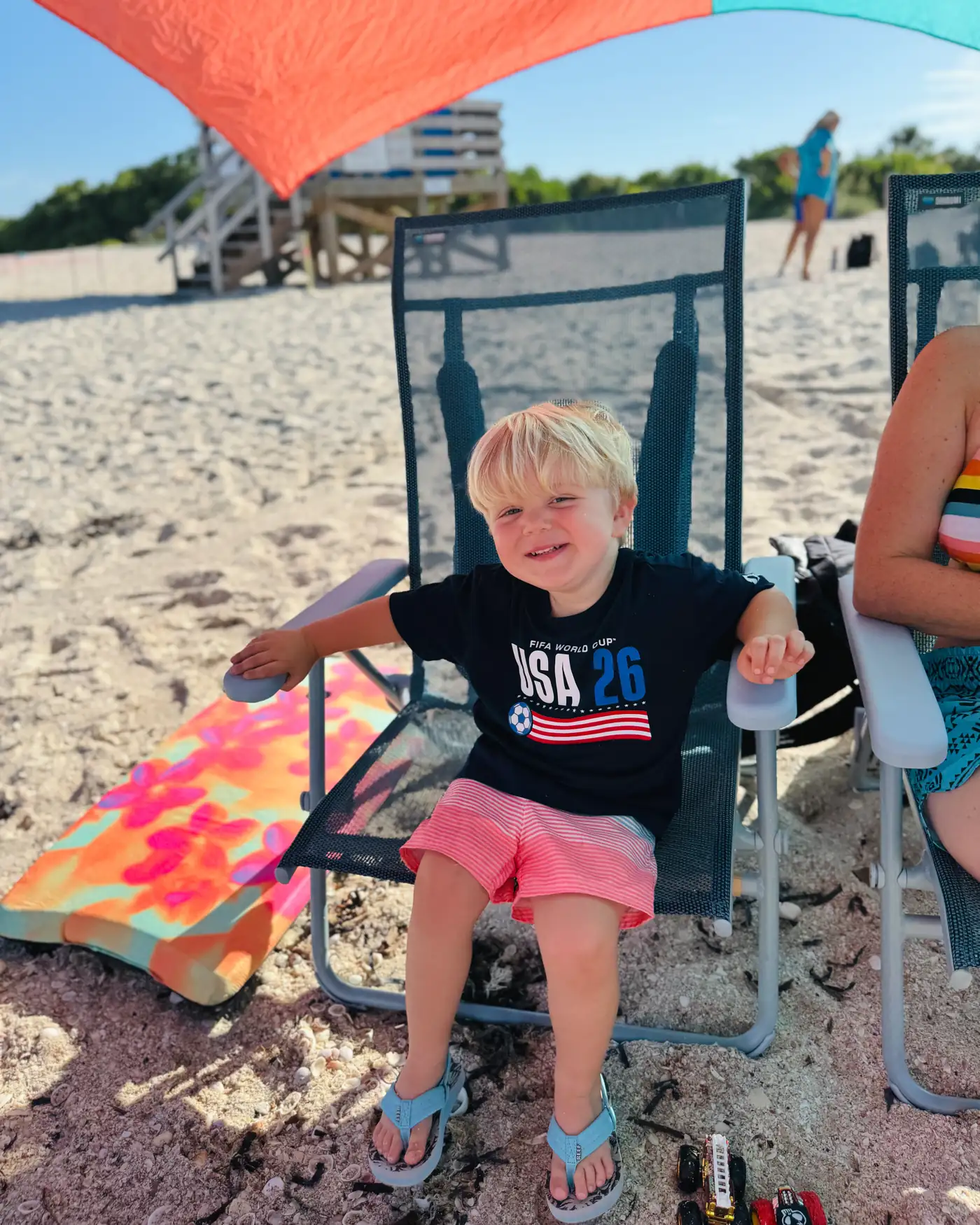
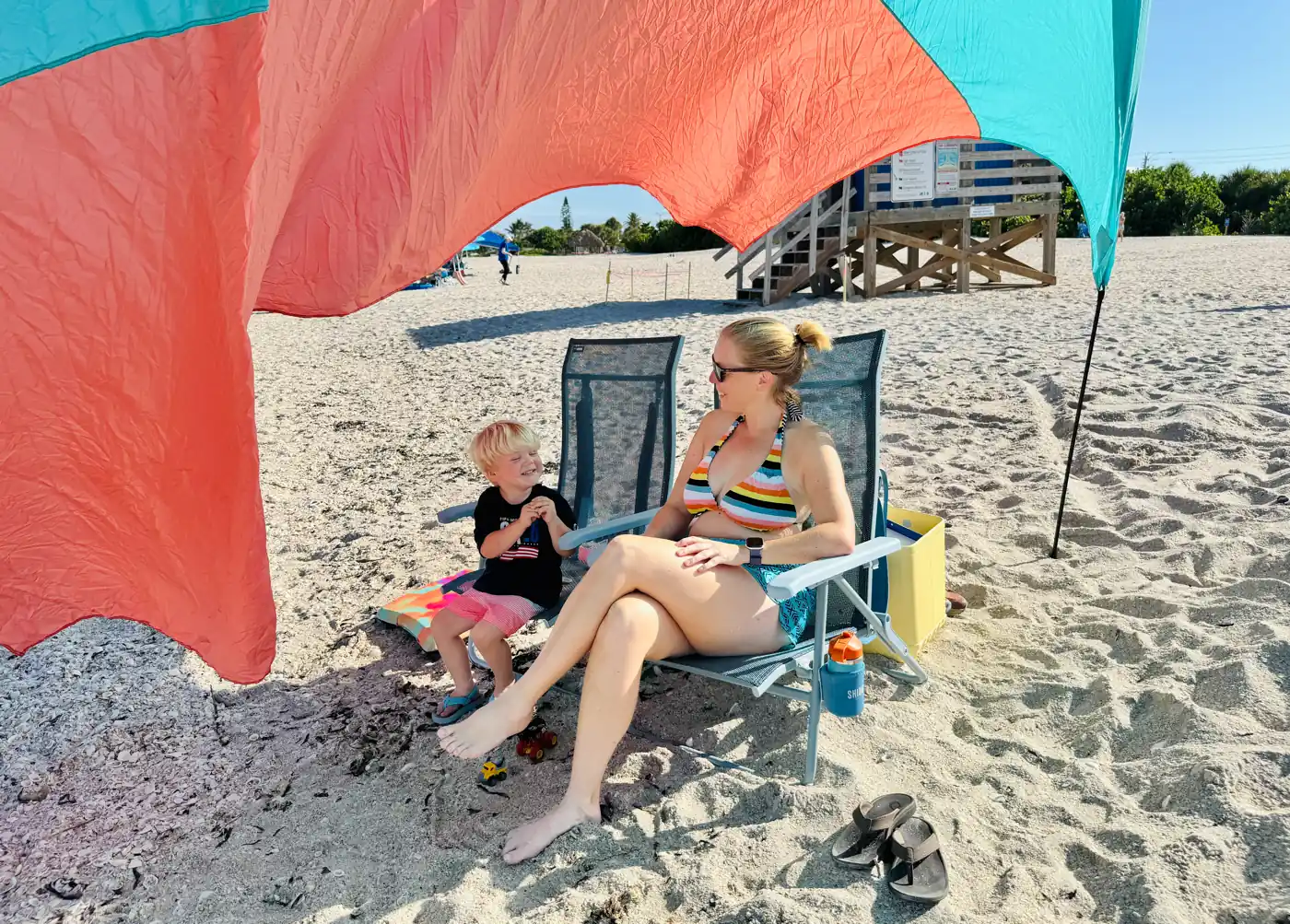
The elevated seat height is the detail we noticed first. At roughly 12 inches off the sand, it is genuinely easier to get in and out of than a standard low beach chair, especially after a long run when your legs are not feeling generous.
The 300 lb capacity and four recline positions mean it fits a wide range of builds and preferences, from sitting upright to fully reclined for a nap.
Features we love about the Shibumi Chair
No crossbar, no problem
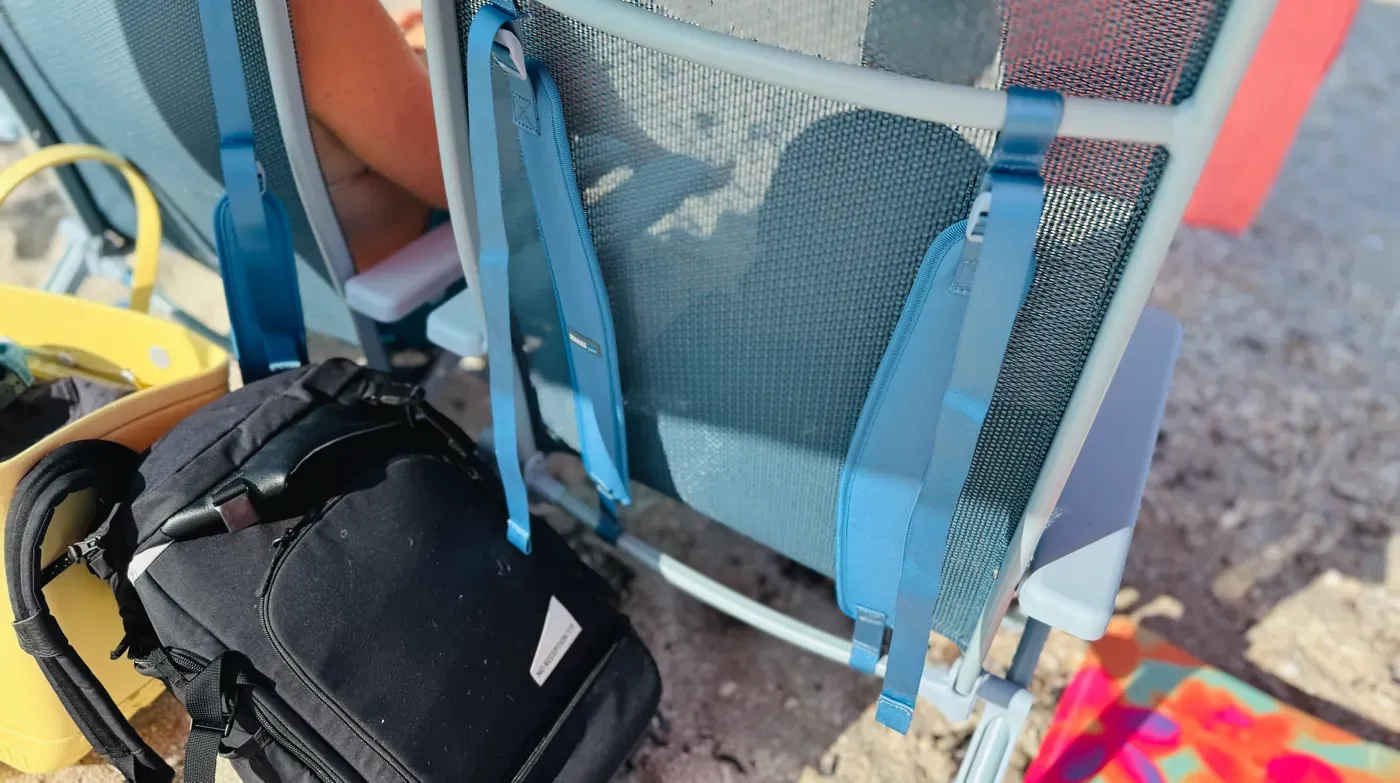
The suspended DreamWave mesh design means there is nothing digging into your lower back, which is the single biggest complaint we have with traditional aluminum-frame beach chairs. It feels closer to a hammock than a chair in the best way.
It stays cool
Breathable mesh instead of solid fabric means no sweaty back or legs after an hour in the Florida sun, which is a bigger deal than it sounds once the afternoon heat sets in.
Built for salt air, not just a beach trip
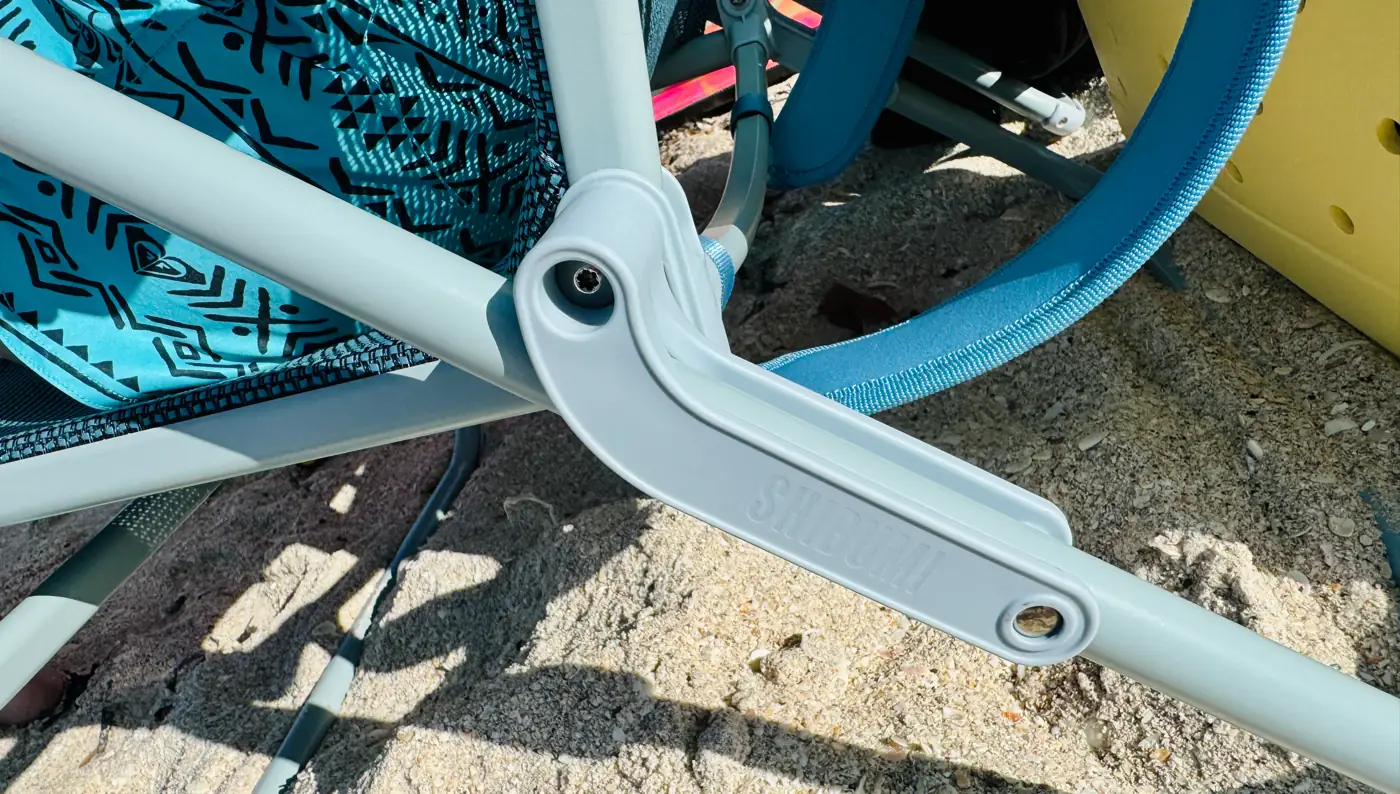
The marine-grade aluminum frame and stainless steel hardware are specifically designed to resist the rust and corrosion that kill cheaper beach chairs within a season or two of real salt exposure. Backed by a lifetime limited warranty.
It carries like a backpack
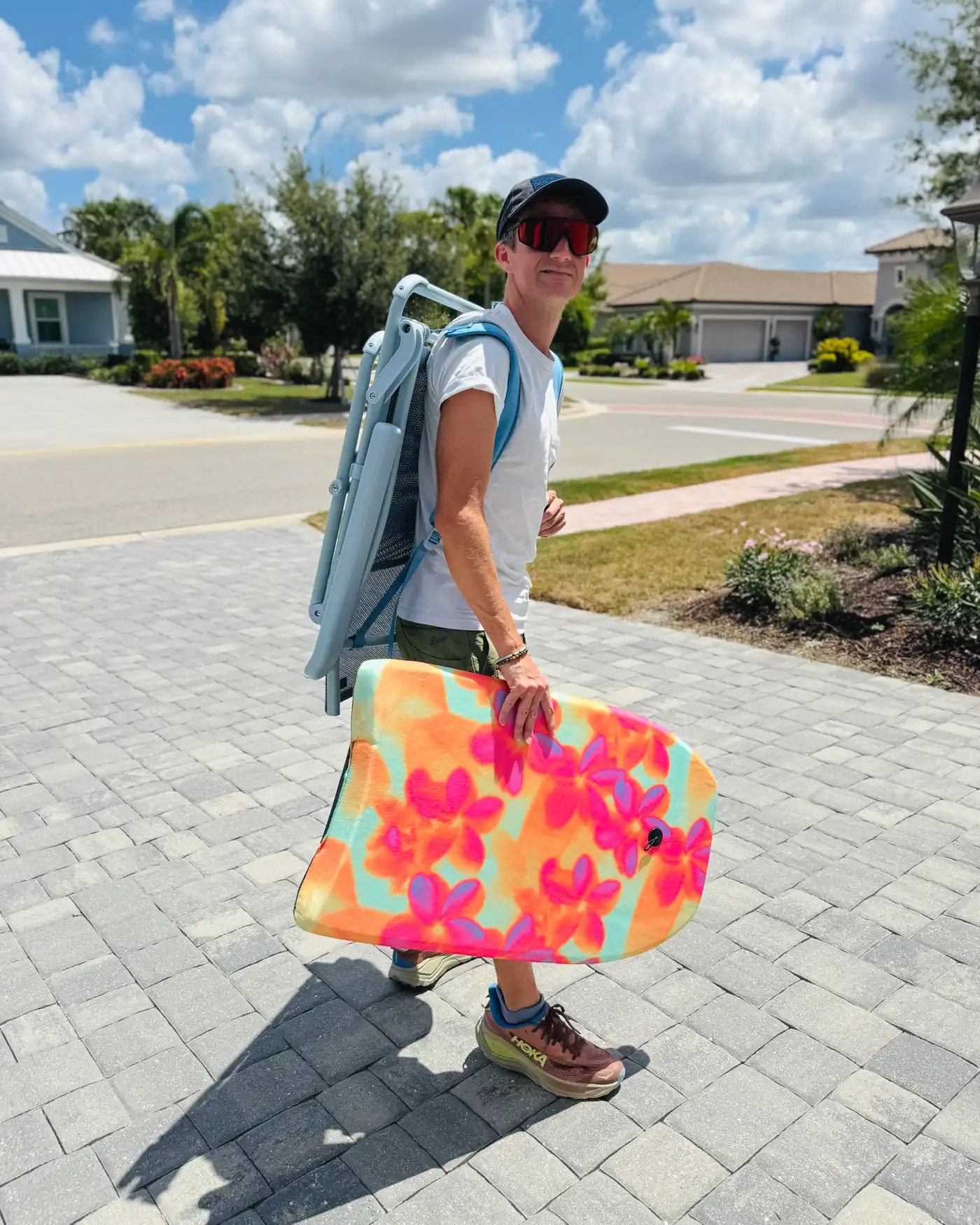
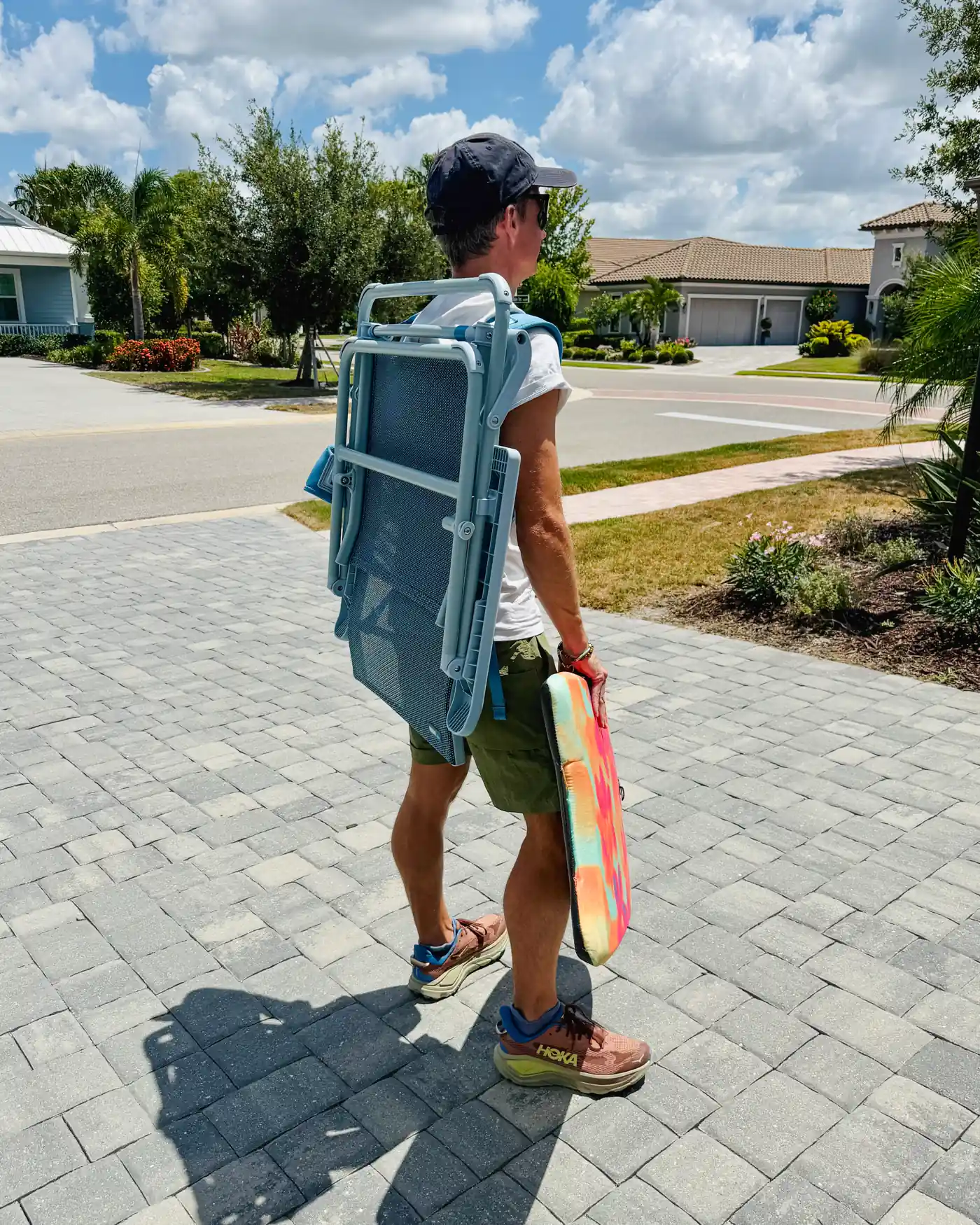
Padded straps mean both chairs go on your back hands-free, which is genuinely useful when you are also carrying the Shibumi Shade, a cooler and Sebastian's bucket and spade collection in one trip from the car.
The small details are thought through
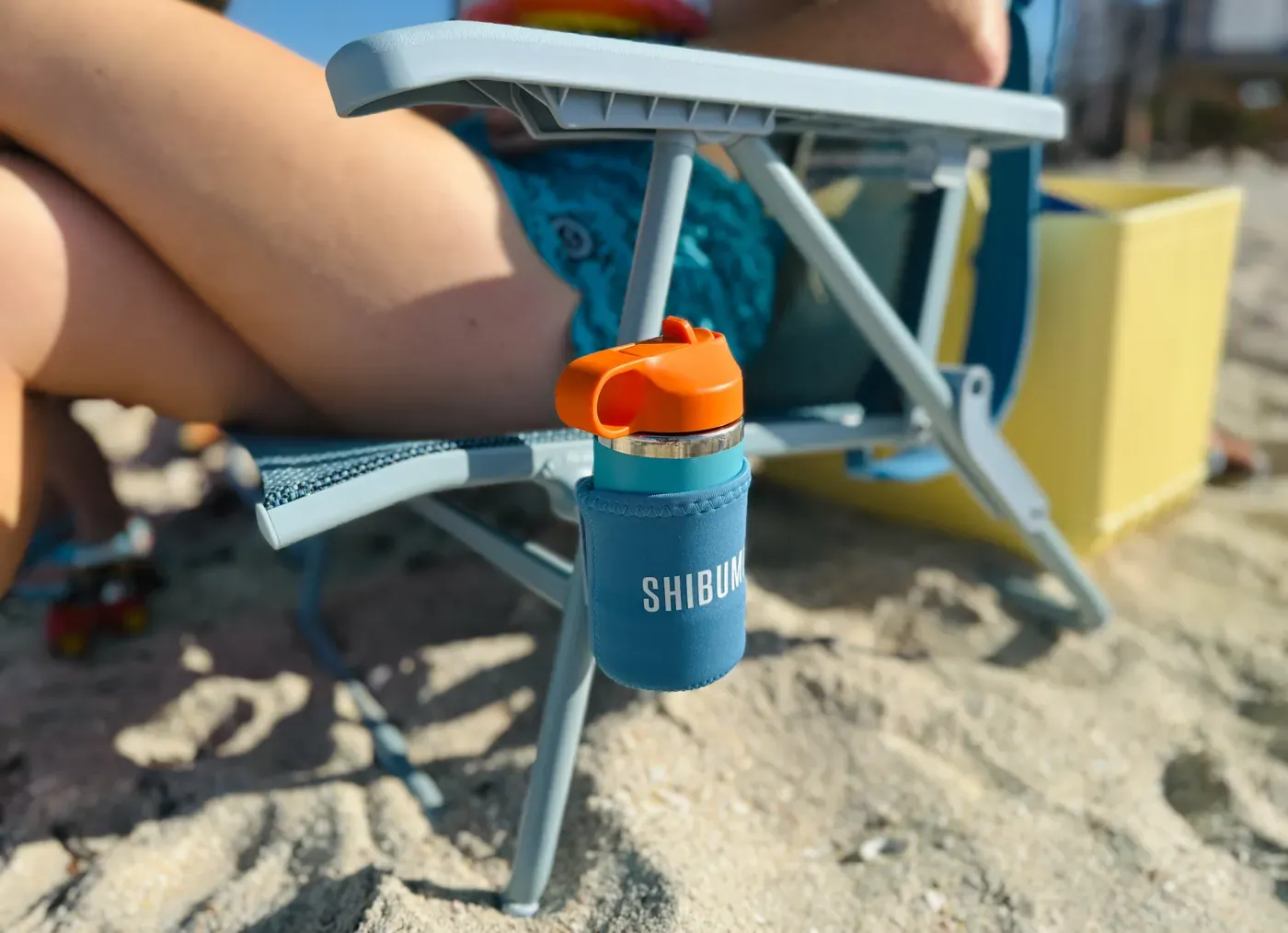
Each chair includes a neoprene drink holder and a small pouch for keys, phone and sunscreen, with double ports if you want two holders.
Shibumi also sells 2-Chair Carry Clips to clip a pair together for one easy carry, and an XL Cup Holder if you use a larger insulated tumbler. We have not tested either accessory yet, so we will hold off recommending them until we have.
What could be improved
At 8 lbs each, this is not an ultralight chair, though the trade-off is a sturdier frame and a more supportive recline than lighter alternatives typically offer.
My verdict
Between the Shibumi Shade Classic and the Shibumi Chair, this has become our actual beach setup, not just gear we tested once and put away.
The Shade's Quiet Canopy genuinely fixed the flapping issue that used to be the brand's biggest weakness, the Wind Assist sandbags make calm days a non-issue, and the Sea Glass color is one of the better-looking pieces of beach gear we own.
The chairs solve the two real problems that come with cheap beach seating: the crossbar digging into your back, and the frame rusting out within a season. The elevated seat and recline range make them comfortable enough for a full afternoon, and the marine-grade build means they should hold up to years of Gulf salt air rather than one or two summers.
If you are searching for beach gear that survives real beach use, this pairing is worth the investment.
If you haven't already, signup for our free newsletter, for more quality outdoor content like this. -Alastair
Sun protection matters just as much when you head out for a run on the beach. If you are planning a Gulf Coast run before or after your beach day, our guide to running on the beach covers sand conditions, footwear and pacing, and our best sunscreen for runners roundup is worth a look before you head out into that same sun.
Written by

Subscribe to new posts
Gear that earns its place, outdoors and at home | Reviews, Roundups, News








Member discussion