
Backpacking Base Weight: What It Means and How to Reduce Yours
What is backpacking base weight, what's included, and how do you lower it? Learn the weight tiers, benchmarks, and reduction strategies that actually work.

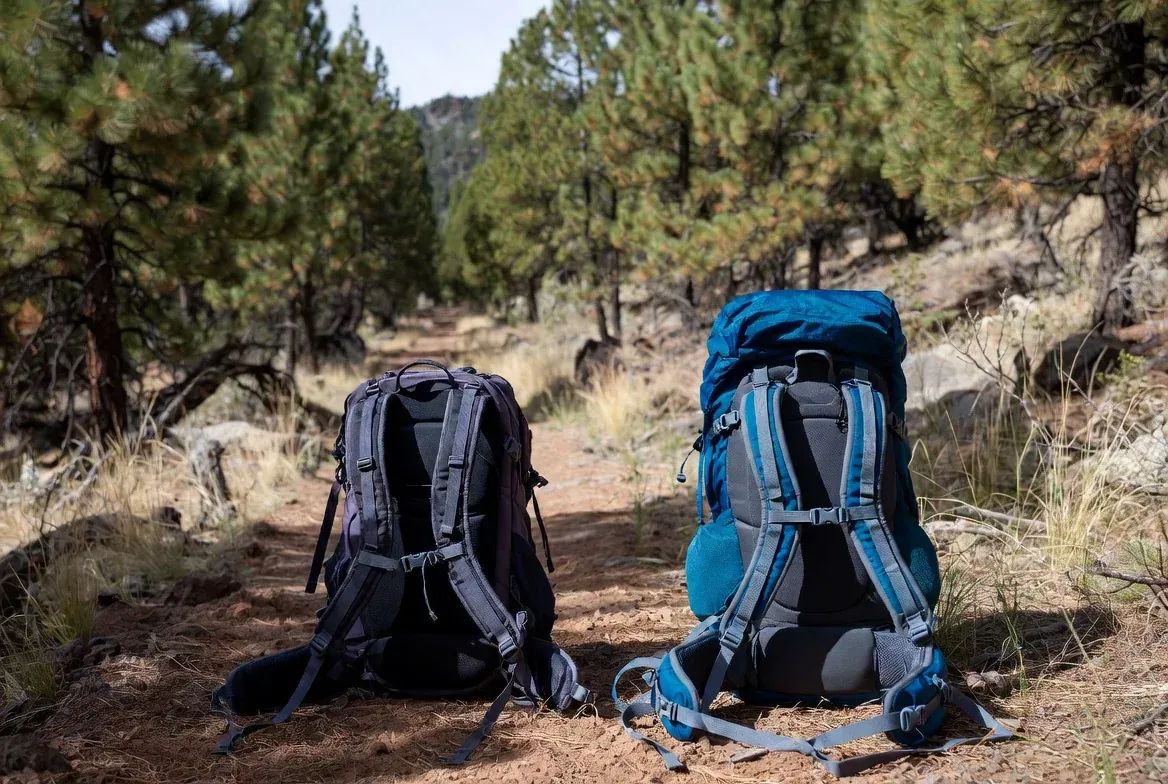
Your back knows how heavy your pack is, and your knees certainly do, but do you actually know your base weight, and what it's telling you about how efficiently you're packing for a hike?
Understanding backpacking base weight is one of the most useful things you can do as a hiker. It gives you a single, repeatable number that tells you where you stand, how much room you have to improve, and what's costing you the most on the trail.
This guide explains exactly what base weight means, what counts (and what doesn't), what a good number looks like, and most importantly, the practical strategies that will help you shave pounds without sacrificing safety or comfort.
What Is Backpacking Base Weight?
Base weight is the total weight of everything in your pack, excluding consumables. Consumables are the items you use up and discard on a trip: food, water, and fuel. Everything else like your shelter, sleep system, clothing, navigation tools, first aid kit, and the pack itself, counts toward your base weight.
The reason hikers use base weight rather than total pack weight is consistency.
Your total pack weight changes constantly as you eat your food and drink your water. Base weight, by contrast, stays essentially fixed across a trip and across trips of different lengths. A five-day outing and a two-day outing will look very different in total weight, but they'll have (roughly) the same base weight if you're using the same gear. That makes it a meaningful benchmark.
What's Included in Backpacking Base Weight?
Everything you carry that isn't consumed during the trip:
- The Big 3: Pack, shelter (tent, tarp, or bivy), and sleep system (sleeping bag/quilt + sleeping pad)
- Clothing: Everything you're wearing or carrying; insulation layers, rain gear, base layers, socks, footwear
- Navigation: Map, compass, GPS device
- Safety & first aid: First aid kit, emergency blanket, whistle, bear canister or hang kit
- Lighting: Headlamp and spare batteries
- Cooking system: Stove, pot, utensils, lighter (but not the fuel or food)
- Water treatment: Filter, purification tablets, or UV pen (but not the water itself)
- Hygiene & repair: Toothbrush, sunscreen, repair kit, duct tape, stuff sacks
- Trekking poles (a common point of confusion — see the FAQ)
Best headlamps for hiking at night (2026 picks)
The five best headlamps for hiking at night, for pre-dawn starts, post-sunset descents, and full night hikes. Honest picks for every kind of hiker.
 Alastair Dixon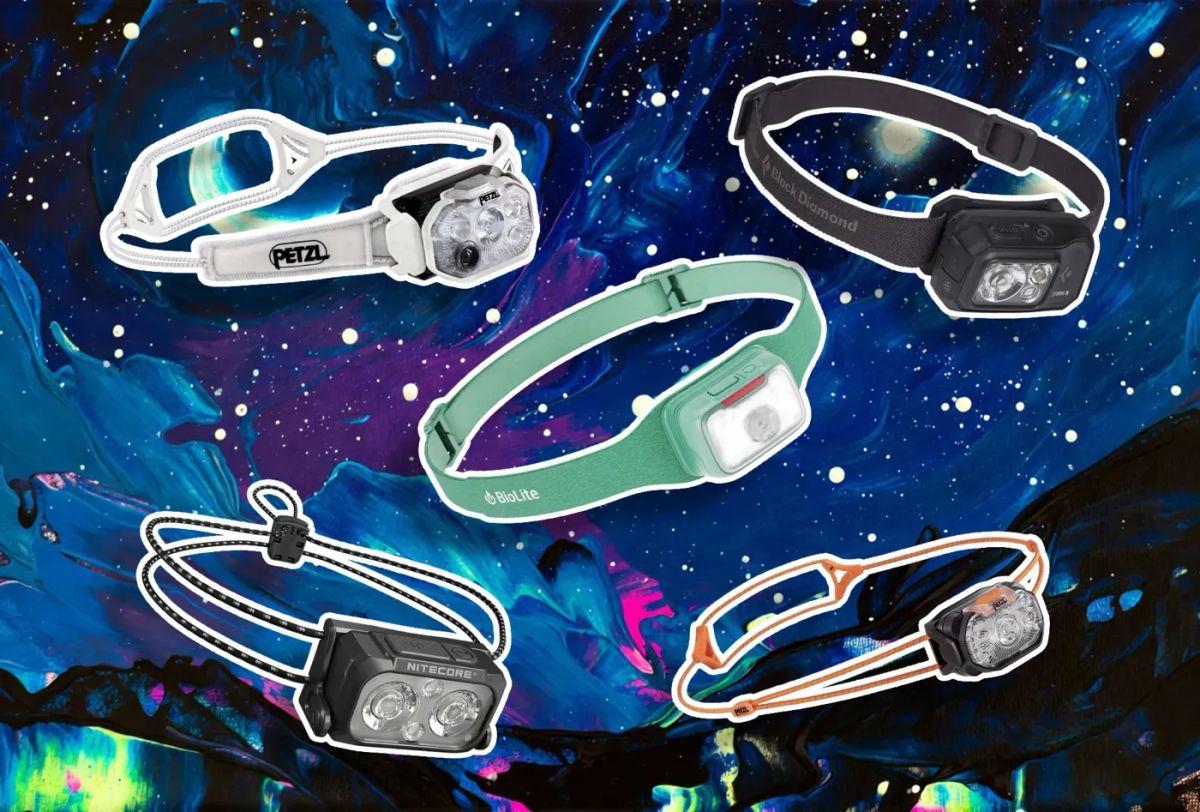
What Is Not Included in Base Weight?
- Food — all of it, regardless of weight
- Water — including what's in your bottles or reservoir
- Fuel — canisters or liquid fuel
- Anything you wear on your body at the trailhead — though this is a gray area
Ultralight Backpacking Gear: The Complete Kit Guide
How to build a sub-10lb ultralight backpacking kit, with the best lightweight gear from REI across every category, plus a free base weight calculator.
Alastair Dixon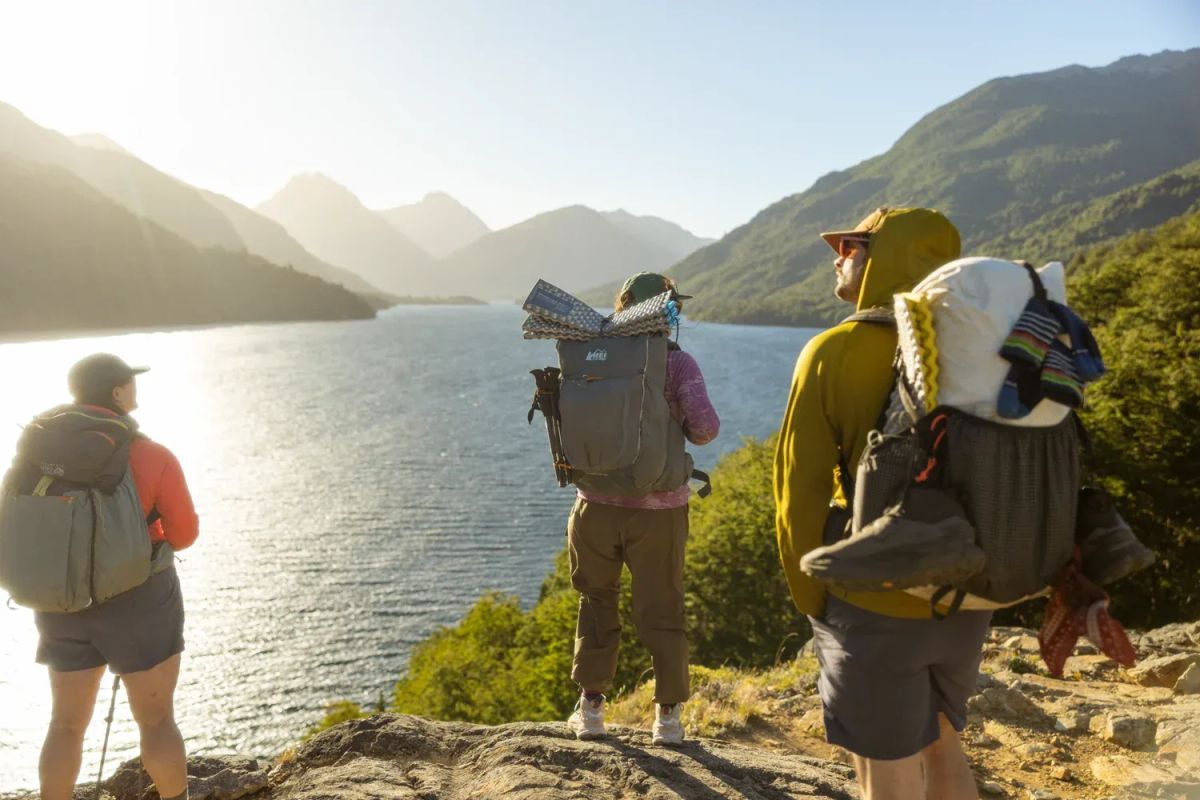
The Four Backpacking Weight Categories
The hiking community has settled on four broadly recognised weight tiers, defined by base weight. You'll see slight variations depending on who you ask, but these are the most widely used benchmarks:
| Category | Base Weight |
|---|---|
| Traditional / Conventional | Over 20 lbs (9 kg+) |
| Lightweight | 10–20 lbs (4.5–9 kg) |
| Ultralight | Under 10 lbs (4.5 kg) |
| Super Ultralight (SUL) | Under 5 lbs (2.3 kg) |
Traditional backpacking is where most people start. A full-featured tent, a mummy bag, a 65-litre pack; before you've added a stitch of clothing or gear, you might already be at 15 lbs. There's nothing wrong with this for casual trips, but it becomes noticeable on long days and mountainous terrain.
Lightweight backpacking is the first step toward intentional packing. You're still carrying a full complement of gear, but you've started choosing items with weight in mind. Most experienced backpackers naturally land here once they've done a few trips and replaced their heaviest items.
Ultralight backpacking (sub-10 lbs) is where gear selection becomes a discipline in itself. It's achievable without spending a fortune, but it requires real trade-offs: smaller shelters, quilt-style sleep systems, frameless or semi-frameless packs, and stripping out redundancy wherever possible.
Super ultralight is the domain of experienced thru-hikers and gram-counters. Below 5 lbs base weight leaves almost no margin for comfort items, and it demands deep knowledge of what you actually need in the field versus what you're carrying out of habit or anxiety.
What Is a Good Backpacking Base Weight?
There's no single "correct" answer here; it depends on conditions, terrain, experience, and personal risk tolerance. But here's a practical framework:
For a three-season overnighter in moderate conditions: A base weight in the 12–15 lb range is entirely reasonable for most people. You'll be comfortable, safe, and carrying a manageable load.
If you're doing long-distance hiking or multi-week trips: Getting into the lightweight range (10–12 lbs or below) makes a significant difference over hundreds of miles. The cumulative toll of an extra 5 lbs is much harder to dismiss on day 18 than on day 1.
If you're in technical terrain, cold conditions, or going solo in remote areas: Don't chase a low number at the expense of appropriate gear. Safety margins and weather redundancy justify extra weight.
The 20% rule: A frequently cited guideline (popularised by REI and others) suggests your total pack weight (base weight + food + water) shouldn't exceed 20% of your body weight. This is a rough starting point, not a rule. Fit hikers regularly carry more; people with joint issues often do better staying well below it.
The most useful question isn't "what's a good base weight?" but "what's my heaviest item, and do I actually need it to be that heavy?" That leads somewhere actionable.
How to Calculate Your Base Weight
The process is simple: weigh every item you carry (excluding food, water, and fuel), and add them up.
A kitchen scale accurate to 1 gram is more than sufficient. Weigh everything individually, record it in a spreadsheet or our backpacking base weight calculator, and look at the total.
The exercise is often more instructive than the final number. Most hikers are surprised by which items are the heaviest, and surprised by how many small items they'd forgotten to account for.
If you'd rather not build a spreadsheet from scratch, our ultralight backpacking gear guide includes a base weight calculator; enter your items and it tallies the total as you go.
Ultralight Backpacking Gear: The Complete Kit Guide
How to build a sub-10lb ultralight backpacking kit, with the best lightweight gear from REI across every category, plus a free base weight calculator.
Alastair DixonHow to Reduce Your Backpacking Base Weight
Here's the practical part. These strategies are roughly ordered from highest-impact to most granular.
1. Focus on the Big 3 First
Your pack, shelter, and sleep system typically account for 50–70% of a traditional backpacker's base weight. Any money or effort you spend reducing weight elsewhere is far less efficient than addressing these three categories first.
- Pack: A 65-litre pack with a heavy frame might weigh 5–6 lbs. An ultralight 40–50 litre alternative can come in under 2 lbs. You also get a smaller pack, which naturally limits how much you'll stuff into it.
- Shelter: A double-walled freestanding tent is comfortable and forgiving, but a good single-wall or trekking-pole shelter can cut your shelter weight in half. Tarps go further still, at the cost of complexity and weather protection.
- Sleep system: A sleeping quilt instead of a mummy bag, sized for actual conditions rather than maximum cold, is one of the most effective single weight reductions available. Swapping a 3-season bag for a well-matched quilt can save 1–2 lbs on its own.
2. Audit What You Actually Use
The most honest weight-reduction exercise is to unpack your bag after a trip and separate what you used from what you didn't touch.
Most people discover at least a few items that made the journey out and back without ever leaving the pack. Some of those are genuine safety items that you should carry regardless; an emergency blanket, a whistle, a first aid kit. Others are redundancies or comfort items carried out of habit. The distinction is worth making consciously.
3. Wear Your Heaviest Clothing
Your base weight includes everything in your pack. It doesn't include what you're wearing to the trailhead. On a cold-weather trip, putting on your insulated jacket and rain shell before the hike starts instead of stashing them in your pack is a perfectly legitimate way to reduce base weight; and it's the same weight on your body either way.
4. Match Your Gear to the Actual Conditions
One of the most common causes of excessive base weight is packing for conditions that are more extreme than the trip you're actually doing.
Carrying a -20°F sleeping bag on a summer trip in the Appalachians because "you never know" adds real weight without real benefit. Using a reliable weather forecast, researching overnight lows for your specific area and dates, and matching your gear to those conditions rather than worst-case scenarios is one of the most effective non-gear changes you can make.
5. Repackage and Eliminate Redundancy
Check your pack for:
- Duplicate tools: Two lighters, two knives, multiple fire starters
- Commercial packaging: Decanting sunscreen, body glide, and medications into small containers rather than carrying the full-size retail versions
- Items with overlapping functions: A first aid kit full of supplies for injuries that are covered three times over; a rain jacket and a poncho
None of these individually saves enormous weight, but collectively they add up, and more importantly, they sharpen your awareness of what's actually earning its place.
6. Consider Material Upgrades Strategically
Titanium cookware, Dyneema (Cuben Fiber) shelters, and down insulation all offer significant weight savings over their conventional counterparts. But they're also expensive, and weight savings from material upgrades are almost always smaller than the savings from category-level decisions (like switching from a tent to a tarp, rather than buying a lighter tent).
Spend on gear upgrades in order of their weight impact, not their novelty.
7. Track Your Weight Over Time
Knowing your base weight before and after gear changes is the only way to measure whether they're actually working. A simple spreadsheet with your gear list and item weights is sufficient. Update it every time you swap something out, and check your running total.
Frequently Asked Questions
Does base weight include the backpack itself?
Yes. The pack is part of your base weight. This surprises some people, since you're obviously carrying it but the pack is not consumed during the trip, so it counts. A heavy pack frame is often one of the biggest single targets for weight reduction.
Does base weight include trekking poles?
Generally yes, if you're carrying them as standard gear. Some hikers argue poles are "worn" rather than "carried" and exclude them on that basis, but the mainstream convention is to include them in base weight. What matters more than the convention is being consistent in how you calculate your own number.
Does base weight include water bottles or reservoirs?
The containers count toward base weight; the water in them does not. An empty Nalgene is base weight. A full one is not.
Is there a "good" base weight for beginners?
There's no magic number, but a practical goal for someone just starting to optimise their kit is to get into the 15–18 lb range for a typical three-season trip. That's achievable with a modest amount of intentional gear selection without requiring expensive ultralight-specific purchases. From there, incremental improvements are much easier to identify.
What's the difference between base weight and pack weight?
Base weight is fixed (gear only, no consumables). Pack weight (also called skin-out weight or carried weight), is everything, including food, water, and fuel. On a weekend trip carrying two litres of water and two days of food, pack weight might be 6–8 lbs more than base weight. On a week-long desert crossing with a full water carry, it could be 15+ lbs more.
Is ultralight backpacking less safe?
Not inherently. The safety of a pack depends on whether it contains the right gear for the conditions, not whether it weighs 8 lbs or 18 lbs. A well-thought-out ultralight kit with appropriate emergency items is safer than a heavy traditional kit with redundant comfort gear but inadequate rain protection.
The risk comes from cutting weight in the wrong places (safety items, weather protection, navigation) to chase a number.
The Bottom Line
Your base weight is a tool, not a score. It tells you how much margin you have (for comfort, for extra food, for a longer trip) and it gives you a concrete way to measure whether changes you make are actually working.
The most useful shift in mindset isn't "I want to be an ultralight hiker" It's "I want to carry exactly what I need, and nothing more" For most people, that process alone, over a few trips, with a kitchen scale and a spreadsheet, will naturally move them from conventional into lightweight territory without buying a single new piece of gear.
When you do start upgrading gear, the Big 3 is where your money will do the most work. And if you want to know exactly where your kit stands right now, the base weight calculator in our ultralight backpacking gear guide will give you your number in a few minutes; along with our top picks by category and a full printable gear checklist.
If you haven't already, signup for our free newsletter, for more quality outdoor content like this. -Alastair
Written by

Subscribe to new posts
Gear that earns its place, outdoors and at home | Reviews, Roundups, News






Member discussion