
What is ultralight backpacking? A complete beginner's guide
Everything you need to know about ultralight backpacking: what it means, how the weight breaks down, and how to build a lighter kit without overcomplicating it.


There's a point on most long trails where the math of your pack starts to work against you. Your hips are negotiating with you. Your shoulders are somewhere between sore and numb. The miles ahead feel longer than the miles behind, and you're spending mental energy managing discomfort that has nothing to do with the actual experience of being outside.
Ultralight backpacking is, at its core, a solution to that problem.
It's not a gear obsession or a gram-counting competition, even though it can look like that from the outside. It's a philosophy built on one practical premise: the lighter your pack, the more energy you have for everything else.
This guide covers what ultralight backpacking actually means, where the weight lives in a typical kit, and how to get started without overhauling everything at once.
The definition comes down to base weight
Ultralight backpacking is defined by base weight, which is the total weight of everything you carry excluding consumables. Food, water, and fuel don't count. Neither does the clothing you're wearing when you leave the trailhead.
The widely used thresholds are:
- Super ultralight: under 5 lbs (2.3 kg)
- Ultralight: 5–10 lbs (2.3–4.5 kg)
- Lightweight: 10–20 lbs (4.5–9 kg)
- Traditional: over 20 lbs (9 kg)
The 10 lb mark is the one that matters most practically. Get your base weight under 10 lbs and you'll feel it on the first long climb. Get it under 7 lbs and the pack starts to disappear.
These numbers aren't rigid rules. A base weight of 11 lbs built around durable, reliable gear you trust will serve you better than a 7 lb kit you've cobbled together with anxiety. But the thresholds give you a useful framework for evaluating where you are and what's possible.
Why go lighter? The real-world case
The appeal of ultralight backpacking isn't primarily about speed, though you will move faster with less on your back. It's about the benefits that lighter weight gives you access to.
You recover better. A lighter pack means less cumulative strain on your knees, hips, and shoulders over multiple days. On a three-day trip this might feel like a minor difference; on a week-long route it becomes significant. Hikers who struggle with joint issues often find that shaving even two or three pounds from their base weight changes what's possible for them.
You go further. This is almost automatic. When the pack isn't fighting you, you naturally cover more ground. Day two of a multi-day trip doesn't start with you dreading the pack. The trail opens up.
You enjoy the experience more. This sounds obvious but it's easy to overlook. Backpacking under a crushing load can become a sufferfest with scenery. Ultralight backpacking, on the other hand (even a modest version of it), shifts the equation so the point of the trip is actually the mountains, the sunsets, the people you're hiking with.
None of this requires extreme minimalism. A 9 lb base weight is ultralight by definition, and it's genuinely achievable without spending a fortune or sacrificing comfort.
Where the weight lives: 'the big three'
In any backpacking kit, three categories account for the majority of the weight: your pack, your shelter, and your sleep system.
This is where the ultralight community focuses first, and it's the right instinct. Shaving a pound from any one of these has more impact than optimizing everything else combined.
The pack
Traditional hiking packs are built for loads. They have thick frames, padded stays, heavy hip belts. All of that is weight you carry whether you need it or not. Ultralight packs (frameless or with minimal frames) are designed to carry 15–25 lbs rather than 50. Once your base weight drops, you don't need the structural support of a heavy pack to manage it.
The shelter
A two-person tent with a full frame and full fly can weigh 5–6 lbs on its own. That's already over half your ultralight budget. Ultralight alternatives (single-wall tents, cuben fiber shelters, tarps with trekking pole setups) can bring shelter weight down to 1–2 lbs without meaningful trade-offs in protection. The quality of ultralight shelter has improved enormously in recent years; you're not sacrificing weather resistance for a lighter pitch anymore.
The sleep system
A quality down sleeping bag or quilt paired with an insulating sleeping pad can weigh anywhere from 1.5 lbs on the ultralight end to 5+ lbs in a traditional setup. The quilt format, which cuts the insulation beneath you (since it's compressed by your body weight and provides no warmth anyway), has become the dominant ultralight sleep solution for good reason.
If you're starting from a traditional kit, work through these three categories before touching anything else. The gains here dwarf the gains from lighter sporks.
Beyond the big three
Once your pack, shelter, and sleep system are dialed, the next areas worth attention are clothing layers, footwear, and the small items that accumulate in every kit.
Clothing layers. Ultralight hikers tend to carry fewer redundant layers and rely on the clothing they're wearing as part of their system. A well-chosen rain jacket, a single midlayer, and a base that works across a range of temperatures does the job for most three-season conditions. The key is layering intentionally rather than packing for every hypothetical.
Footwear. All mountain trail running shoes instead of boots is one of the most common ultralight conversions, and one of the most impactful. Boots provide ankle support and durability but they carry significant weight with every step.
The Best Trail Running Shoes, right now (No-nonsense guide)
Simple, no-nonsense recommendations with my personal top 2 picks for road-to-trail hybrids, all-mountain workhorses, ultra cushioned cruisers, and lightweight trail racers.
 Alastair Dixon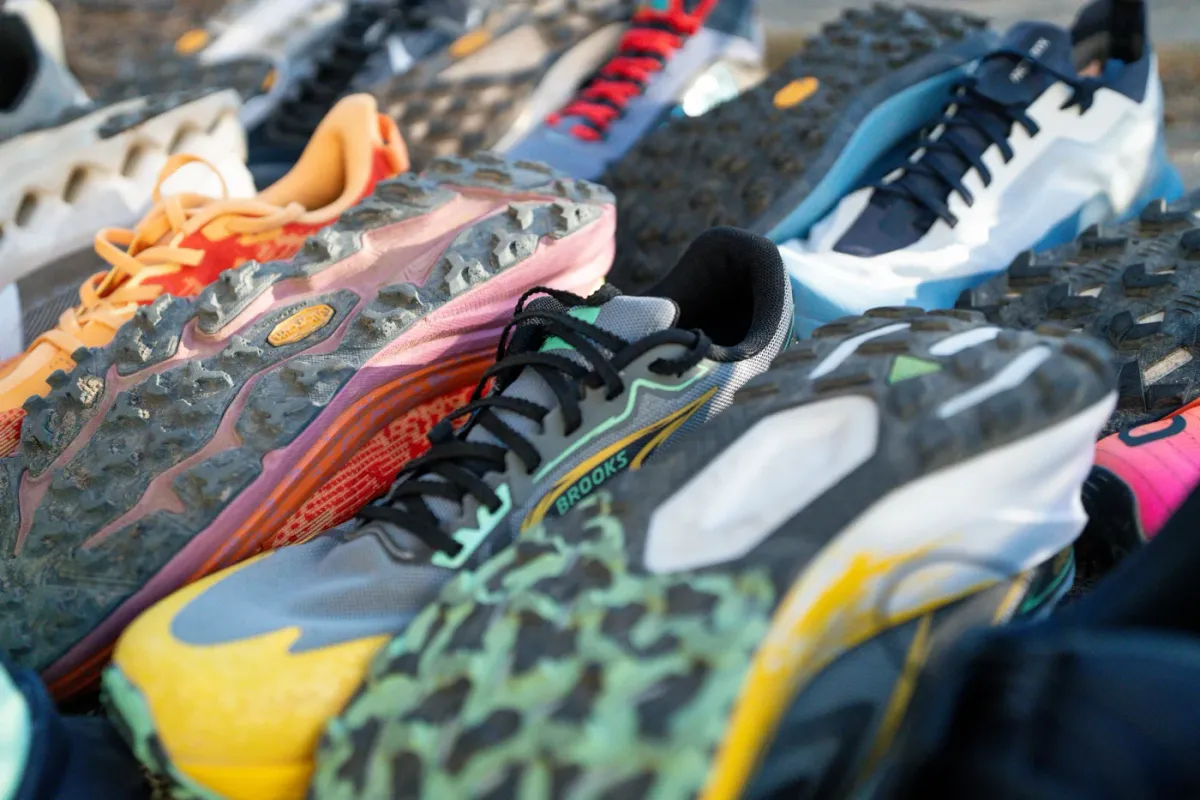
Many experienced ultralight backpackers have moved entirely to trail running shoes, particularly on established trails and for shorter routes. Your footwear lives at the end of your legs; even small weight savings here are amplified with every stride.
The small stuff. A first aid kit, repair supplies, navigation tools, a headlamp: every item in the accessory category is worth examining for dual-use opportunities and unnecessary redundancy. This is the category where traditional backpackers tend to over-pack, carrying gear for scenarios that almost never happen.
Understanding your base weight
Before you start making changes, it's worth knowing where you actually stand. Lay out everything you currently carry and weigh each item. A kitchen scale works. Apps like Lighterpack let you build a digital gear list and track the total automatically, or you can just use our free base weight calculator.
Most people who do this for the first time discover they're carrying significant weight in items they'd forgotten were in the pack, duplicates of things they didn't realize they had two of, and comfort items that haven't actually been used on the last several trips.
The audit alone often identifies five or more pounds of weight that can be removed without replacing anything. Before buying a lighter tent, the question is always: is there anything I can leave at home?
Our guide to backpacking base weight: what it means and how to reduce it walks through the process in more detail, with a practical framework for evaluating each item in your kit.
Getting started: do this, not that
The wrong way to get into ultralight backpacking is to buy an entirely new kit all at once. The gear is expensive, and without knowing how you'll use it, the risk of buying wrong is real.
The better path is this:
Start by auditing and removing. Do the gear audit. Leave things at home. Carry less. This costs nothing.
Prioritize the big three, but replace them gradually. Identify which of your three core items is heaviest relative to what's available. Replace that one first. A year later, the next one.
Rent or borrow before committing. Most REI stores rent ultralight gear, which is a practical way to try a lightweight shelter or sleep system before a significant purchase. This is especially useful for quilts, which are a genuine adjustment if you're used to a mummy bag.
Match your kit to your style of hiking. An 8 lb base weight optimized for fast, technical ridge hikes looks different from an 8 lb base weight designed for comfortable two-night trips in mixed weather. Gear choices should reflect how you actually backpack, not how you imagine you might someday backpack.
Is ultralight backpacking for you?
Ultralight backpacking suits almost everyone who backpacks, but it suits some people more immediately than others.
It's a natural fit if you're covering long distances, if your current pack weight is causing discomfort or affecting your enjoyment, if you're planning multi-day routes with significant elevation, or if you want to move between campsites at a faster pace.
It's also particularly well-suited to people returning to backpacking after time off who find traditional pack weights harder to manage than they used to.
The one honest caveat: going very light (under 7 lbs) requires accepting some trade-offs, usually around comfort, redundancy, and conditions tolerance. A fully minimalist kit handles a good weather trip beautifully and a bad weather trip adequately.
For technical winter routes, shoulder-season alpine conditions, or trips where full weather protection is non-negotiable, a slightly heavier and more robust kit is the right call. The point of ultralight backpacking is never to be reckless. It's to be thoughtful.
Where to go from here
If you're ready to start building or refining a kit, our ultralight backpacking gear guide covers the specific categories in detail, with gear picks across the pack, shelter, sleep system, clothing, and accessories.
Ultralight Backpacking Gear: The Complete Kit Guide
How to build a sub-10lb ultralight backpacking kit, with the best lightweight gear from REI across every category, plus a free base weight calculator.
 Alastair Dixon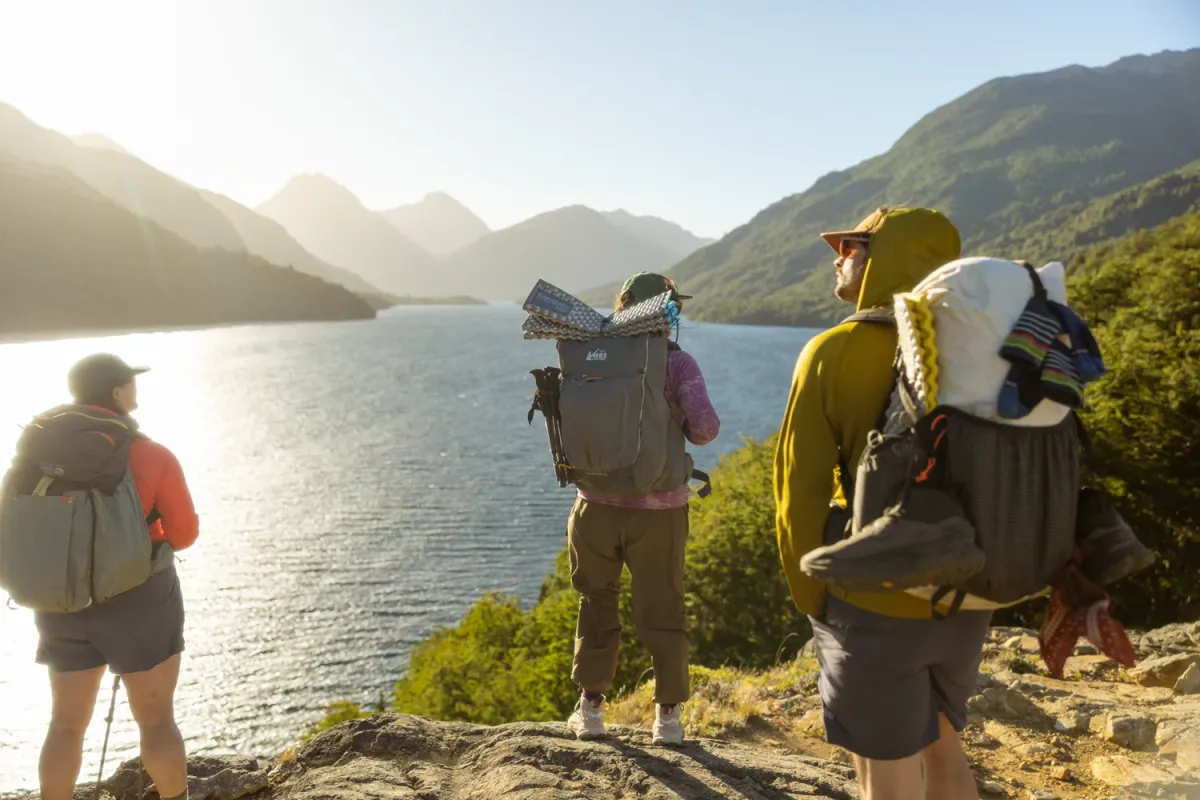
For category-by-category roundups as you're making purchasing decisions:
- Best ultralight backpacking tents — solo and two-person options for every budget
- Best ultralight backpacking quilts — the sleep system upgrade worth making
- Best ultralight backpacks — frameless and minimal frame options that actually carry well
- Ultralight backpacking gear list and checklist — everything you need, nothing you don't
If you haven't already, signup for our free newsletter, and subscribe to our YouTube Channel for more quality content like this. -Alastair
Written by

Subscribe to new posts
and discover the best gear, healthy foods, and life outdoors.








Member discussion