
Ride1UP Revv 1 DRT review: a tough, fast moped-style ebike built for dirt and mixed terrain
A 1000W Bafang motor, full suspension, and 4-piston brakes make the Revv 1 DRT a fun, confident on or off-road ride, just be prepared for how much it weighs.

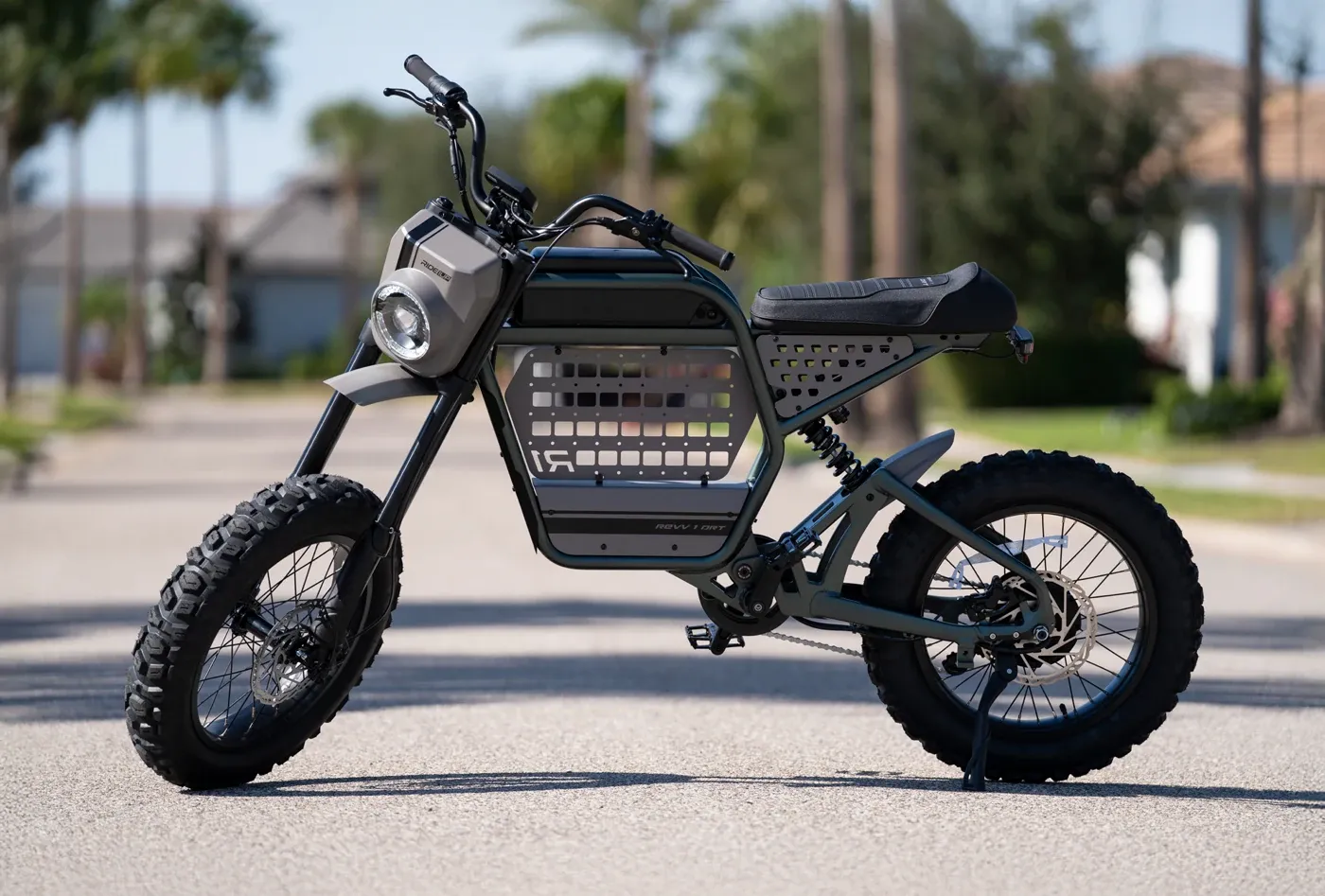
The Ride1UP Revv 1 DRT sits in that sweet spot between “this is basically a mini moped” and “yeah, it still counts as an ebike, because it is shipped out as a 'Class 2' electric bike (I'll share how to unlock off-road mode which makes it much faster), and the fact it comes with pedals”.
It has the stance, the cafe-style saddle, the moto headlight and fairing, and the chunky tires… but it’s also built around the things that actually matter when you leave smooth pavement behind: full suspension, 4-piston hydraulic brakes, and a 1000W Bafang motor that powers the whole experience.
This is the kind of ebike that makes sense for a lot of locations, including Florida riding where my routes can turn into a mix of neighborhood streets, bike paths, sandy connectors, and the occasional “let’s see where this goes” detour.
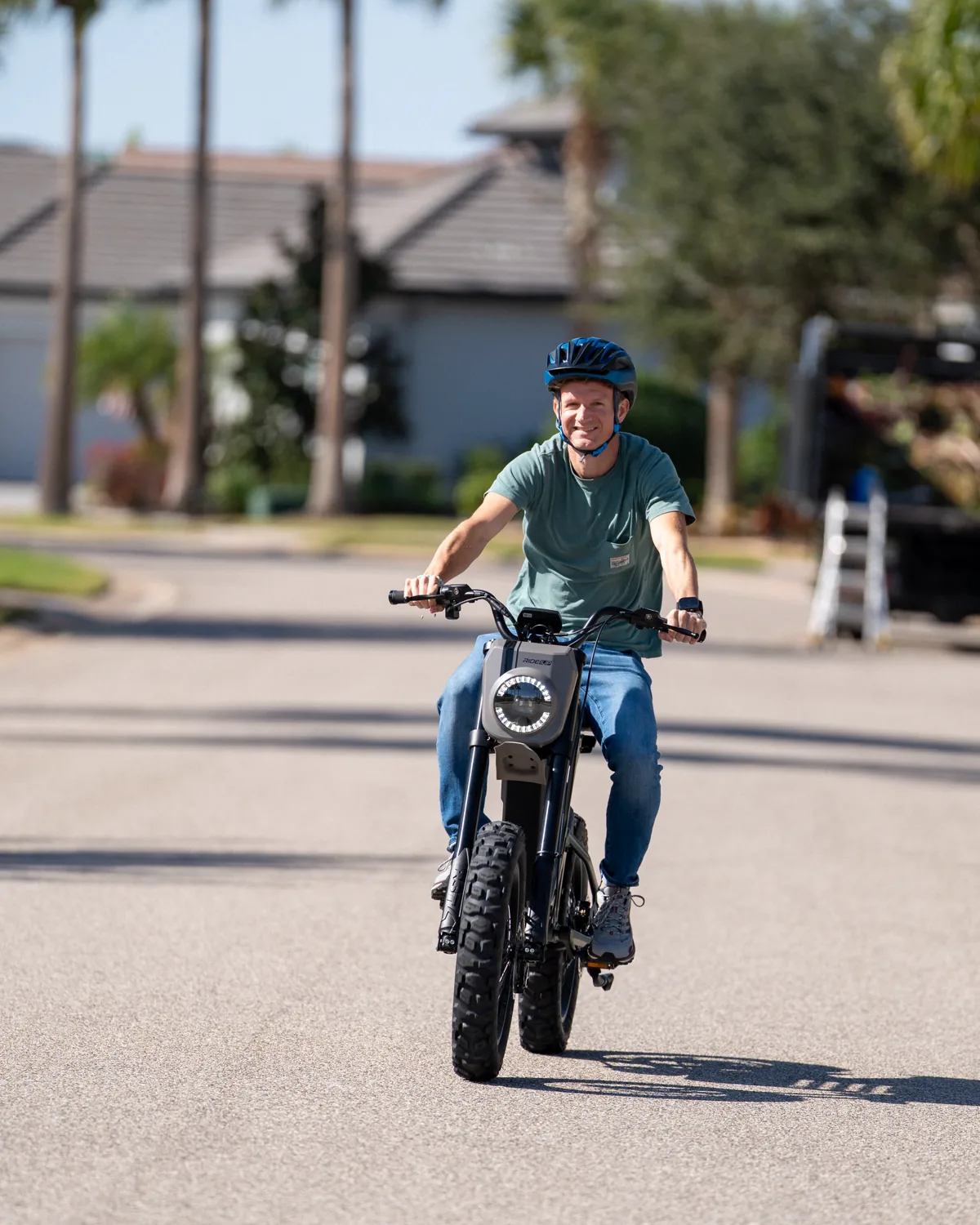
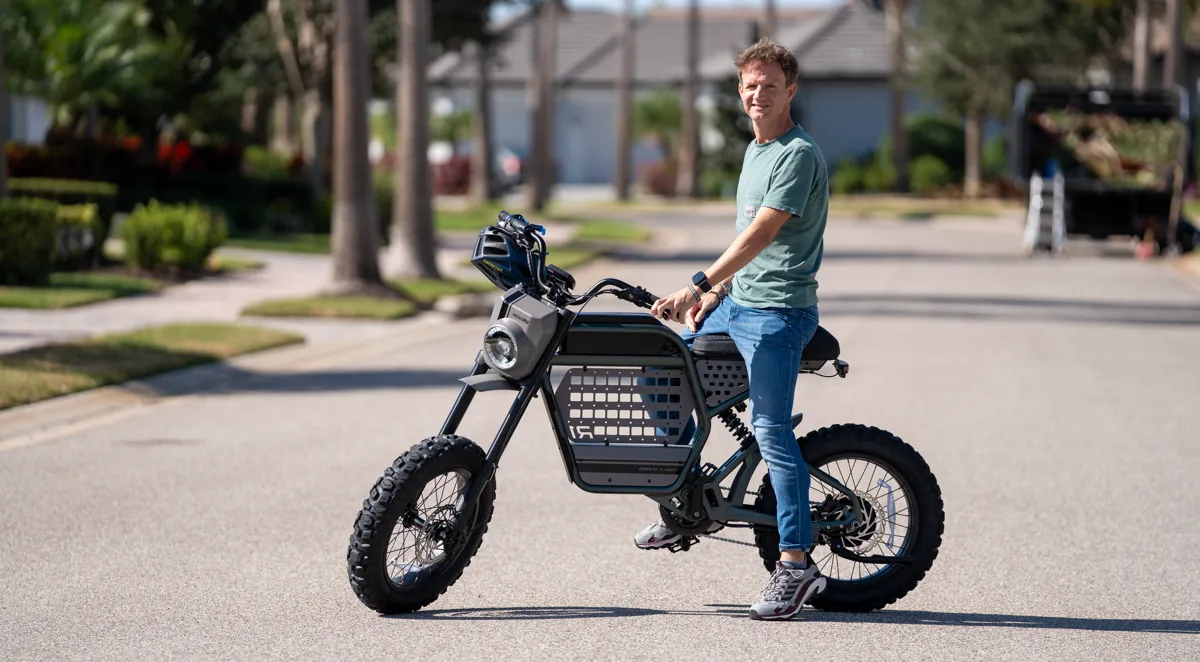
Ride experience is something else, I mean just look at that big grin on my face!
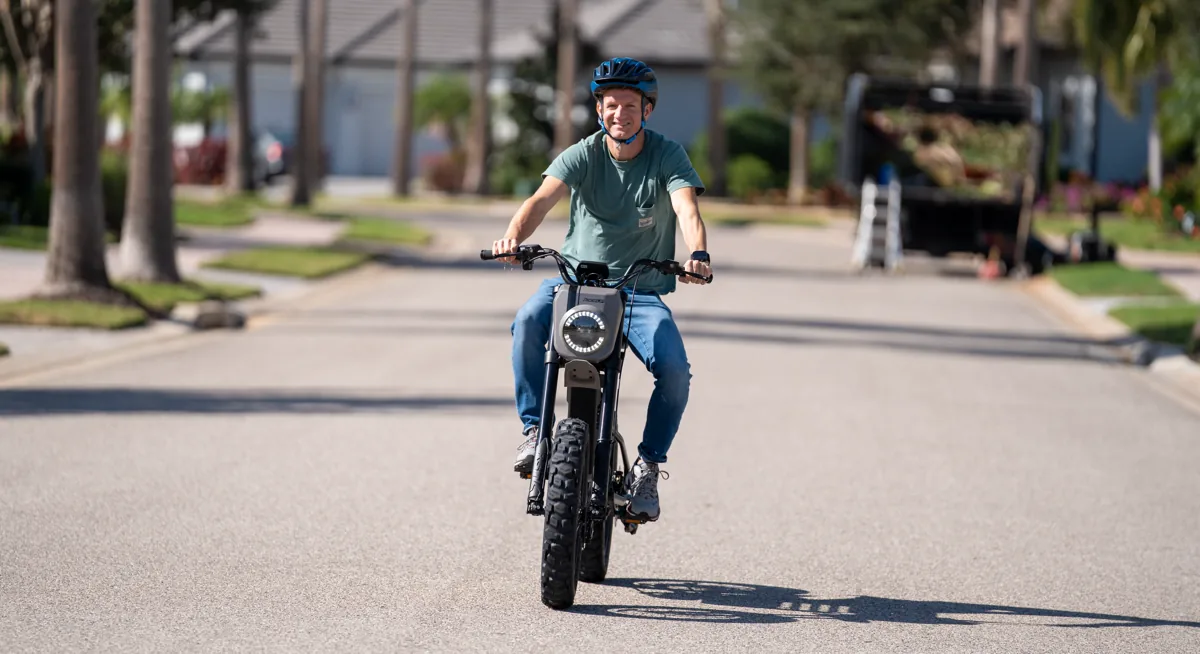
It also helps that the DRT comes in colors that suit the vibe. The Toy Soldier color that I have, looks properly tactical and fits the bike’s off-road attitude, while Black-Out option keeps things stealthy.
Fit-wise, Ride1UP rates it for a wide range of riders (5'3" to 6'4"), which matters more than people realize with moped-style frames. For those who are wondering, I am 5'8", to give you some reference from the photos that feature me with the Revv 1 DRT.
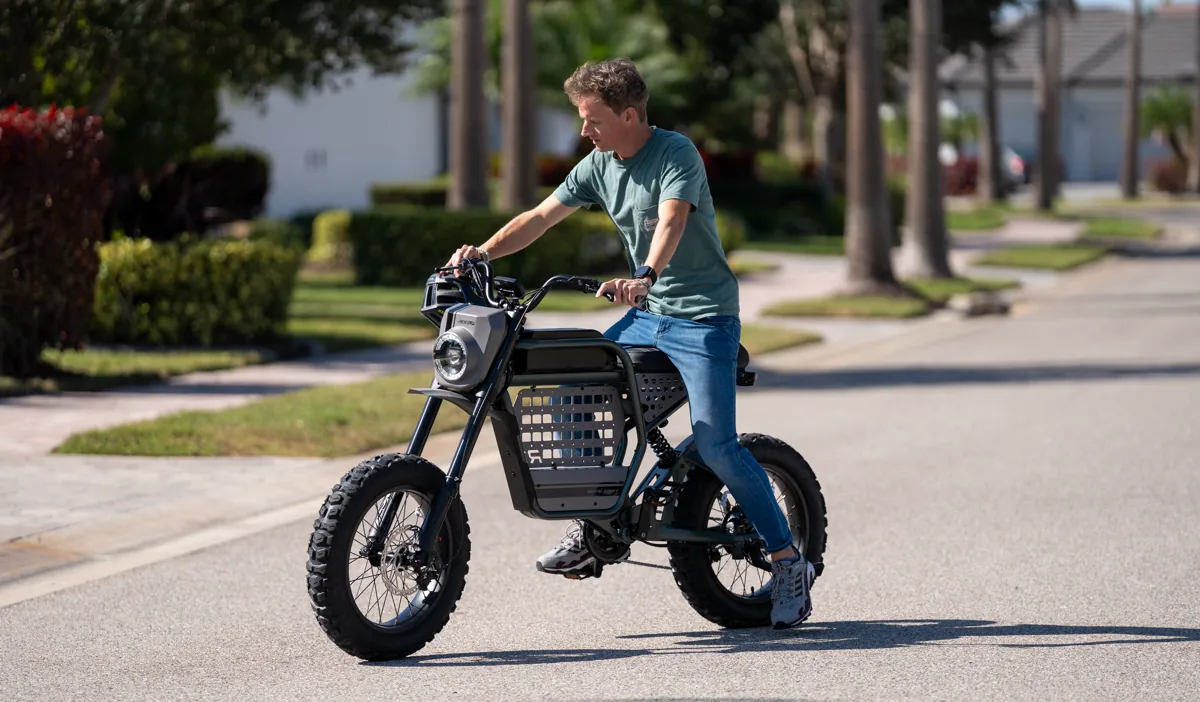
One last thing worth saying up front: it arrived very well packed. The install is fairly easy, but it takes time, and I had a friend visiting who gave me a hand; you'll need someone to help because it's a heavy thing to maneuver when building it.
Key specifications
- Price: $2,395 at ride1up.com - currently on sale (originally listed at $2,595)
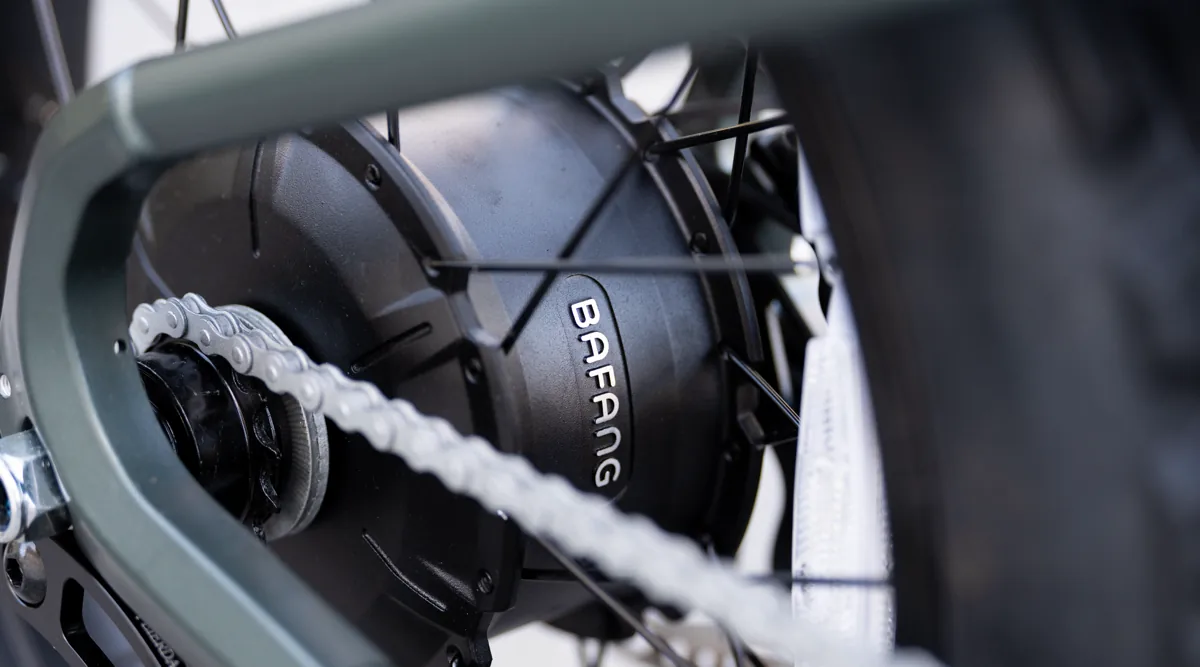
- Motor: 1000W (52V Bafang RM G0F4.1000)
- Battery: 52V 20Ah (Samsung 50E 21700 cells), UL 2271 certified
- Range: 30–60 miles (and 60–120 miles with a dual battery setup)
- Top assisted speed: 20 mph (Class 2 default) - can be user-configured to Class 3-like (28 mph pedal assist) or unlocked to Off-Road Mode (>28 mph, often ~32 mph per tests)
- Suspension: 150mm double-crown fork + 76mm rear travel
- Brakes: 4-piston hydraulic discs with 203mm rotors + electric cut-off
- Tires: 20x4” knobby off-road tires
- Weight: about 91 lbs
- Rider height range: 5'3"–6'4"
- Warranty: 1 year
Build quality and design
The first impression is that Ride1UP didn’t hold back on the “rugged machine” feel, and all the details including the paint work are very high-quality.
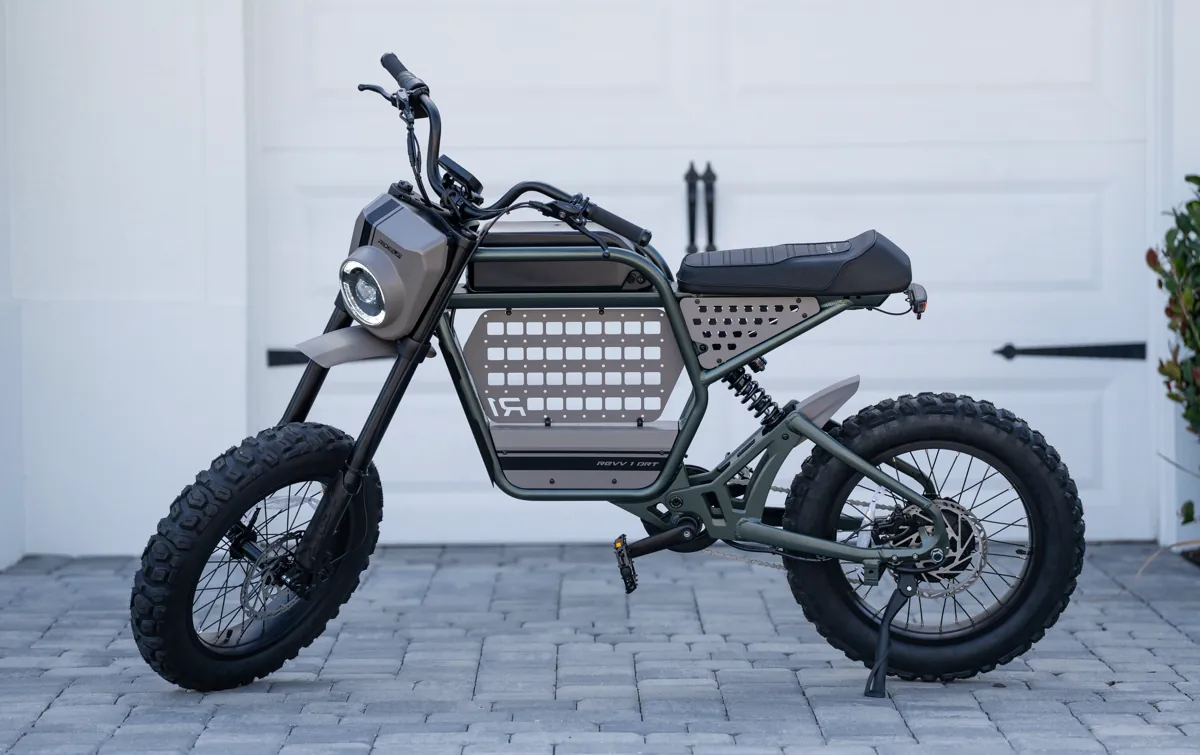
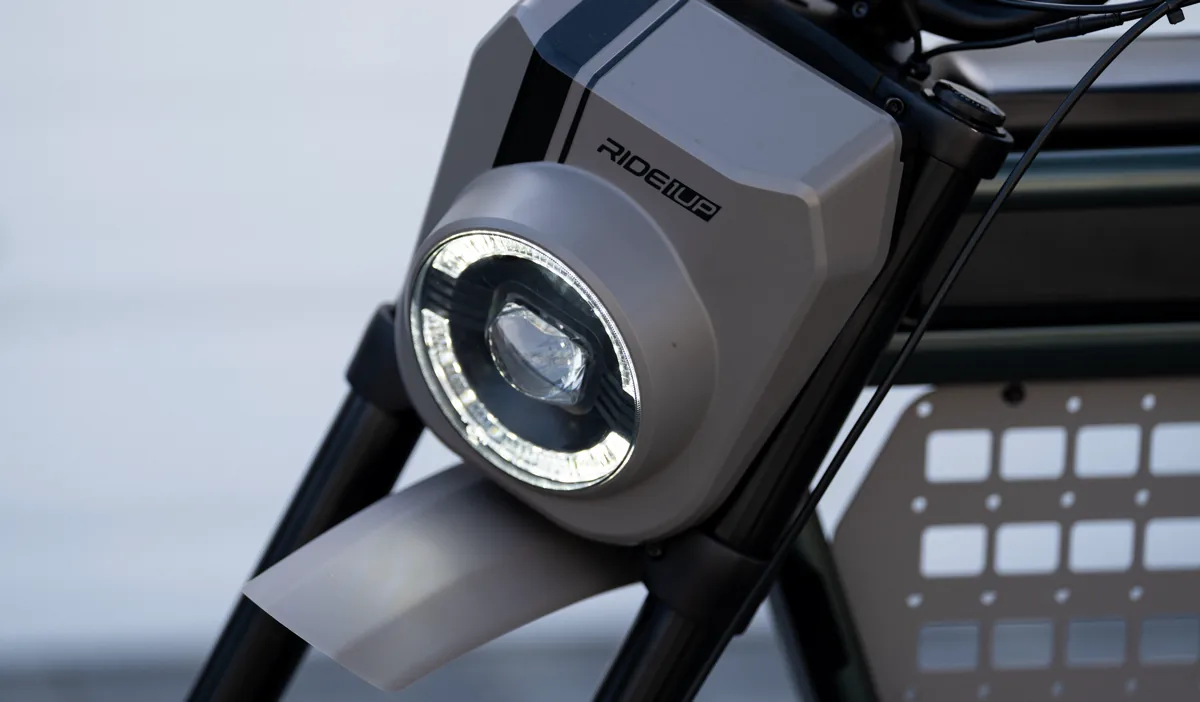
The Revv 1 DRT looks unapologetically moto-inspired, and the details match that intent, with a proper round headlight with a custom fairing, a cafe-style saddle, and the kind of chunky proportions you usually only get when a bike is designed around stability and traction rather than pedaling efficiency.
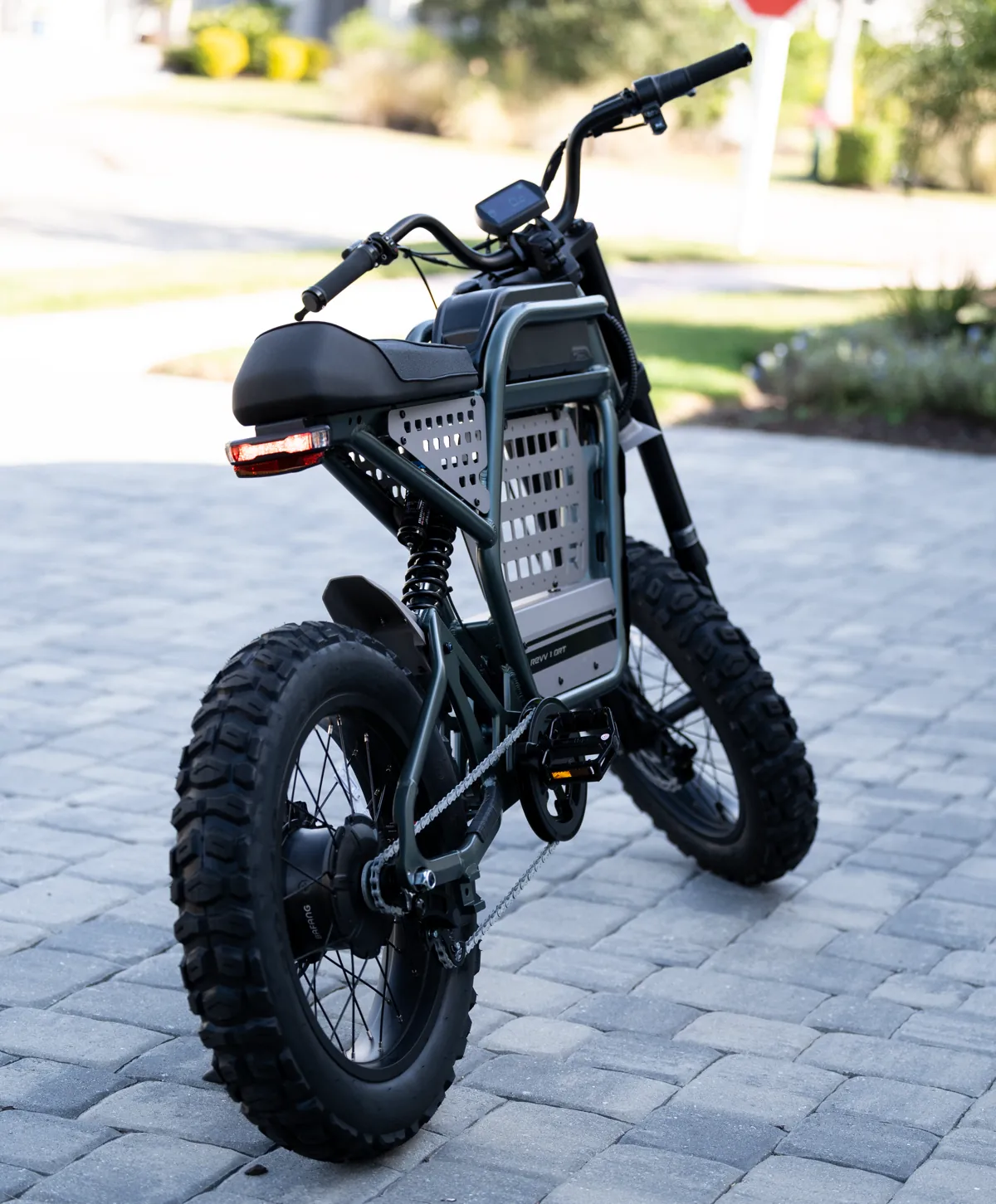
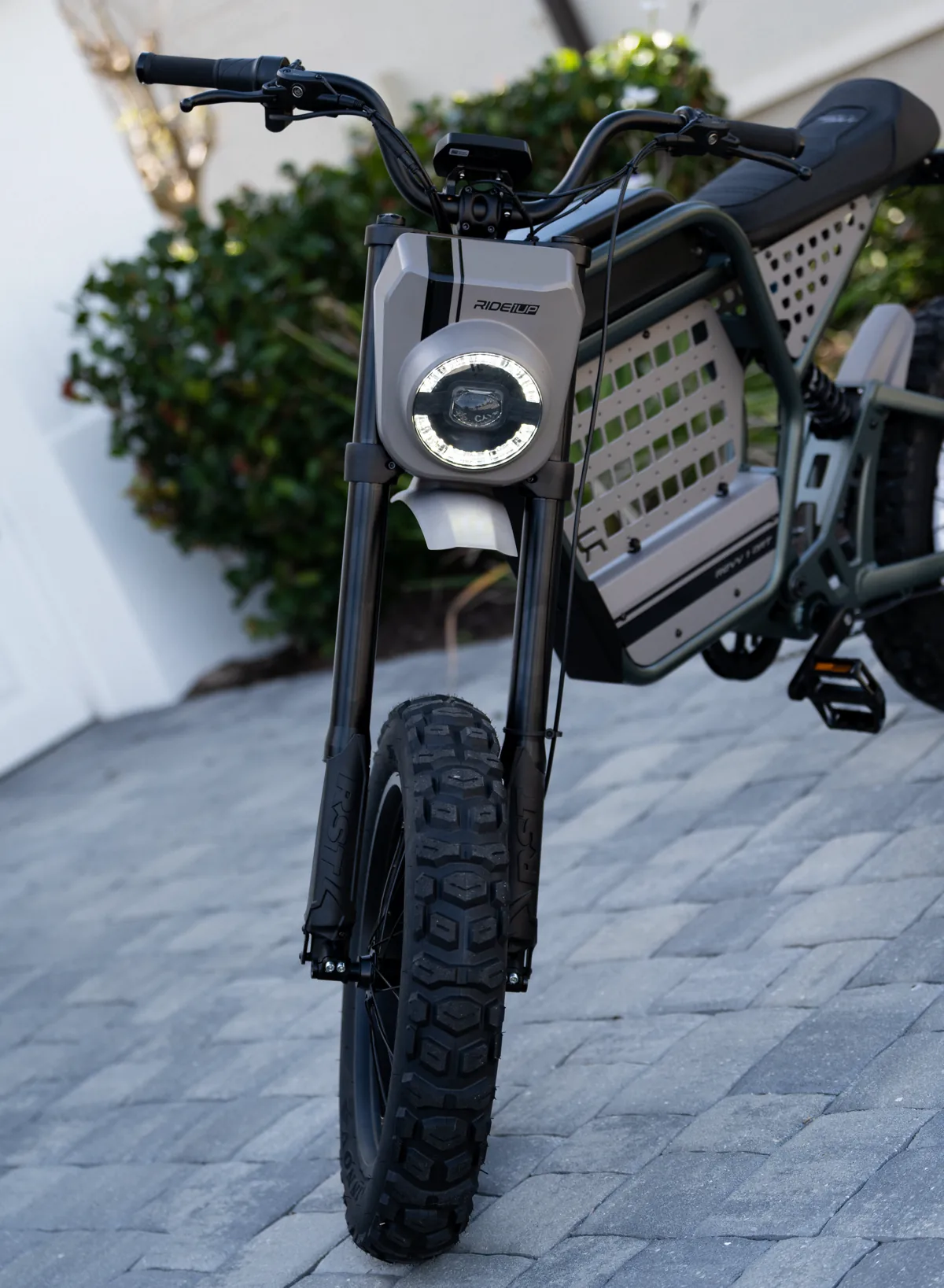
The overall layout, the off-road tires, the full suspension, and the brake setup all point toward the same thing: this bike is meant to handle rough surfaces and higher speeds without feeling sketchy.
And because it matters to the ownership experience: the packaging was excellent with no transit damage identified; you will have to arrange a delivery time for this one due to its weight and size.
The process of that was all handled very professionally, with our local shipment handler reaching out to me, arranging a delivery time, etc.
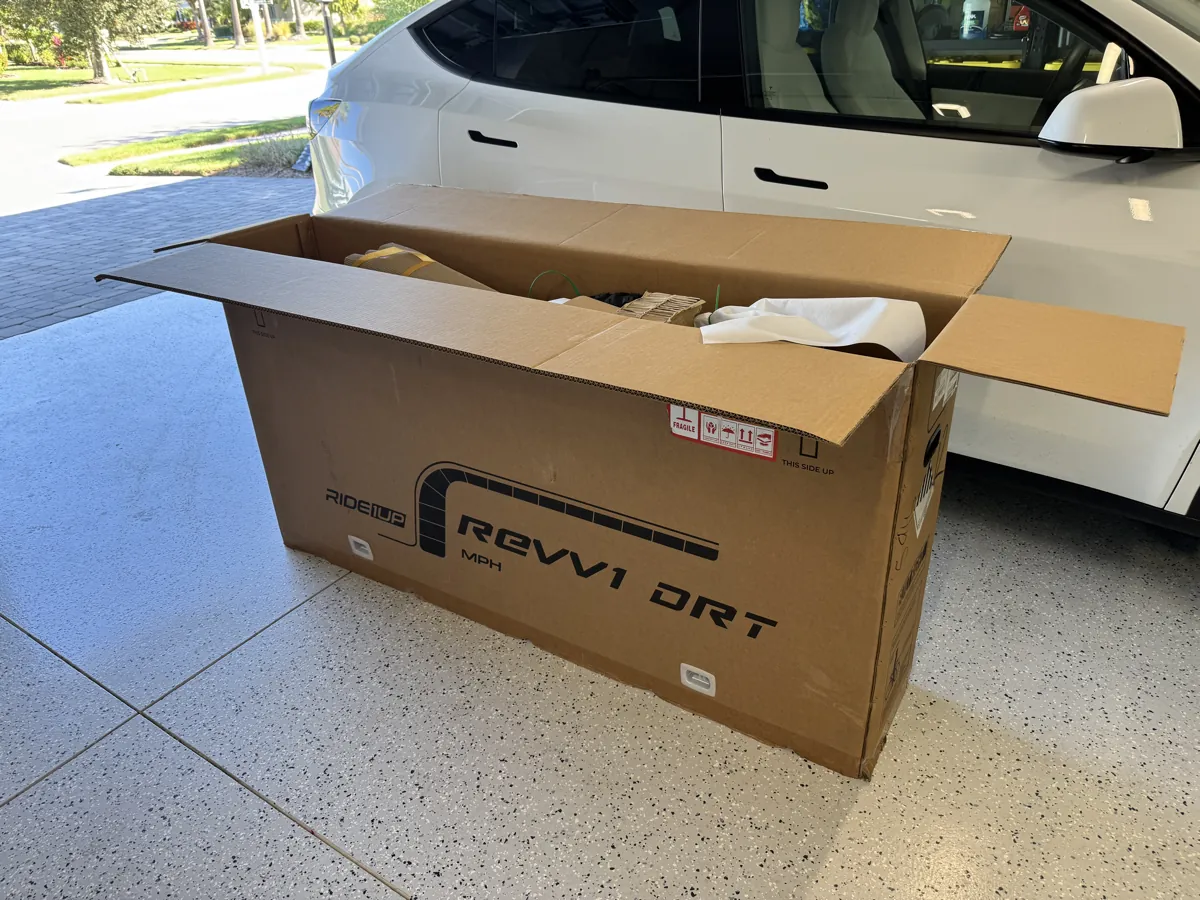
Everything arrived protected and secured, and although the install wasn’t complicated, it did take some time to do properly (and that was with a friend giving me a hand).
This was partly due to the bike being heavy, and partly because I like to double-check the essentials before that first ride.
Initial setup and essential settings tweaks
Assembly basics
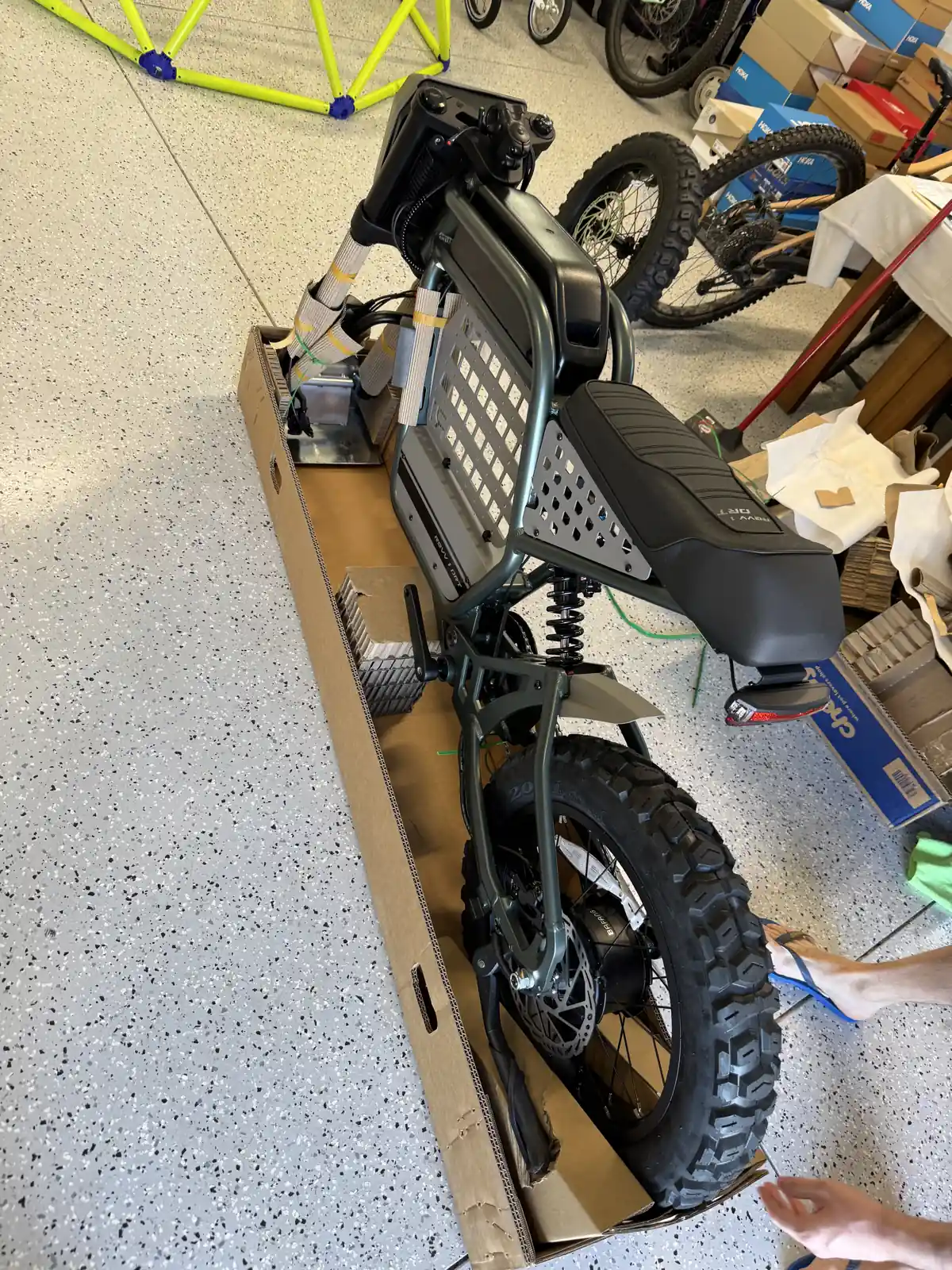
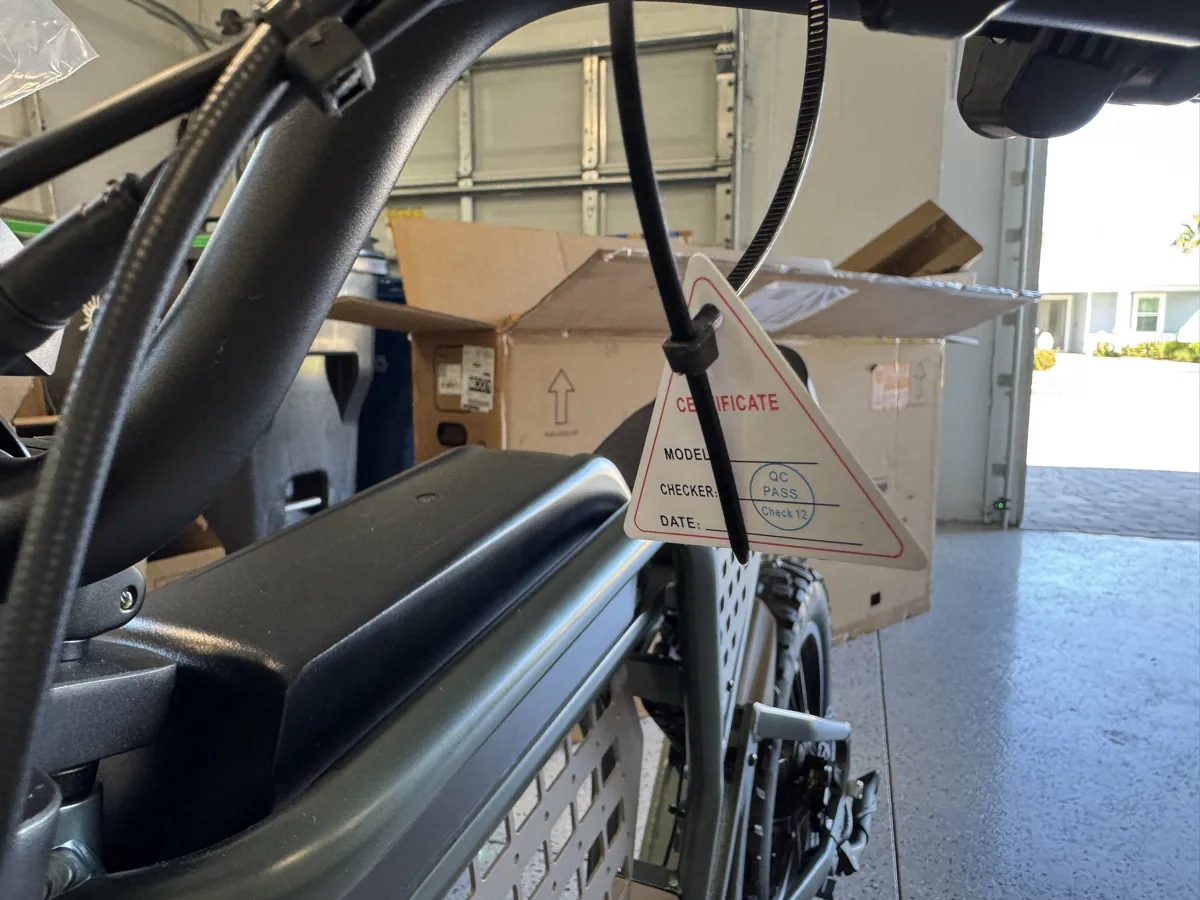
Ride1UP describes it as 90% pre-assembled, and that’s exactly how it felt.
Most of the work is finishing touches and careful checking rather than building from scratch.
The only real “challenge” is the bike’s weight, everything just takes longer when you’re moving a 91 lb ebike around.
Speed and mode unlocking
Out of the box it’s Class 2, meaning 20 mph on throttle and 28 mph assisted, if you unlock to class 3 and pedal hard enough.
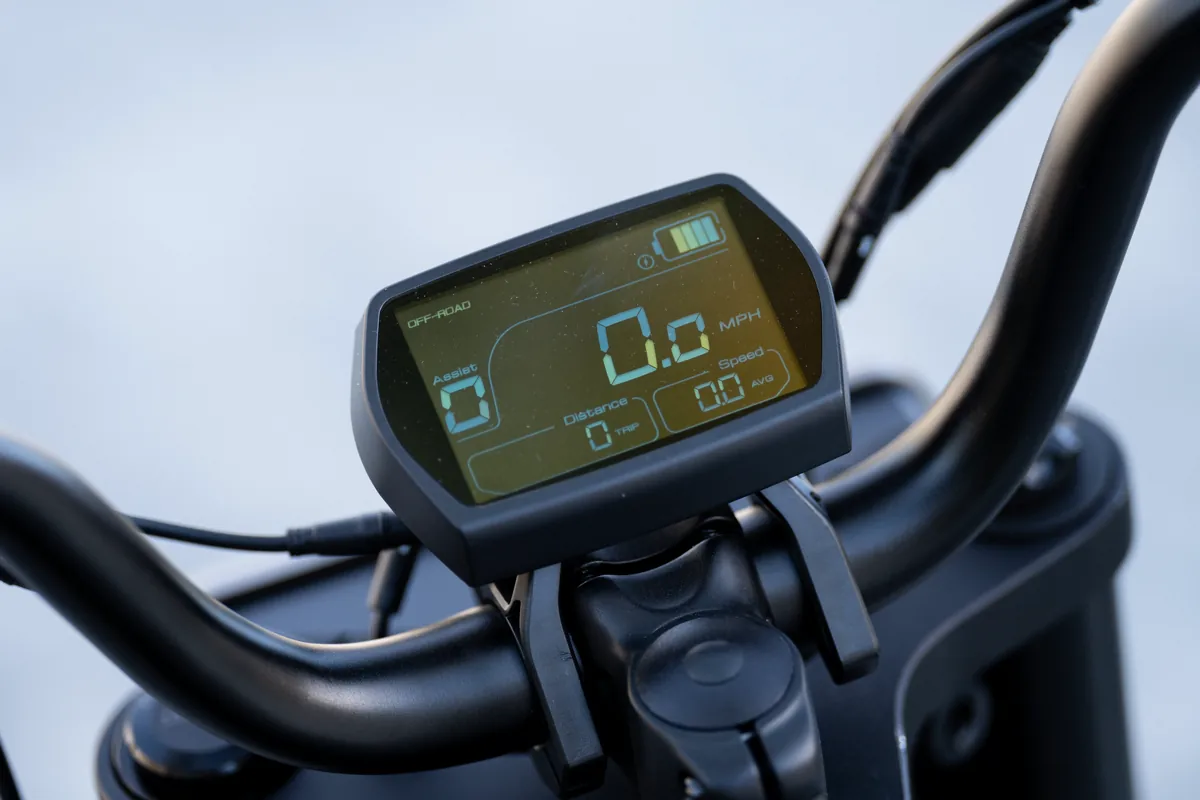
There’s also an Off-Road Mode option that can be enabled after you email Ride1UP and request the waiver. Once enabled, it’s capable of speeds well beyond Class 2, around 32 mph with throttle only).
I treat that as private land / off-road-only territory for both legal and common-sense reasons.
I unlocked mine because 20 mph with the throttle just didn't feel enough on this bike, and upgrading the speed makes it the riding experience it's intended to be.
Suspension and fit adjustments
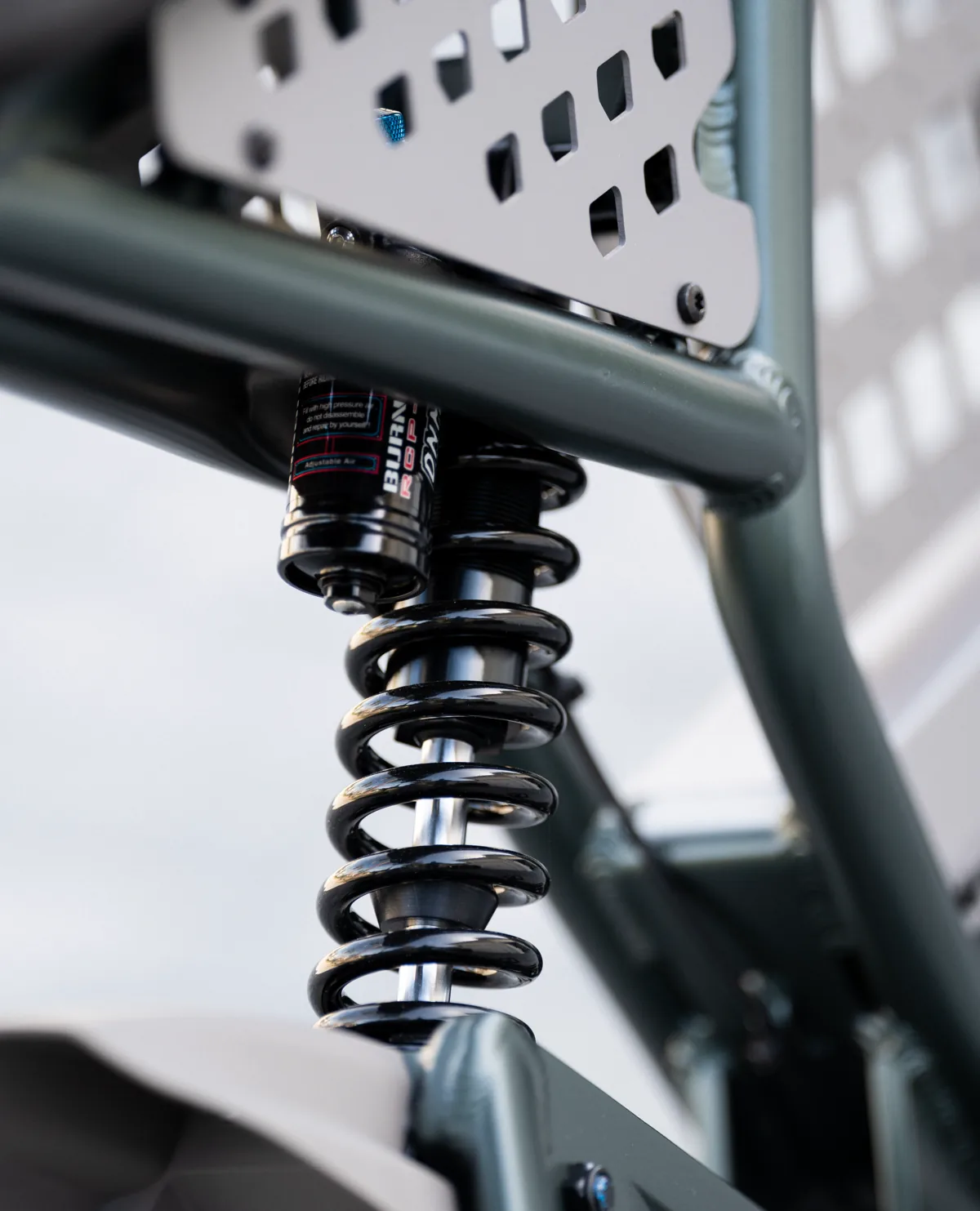
The fork has preload and a hydraulic lockout, and the rear shock is adjustable too (rebound, compression, preload).
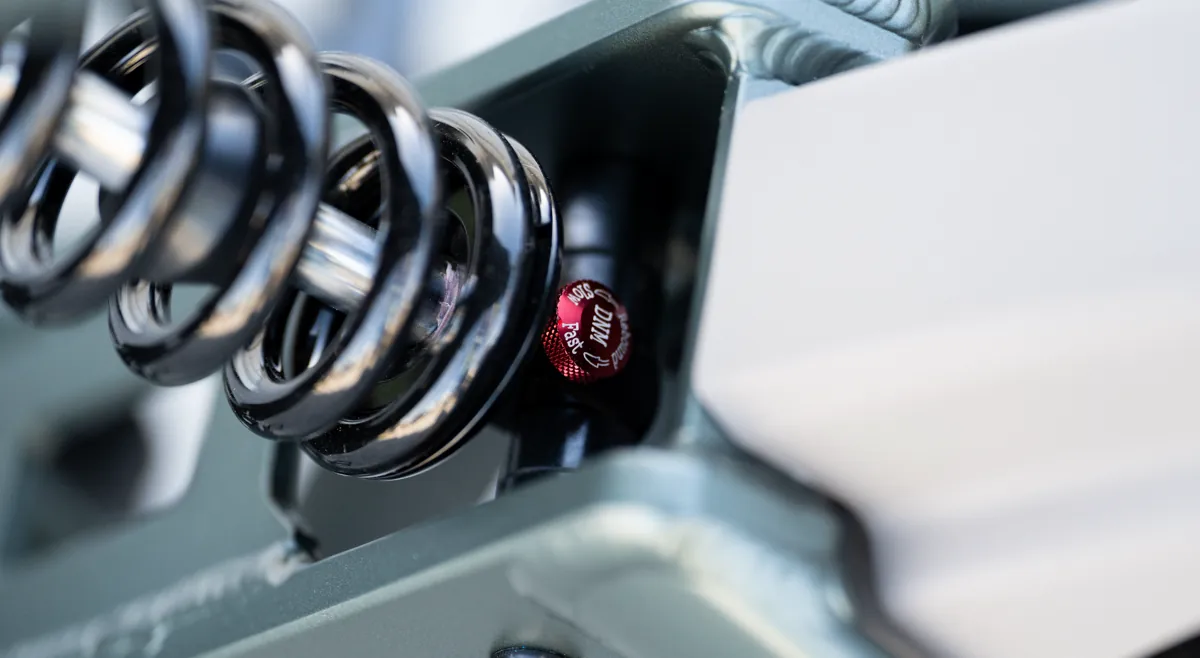
You can make it feel more planted and controlled for rougher riding, or firm it up for smoother pavement outings.
Fit-wise, it works across the stated 5'3"–6'4" range, and the riding position is definitely more “cruise and explore” than “dialed road bike fit.”
Tires, brakes, and safety customizations
Two quick changes matter straight away: tire pressure and brake lever reach.
- Tire pressure makes a big difference here. A good practical range is 20–30 PSI for softer surfaces and trails, and 35–40 PSI for road efficiency and sharper handling - check what the tyre rims say incase you get a different set on yours.
- Brake lever reach is worth adjusting so you’re not over-gripping the levers (especially on longer rides).
If you’ll mix with traffic at all, I’d add mirrors early, there's already a functional horn button which works well. Mirrors will make real-world riding safer.
Performance review
The display is nice and easy to read and setting like pedal assist are easy to change via the handlebar + - buttons, and ride comfort is on point.
Acceleration and top speed
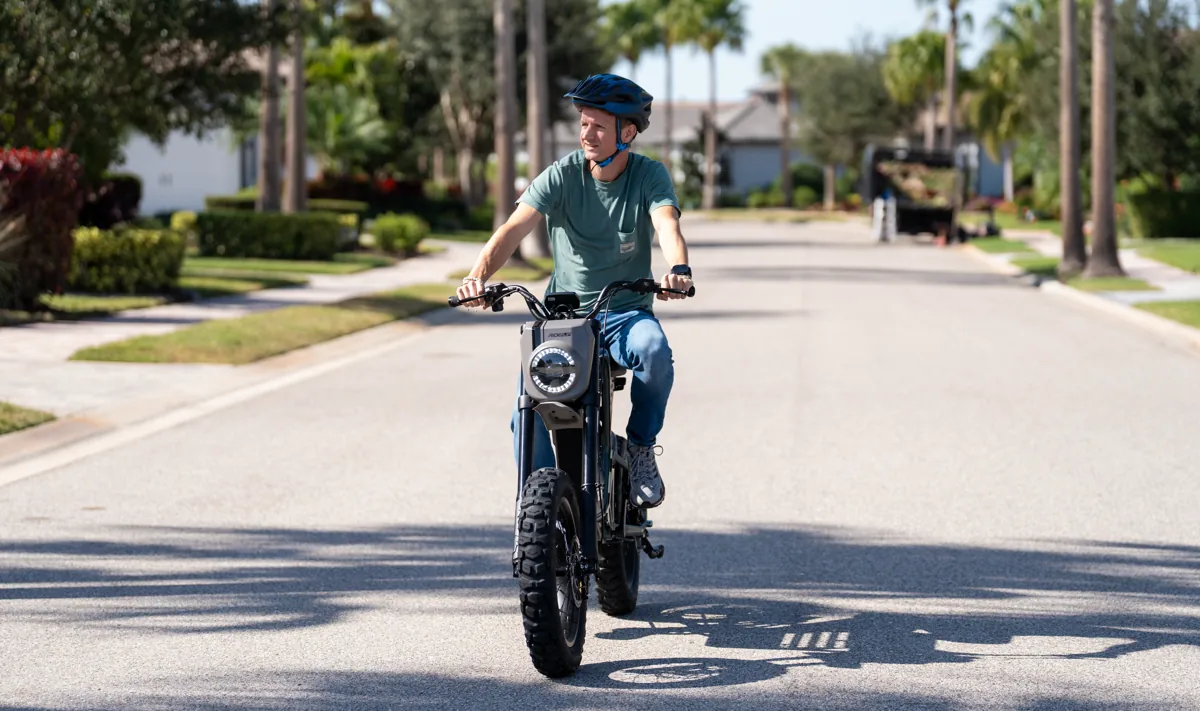
This is the defining trait of the Revv 1 DRT, and I'm going to be assessing the bike in the unlocked OFF-ROAD (faster) mode.
The 1000W Bafang motor paired with the 52V 35A (boost) controller makes the bike feel eager the moment you ask it to move.
It doesn’t feel like it’s slowly building speed the way some ebikes do. It gets up and goes.
That matters a lot in Florida terrain, where the “hard parts” aren’t big mountain climbs as much as they are short punchy rises, soft sand, wind, and rough surfaces that normally sap momentum.
The Revv 1 DRT doesn’t feel easily bogged down. It keeps pulling when the surface gets loose or the path turns into a patchwork of potholes and broken pavement.
In the default setup, you’re capped at Class 2 behavior.
That’s plenty quick for paths and mixed-use areas but off-road mode is a different conversation entirely.
It’s the kind of speed that turns this from “heavy off-road ebike” into “small motor vehicle energy,” and that’s exactly why I keep that mode mentally parked in the off-road/private category.
Throttle vs pedal assist
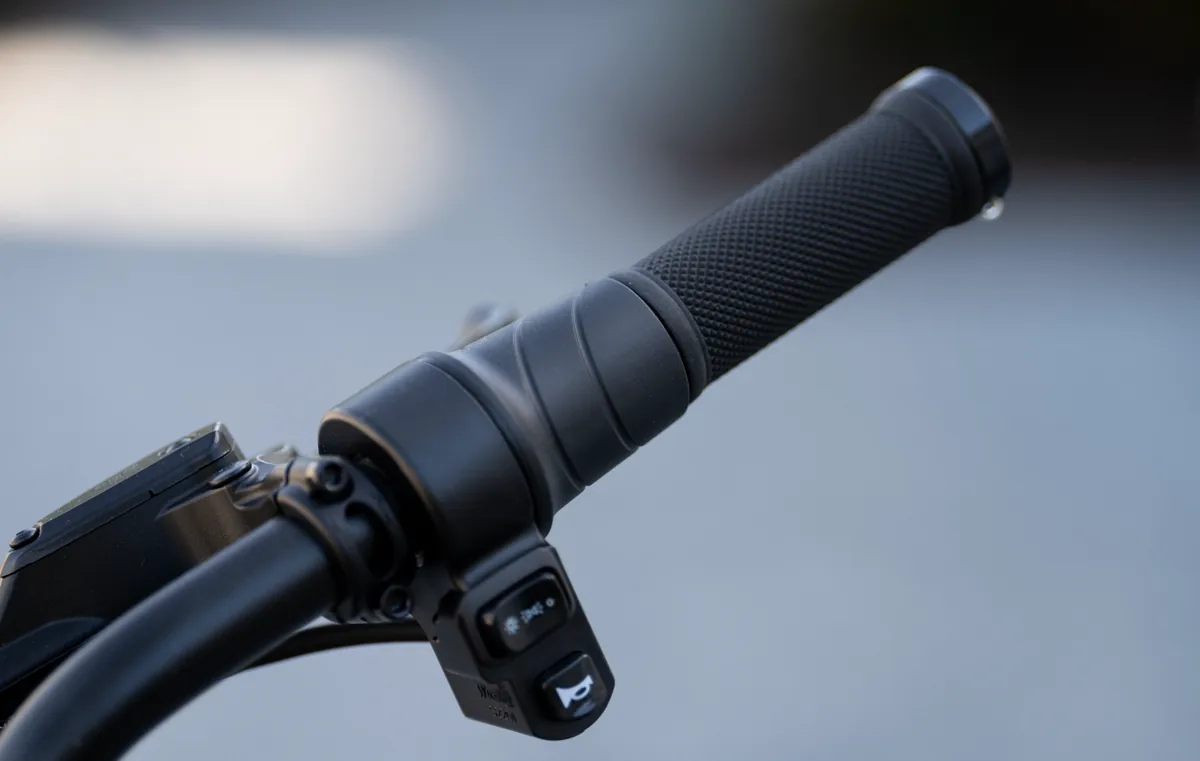
This is a moped-style ebike, and it rides like one. You can pedal, and it has pedal assist, but the experience is clearly not built around “pedal efficiency” the way a more traditional ebike is.
That’s not a flaw as much as it is a design choice, and I find myself wanting to just ride with the throttle most of the time, it just feels more natural on a bike like this.
If you ride it like a cruiser, light pedaling, letting the motor do the heavy lifting, it makes perfect sense too.
However, if you’re expecting something you’ll happily pedal hard when the battery is low, this is not that. The geometry, the weight, and the overall feel all point toward assisted cruising or throttle rides, rather than pedal-first riding.
And the more you lean on throttle and higher output, the more you need to think about range realistically (more on that below).
Handling and stability
The Revv 1 DRT feels stable, and that’s a direct result of its proportions: 20” wheels, 4” wide tires, full suspension, and a substantial overall build.
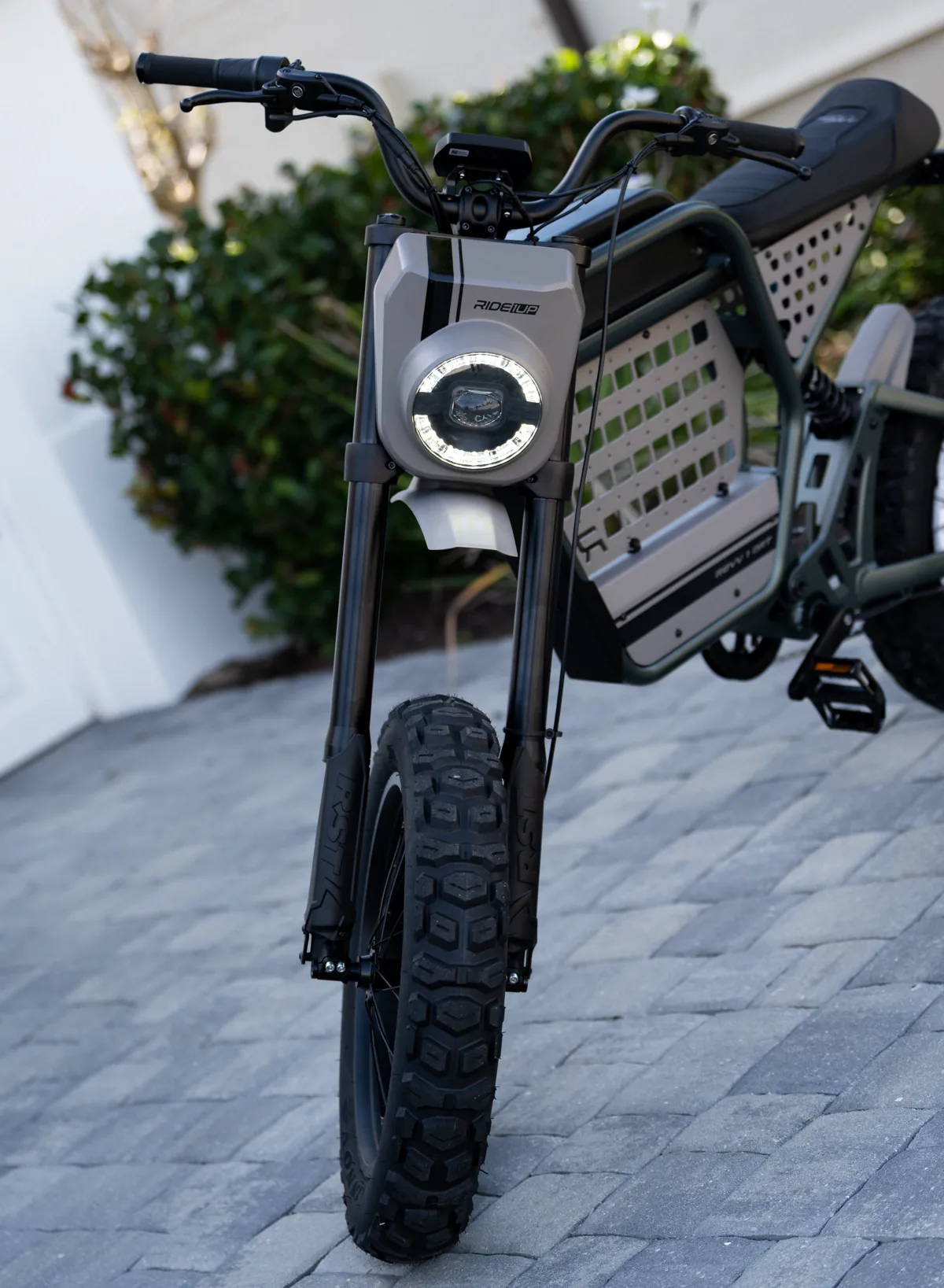
At speed, that stability is one of the main reasons the bike feels confident rather than twitchy.
The flip side is the obvious one: 91 lbs is very heavy, there's no getting around that but you have to realise every bike in this class of moped style frame, tends to be pretty hefty.
On the move, weight reads as planted and solid but off the bike, it reads as awkward logistics.
Carrying it up steps, lifting it into a vehicle (good luck with that...), or dealing with tight storage is not a casual experience. I store mine on the ground with it's heavy-duty kickstand, in my very easily accessible garage.
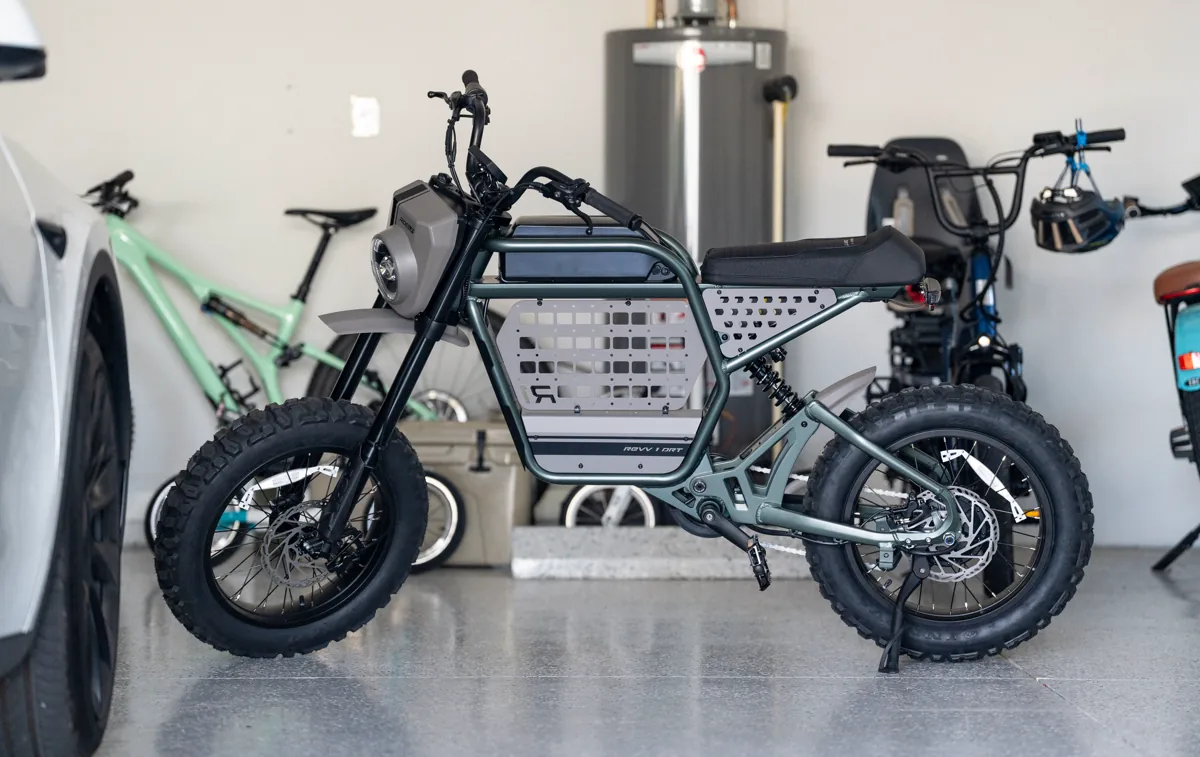
If you have stairs at home or you’re planning to rack it frequently, that needs to be part of the buying decision, not an afterthought because you'll need some very heavy duty racks for that and I don't think you'll be able to get this up stairs very easily.
On rougher paths, roots, broken edges, potholes, the suspension helps the bike stay composed instead of bouncing you around.
The fork and rear shock both have a lot of travel, and do what you want them to do: take the sharpness out of the ride so you can keep rolling, especially on surfaces that would normally make you slow down.
Suspension performance on real surfaces
A lot of ebikes claim “full suspension,” but the DRT’s setup is clearly chosen for off-road intent: 150mm up front with a double-crown fork, and 76mm in the rear with a shock that’s actually adjustable.
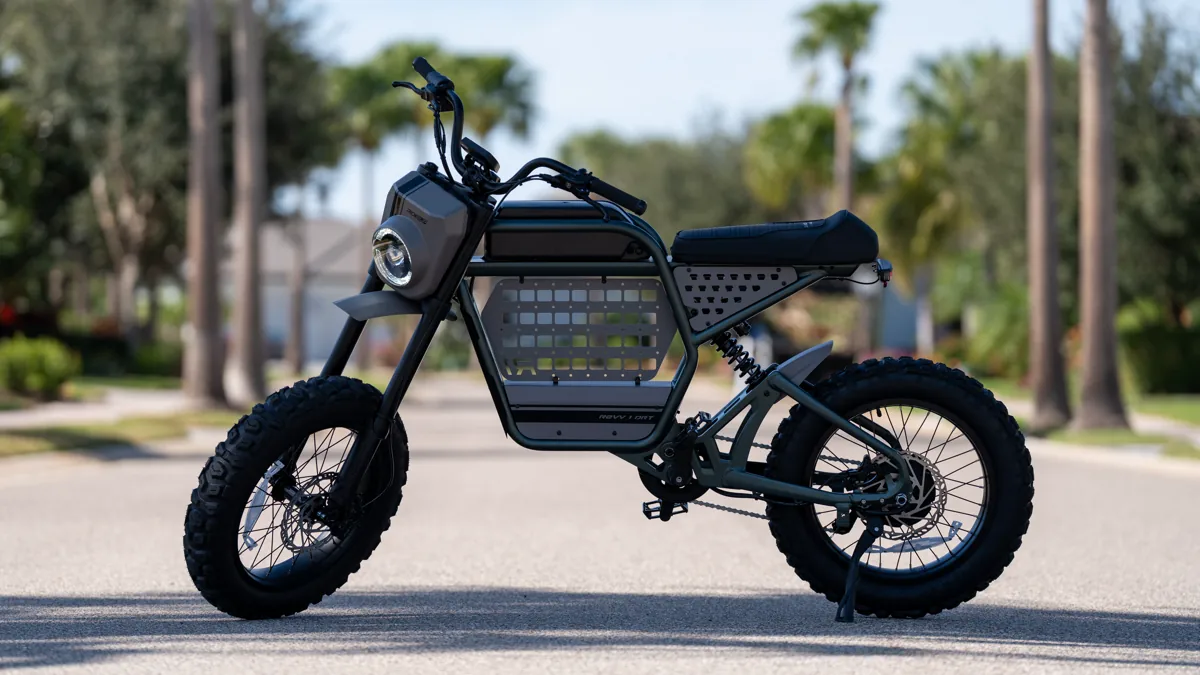
On trails and uneven connectors, that translates to less harshness and more control. It’s comfort that lets you hold a line when the surface is messy.
The ability to tune preload and damping also matters more on a bike like this because riders will use it differently.
Some people want it plush for dirt and roots, others will want it a bit firmer for pavement cruising. You can nudge it either way without turning it into a project.
Braking confidence
This bike has the speed and the weight where braking stops being a “nice spec” and becomes a core safety feature.
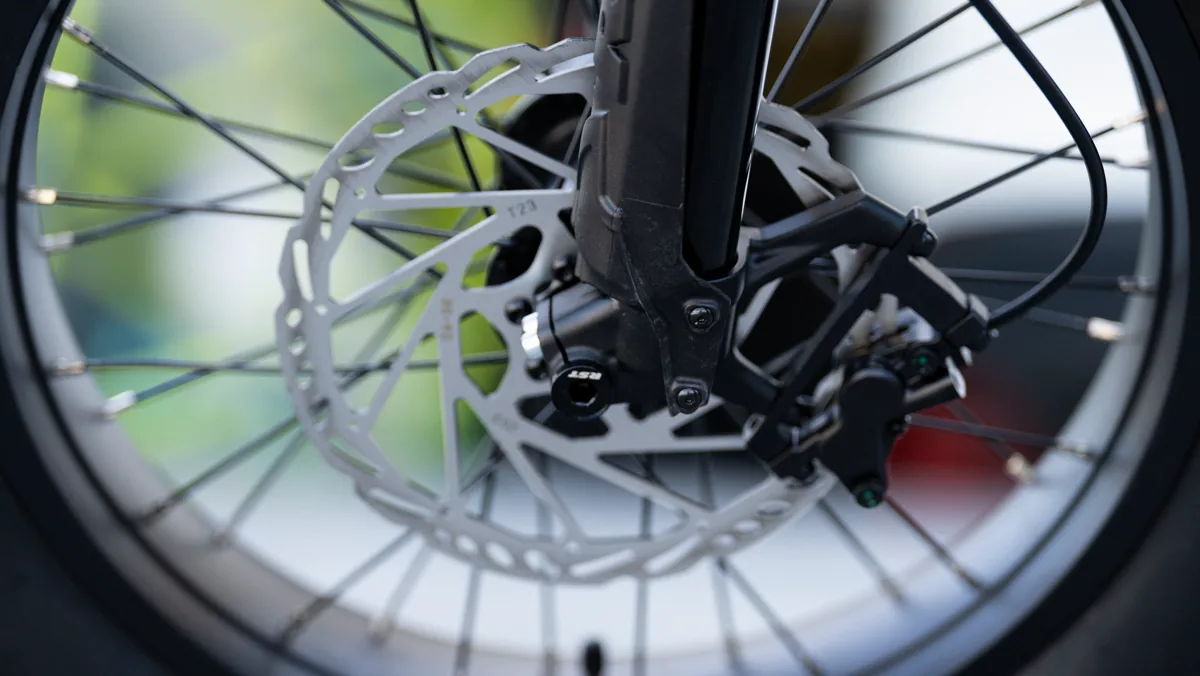
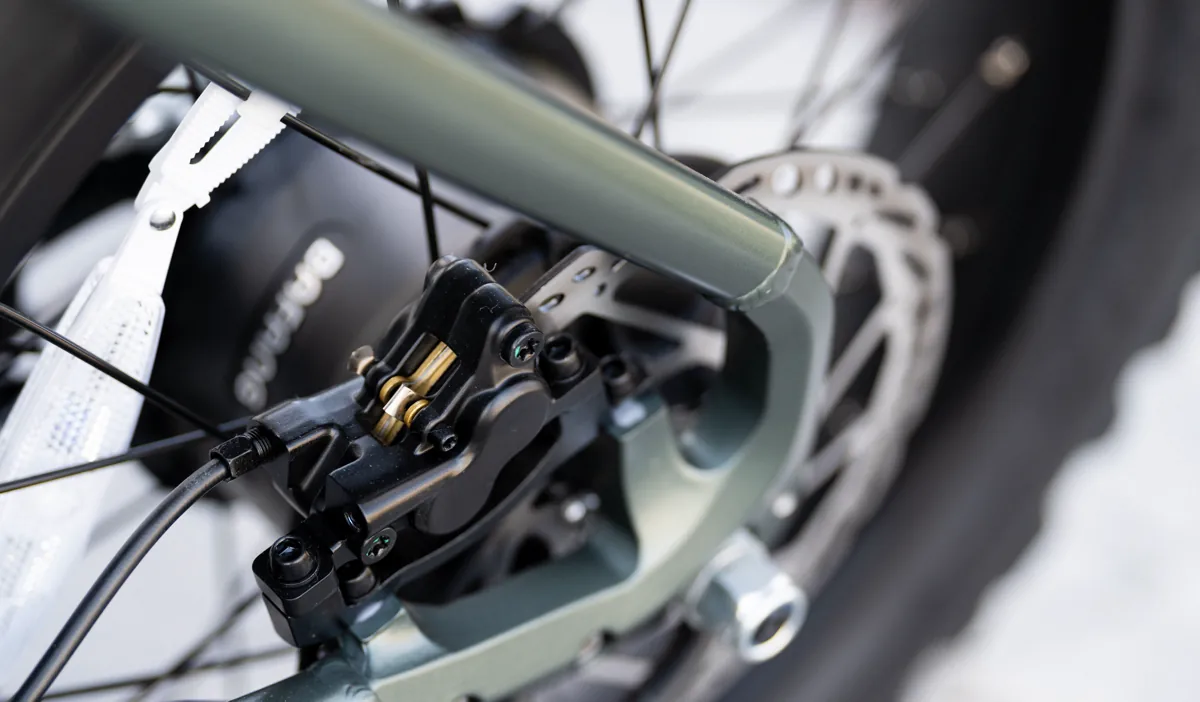
The 4-piston hydraulic brakes with 203mm rotors feel appropriate for what this bike can do. There’s also an electric cut-off sensor, which helps the bike behave predictably when you’re braking at speed.
In practical terms, the brake setup matches the character of the bike.
If this was running smaller rotors or weaker brakes, it would feel like a mismatch due to the bikes speed and weight.
Battery life and range in mixed terrain
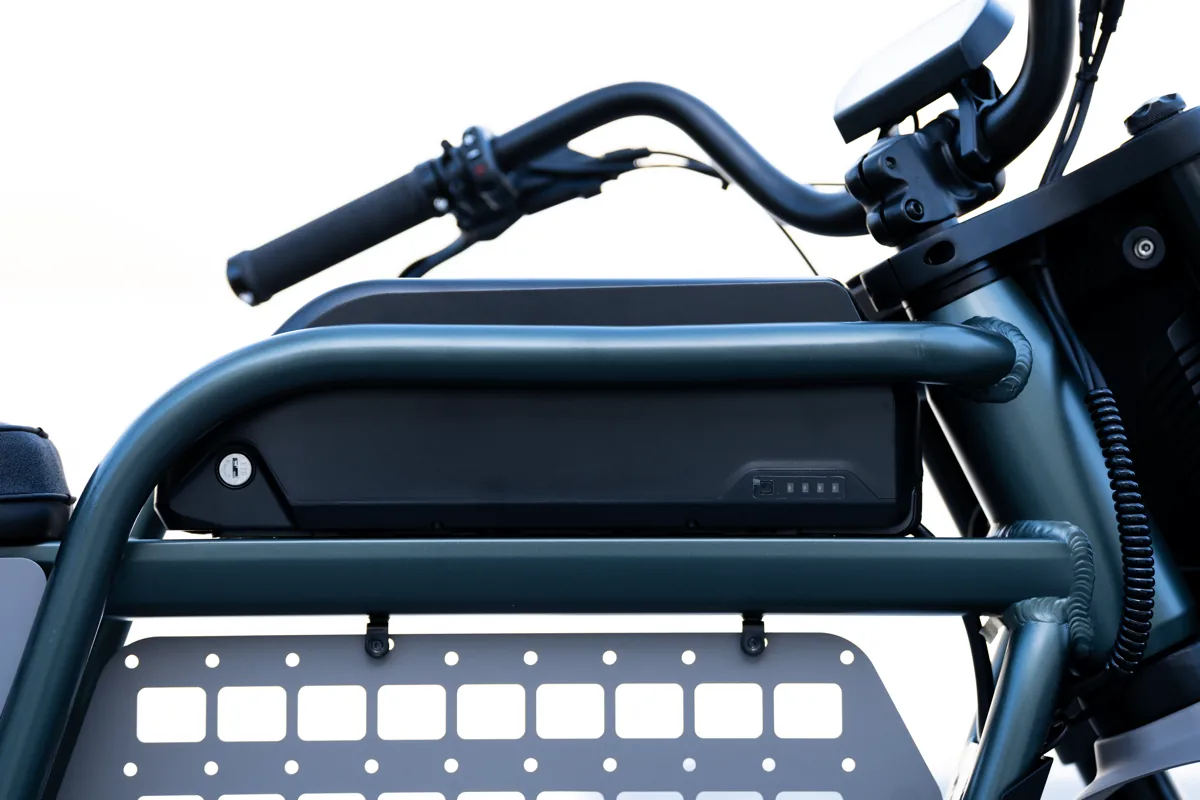
Ride1UP lists 30–60 miles, and that’s a believable range window for a bike like this with a 52V 20Ah battery, as long as you remember that how you ride dictates where you land in that window.
If you ride throttle-heavy, ride faster, or spend time going up hills, or pushing through soft terrain, range drops quickly. Speed and throttle are fun, but they’re expensive in miles. Rider weight will of course have some bearing on mileage too.
If you want longer coastal cruises or all-day exploring without planning your loop around battery anxiety, the dual battery path is there, and the numbers scale logically: 60–120 miles with the dual setup depending on speed, terrain, and how much you lean on throttle.
At the current promo pricing for the extra battery, it’s one of the more straightforward ways to make the DRT feel less limiting but an extra battery will increase the weight further - I have the single battery setup.
Ride comfort and noise
Comfort is one of the things this bike does well.
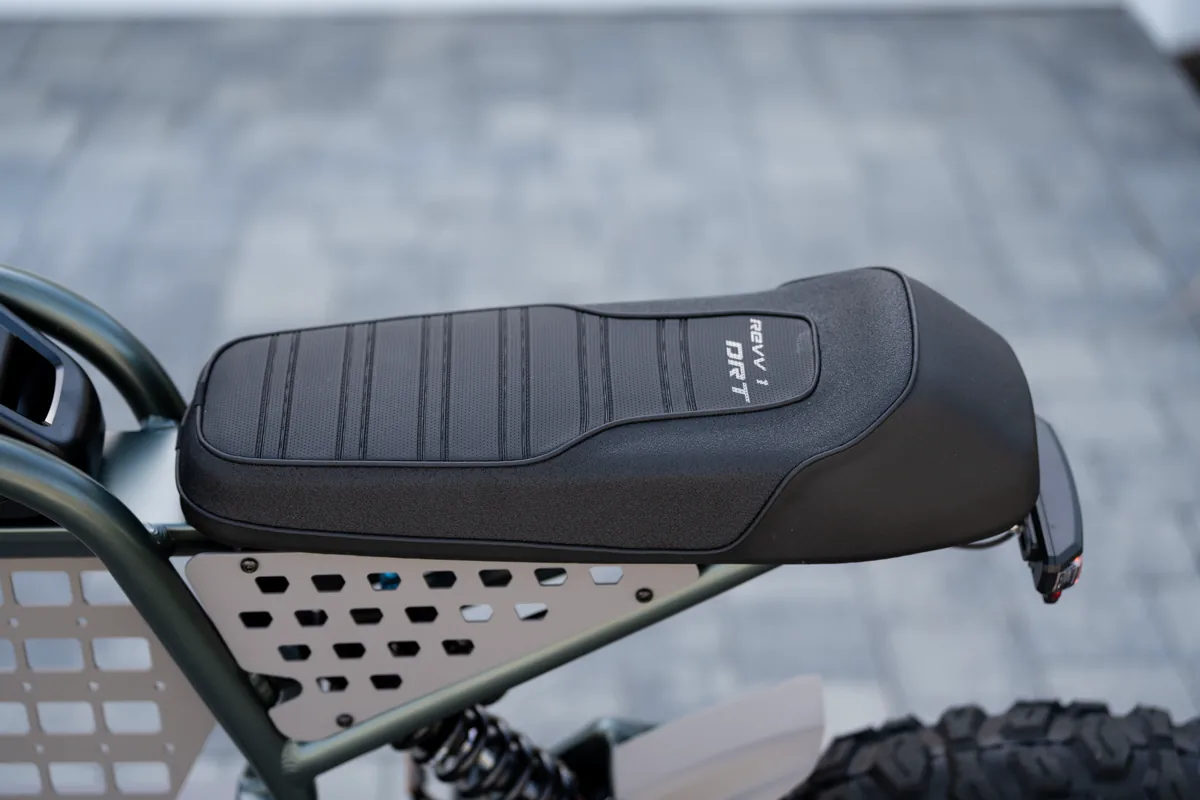
Between the full suspension, well position and ergonomic handlebars, and the cafe-style saddle, it’s set up for longer rides without that constant “buzz” you get on rigid frames, especially over broken pavement.
Noise is the expected trade-off as knobby tires really hum on pavement. That’s normal.
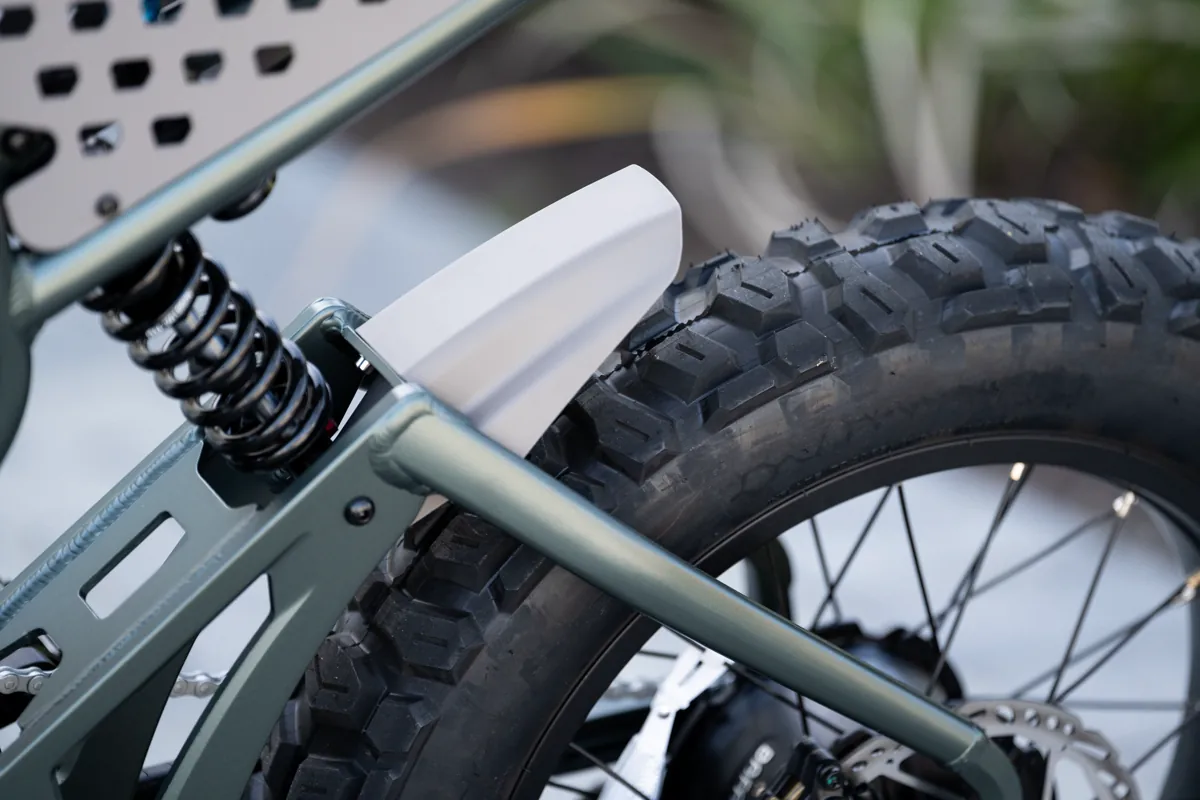
If your riding becomes more street-heavy over time, swapping to a more road-friendly tire is the obvious move for efficiency and a quieter ride.
But if you bought the DRT for dirt and mixed surfaces, the stock tire choice makes sense; they look cool too - ha!
Legal and safety considerations
The Revv 1 DRT can tempt you into speed, and it’s worth staying grounded about that.
- In public spaces, Class 2 behavior is the sensible lane to stay in.
- Off-road mode belongs off-road/private. The bike’s capability doesn’t automatically make it appropriate everywhere.
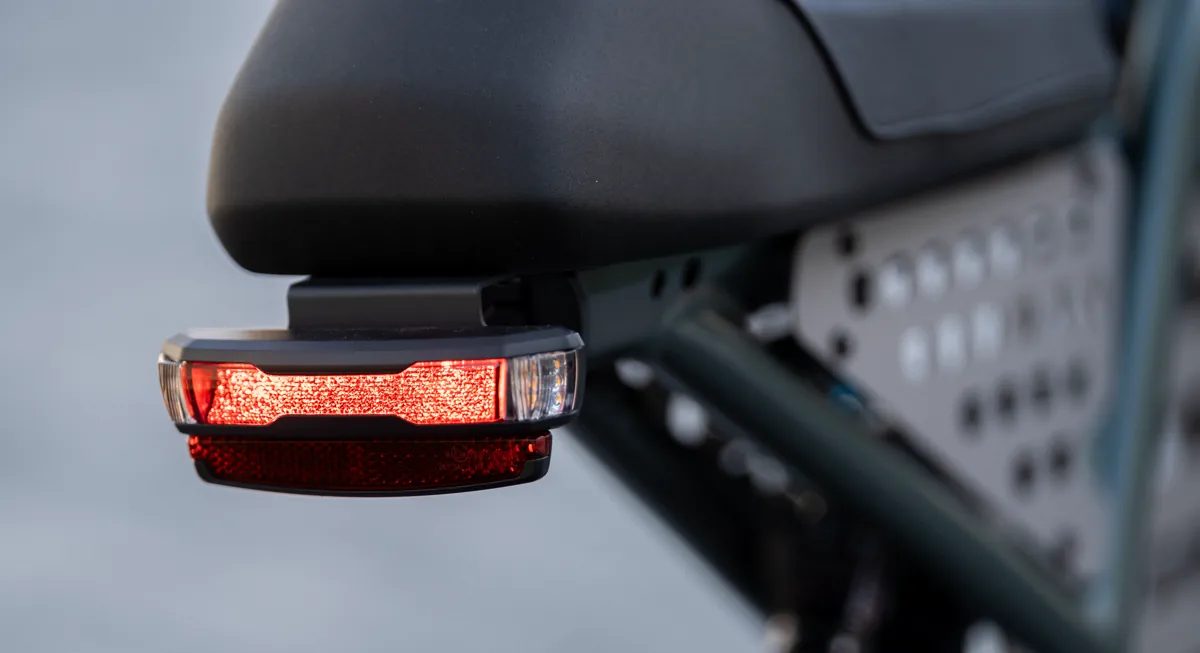
- The lighting setup helps with visibility: the headlight is a 120 LUX moto-style unit with high/low beam, and there’s a dedicated brake light.
The main point is simple: speed + weight changes the stakes fast. Ride it and respect it, like the machine it is, not like a lightweight bicycle.
Maintenance, upgrades, and long-term ownership tips
A few habits keep this kind of ebike running smoothly:
- Keep the drivetrain happy with regular chain lube, especially if you ride sand/grit.
- Use tire pressure intentionally (it changes feel, traction, and efficiency).
- Expect periodic brake attention over time (lever reach tweaks, and service if brake feel changes).
- If you go dual battery, do it properly with the correct parallel setup so everything stays predictable and balanced.
Final verdict
The Ride1UP Revv 1 DRT is at its best when you treat it like what it is: a moped-style ebike built to handle rougher surfaces, higher speeds, and mixed terrain without feeling flimsy.
For the current price of $2,395, it offers very solid value for money, considering build quality and capability both on and off road.
The power is the headline, but the suspension and brakes are what make that power usable and enjoyable.
It’s not subtle, it’s not light, and it's certainly not a “pedal-first” ebike, but if what you want is a bold, planted ride that makes dirt paths, broken pavement, and sandy connectors feel like part of the adventure, the DRT fits that job really well.
Written by

Subscribe to our Newsletter
to discover the best gear, healthy foods, and life outdoors.









Member discussion