
LifeStraw Go Series Stainless Steel 18oz review: Reliable filtered hydration that stays cold on the go
The insulated stainless bottle that removes bacteria, parasites, and bad taste while keeping water refreshing cool all day.

Safe drinking water while traveling or on trails shouldn’t feel like a constant worry.
Questionable taps in hotels, airport fountains, or stream fills on hikes leave most people reaching for single-use bottles or hoping for the best.
I’ve tried various filter options over the years, from basic carbon straws to bulkier battery powered purifiers, always looking for something that balances protection, taste, and convenience.
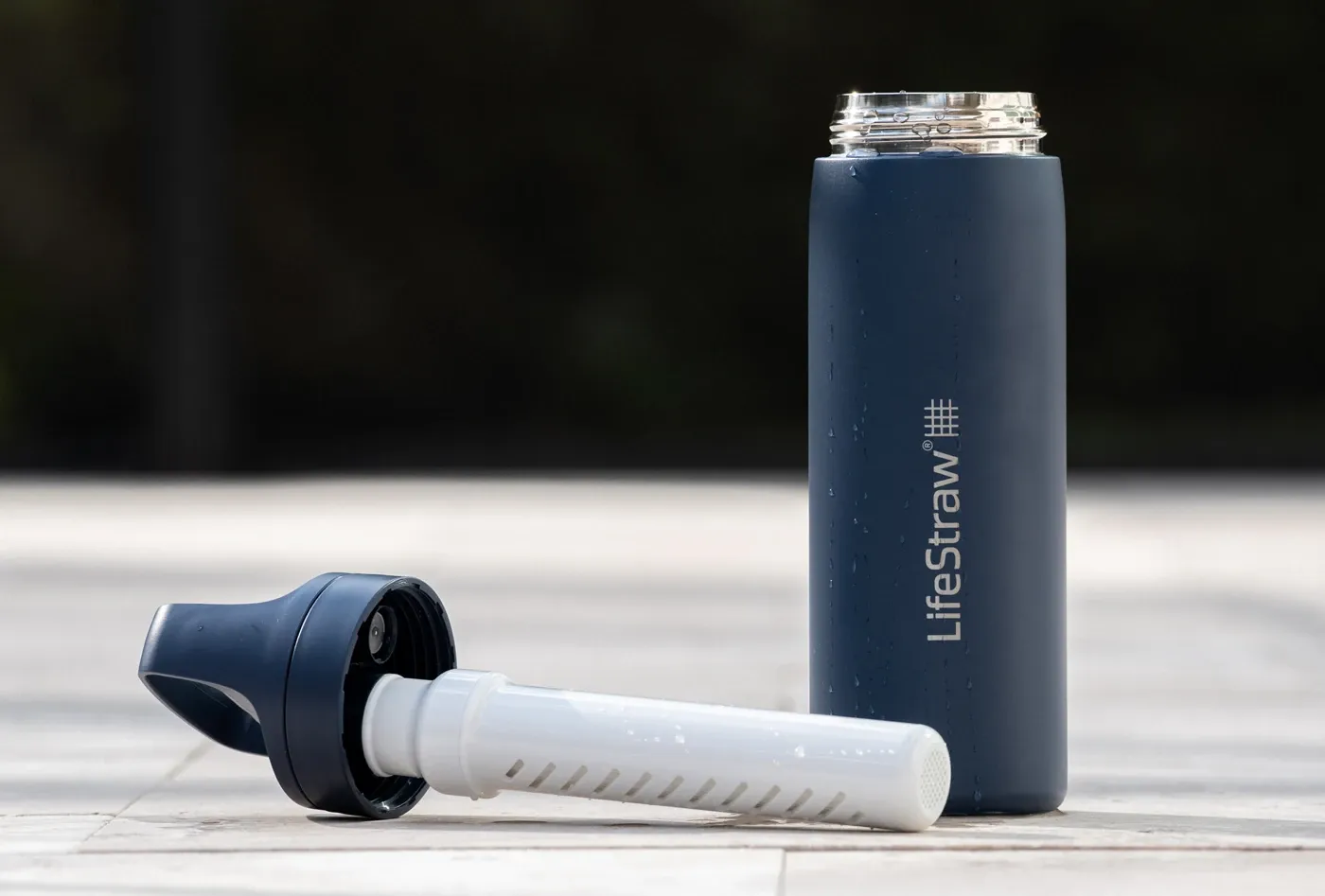
The LifeStraw Go Series water filter bottle brings together effective 2-stage filtration and real vacuum insulation in a size that travels well.
I’ve tested it over recent months on international trips, hikes, and for staying hydrated during work days. It's already one of those bottles I trust when I need water that stays cold and tastes clean, no matter the source.
Key specifications
The Go Series 18 oz focuses on practical durability.
- Pricing: $49.95 RRP, on sale now for $33.74 at Amazon.com
- Capacity: 18oz (532 ml)
- Material: Double-wall vacuum-insulated stainless steel (BPA-free)
- Insulation: Keeps water cold for 18 to 24 hours in real use (ice often lasts a full day)
- Filtration: 2-stage system – membrane microfilter removes 99.999999% of bacteria, 99.999% of parasites, 99.999% of microplastics, silt, sand, and cloudiness; activated carbon filter reduces chlorine, bad taste, odor, and organic chemicals
- Filter life: Membrane microfilter lasts up to ~1,000 gallons (4,000 liters); carbon 26 gallons (100 liters).
- Weight: Approximately 1.03 lbs (468 grams) empty
- Dimensions: Height 11 inches (28 cm), diameter 3.14 inches (8 cm)
- Other features: Leak-proof screw-on lid with carry loop, silicone mouthpiece, dishwasher-safe bottle (lid hand-wash recommended), replaceable filters
Performance review
Filtration delivers confidently, thanks to the 2-stage setup that protects against bacteria, parasites, and microplastics while the carbon stage noticeably improves taste from chlorinated taps or slightly off sources.
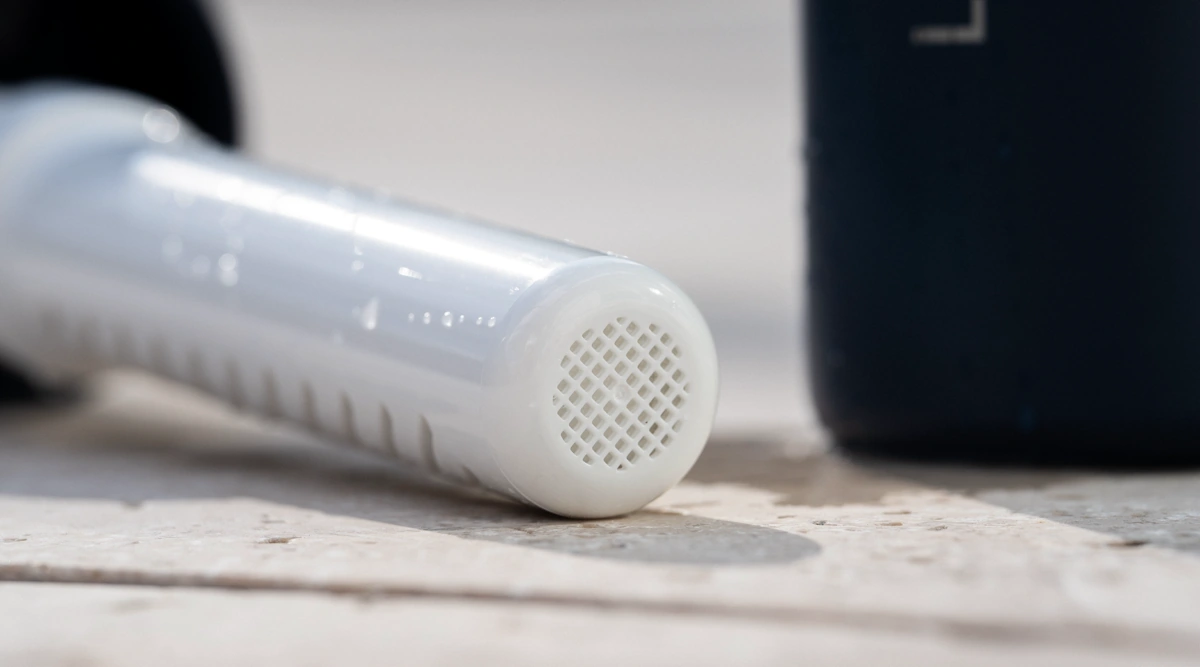
Water comes out of the LifeStraw Go Series in a neutral and clean manner, without plastic or metallic flavors common in some bottles. I’ve filled from hotel sinks, public fountains, and trail sources with no issues.
Insulation performs well for cold drinks.
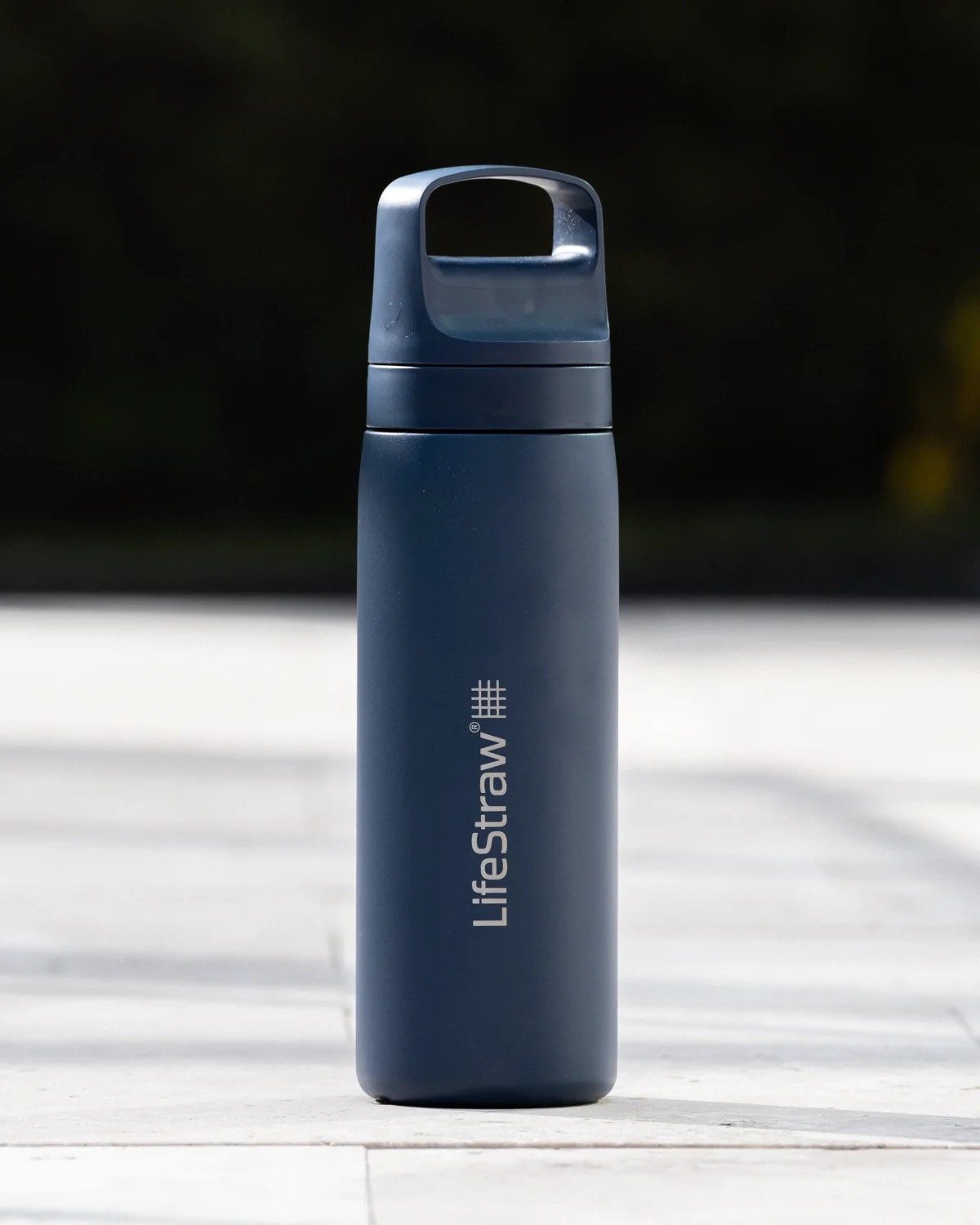
Double-wall vacuum construction keeps ice water refreshing for a full day in moderate conditions, and often into the next morning.
It’s not rated for hot liquids as there's a pressure buildup risk, but for cold hydration it works reliably well.
Flow rate requires a stronger suck than a standard bottle due to the dual filters that you need to suck the water through.
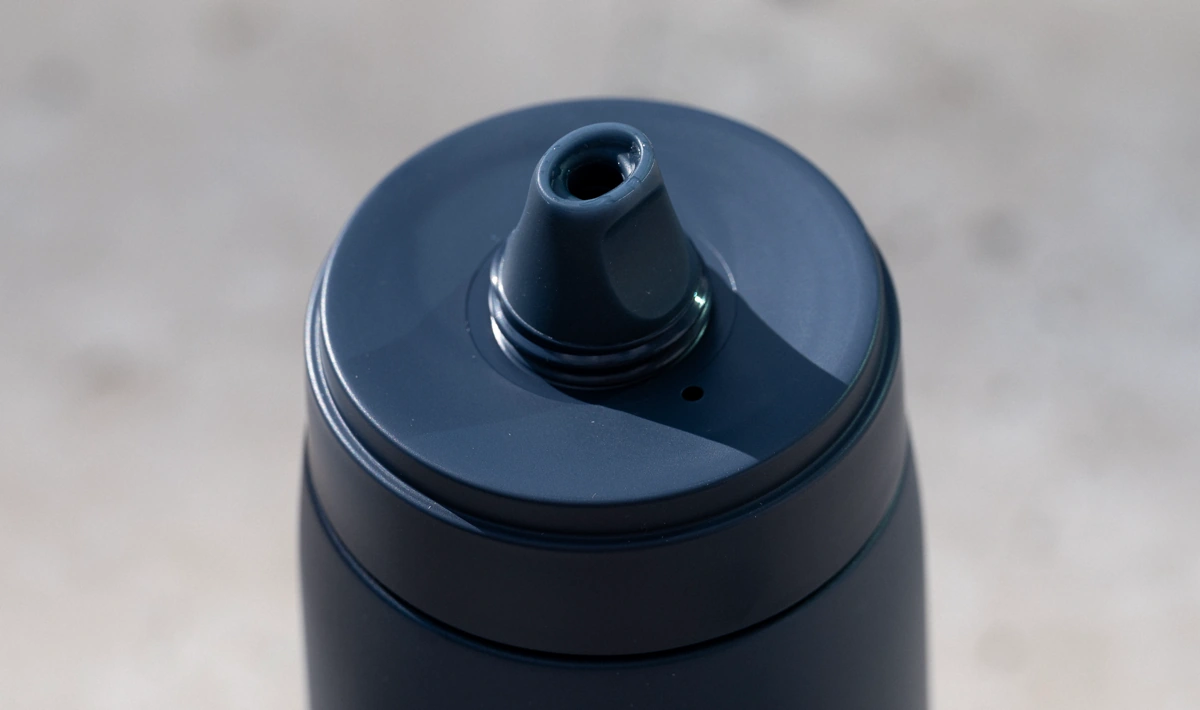
It’s noticeable at first, especially for quick gulps, but becomes normal with use.
Priming a new filter (soaking and sucking out air) helps smooth it initially.
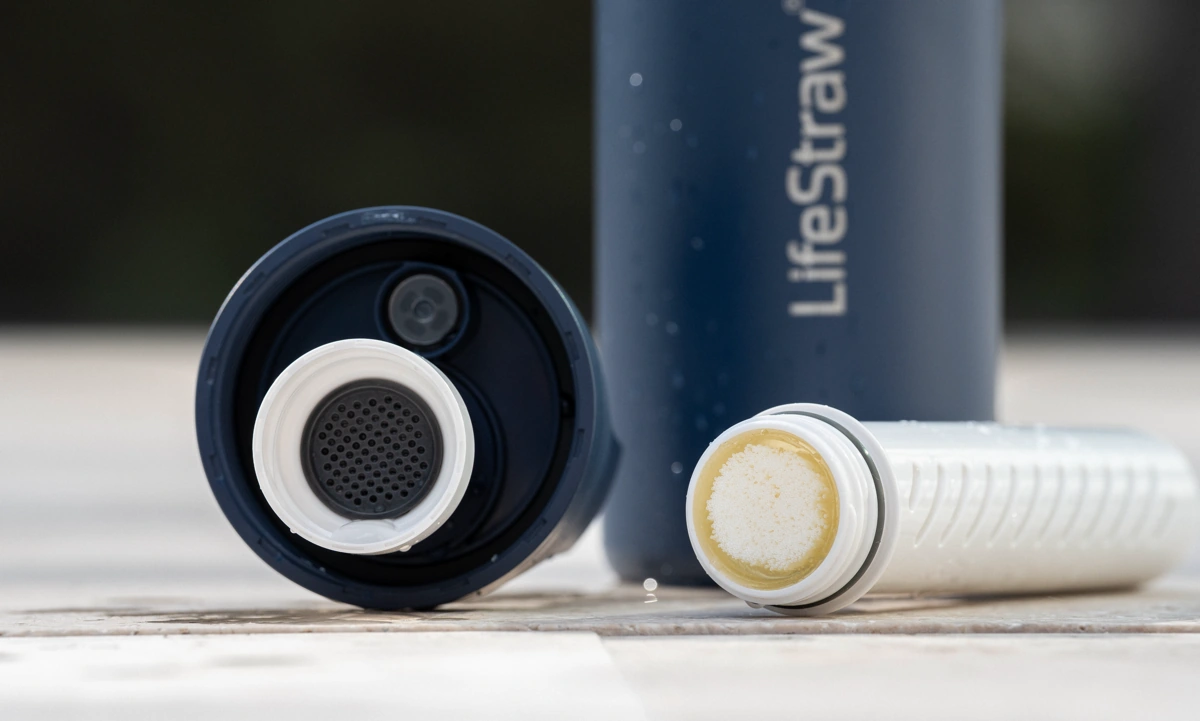
Build quality feels very premium.
Stainless steel resists dents and scratches better than plastic versions, and the lid seals tightly with no leaks in bags or during travel.
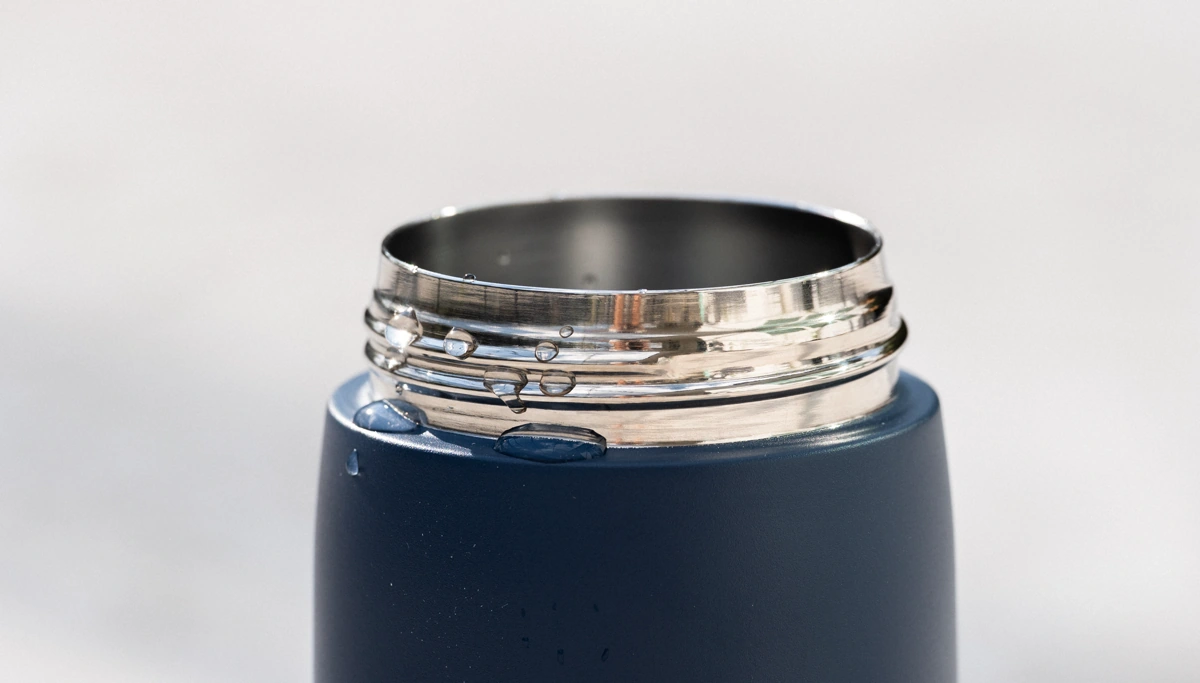
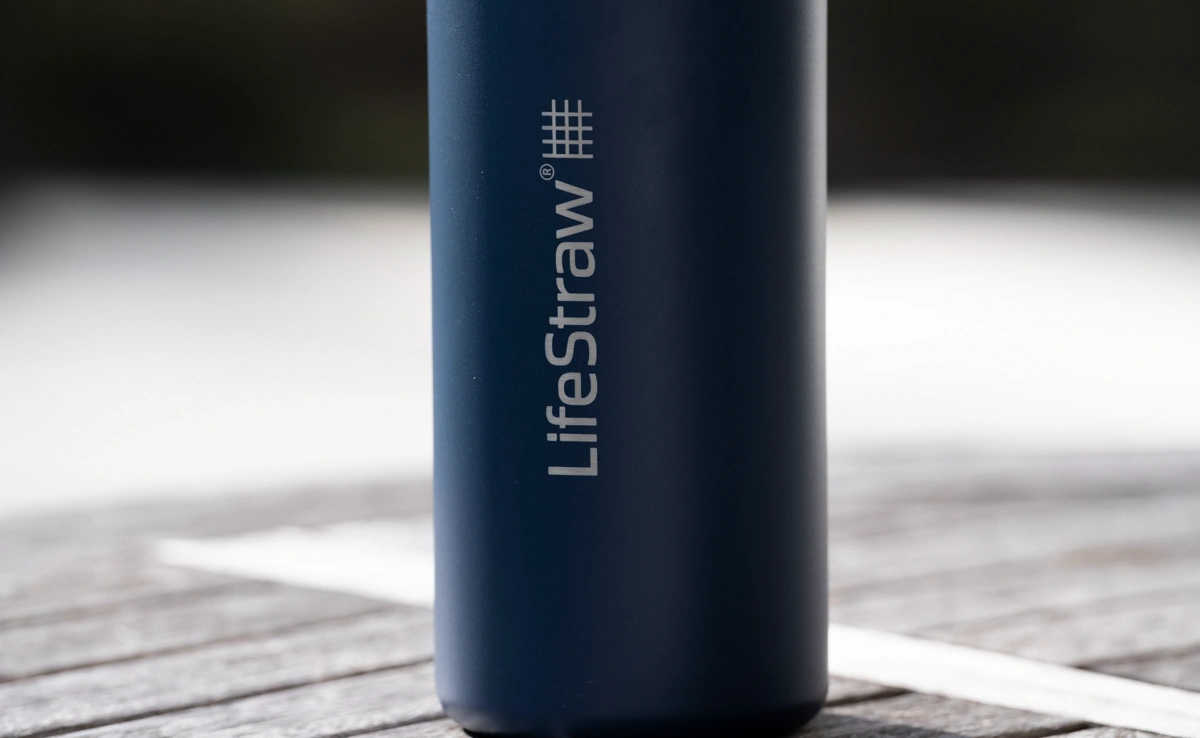
The carry loop on the lid is handy for clipping or grabbing, and the slim shape fits cup holders and backpack pockets easily.
Maintenance is straightforward as the bottle is dishwasher-safe (top rack, filters removed), and the mouthpiece separates for cleaning.
Carbon filter life is shorter (about 2 months for taste-focused use), so replacements add ongoing cost, but the core microfilter lasts years.
A few practical realities worth noting:
At just over a pound empty, it’s heavier than non-filter insulated bottles. The cap requires two hands as it's not attached to the bottle itself, and can be easy to misplace if not careful.
Also the mouthpiece hygiene needs attention to avoid mold if not dried properly - this is common place with water bottles though.
Also, it doesn’t remove viruses or heavy metals as it's not a full purifier, so for extreme backcountry it’s not standalone.
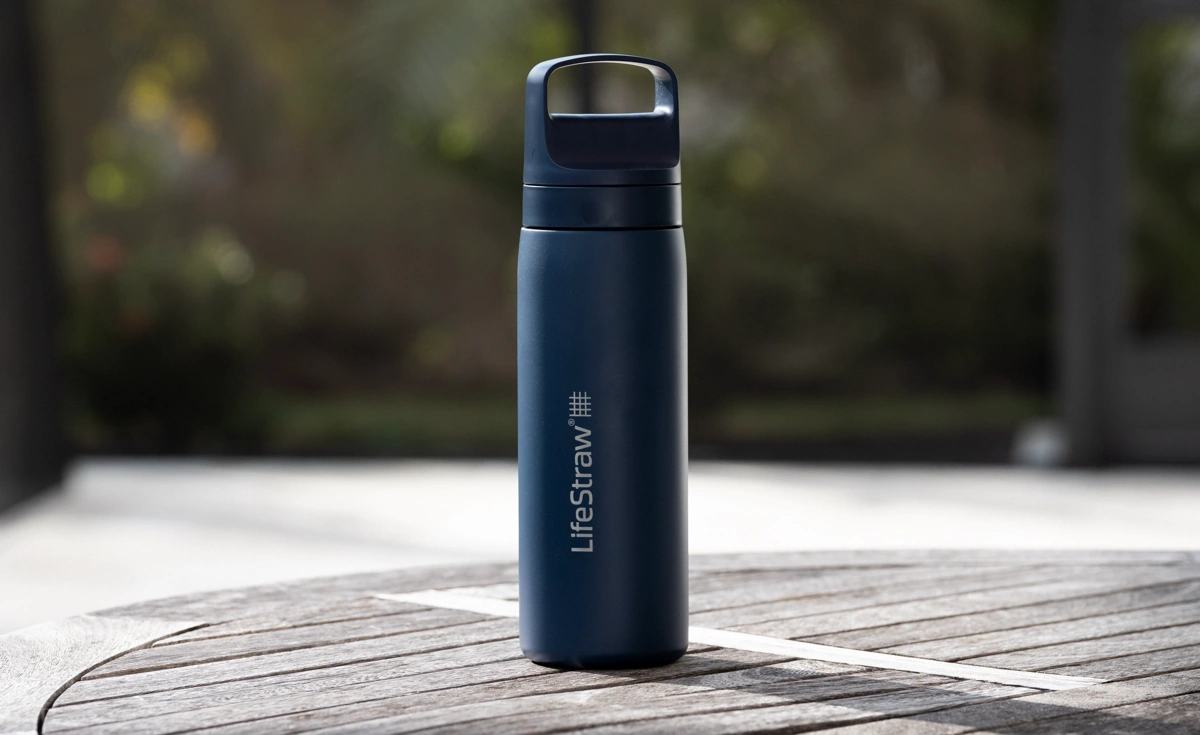
Overall, it excels for travel, daily use with questionable taps, or light adventures where cold, clean water matters most.
My verdict
The LifeStraw Go Series Stainless Steel 18 oz has become one of my trusted companions for reliable hydration.
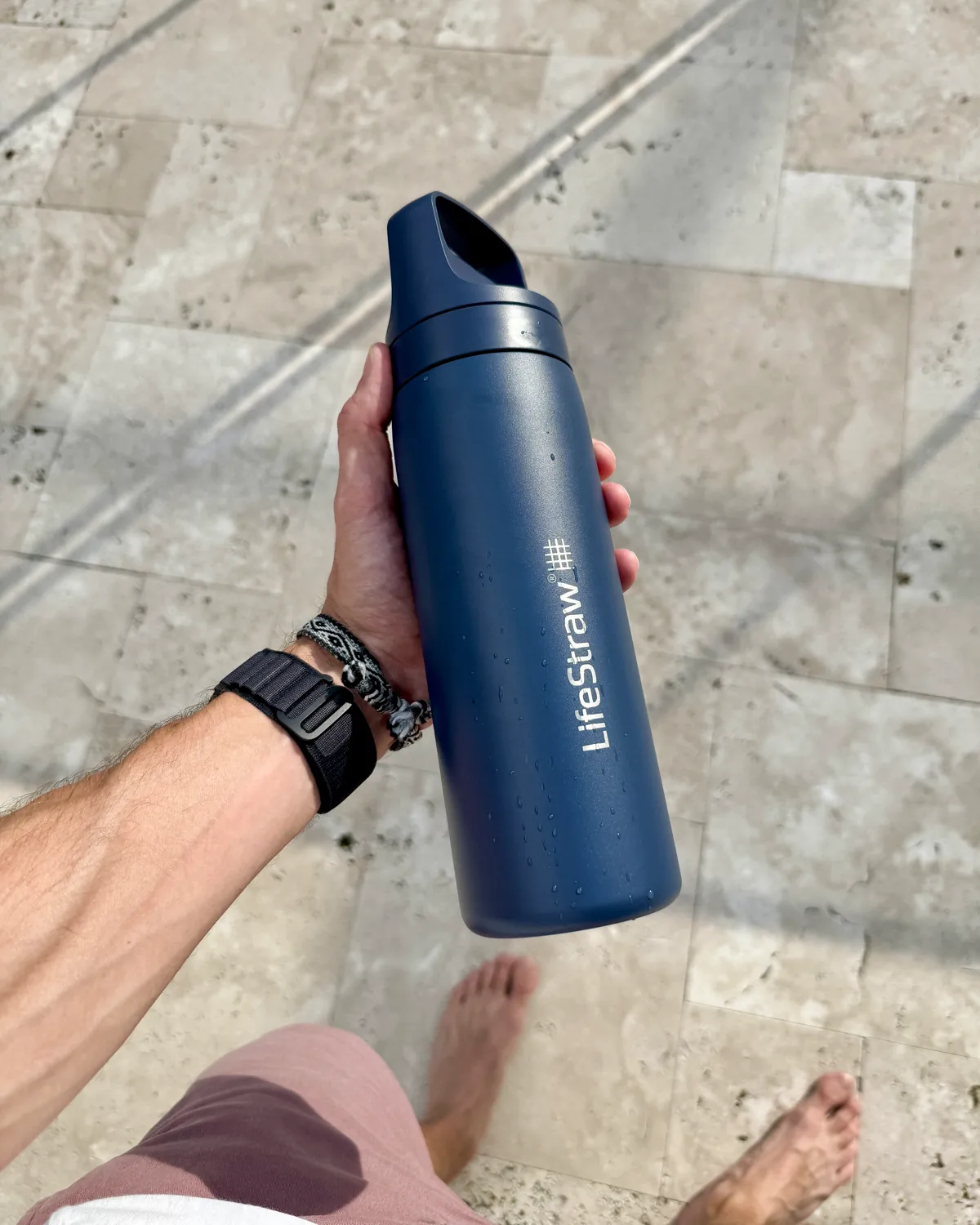
It combines effective pathogen and taste filtration with solid cold retention and a durable build, in a way few bottles match.
For international travel, urban commutes with bad tap water, or moderate trails where you want to fill confidently, it works without drama.
The flow rate and weight are trade-offs worth accepting for the protection and convenience, and carbon replacements ( around $19 on Amazon.com ) add cost over time, but the value feels fair at sale prices.
If you need one bottle that keeps water cold, tastes clean, and reduces single-use plastic reliance, this one earns a strong recommendation from me.
That said, if your needs lean more toward full purification (including viruses) or different mechanics, two strong alternatives stand out from my testing:
Alternative 1 - The LARQ Bottle PureVis 2 uses filtratration AND UV-C light for virus-level purification in 60 seconds, with excellent insulation for cold drinks, unrestricted flow, and self-cleaning tech. It’s pricier and tech-focused, perfect for daily carry and travel where ease matters most. Read my full LARQ PureVis 2 review here.
Alternative 2 - The Grayl UltraPress Titanium presses to purify in 10 seconds, removing viruses, chemicals, heavy metals, and particulates in a lightweight titanium build. It’s ideal for serious backcountry or remote travel where comprehensive protection is priority over insulation. Read my full Grayl UltraPress Titanium review here.
Thanks for reading. Have you used the Go Series or another filtered bottle? Share your thoughts in the comments. -Alastair
Written by

Subscribe to our Newsletter
to discover the best gear, healthy foods, and life outdoors.








Member discussion