
The Best Trail Running Shorts in 2026 | Tested On Actual Trails
Including the best trail running shorts for men and women — tested across technical singletrack, muddy mountain races, and long ultra-distance efforts

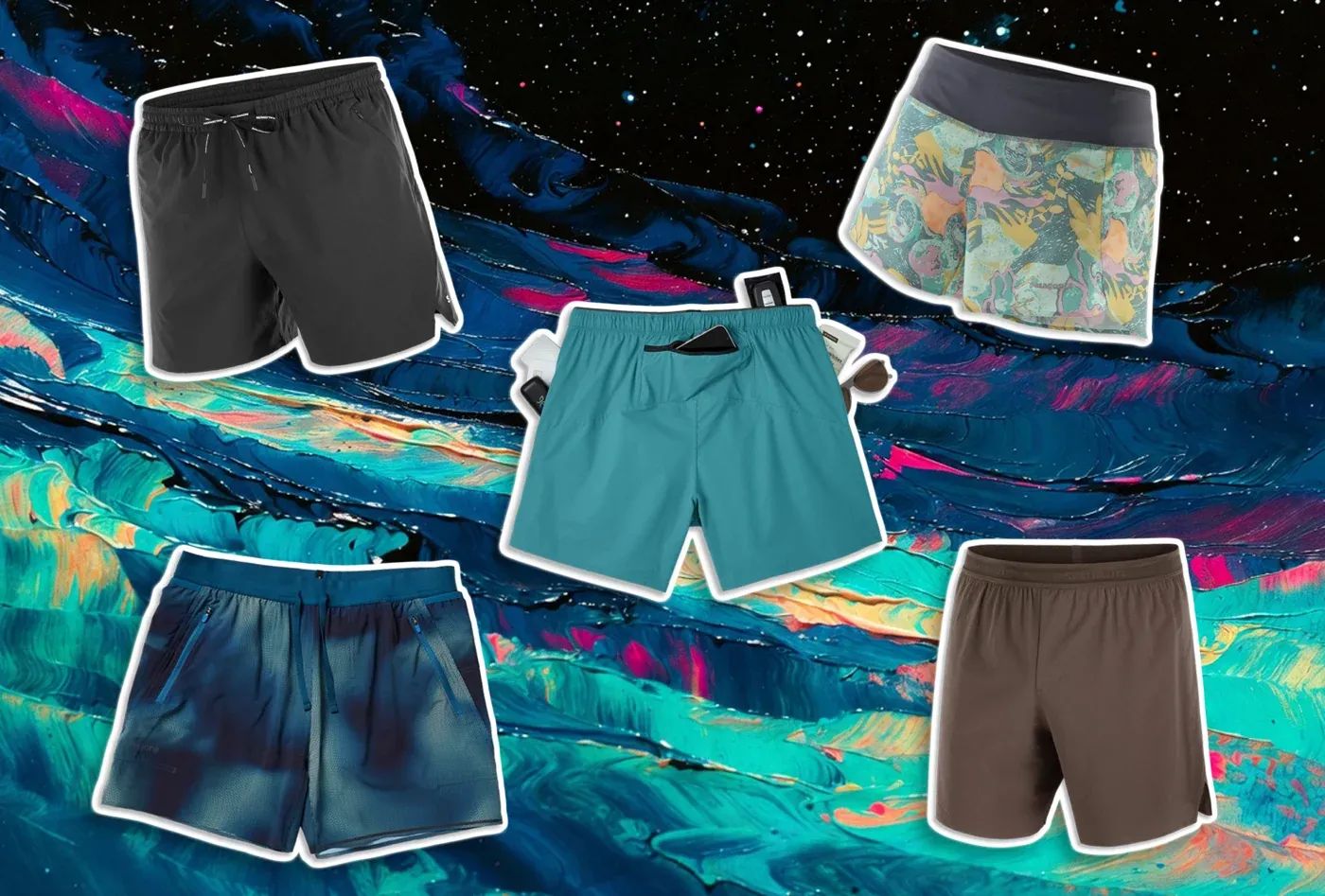
So you're hunting for the best trail running shorts and want to know which ones will actually hold up on the trails; not just look good in a product listing. You're in the right place, and welcome home...
Trail running shorts are a genuinely different beast from road running shorts. The demands of technical terrain, unpredictable weather, muddy creek crossings, and long hours on your feet require features that most road-focused shorts simply don't have.
I've been trail running and racing for years,all over the world, including (but not even closely limited to) completing UTMB OCC in Chamonix, Speedgoat in Utah (racing this one again this year), Mount St. Helens circumnavigation in Washington State; and in that time I've run in a lot of different trail running shorts.
This guide covers the best options for both men and women, organized by the type of runner you are. Whether you need something built for ultra-distance races, fast-and-light mountain days, or everyday trail miles, there's a pair here for you.
➡ Looking specifically for road running options? Check out our Best Running Shorts For Men and Best Running Shorts For Women guides.
If you purchase through links in this article, we may earn a small affiliate commission.
What Makes Trail Running Shorts Different?
Before I get into the picks, it's worth explaining why trail-specific shorts matter. Road running shorts are optimized for repetitive forward motion on predictable surfaces. Trail running shorts need to handle:
- Mud, water, and stream crossings — fabrics need to drain fast and dry quickly rather than hold moisture against your skin
- Technical movement — climbing over rocks and roots means a wider range of motion and a lower-profile hem that won't catch or snag
- Longer time on feet — chafe resistance matters more over 4, 6, or 10+ hour efforts than on a 45-minute road run
- Storage for nutrition and gear — trail runners carry more: gels, poles, phones, soft flasks, emergency layers. Pocket design is critical
- Secure waistbands — technical descents and scrambling sections mean you need a waistband that stays put without constant readjusting
Keep those requirements in mind as you browse the list below.
My Testing Criteria for Trail Running Shorts
For a pair of trail running shorts to make this list, they had to pass my real-world testing checklist:
- Fabric needs to be breathable so they drain and dry fast after water crossings or heavy rain
- Liner provides enough support and coverage for long efforts without chafing
- At least one secure pocket large enough for a phone or a 100ml soft flask
- Waistband stays put on technical descents and scrambling
- Inseam length that doesn't restrict movement or cause thigh chafe on long climbs
- Durable enough to handle repeated use on rocky, abrasive terrain
- Lightweight, because every unnecessary gram matters on long mountain days
No pair made this list purely on spec sheet credentials. Every pick here has been worn on actual trails.
The Best Trail Running Shorts | Men's & Women's Picks
🥇 Path Projects Graves PX Short ($78) — WINNER (Men's)
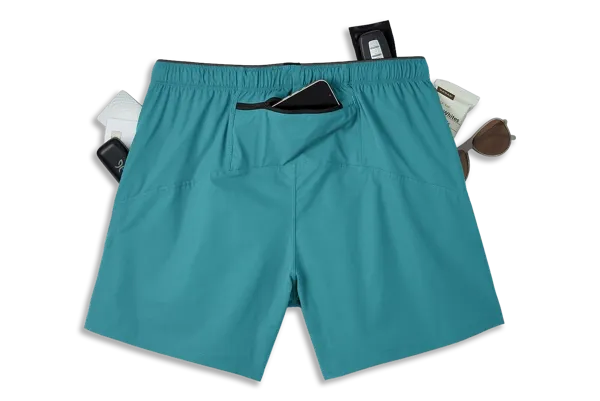
I've been running in Path Projects shorts for years, completed countless ultramarathons in them, and crossed the finish line of UTMB OCC in Chamonix wearing a pair. That's not a coincidence — the Graves PX is the best trail running short I've tested, full stop. With 928 reviews at 4.7 stars, I'm clearly not the only one who thinks so.
If you only buy one pair of trail running shorts, make it these.


What makes Path Projects genuinely different is their modular liner system. Rather than sewing a single liner into every short, they sell outer shells and liners separately — so you can pair them to exactly what you need for a given run. Going long in cold conditions? Grab a longer compression liner. Racing in summer heat? A lightweight brief liner. Running a 100-miler where chafe management is everything? There's a liner designed specifically for that.
The Graves PX shell is fast-drying, durable on rocky terrain, and comes in both a 5" and 7" inseam — as well as classic and relaxed fits — so there's a version for every body type and preference. Rear pockets handle a phone, keys, and nutrition without bounce, with the centre pocket perfectly sized for a modern smartphone.
My personal favourite pairing is the Graves PX with the Lynx PD 8" liner — the longer liner gives me the chafe protection I need for ultra-distance efforts without any of the overheating that comes with full compression tights.
Best for: All trail running — from fast training days to 100-mile races
Patagonia Strider Pro 3½" Shorts ($85) — Best Overall (Women's)
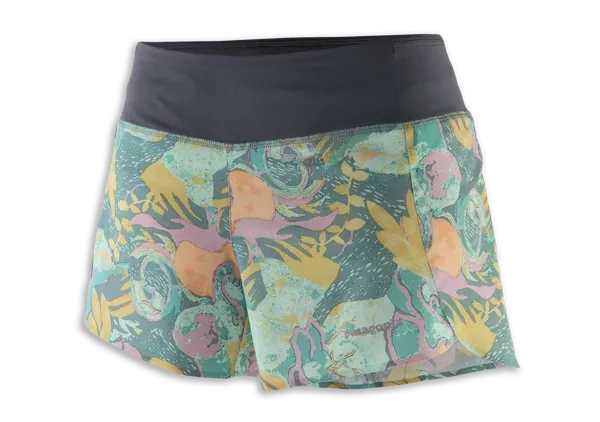
The Strider Pro is what happens when a brand genuinely listens to female trail runners rather than just shrinking down a men's short.
The women's-specific cut sits higher on the hip with a mid-rise fit, the built-in liner briefs are shaped and positioned correctly for the female anatomy over long efforts, and the three-pocket system is genuinely useful (a zippered centre-back pocket for a key or phone, plus two semi-secure side waistband pockets for quick-access gels).
The shell is 90% recycled polyester with four-way stretch and a DWR finish, so it moves with you on technical terrain and sheds light moisture without weighing you down. At just 98g, you'll barely notice them. The 3½" inseam gives good freedom of movement on climbs while the wide stretch-knit waistband with internal drawcord keeps everything in place on descents. Made in a Fair Trade Certified factory. 4.3 stars across 57 reviews.
Available in Moon Tripper Blue Sage, Black, Blue Sage, Faded Magenta, Wetland Blue, and Marlow Brown.
Nike ACG Second Sunrise 5" Shorts (~$57) — Runner Up (Men's)
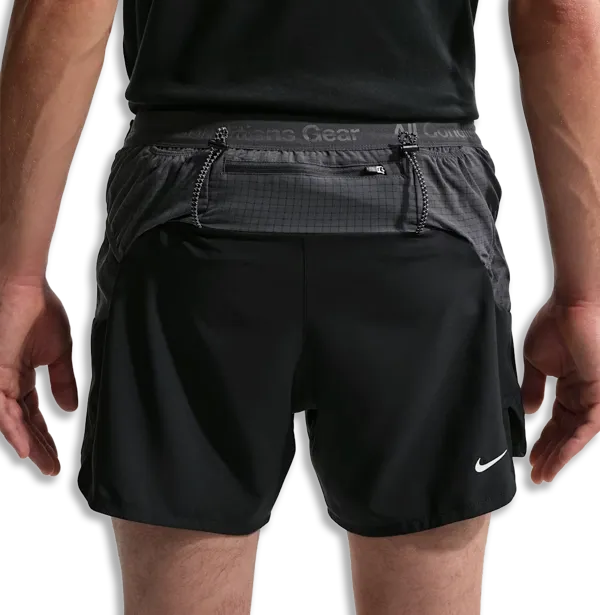
If the Path Projects system feels like more than you need (separate liners, mix-and-match shells) the Nike ACG Second Sunrise shorts are the best single-piece alternative.
I own three pairs, which tells you everything about how much I rate them.
Nike engineered these specifically for trail, and it shows. The Dri-FIT shell uses a slightly more open weave than Nike's road shorts, draining and drying noticeably faster after water crossings. The built-in liner is supportive without being restrictive, and two rear pockets sit flat against your body and handle a phone plus a couple of gels without any bounce.
Read my full Nike Trail Second Sunrise shorts review for the complete breakdown.
These also happen to look great off the trail, which matters when you're traveling to races and want one pair that handles a morning run and an afternoon in town.
Arc'teryx Norvan Shorts ($90)— Best for Fast & Light / Short Races
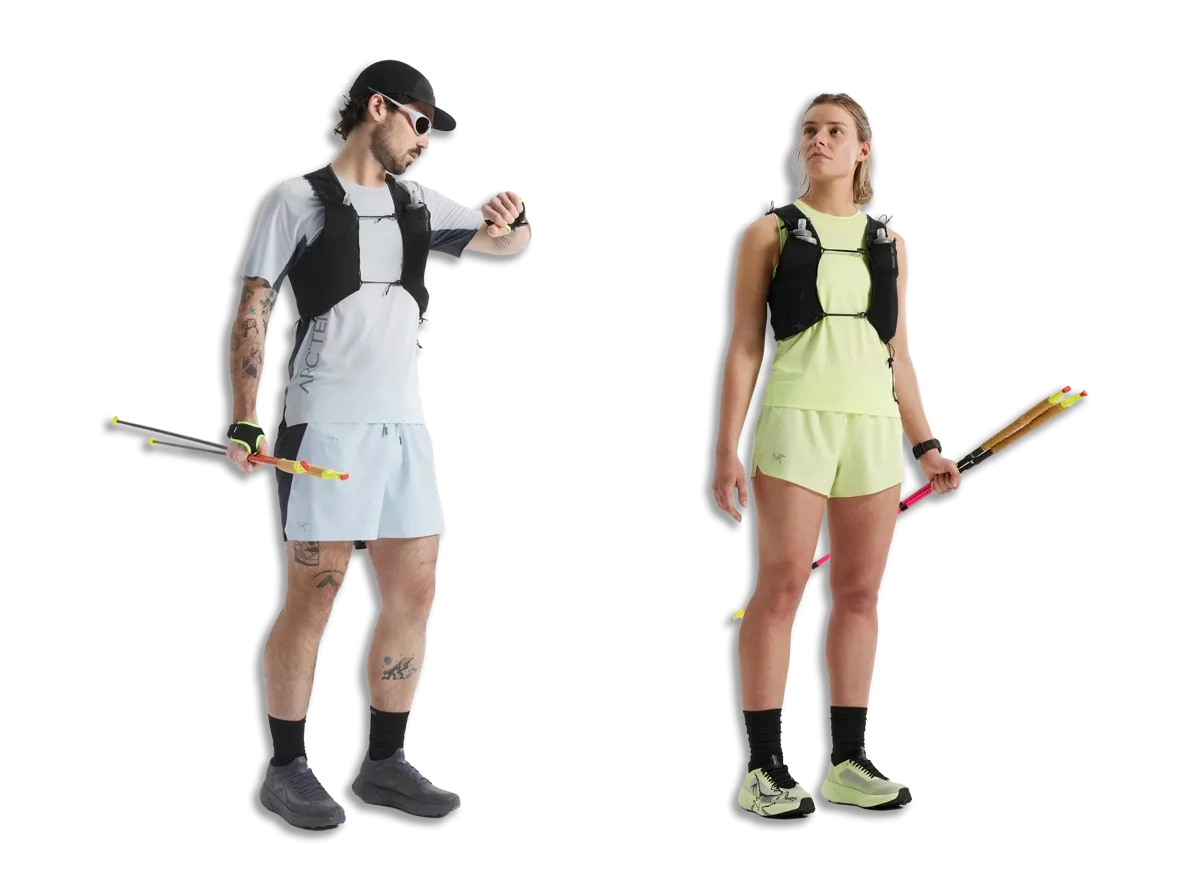
These are the shorts you reach for when the priority is going fast and carrying as little as possible. Built from 100% recycled Diem™ polyester, they're soft, lightweight, and move with you on technical terrain without restriction.
Arc’teryx Women’s Running Clothes Review: Norvan Shorts, Taema Tees
Helen’s in-depth review of the Arc’teryx women’s Norvan running shorts and Taema tee, including key features, sizing tips, pros and cons.
 Helen
Helen
The women's version comes in a 3" inseam with a built-in brief liner that wicks moisture, ergonomic patterning, a split hem for full freedom of movement, and a single zippered back pocket for gels.
The men's version is a linerless 5" short, a deliberate design choice for runners who prefer to wear their own liner underneath or simply run without one. Both have a breathable waistband designed for security on extended efforts.
Pockets are minimal (one rear zippered pocket on each) so these aren't the right call if you're carrying a full day's nutrition (unless you choose to wear a running belt or hydration pack).
For short trail races, interval sessions on technical singletrack, or fast mountain runs where you're moving quickly and staying light, they're exceptional. The price point reflects Arc'teryx's materials quality and construction.
Best for: Short trail races (up to half marathon), fast training days, technical terrain
Janji AFO 5" Middle Short Ultra ($94) — Best for Ultra Distance
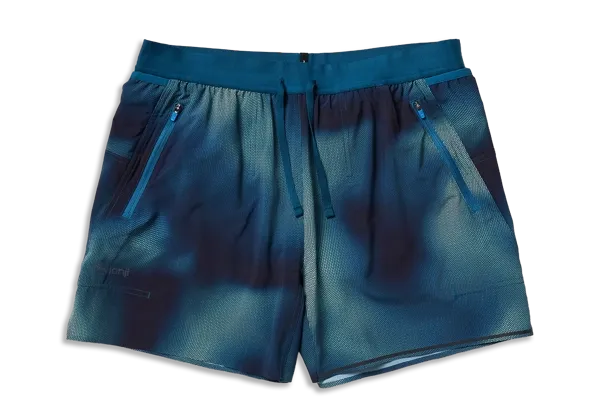
Ultra running puts unique demands on shorts that most trail-focused options don't fully address. You need a liner that won't chafe after 10+ hours, a waistband that sits comfortably under a race vest hipbelt, and pocket storage that supplements your vest's capacity rather than duplicating it. The Janji AFO Middle Short Ultra solves all of these — and then some.
The pocketing here is genuinely impressive: six in total. Two zippered hand pockets secure cash and cards, two drop-in pockets are positioned perfectly for gel access mid-run, a back zip pocket fits most phones, and an interior liner pocket has an elastic key loop. That's more usable storage than most trail vests.
The shell is made from AFO fabric (88% recycled polyester, 12% elastane), which is hyperlight at just 133g and moves with you without restriction. The brief liner (94% polyester, 6% spandex) is well-positioned for long efforts, and reflective detailing on the hand pockets and logos keeps you visible on pre-dawn or post-sunset running.
Also available in a 7" inseam and a 2-in-1 version if you prefer the built-in compression liner option. Women's options available too.
Best for: Ultramarathons, 50k+ efforts, multi-hour mountain days
Salomon Sense Aero 7" Shorts ($70) — Best Minimalist Trail Short
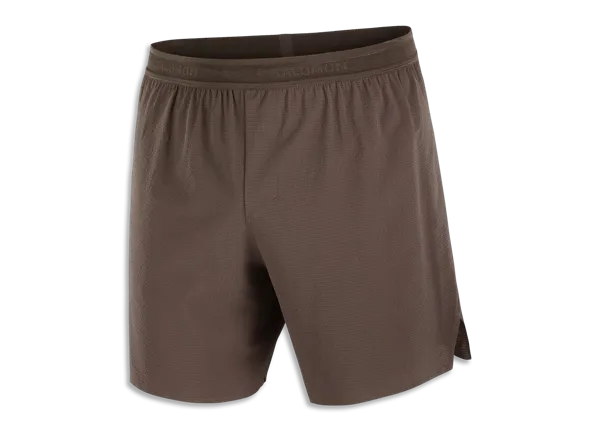
If you run with a vest and want shorts that stay completely out of the way, the Sense Aero is Salomon's current answer. The Aerotech fabric is built with micro-holes for maximum airflow; on hot summer trail days these feel closer to wearing nothing than any other short on this list. The 4-way stretch moves with you on technical terrain and the 37.5® Technology actively regulates body temperature, drying five times faster than comparable fabrics.
The 7" inseam version earns its place here specifically for runners who struggle with inner-thigh chafe on long climbs; the extra coverage makes a real difference on steep, sustained ascents in warm conditions. The flat elasticated waist (no drawstring) stays put surprisingly well given the minimalist design.
The trade-off to know about upfront: storage is genuinely minimal. There's one internal mesh pocket at the front for a key or a couple of gels. If you need more than that, you'll want a vest alongside these. Also available in 3" and 5" inseams.
Best for: Hot-weather trail running, vest-wearing runners, minimalists who prioritise breathability
Compressport Trail Racing 2-In-1 Short ($120) — Best for Race-Day Storage
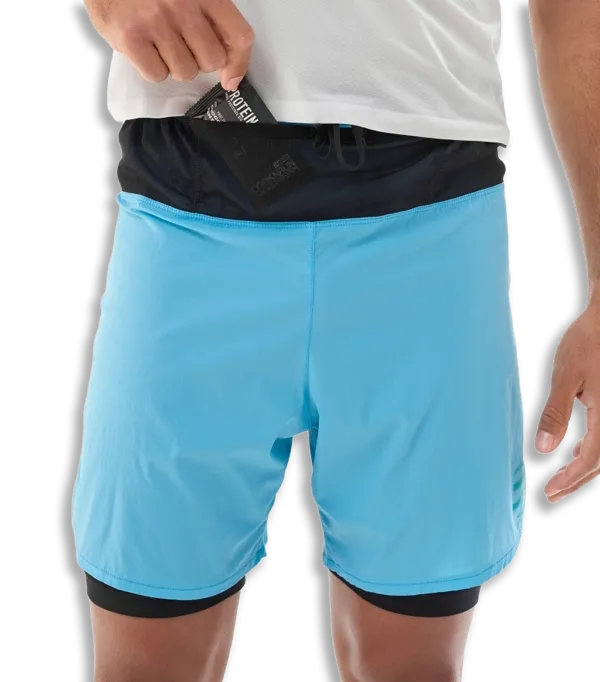
Compressport completely redesigned this short based on feedback from their fastest athletes, and the result is one of the most storage-focused trail racing shorts available. The 2-in-1 design pairs a fully-knitted inner boxer (breathable, supportive, and seamless against the skin) with an ultralight loose outer layer that stays out of the way on technical terrain.
What sets it apart is the wraparound trail belt: a breathable elastic mesh waistband divided into three compartments with easy-access pull tabs, designed to carry gels, a phone, or a small hydration flask without needing a vest. A hidden rear pocket with an invisible zip handles valuables securely. The drawcord allows even adjustment for a precise fit, and the high-tech waistband, an extension of the inner boxer itself, stays put even when you're pushing hard.
At $110 it's the most expensive pick on this list, and the premium is real: the materials quality, chafe-free comfort across long race efforts, and pocketing system genuinely justify it for runners who race without a vest and need their shorts to carry everything.
Best for: Trail racing without a vest, runners who prioritise storage, long race efforts
Salomon Shakeout Core 5" Short ($60) — Best Budget Trail Shorts
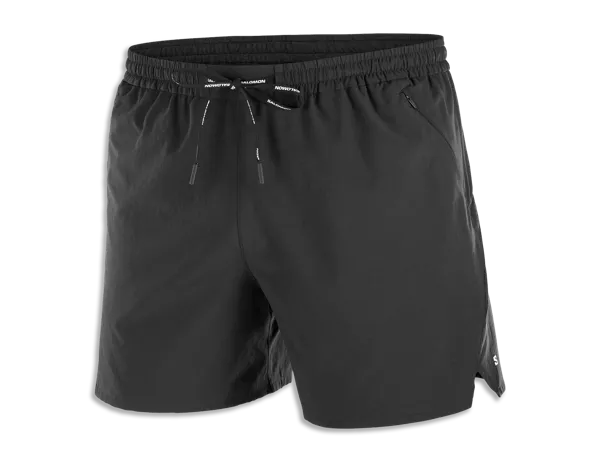
Not every trail runner needs to spend $78-110 on shorts, and the Salomon Shakeout Core proves you don't have to. At $60, it delivers the features that actually matter for trail running without charging you for anything you don't need.
The internal brief liner is moisture-wicking and stays put on the move, the elastic waistband with adjustable drawcords dials in fit for all body types, and, critically, there are two zippered hand pockets on either side, giving you more practical storage than the far pricier Sense Aero.
The 100% polyester shell is lightweight and quick-drying. Inseam is 5", which works for the vast majority of trail runners.
Yes, you'll notice the step down in materials refinement compared to the Path Projects or Janji picks above; the fabric has slightly less stretch and the overall feel is more functional than refined.
For newer trail runners building out their kit, anyone who just needs a capable backup pair, or runners who want to try trail-specific features without a significant outlay, the Shakeout Core delivers real value.
Best for: Budget-conscious trail runners, beginners, backup pair
Trail Running Shorts Buying Guide
Liner type: which is right for you?
Brief liner — The most common option. A sewn-in brief provides modest coverage and support. Works well for efforts up to around 4-5 hours for most runners. Lightweight and low-bulk.
Compression liner — A tighter-fitting, longer liner that extends to mid-thigh. Better chafe protection on long efforts and provides some muscular support. Slightly warmer and heavier. Best for ultras and those prone to inner-thigh chafe.
Modular (no liner) — Some trail shorts ship without any liner, designed to be paired with a separate compression liner or base layer of your choice. More customizable but requires buying additional pieces.
Inseam length
- 2–3" — Maximum freedom of movement. Best for fast, technical work. Less chafe protection on long climbs.
- 5" — The trail running sweet spot. Enough coverage for most efforts without restricting stride.
- 7" — More coverage, better for runners prone to thigh chafe on long efforts or those running in cold/wet conditions.
Pockets: what to look for
Trail running shorts pockets need to be secure. A zip closure or at least a deep dump pocket with elastic retention; bounce is the enemy. Look for:
- At least one rear zip pocket sized for a modern smartphone (most phones need ~6" depth now)
- Hipbelt-compatible positioning if you run with a race vest
- Bonus: a small front right pocket for quick-access gels
Waistband
A drawcord is essential for trail running. You'll be adjusting fit based on what you're wearing underneath and whether you're running with a vest. Look for a flat, non-rolling waistband that won't bunch under a vest hipbelt.
Frequently Asked Questions
What's the difference between trail running shorts and regular running shorts?
Trail running shorts are built for faster drying, more durable fabrics, more secure pocket storage, and a cut that allows for greater range of movement on technical terrain. Road running shorts prioritize lightweight construction and sweat-wicking above all else; features that become secondary to durability and drainage when you're running off-road.
Should trail running shorts have a liner?
Yes, for most runners. A liner provides support and prevents chafe. The type of liner (brief vs. compression vs. modular) depends on your distance and personal preference; see the buying guide above for more detail.
What length inseam is best for trail running shorts?
A 5" inseam is the most versatile length for trail running and works well for the majority of runners. Shorter inseams (2–3") are better for fast, technical work. Longer inseams (7"+) suit ultra-distance runners or those prone to inner-thigh chafe.
Are trail running shorts with pockets worth it?
Absolutely. One of the biggest practical differences between trail and road shorts is the storage requirement. On trails you're typically carrying nutrition, a phone, keys, and sometimes emergency kit. Secure, well-positioned pockets are a non-negotiable feature for trail running.
Can I use road running shorts for trail running?
You can, but you'll likely notice the limitations quickly. Road shorts tend to hold water after creek crossings, lack the pocket storage trail running requires, and use lighter-weight fabrics that can degrade faster on abrasive terrain. If you're trail running regularly, it's worth investing in a trail-specific pair.
Any questions about fit, sizing, or which option is right for your specific use case? Drop them in the comments below — I'm always happy to help our subscribers. -Alastair
Trail & Kale tests all gear in real conditions. Some links in this article are affiliate links — if you purchase through them, we may earn a small commission at no extra cost to you. This never influences our recommendations.
Written by

Subscribe to new posts
and discover the best gear, healthy foods, and life outdoors.







Member discussion