
Rapid Radios make nationwide push-to-talk simple, if you have cell signal
Simple setup, clear encrypted audio, and effortless group comms make sense for families and travelers who stay within LTE coverage.

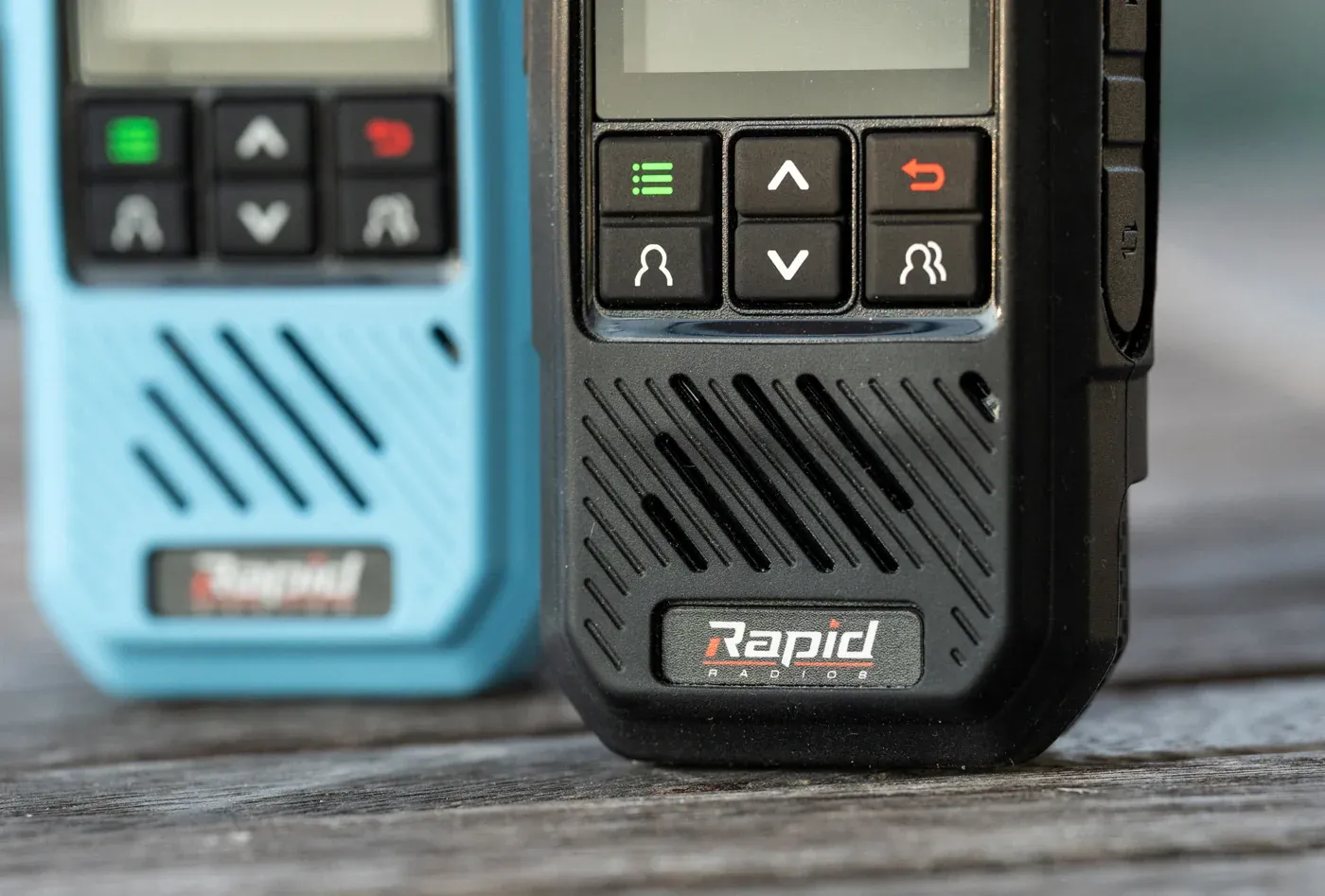
Rapid Radios are easiest to understand if we call them what they are: LTE push-to-talk radios that behave like walkie-talkies, but run on cellular towers instead of traditional radio frequencies.
That one detail is also why opinions are so split. Casual users will love the “press-to-talk anywhere” simplicity but prepper and ham radio communities will most likely avoid them because, when there’s no cell signal, they don’t work at all.
And the “no fees” messaging has potential to rub some people the wrong way once you realize the included year of service ends and you’ll need to renew to keep them functioning, even if it is only $50/year.
I tested these with a pretty specific use case in mind: family hikes, group travel, and the occasional “phones are annoying for this” moment. I also wanted to see how far they really go in weak coverage, because that’s where the marketing and reality usually part ways.
Key specifications
- Price (set of 2): $399 at rapidradios.com (sale price from $997)
- Service included: 1 year of service per radio (SIM included)
- Renewal: $50 per year, per radio (not a monthly subscription, but you do need to renew or they effectively “brick” after the included year)
- Coverage: “Nationwide” LTE/4G use in the USA (depends on towers)
- Technology: LTE/POC push-to-talk (data-stream based, not traditional radio)
- Bands: B1,2,3,4,5,7,8,12,13,17,66 + TDD 38/40/41
- Range: “Unlimited” distance where signal exists
- Private + group comms: 1:1 private talking, group talking up to 200 people
- Audio + privacy: Noise-canceling behavior mentioned in user feedback; AES-256 encryption
- Battery: “5+ day” claim; real-world testing puts it closer to ~3–5 days with heavier PTT use
- Charging: USB-C, about 2 hours to full
- Display: Basic LCD (signal/battery/channel)
- Included: Belt clip, charger; mounts/hardware mentioned for car/base unit
- Extra: “Global option” available (with noted international markup concerns)
These Nationwide PTT Walkie-Talkies are currently on sale for $399 USD $997 USD at rapidradios.com
How to set it up (the settings I changed right away)
In my case, there was basically no setup required. Rapid Radios had already custom configured my radios in their Michigan office, including assigning them to my group (mine arrived labeled with the group name Alastair Dixon and the quantity noted as 4 radios).
So what I actually did was more of a quick “sanity check” and a couple of practical tweaks:
1) Charge + power on
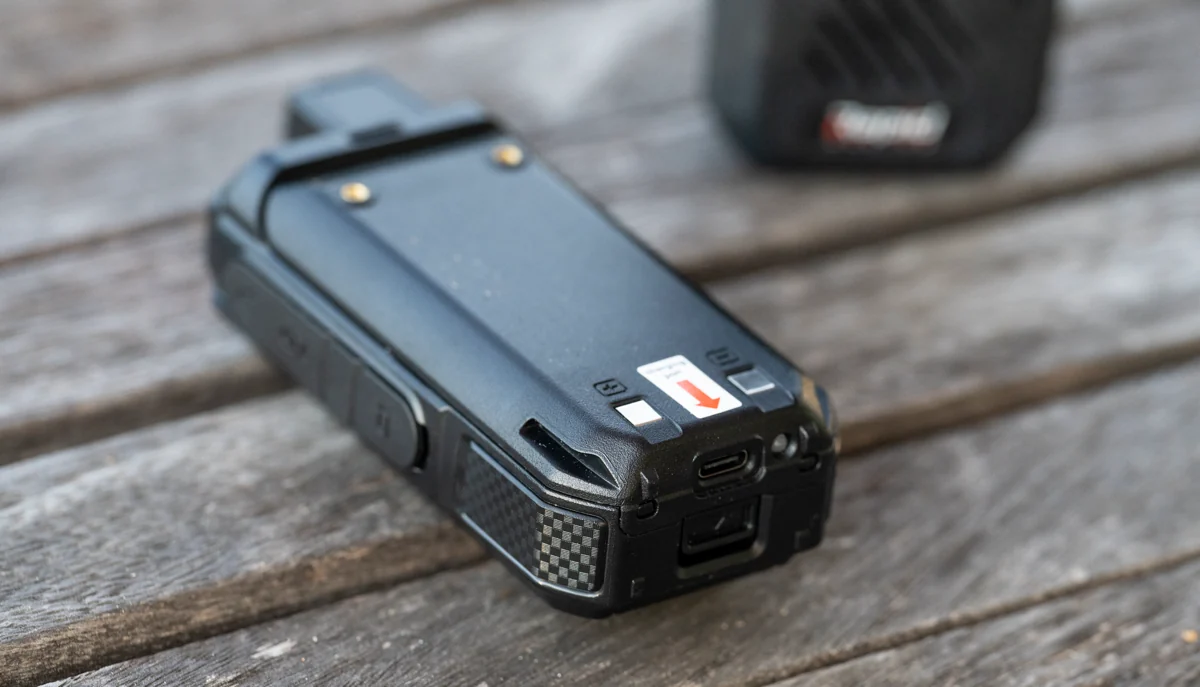
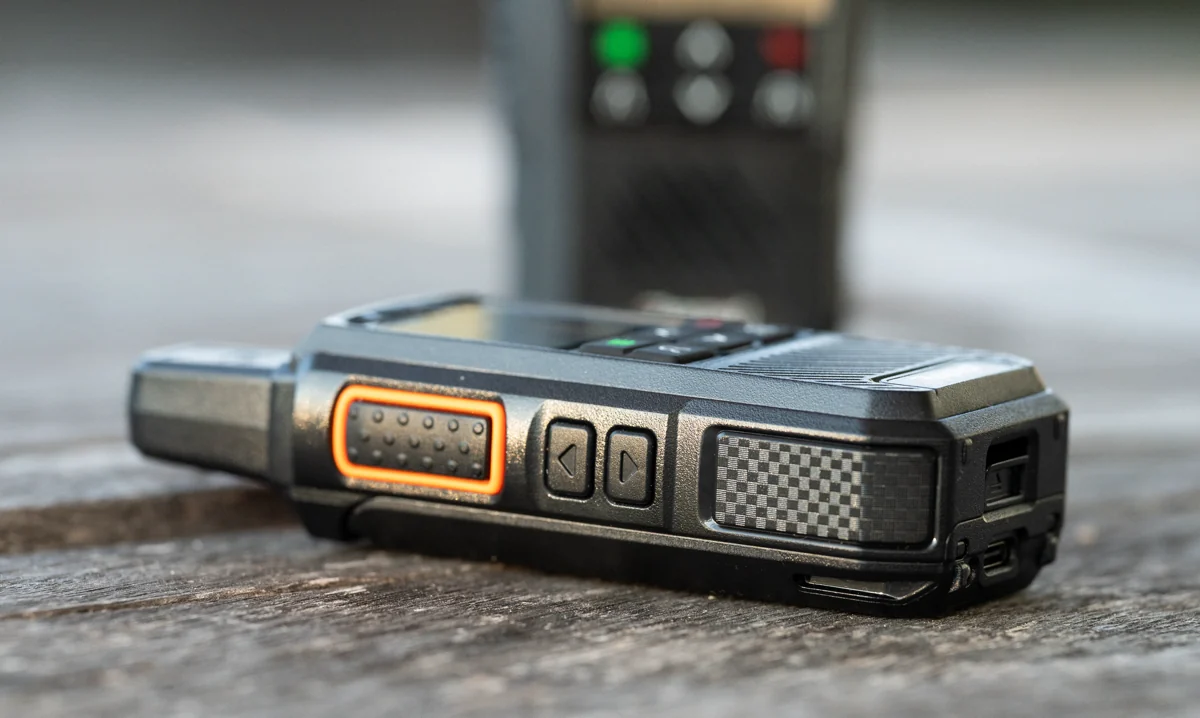
- Charging is USB-C, and the charging port is on the bottom of the unit (not the side).
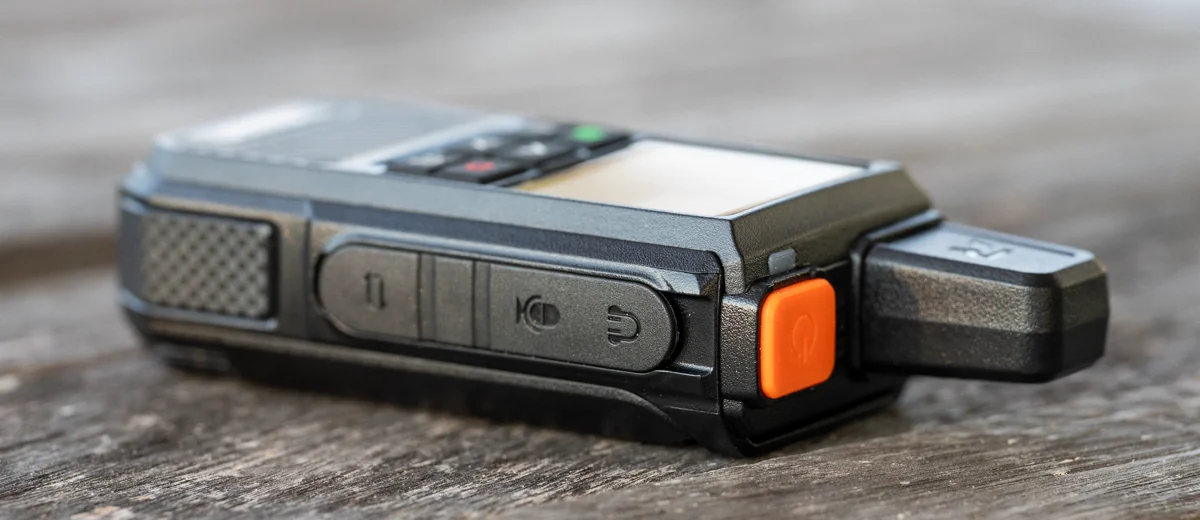
- Power on is simply holding the orange Power button on the top.
2) Confirm you can talk to the group
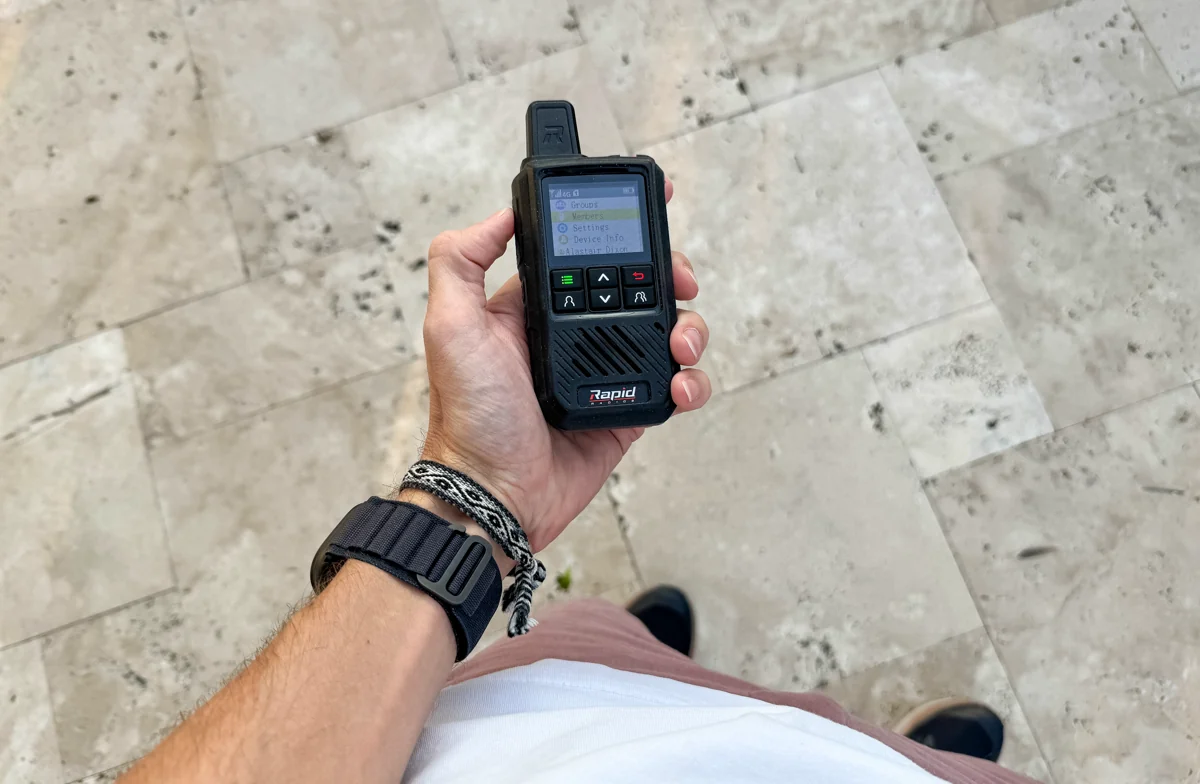
- Push and hold PTT to talk.
- Everyone in your group hears it (you can speak for up to 60 seconds at a time).
3) (Optional) Direct someone specific
If you want to talk to one person instead of the whole group, use the UP/DOWN arrows to select a user, hit the green button to check-mark them, then hold PTT to talk to that selected person.
4) Set the correct time zone (only if it’s wrong)
Mine didn’t need changes, but the quick-start card that comes in the package shows how:
- Green Menu → Settings → Zone → scroll with up/down arrows to your time zone → confirm with the menu button → use the red Exit/Back button to back out.
5) Ignore the QR code on startup
The card notes a QR code can appear when you power on; that’s considered normal and it should disappear on its own if the device is within tower range.
6) Volume
Volume is adjusted with the UP/DOWN buttons on the left side of the radio.
Performance review
What they do best: push-to-talk simplicity at any distance (with signal)
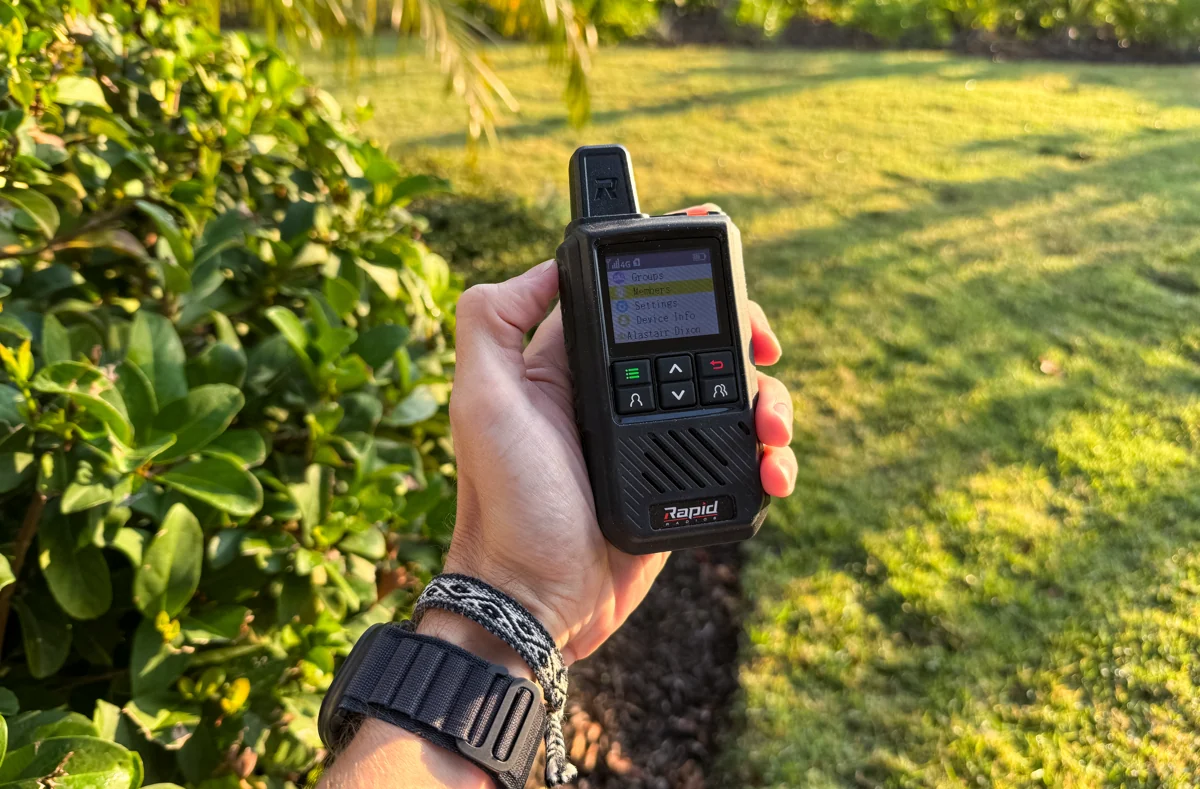
When LTE is there, the experience is exactly what people describe: instant push-to-talk across states and great audio clarity.
That’s why RV users and families keep praising them. There's no dialing, no “can you hear me now” call setup, and no group call chaos.
You press the button and it just works.
Compared to basic FRS walkie-talkies, like Rocky Talkie Radios, for example, this is a completely different world.
Range isn’t a few blocks or a ridge line, It’s as far as the network can carry it.
Audio quality is consistently the bright spot
Between noise handling and the “just talk” interface, these feel designed for normal humans, not radio hobbyists. That’s a real strength, especially for:
- kids
- older family members
- group travel where you want zero learning curve
The AES-256 privacy angle also matters for people who don’t love the idea of open channels, especially in crowded settings.
The hard limit: they are “tower prisoners”
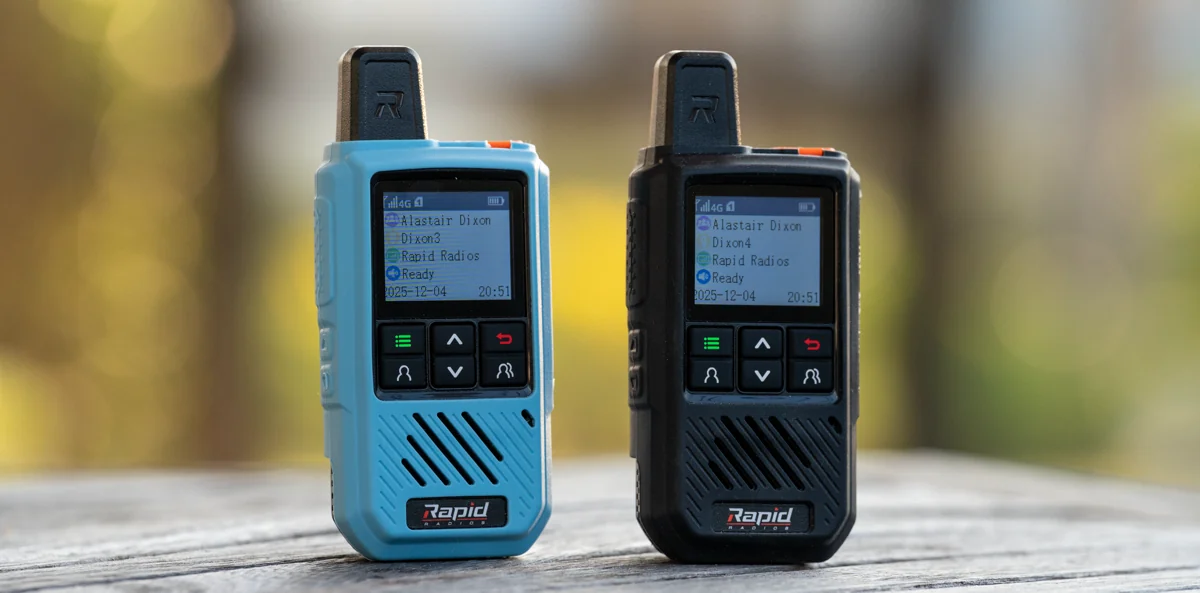
This is the dealbreaker for a lot of people, and it needs to be said plainly.
If you lose signal, or you’re in deep woods / true backcountry with no coverage, Rapid Radios do nothing.
There’s no offline mode, no radio-to-radio fallback, and no magic “off-grid” behavior.
Reliability and build quality
there's a familiar pattern with anything that leans on LTE. In strong coverage, these can feel almost bulletproof, like they just work every time you press the button and you stop thinking about the device entirely.
The antennas are pretty powerful and that's what enables such strong connections.
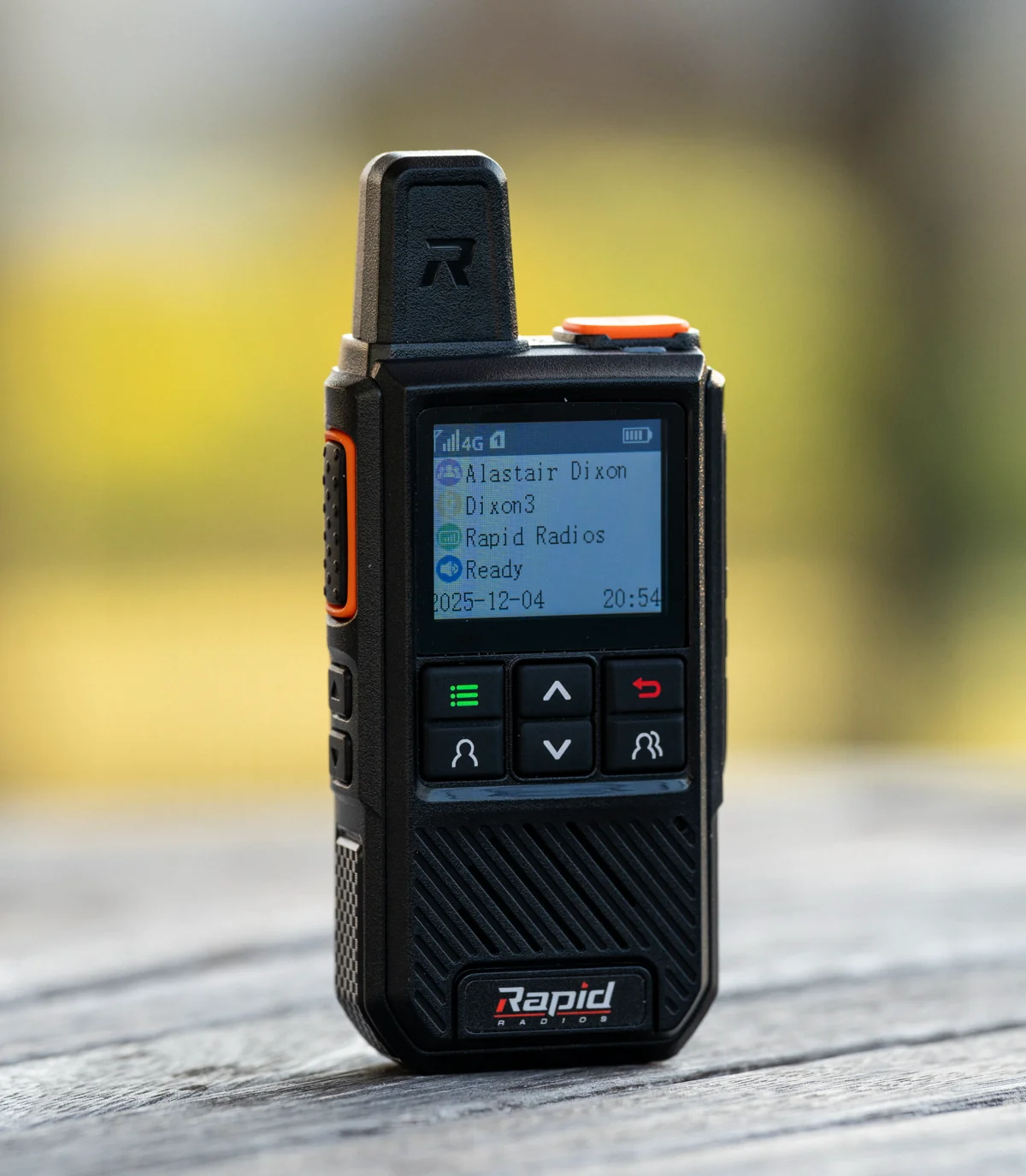
Once you get into weak or patchy signal, the tone changes.
That’s where you may experience delays, missed transmissions, or generally inconsistent behavior that makes you second-guess whether your message actually went through.
This could be a deal breaker if you spend a lot of time in rural fringe coverage areas, where signal is always a bit of a gamble.
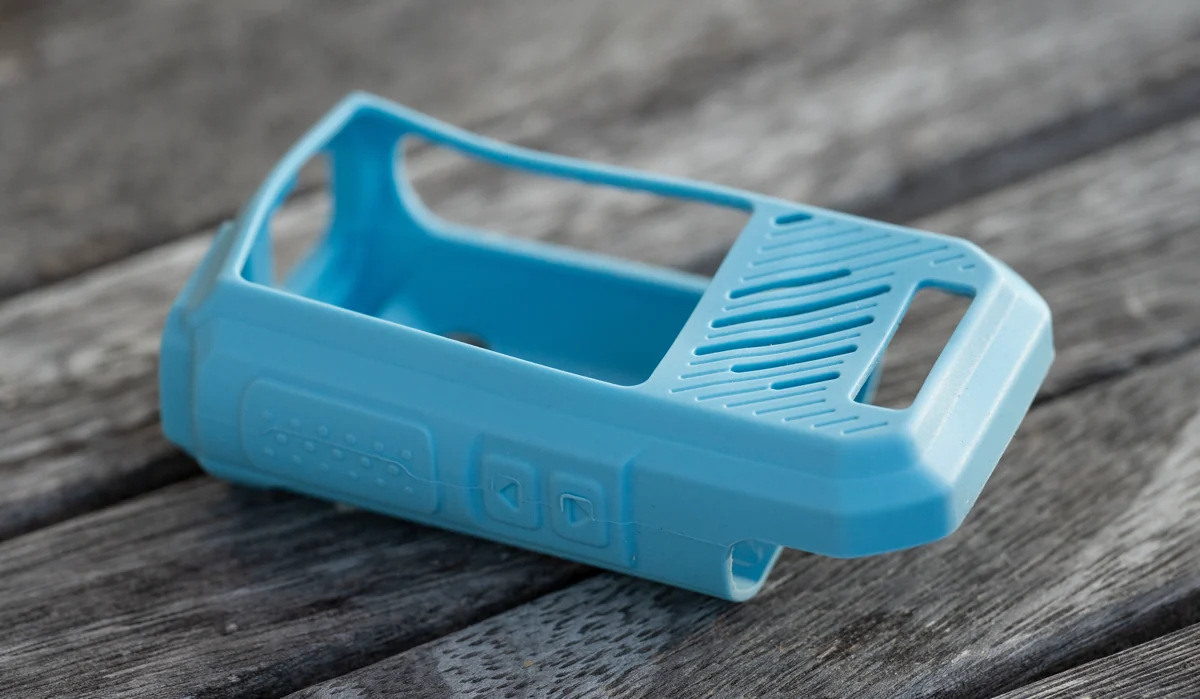
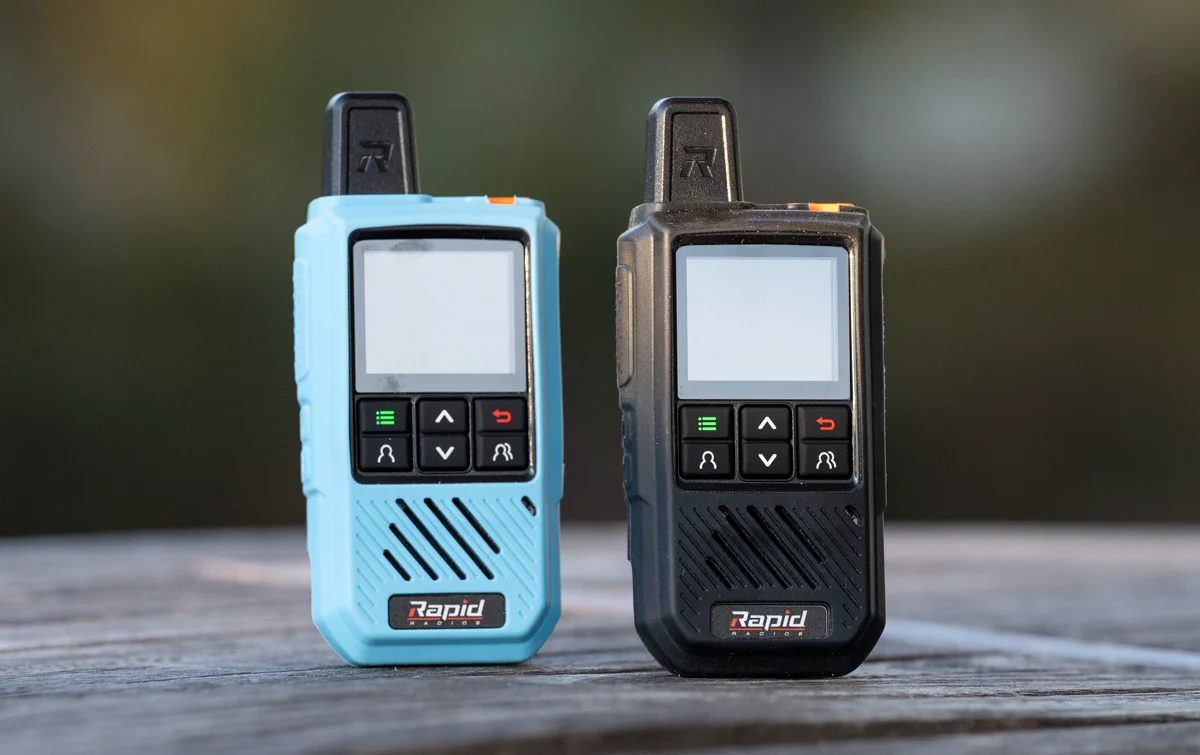
The build quality seems to be pretty durable so far but I'd recommend getting the silicone sleeves to put the radios in; that will give then an extra layer of protection.
Price and “no fees”
At $399 for two with a year included, the value can make sense for the right person.
The renewal at $50/year per radio is not outrageous compared to satellite options, and the lack of monthly contracts is appealing.
The issue is the framing. “No fees” reads like “no ongoing cost,” but you do need to renew that yearly charge or the device becomes useless.
My verdict
If you buy Rapid Radios Nationwide PTT Walkie-Talkies for the right reason, they can be genuinely useful.
What it is: A simple, nationwide push-to-talk communication tool that shines for families, RVers, and group travel when LTE coverage exists. They provide clear audio, a low learning curve, quick group setup, and a renewal cost that can feel reasonable compared to a satellite communicator.
What it isn’t: A grid-free emergency radio, a backcountry solution, a prepper device, or a replacement for ham radios off-grid or an inReach-style satellite communicator.
The way I’d describe them is: signal-savvy convenience. They’re not a survival tool, they’re a friction-reducer for communication in the real world, as long as you stay inside the cellular footprint.
If your trips regularly drift into true dead zones, I’d treat these as either a “try and return if rural performance disappoints” purchase, or pair the concept with a satellite solution if you want genuine emergency coverage.
Written by

Subscribe to our Newsletter
to discover the best gear, healthy foods, and life outdoors.









Member discussion