


members only
Ikigai: what makes a life feel worth living?
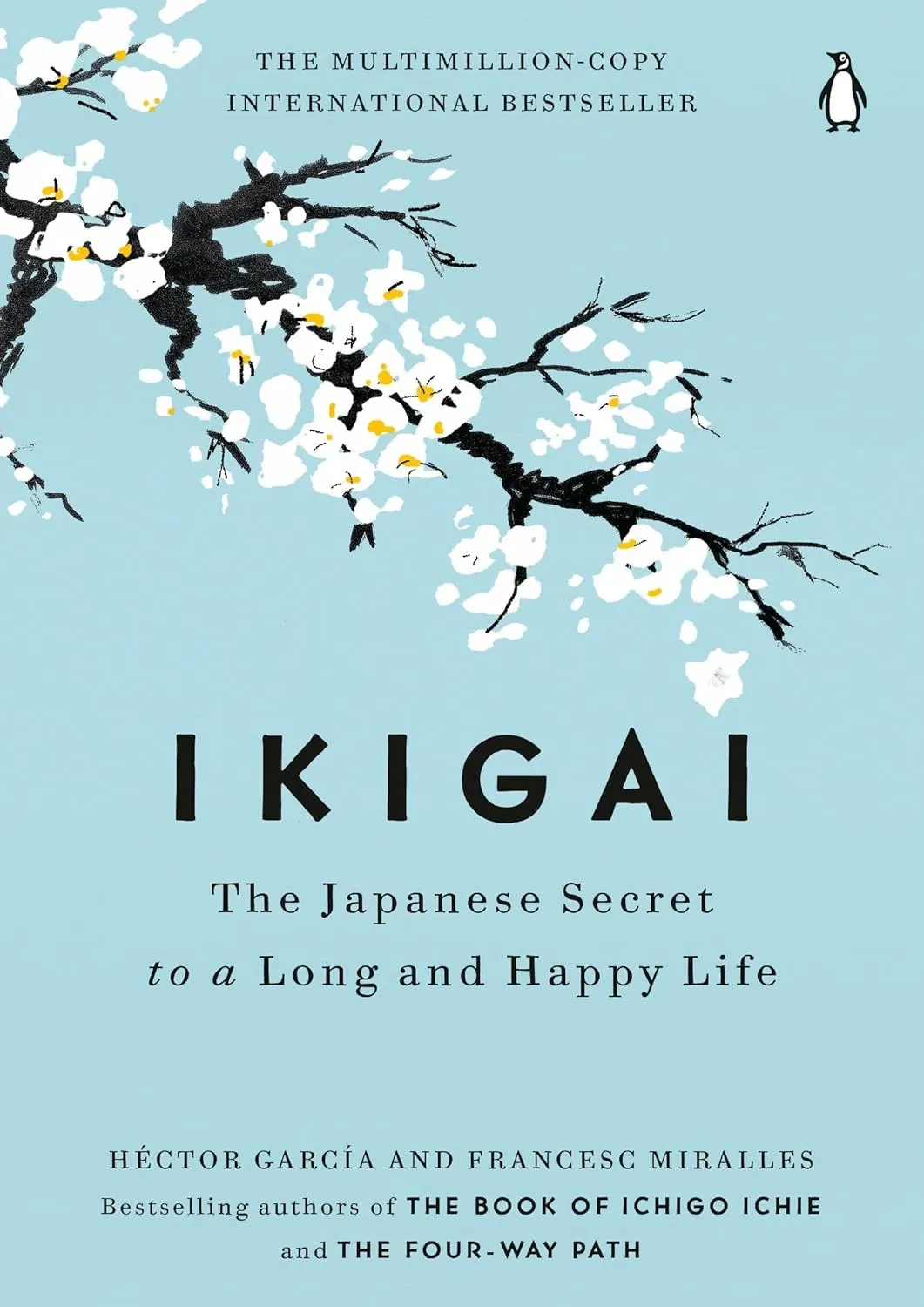
Trail & Kale’s Book of the Month (March 2026): A reflective look at Ikigai by Héctor García and Francesc Miralles, and the deeper question underneath it: what keeps a life feeling meaningful in ordinary time?
Sometimes the books that stay with us aren’t the ones that give us a big new idea.
They’re the ones that take a familiar hunger, one we’ve maybe been carrying quietly for years, and give it gentler language.
Not How do I become more successful?
Not How do I optimize my routine?
Not even How do I become happier?
More like:
What makes life feel worth showing up for, consistently, from the inside?
That’s the energy of a little book called Ikigai.
It’s a small book, at least physically, but it circles a big human concern. Not just longevity. Not just purpose. Something softer and more practical than both. The feeling that your days belong to something. That your life isn’t only being managed, but actually lived.
Quick details
- Price: $13.12 at Amazon (hardcover)
- Authors: Héctor García and Francesc Miralles
- Pages: 208
- Publisher: Penguin Life
- Publication date: August 29, 2017
What this book is really about
On the surface, Ikigai: The Japanese Secret to a Long and Happy Life is presented as a book about the Japanese concept of ikigai, often translated as 'a reason for living', and about what we can learn from long-lived communities in Okinawa.
The authors frame the book around conversations with residents of a village described by the publisher as having an unusually high percentage of centenarians, using those interviews to explore habits of movement, food, community, work, and outlook.
But I don’t think it lands best as a “longevity book”. I read it more as a book about continuity of meaning.
About how people stay connected to life when there’s no applause, no milestone, no reinvention arc, no productivity hack. Just another morning. Another walk. Another meal. Another reason to get up.
That’s what I think gives the book its quiet pull. It isn’t really obsessed with grand purpose. It’s more interested in the idea that a meaningful life may be built from smaller, steadier anchors than we tend to assume.
A useful correction to the way “ikigai” gets talked about
One thing I appreciate while thinking about this book is that ikigai is often flattened in Western wellness culture into something like a career diagram or personal-brand exercise.
Book of the month - Trail & Kale
Book of the Month is a monthly book club that acts like a lens for bigger life questions. We pull out what the book is really about, the ideas that hold up, and what they change in everyday life.


Find the overlap between what you love, what you’re good at, what the world needs, and what pays.
Neat. Shareable. Slightly exhausting.
But to me, that seems narrower than the concept itself.
Japan’s official government site describes ikigai more broadly as that which brings “value and joy to life”, and says it can refer to people like friends or children as much as to work or hobbies. In other words, it doesn’t have to be a profession, a mission statement, or some polished answer you can say out loud in a networking conversation.
That broader framing makes the book more useful to me.
Because for most people, the thing that keeps life meaningful isn’t always impressive.
It may be caring for someone. Making things. Being part of a group. A morning ritual (hello coffee). A daily walk. Learning. Service. Craft. A sense of contribution. Or just the feeling that your presence still matters somewhere.
That feels truer to life than the more commercial version of “purpose”.
Why the book resonates with me
What Ikigai does well is shift the conversation away from intensity.
A lot of modern self-help writing still carries this hidden assumption that transformation has to be dramatic. You overhaul everything. You find the one thing. You become the person who has clarity.
This book moves in a different direction, a much better one.
It suggests that a good life may depend less on chasing peaks and more on staying meaningfully engaged. Not rushed. Not maxed out. Not numb. Just connected.
That idea lines up with a wider body of research more than it might first appear. Studies have found that a stronger sense of purpose in life is associated with lower mortality risk, and reviews of the literature have linked purpose with better health outcomes and healthier behaviors in older adults.
That does not mean purpose is some magical shield against aging or illness. But it does suggest that 'meaning' appears to matter in measurable ways.
I think that’s where the book becomes more than just an appealing idea; it starts to ask something deeper:
What happens to us when we lose our reasons for participation?
Not our goals. Our participation. Because those aren’t the same thing.
The Okinawa effect, and what to be careful with
The Okinawa material gives the book much of its shape, and it’s easy to see why. Okinawa has long been associated with exceptional longevity and is often included among the world’s “Blue Zones”, regions studied for unusually high rates of long life.
But I think it helps to read this part with some steadiness.
The book is strongest when it treats longevity as something emerging from a whole way of life: movement built into the day, close social ties, modest eating patterns, routine, contribution, and orientation toward life. It is less useful if we turn it into a scavenger hunt for a single secret.
Because there probably isn’t one.
Why this matters beyond longevity
This is the part that stayed with me most. A lot of people today are not exactly lacking information. We’re lacking meaningful orientation, due in part, to an overload in information.
We know how to track things, improve things, measure things, optimize things.
But plenty of us still move through the week with that vague, hard-to-name feeling that life has become administratively full and spiritually thin.
That’s where Ikigai feels helpful. Not because it gives a perfect answer, but because it nudges the question back toward daily life:
What still gives your days shape? What kind of effort leaves you feeling more like yourself, not less? Where do usefulness, enjoyment, and feeling alive meet?
For readers of Trail & Kale, I think that connects quite naturally to wellbeing.
Not wellbeing as image, not wellbeing as performance, and not wellbeing as endless refinement. But wellbeing as felt coherence.
The sense that your habits, attention, relationships, and effort are pulling in roughly the same direction. That your life is not just efficient, but inhabited.
A small practice for this month
Rather than asking, “What is my purpose?” which can feel weirdly heavy, try asking something smaller like:
What gives this season of my life a reason to begin well?
Write down three things. Not forever-things, just true things.
A person.
A practice.
A form of contribution.
A place.
A responsibility you’re glad exists.
A kind of work that feels honest.
That may be a better doorway into ikigai than trying to invent one grand answer.
Get it at Amazon
A reflective close
Ikigai reminds us that a life can be made worthwhile in ordinary ways, through care, rhythm, usefulness, connection, and small forms of devotion that don’t always look impressive from the outside.
That feels especially important now.
Because when people lose their sense of purpose, they don’t always fall apart dramatically. Sometimes they just become slightly less present in their own lives. Slightly less animated. Slightly less glad to begin the day.
This book is, in its own quiet way, a reminder to notice what still calls us back in.
-Alastair
If you haven't already, signup for our free newsletter, and subscribe to our YouTube Channel for more quality content like this. -Alastair
Written by

Subscribe to new posts
and discover the best gear, healthy foods, and life outdoors.











Member discussion