How To Treat Plantar Fasciitis At Home, Quickly And Safely
These tips for treating that annoying plantar fasciitis foot pain at home will get you recovered and back up and running in no time!

If your heel or the bottom of your foot hurts, especially with a sharp or stabbing pain, you might have Plantar Fasciitis. This common foot problem is painful, but with the right care at home, most people can get better and stop it from coming back.
Plantar Fasciitis in runners is often a running overuse injury that causes inflammation of the plantar fascia, which is the thick band of tissue that runs across the bottom of your foot, connecting your heel bone to your toes.
In this post I'm sharing a simple, tried-and-proven set of steps based on my personal experience you can take to treat Plantar Fasciitis at home, to heal from this common running-related injury, and - importantly - prevent it from coming back, for good.
It's important to note that rather than jumping to conclusions and assuming the issue you're dealing with is Plantar Fasciitis, consider that there could be other reasons for your foot pain. This is why it is important to see a doctor in order to get properly diagnosed, or seek help from a physical therapist, before you take any steps to treat it at home.
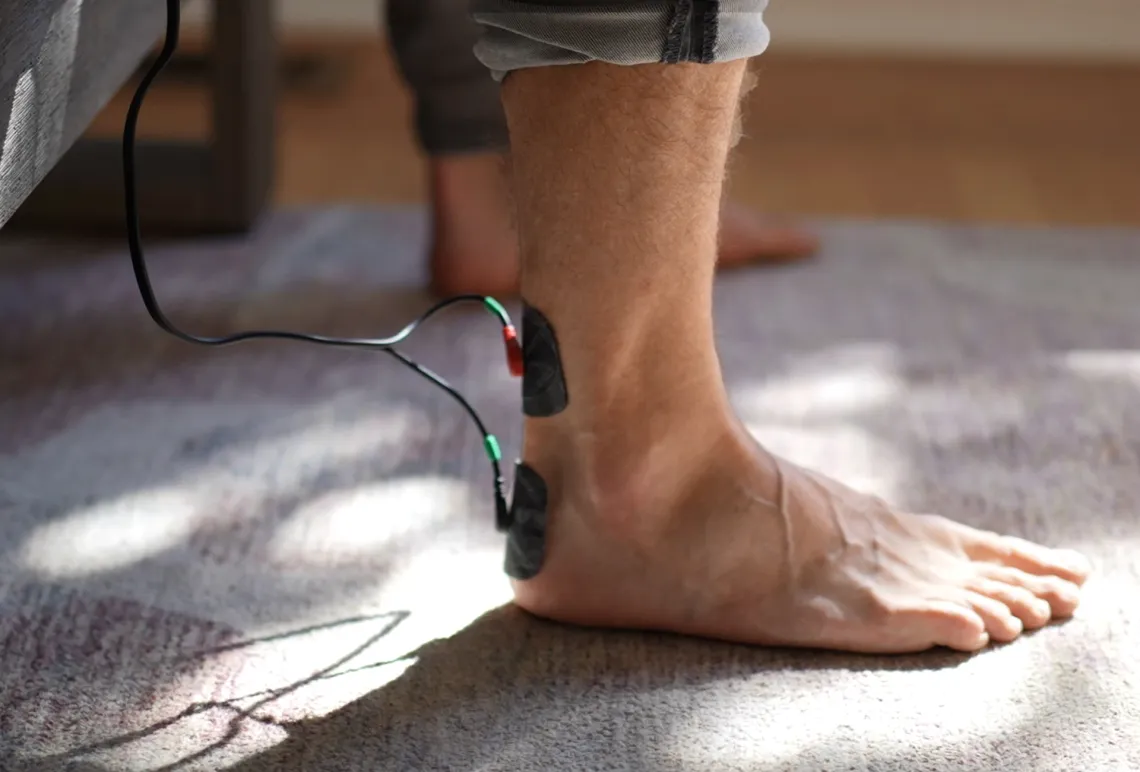
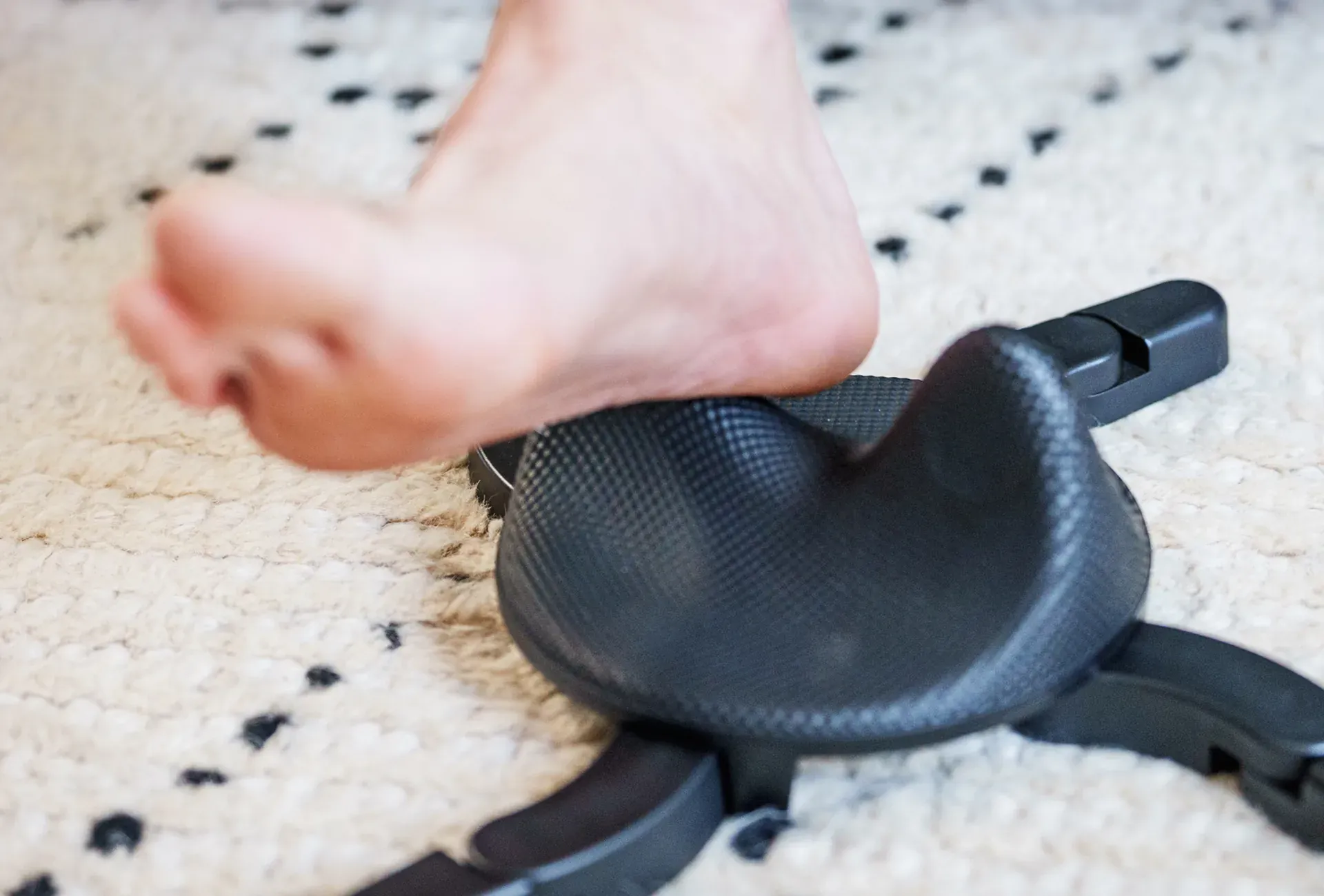
This post is sponsored by Alleviate Therapy, a physical therapist-founded company that offers a package of essential tools to help get rid of Plantar Fasciitis foot pain by treating it at home. The system includes a slimline foot support brace, a foot massager and at-home exercise program to stretch and strengthen your body to help avoid the injury recurring once you've healed and got back to running once more.
Alleviate's system is a key element of this failsafe Plantar Fasciitis recovery plan that I've followed with great success. Learn more about those tools in my in-depth Alleviate Therapy review.
If you purchase through links in this article, we may earn a small affiliate commission. For exclusive content, our newsletter, and more perks, become a member, it's free! -The Trail & Kale team ✌🏼
Why are runners prone to getting Plantar Fasciitis foot pain?
Before getting into how to treat Plantar Fasciitis at home, it's worth understanding why you likely picked up this running overuse injury in the first place.
Once you have an idea of that, then you'll be able to make appropriate changes to your running habits to help you avoid suffering from it again in future.
There are a few reasons why we runners may be prone to getting this injury:
1. Increased weekly running mileage
If you increase your weekly running distance too quickly, this can put extra stress on the plantar fascia, as well as other parts of your feet and legs, that can contribute to the injury (as well as other possible running overuse injuries like Achilles tendinitis and shin splints).
If you're training for a half or full marathon, for example, then ensuring you're gradually building up your mileage no more than 10% per week should help prevent your running mileage from causing issues.
Learn more in my running training plans section, which includes a selection of schedules for distances from 5k to 50k, that take this approach to building up mileage.
2. The surface you tend to run on
Running on hard surfaces without appropriate shoes for PF can cause, or contribute to, a runner experiencing issues with plantar fascia pain.
Wearing old or improper running shoes that don't support your arches or cushion your feet properly is a common culprit, but fortunately one that's easy to put right with a new, suitably supportive and cushioned running shoe, which my Best Running Shoes for Plantar Fasciitis guide will help you with.
3. Your body mechanics as you run
Things like having a tight Achilles tendon (the tendon connecting your calf muscles to your heel), or issues with inadequate arch support in your running shoes can increase the risk, but the fundamental issue may even start higher up your body with your posture, glute activation and hip flexion - it's all connected, after all!
This is one of the many reasons why improving your running form is important, as well as doing appropriate stretches before and after running. Doing so should have many other benefits including unlocking your ability to run faster!

How to treat plantar fasciitis at home
Ok let's get into the main reason why you're reading this post - how to actually treat plantar fasciitis at home, which is based on my personal experience with PF, so you can stop getting that annoying foot pain and get back to comfortably walking, standing and running once more.
How to Start Running - Part 1 of 3
Why running matters, what gear to start with, and how to set your first realistic goal—even if you’ve never run properly before.
 Alastair Dixon
Before you read on to learn how I have successfully treated myself to recover quickly from this very issue, remember that I’m not a doctor, nor am I a physical therapist.
This post is for subscribers only
Subscribe to continue reading
Written by