
Do Grounding Sheets really work? Shocking benefits, the science, and top picks for 2026
A clear look at grounding sheets: how they work, what research suggests for sleep, stress, and soreness, how to use them safely, and the best options to consider buying.


Grounding sheets (aka “earthing sheets” or “grounding bed sheets”) are one of those wellness trends that sounds a little out-there… right up until you hear how many people swear they sleep better on them.
And if you’re the kind of person who is very active, chases good recovery, and knows your mood and energy live and die by good quality sleep, it’s at least worth understanding what’s going on here, because this therapy of sorts is going viral right now, and I think there's something to it.
Also the “shocking” part of this title is just a little wordplay on the science behind the benefits (which you'll come to learn shortly), you’re not meant to feel an electric shock. If you do, something’s wrong and I would advice unplugging immediately.
What are grounding sheets anyway?
Grounding sheets are bed sheets (fitted, flat, or half-sheets) woven with conductive material, usually silver fiber, sometimes carbon.
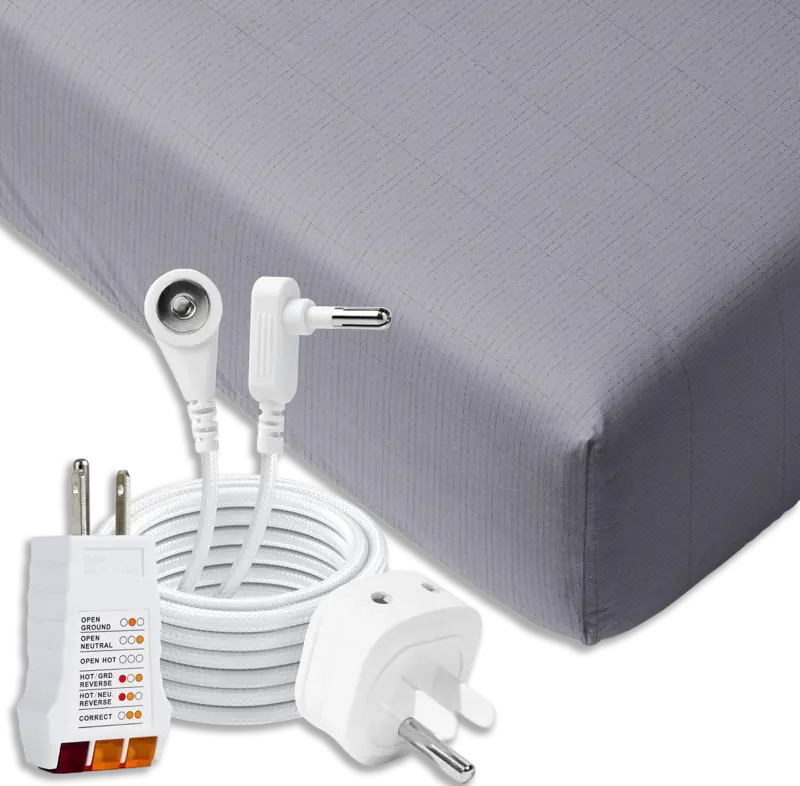
They come with a cord that connects to ground, either through the grounding port of a properly grounded wall outlet (the round hole on a 3-prong outlet) or a grounding rod outside.
Regular sheets are insulators but grounding sheets are designed to be the opposite: a “conductive path” from your skin to ground.
The theory behind grounding sheets
The Earth isn’t just a lump of rock we stand on. It sits inside a real, measurable electrical environment that’s running all the time, you can thank Earth's rotating iron core for that little phenomenon.
In fair weather, the ground is typically negatively charged relative to the atmosphere, and there’s a vertical electric field (often described as a “potential gradient”) between the surface and the ionosphere. Thunderstorms and lightning help keep this global circuit topped up, so it’s not a one-off phenomenon.
On top of that, lightning activity also excites very low-frequency electromagnetic resonances in the Earth–ionosphere cavity (often called Schumann resonances, with a fundamental peak of around ~7.83 Hz).
These signals are extremely weak, but they’re part of the planet’s natural background electromagnetic “hum”. It’s a real physics phenomenon, even if the health claims people attach to it often go way beyond what’s been proven.
So where do grounding sheets come in? The earthing/grounding hypothesis is basically this:
- Humans evolved for a very long time with frequent direct conductive contact to the ground (bare feet, natural surfaces, less synthetic insulation).
- Modern life reduces that contact (shoes, flooring, beds), and we also pick up small electrical charges from our environment.
- A grounding sheet, if it’s genuinely conductive and connected to a proper ground, is intended to give your body a low-resistance path to Earth ground, bringing your body closer to the Earth’s electrical potential while you sleep.
Supporters then take one more step and argue that this “equalizing” could influence physiology; things like stress signaling, inflammation, or sleep regulation (e.g., via small studies on cortisol or pain), via electron transfer and nervous system modulation.
Critics point out that while the electrical part (potential equalization) is plausible, the jump from “we changed the body’s electrical state” to “we reliably changed health outcomes” is still where the evidence gets thin and inconsistent.
The Earth’s electric field and resonances are very real, and grounding sheets aim to reconnect you electrically to that environment.
The part still being debated is whether that reconnection produces consistent, meaningful health benefits beyond a placebo effect, and better sleep routines.
What the scientific research says so far
Most of the evidence people cite for grounding sheets isn’t specifically on sheets themselves.
It’s on grounding/earthing more broadly (mats, pads, patches, or grounded sleep setups). That matters, because it means we’re borrowing conclusions across similar-but-not-identical setups.
Sleep analysis shows promising signals, but it's still early days
A 2025 randomized, double-blind, placebo-controlled trial (60 participants) found that people using grounding mats had improvements in insomnia severity, daytime sleepiness, perceived stress scores, and total sleep time compared with a non-grounding (sham) mat.
There’s also an older pilot study (2004, 12 participants) that reported changes in cortisol patterns and improvements in self-reported sleep, pain, and stress while sleeping grounded. It’s interesting, but it’s very small and relies heavily on subjective reporting.
My take is that if you’re buying grounding sheets primarily for sleep, the best honest framing is that some small controlled studies suggest grounding sheets benefits like better sleep are possible, but we’re nowhere near “proven”, yet.
The words "not proven yet", should not dissuade you from trying it for yourself, however, especially if you are a believer in holistic health techniques like this
Inflammation and pain have a lot of hypotheses but with mixed-quality evidence
A 2015 review pulled together a wide range of grounding studies and case reports, including work suggesting changes in pain and immune / inflammatory markers in certain contexts, including delayed-onset muscle soreness (DOMS) models.
It’s a big compilation, but it’s not the same thing as “multiple independent large randomised controlled trials (RCTs)”.
My take on this is that if you’re hoping for less soreness or better day-to-day aches, the science is suggestive, but again, not settled.
It’s highly plausible some people feel a difference, but we can’t confidently separate “real physiological effect” from placebo, expectation, or simply improved sleep driving better recovery, and everybody responds differently, so again, worth a try I'd say!
Why so many people are really interested in the potential of all this
Even if we ignore the internet hype, I get why this lands with active people in particular:
- Sleep is the base layer for recovery and healing. Anything that helps you fall asleep faster, stay asleep, or wake up feeling more “recovered” gets attention fast.
- It's low effort, and high consistency, meaning if you do nothing else, you still sleep every night.
- A lot of us are stressed without realizing it. Stress from training, work, and life in general stacks up, and the nervous system doesn’t always downshift easily, so it's important that you make an effort to flush excess stress from your body as often as possible; it's the same for sleep.
Whether grounding sheets are the solution is another question, but I think that’s part of the appeal here.
Are grounding sheets safe?
Generally, they’re considered low-risk for most people when used correctly, but they’re not “plug it in and forget it” gear either.
What I’d treat as non-negotiable if you are going to buy yourself one:
- Only use a properly grounded outlet. Be sure to test it with an outlet tester beforehand. It's cheap, and fast to do and well worth it.
- Unplug during thunderstorms and if you’re not using it.
- If you have implanted medical devices (like a pacemaker), or complex medical conditions, ask your clinician first.
Some people report odd sensations early on (warmth, tingling, “off” sleep for a night or two). That’s not well-studied, but it’s commonly reported anecdotally.
And silver threads can degrade over time if you use bleach/softeners or wash aggressively.
How to use grounding sheets
- Put the sheet on like a normal bed sheet (or place a half-sheet where your legs/back will touch).
- Snap the cord onto the sheet.
- Plug into a tested grounded outlet (or connect to a grounding rod).
- Make sure you have skin contact (thin pajamas are usually fine; thick layers can reduce contact).
- Give it 2–4 weeks before deciding, because sleep trends are anything but consistent.
If you want to verify it’s doing anything electrically:
- Use a multimeter to check continuity/resistance (brands often share target ranges), or
- Use a body voltage meter (you’re looking for a drop when connected).
What to Look For When Buying
I’d prioritize products with:
- Material transparency: cotton type, silver % (or conductive fiber type), and clear care instructions.
- Return policy + warranty: because conductivity can fade, and because comfort matters.
- Reasonable construction details: deep pockets, secure snaps, decent cord length, strain relief on the connection point.
- Certifications (when available): like OEKO-TEX for textiles (nice-to-have, not a guarantee of performance).
And one reality check: more silver can mean better conductivity, but it can also mean more “sheet feel” (some people find it slightly scratchy), and it may require more careful washing.
Top Picks for 2026
Here are a couple of the best grounding sheets that are legit based on brand transparency, and construction:
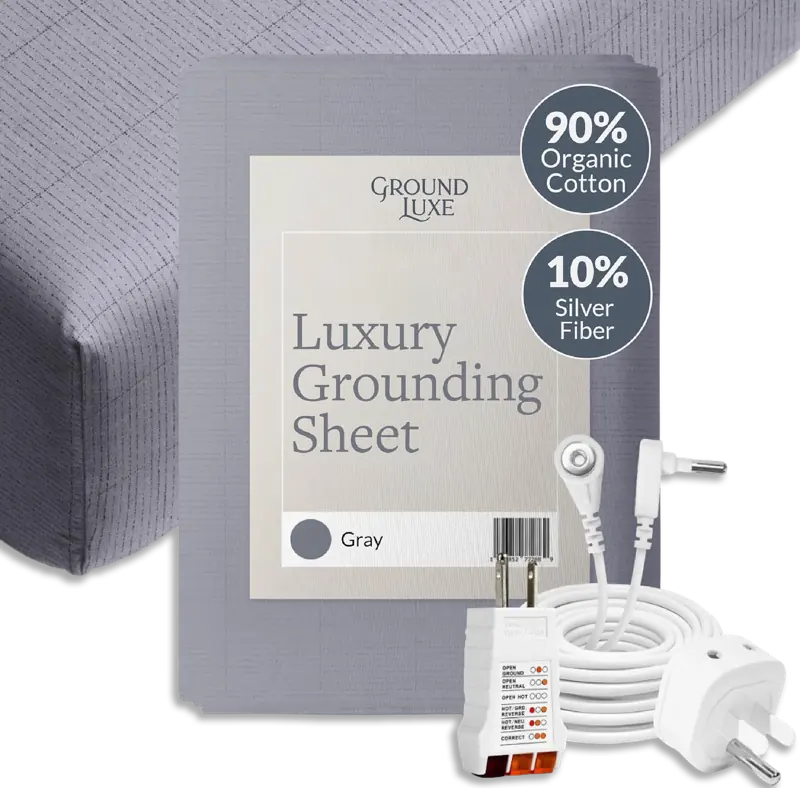
GroundLuxe Organic Fitted Grounding Sheet
The GroundLuxe Organic Fitted Grounding Sheet is a 400 thread count organic cotton fitted sheet woven with 10% silver fiber (their “next gen” version) and it comes as a kit with a grounding cord, safety adaptor, and an outlet tester.
It includes a 15 ft / 4.6 m grounding cord that plugs into the grounding port only (no powered electricity), and the fitted sheet is sized to fit mattresses up to 13 inches deep.
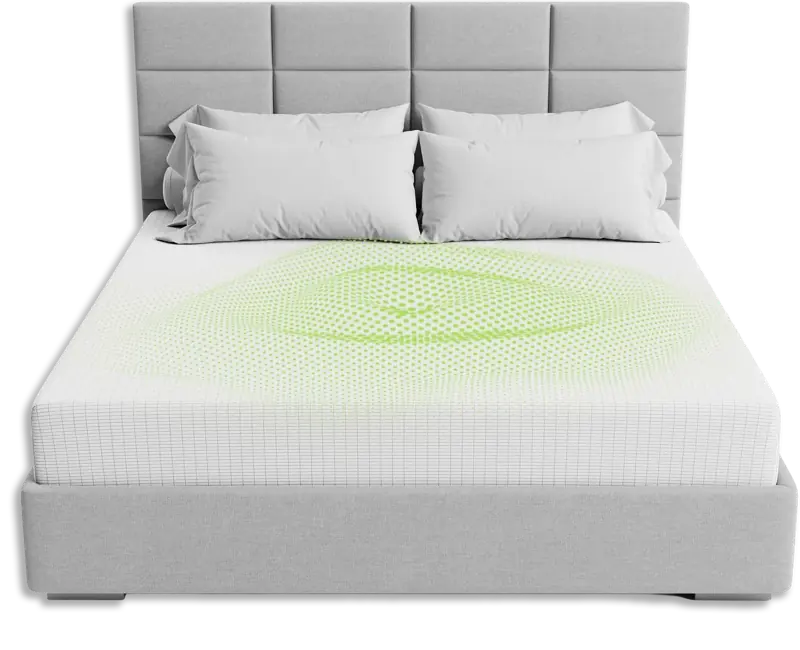
The Grounding Co. Terra fitted grounding sheet
The Grounding Co. Terra fitted grounding sheet is a fitted earthing sheet made with 95% organic cotton + 5% silver-infused conductive threads, designed to connect you to ground while you sleep.
It’s machine washable, stays soft after 100+ wash cycles, and it includes a grounding cable that plugs into a standard wall outlet (ground connection).
The Honest Bottom Line
Grounding sheets aren’t “debunked”, but they’re also not backed by the kind of large, independent, repeatedly replicated trials that would make me call them a sure thing, just yet.
The best data we have is still relatively small, with some encouraging sleep results in controlled conditions and a wider body of suggestive work around inflammation and stress - so there's almost certainly 'something' to it...
If you’re curious, I’d treat it like we treat a lot of recovery gear:
- be open minded about science we don't fully understand yet
- give it a clear testing window
- and be sure to give yourself a few honest check-ins on whether you’re feeling a meaningful difference.
If you’ve tried grounding sheets, I’m curious: did you notice anything concrete (sleep latency, fewer wake-ups, lower soreness)? Let me know in the comments! -Alastair
Written by

Subscribe to new posts
and discover the best gear, healthy foods, and life outdoors.









Member discussion