
The creative act: making space for what wants to come through
Trail & Kale’s Book of the month: The Creative Act: A Way of Being by Rick Rubin is a small, quiet book that reframes creativity as something closer to awareness than output.


There are weeks where everything feels a little too full.
Not in the dramatic, falling-apart sense. More like your mind has too many browser tabs open.
You can still function, you can still do the things, but your attention is thinner than you know it can be. You’re taking in loads of information and somehow feeling less connected to what you actually think, or would prefer to be focused on.
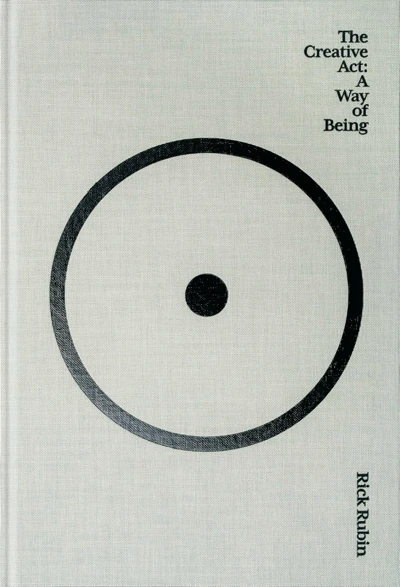
It’s not a book about “how to be creative” in the usual sense. It’s more like a collection of reminders that creativity starts long before the making.
It starts with how you pay attention, what you allow in, and what you quietly push away because it feels inconvenient, impractical, or not good enough yet.
What this book is really doing
Rubin’s tone is gentle, but he’s making a fairly radical point:
Creativity isn’t a rare trait that a few people possess. It’s a way of relating to reality. A way of listening. A way of noticing what has energy, what feels dead, what’s true, and what’s noise.
That’s why the book works even if you don’t think of yourself as “a creative person”.
Because the invitation is bigger than art. It’s about becoming a better receiver of the world, and a less harsh editor of yourself.
A few ideas that stuck with me
1) You’re not forcing creativity, you’re making room for it
One of the strongest undercurrents in the book is that the most important part isn’t “trying harder”, it’s removing what blocks you from achieving your goals.
That might be overthinking. It might be constant comparison to others (I'm looking at you social media!). It might be filling every spare moment with input so you never have to sit in uncertainty.
Rubin’s approach isn’t “do more”, it’s “clear space”, then see what shows up.
For real life, this is practical because when we’re overstimulated, we reach for more plans, more products, more ideas, more fixes but sometimes the better move is simply to create a bit of quiet and let your own taste come back online.
2) Attention is a practice, not a personality trait
The book keeps circling back to attention as the foundation of creativity, not attention as in “focus harder”, but attention as in being present.
The kind you can practice anywhere:
- walking without filling the space with audio
- cooking without rushing to the next thing
- being outside and letting the environment set the pace for once - that's one of the things that I love so much about trail running!
It’s a reminder that attention isn’t just a mental skill, it’s a true form of respect. For your experience. For the moment. For the subtle signals you normally miss.
And when you practice it, you start seeing how many of your choices aren’t actually choices at all; they’re defaults, habits, and reactions.
3) Taste comes first (even before you can explain it)
A lot of people assume they need skill or certainty before they can trust their preferences.
Rubin flips that by suggesting taste matters early. It’s how you orient yourself, and how you find the thread.
That idea is useful well beyond art as it applies to how we build a life that fits:
- what kind of movement we actually enjoy enough to repeat (walking, running, etc)
- what kind of food makes us feel steady throughout the day (without energy peaks and troughs)
- what kind of gear we keep reaching for because it reduces friction, not because it looks impressive (your trusty pair of trainers)
Taste doesn’t need to be defended in a comment section, it just needs to be listened to.
4) The work is the work, and it doesn’t have to be heavy
There’s a quiet permission in this book to treat the process as lighter than we tend to make it.
Not careless, just not loaded with identity.
Rubin’s writing nudges you away from the mindset of “this has to prove something”. Instead, it’s more like: make things, try things, follow what has energy, and stay honest about what doesn’t.
That’s a healthier relationship with progress. It’s less about crushing a goal and more about showing up consistently, without turning every attempt into a referendum on your worth.
Why this matters if you’re just trying to live a little better
You don’t need a creative project for this book to help, the themes translate straight into daily life:
- If you feel overwhelmed by wellness advice, it’s a reminder to reduce inputs and rebuild trust in your own signals.
- If you’re trying to get outside more, it makes the goal simpler: don’t optimize the experience, pay attention to it.
- If you’re trying to buy fewer, better things, it sharpens your judgment. What quietly improves your day? What just adds complexity?
- If you feel stuck, it reframes “stuck” as something that might dissolve with less pressure and more receptivity.
The book doesn’t give you a checklist, it gives you a posture to be calmer, more observant, and less performative.
A small challenge for this week
Try this once, and keep it easy:
Do one hour of “input-light” time.
No podcasts. No scrolling. No trying to learn something. Just a walk, a simple hike, a tidy-up, cooking a meal, sitting outside, whatever fits your day.
Afterward, jot down three sentences:
- What did I notice that I normally miss?
- What felt clearer than usual?
- What felt noisy, unnecessary, or forced?
That’s it, that’s the practice. Not productivity, and not a new routine to maintain forever. Just a small return to your own perception. TRY IT!
A reflective close
The Creative Act is one of those books that doesn’t shout, or try to win you over with big claims.
It just keeps pointing back to something most of us are missing: the quality of our attention shapes the quality of our life.
So here’s the question I’m holding onto this month:
Where am I trying to force an answer, when what I really need is to make space and listen?
Written by

Subscribe to new posts
and discover the best gear, healthy foods, and life outdoors.











Member discussion