
Blisters on the ball of my foot: caused by gait, not shoes
I used to suffer from awful blisters because of how I ran. This is how I overcame them and went on to run marathons and ultra-distances with not a blister in sight.

In my first year or so of running my running speed and distance gains were significantly held back by blisters on the ball of my foot, which were blisters caused by gait, not shoes.
What frustrated me the most when I told (most) people this, is that they immediately responded along the lines of "get new shoes" or "wear the right socks".
No! The answer is not always that simple, or obvious. Read on and I'll explain.
This post not only explains what I did to stop getting this running injury, but my tried and proven tips to prevent it from coming back.
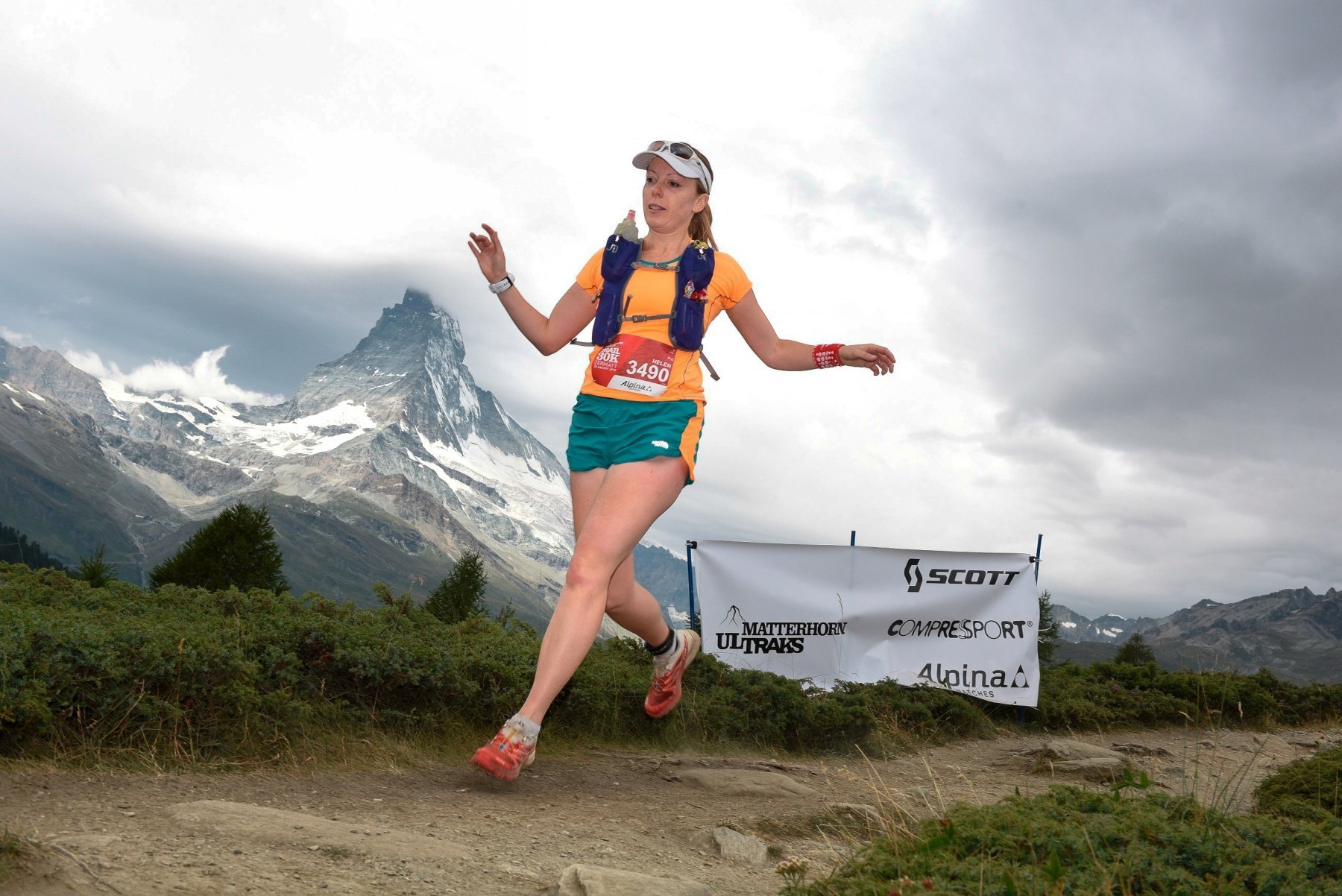
By the way, I wrote this post more than 10 years ago and have since gone on to run trail marathons and ultramarathons around the world, with no blisters anywhere to be seen.
Plus, I also co-founded this hugely popular website, Trail & Kale, which is packed full of premium gear reviews, running advice and buyer's guides - so I hope you stick around and check out some of our other content, especially if this post helps you solve your running blisters issues!
A bit of background
It sounds so stupid and petty for blisters to have got in the way of my progression, both in terms of distance and speed, but they were the bane of my (running) life.
I'm writing this mainly in case there are others out there who had a similar problem to me when they started running, as it is only since solving the problem that I know what caused it.
When I started running, I visited a specialist running shop and bought myself some running shoes after a gait analysis, plus some running socks.
All was going well and I worked up to running around 8k with no problems, however, when I started to increase the distance of my runs beyond this, I started to develop blisters on the bottom of my foot, behind and on the ball of my big toe.
These seemed to be directly related to distance and the further I ran, the bigger they got.
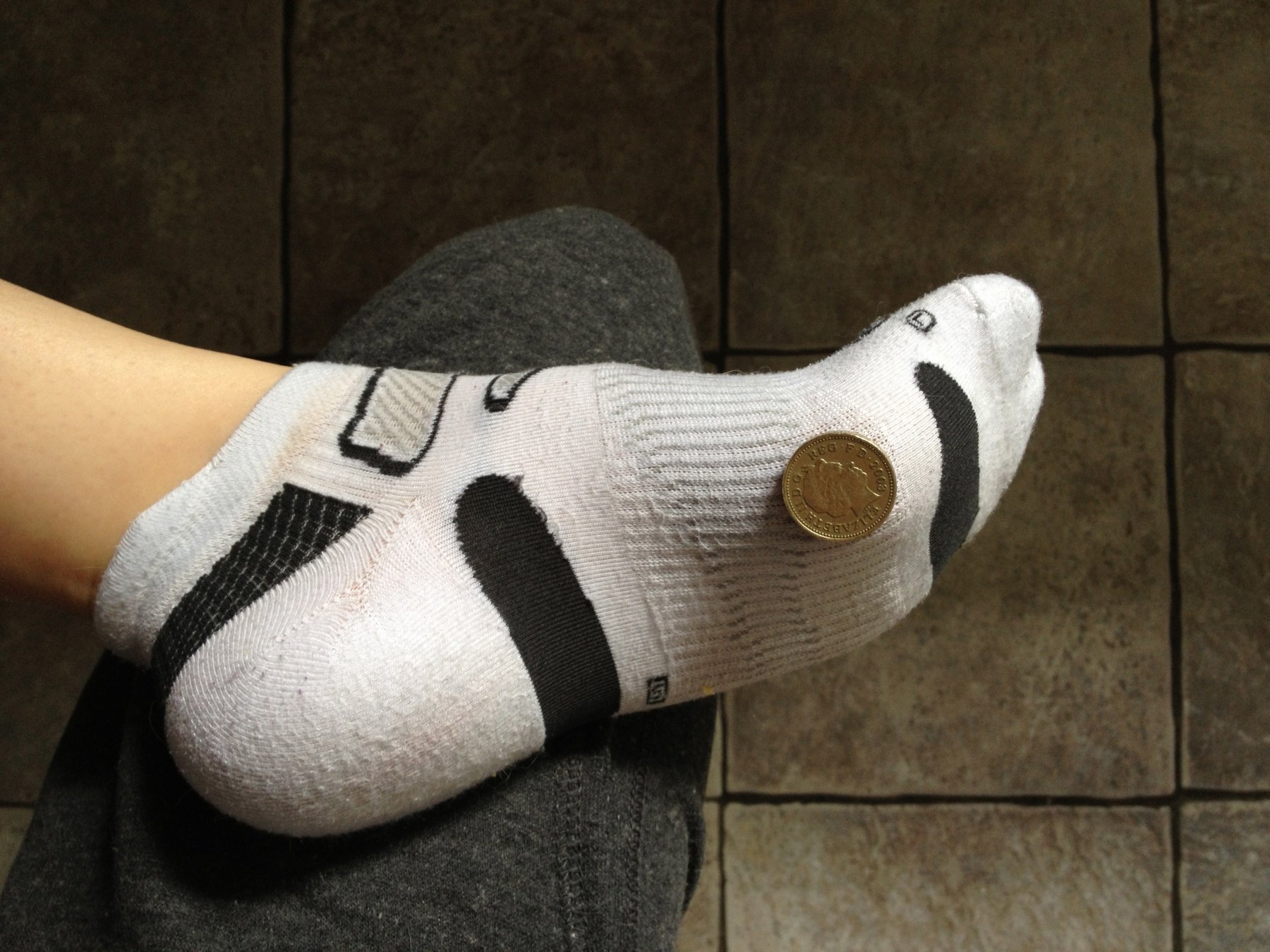
For illustrative purposes, the £1 is where they appear and is a similar size to the typical blisters I was getting (although they got bigger if I ran further - up to about a 50p size in the case of Bristol Half marathon one year).
For our US readers, that coin is around the size of a quarter. 50p is even larger than that, so you get the idea - these were big, ugly, angry blisters!
This put me out of action for weeks as they needed popping and bandaging and took ages to heal.
Of course, being on the bottom of my foot, they weren't great to walk on and needed draining to relieve the pressure and stop them from spreading.
Trying numerous remedies
I tried everything to prevent them.
I'll try listing what I tried, believe me when I tell you I searched high and low in shops, magazines and online for a potential solution:
- different running shoes (different shop, brand, length and width, guidance/motion control and neutral)
- different running socks, double layer 'blister-free guarantee' socks
- body glide
- talc
- tighter laces
- looser laces
- plasters
- taping
- sanding hard skin...
You name it, I still got the blisters.
Needless to say, I spent a small fortune doing this, with no joy, but I was determined not to let something as stupid as getting blisters stop me progressing with my running – especially as I was not getting more serious issues, such as muscular or joint problems.
That being said, if you're early in your blister-issue journey, definitely make sure you do have an appropriate pair of running shoes and socks. They don't need to be 'special' or have unusual blister-resistant features. Just a good pair of well fitting running shoes, and a proper pair of sweat-wicking running socks.
Our running shoes and running socks buyers guides will help you if you need to choose a new pair of either.
Finally, after almost a year of blister problems and experimenting with various methods of blister prevention, I visited a specialist gait analyst for an hour-long bio-mechanical assessment and gait analysis.
What happened during the gait analysis session?
For the most part, I was filmed walking and running, barefoot and in trainers, on a treadmill.
This is different to, and much more in-depth than, the sort of assessment you will get for shoes in a running shop and is specifically focused on:
- joint instability
- muscular imbalance
- poor posture
- timing of gait
- stride length and foot strike.
The outcome for me was that 15 years of sitting for most of the day and not exercising much at all, meant weak glutes and tight calves. These resulted in poor knee control when running.
Combine this with high arches on my feet, and it turns out that these muscle imbalances meant that instead of bending my knee forward to push off when running, I had been collapsing my knee inwards and pivoting on the ball of my foot to take-off (it was easier than using my glutes or stretching my tight calves).
This is, essentially, over-pronation from the hip down, and not the sort of description you may hear in a running shop, which seems all too often to focus just on how your foot lands, and not how the rest of your leg/body moves.
Cue: nasty blister creation, because they weren't from simple rubbing, but from shearing forces.
It was obvious from looking at the gait analysis videos (when slowed down) that this was what was happening.
You could see the point at which I was pivoting my foot before take-off.
The blisters started developing once I got more tired during a run, which was typically after 8-10k, but also happened earlier on during runs when I was pushing at my maximum effort.
The solution
Initially, I signed up for a course of physiotherapy with a sports PT, to strengthen muscle weaknesses and loosen my tight calves.
If you find that your calves seem tight then read my specific post about why that may be the case and some simple ways to stop getting tight calves from running.
I always find seeing a specialist sports physio helps when I have tightness or imbalances, as often I benefit from the massage to release tight muscles, and advice on what exercises are best to help solve the problem (or prevent it recurring).
I also bought some orthotics from the gait analyst, but ended up not wearing them as the physio treatment alone worked wonders and I prefer to solve problems without 'supports' if possible.
I have since developed my views in this area and would now strongly suggest people don't just turn to orthotics or other supports, if their issue can be solved by physiotherapy and strengthening exercises instead, i.e. try to solve the cause of the problem rather than trying to mitigate the symptoms.
Work those glutes
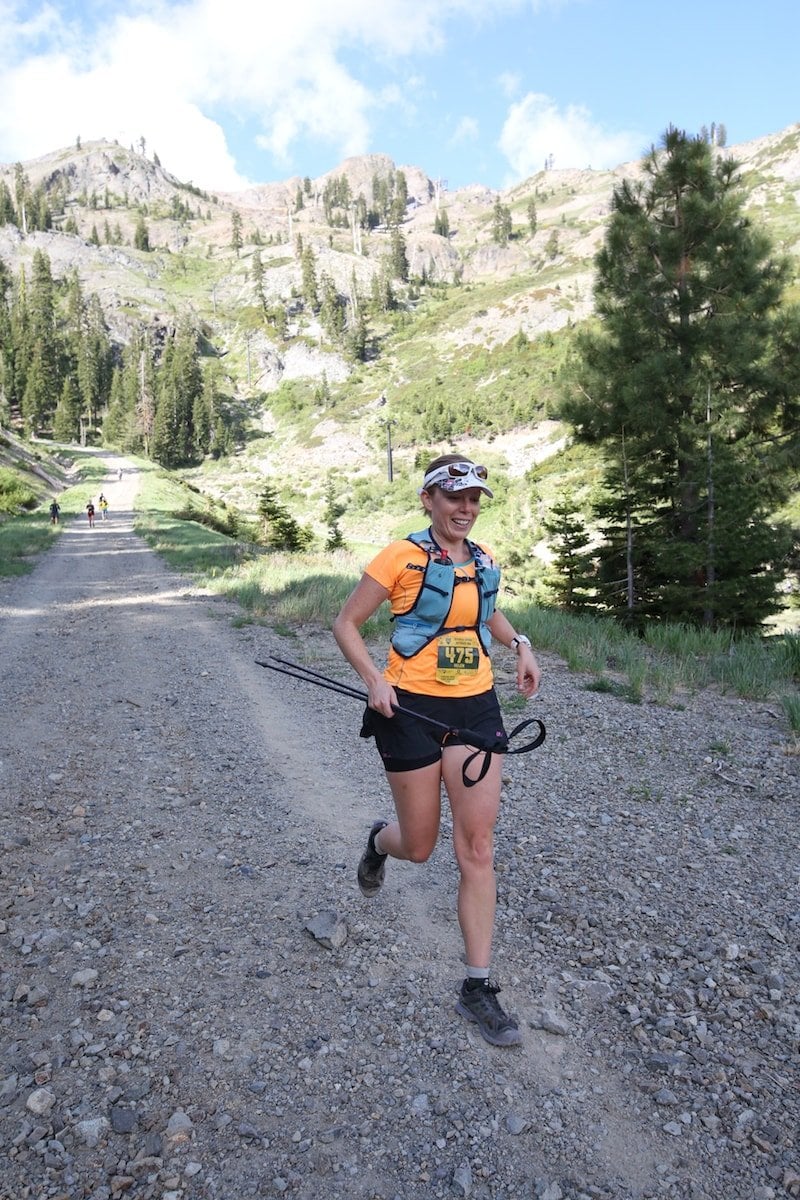
I had been getting faster running relying on mainly my quads and calves, but you can benefit from so much power in the glutes if you actually use them.
I had really underestimated the importance of using your glutes in running.
If you read any good running book or blog (including much of the advice and training plan guidance here on Trail & Kale), you will also see mention of this.
Here are some of the glute exercises which helped me:
- Lunges
- Squats
- Single-leg squats
- Bridge
- Donkey-kicks
- Side leg lifts
- Stability ball dolphin
- Hopping side to side
For building glute strength even faster, we recommend doing these exercises in combination with a balance or friction trainer.
- The Balance Trainer we love is the Bosu NexGen Pro.
- You can also use what's called a Friction trainer like the one from Flowin that we have written about.
Both of these trainers make working your glutes fun, so if you really want to improve strength then you should definitely consider looking into one of them.
These exercises also help reduce the likelihood of suffering from other running problems which may result from having weak glutes, such as IT Band (side of knee) pain, which I have experienced when my glutes have become tired on long runs.
Next steps to make you a stronger and more injury-proof runner
The 4 next steps in the rehabilitation process I followed are set out below.
I know they work, because I originally wrote this 'blisters caused by gait' post more than 10 years ago and went on to not only found Trail & Kale but run trail marathons and ultramarathons all over the world, without a sign of any ball-of-foot blisters - or, in fact, blisters of any sort.
So you could say I know a thing or two about this topic.
Here are the three next steps to work on:
1. Learn to run with proper running form
Work on improving your running form.
This will not only improve your biomechanics and reduce your likelihood of developing running injuries, but should help you run further and faster.
2. Run with an appropriate running cadence
Work on being mindful as you run, and run with an appropriate running cadence.
Cadence, or stride frequency is linked to having appropriate stride length, avoiding over-striding, and generally running with good running form, and should help reduce impact on your ankles, knees, hips, back and generally your whole body, and reduce your need for huge heel cushioning in your running shoes.
3. Do your pre and post run stretches
Develop your overall flexibility through stretching before and after running. This will make a difference to your run itself, and how quick and effective your post-run recovery is. Don't skip those stretches - ESPECIALLY the post-run stretches. Spend 5 minutes (at least) before and after your run doing them.
Visit our guide to stretches for runners for a list and video demonstrations of our favorite running stretches to do.
4. Train using an appropriate training plan
The source of many running injuries is overtraining: running too much, far, or fast, too soon.
A good training plan will help you increase your running mileage, duration and frequency appropriately while also providing information to help with your running nutrition, gear and recovery.
We have runner's training plans for every distance from couch to 5k, 10k, half marathon, marathon and even 50k ultramarathon training plans, here on Trail & Kale (that are free to download, by the way). Visit our training plans page to browse them all!
Thanks for reading!
This post was originally written more than 10 years ago and is a popular post - because so many people have this problem!
I hope that, if you're still reading now, you found this interesting/useful – and if you've had similar problems as I used to and are starting to doubt whether you should continue running, that this story will give you hope that there is a solution out there for you too - don't give up!
In the meantime, subscribe to our newsletter for more running and adventure advice and inspiration - plus plenty of gear reviews, and visit our RUNNING 101 page for a treasure trove of running-specific advice and tips.
Written by

Subscribe to new posts
and discover the best gear, healthy foods, and life outdoors.








Member discussion