Best magnesium for sleep in winter: what the evidence actually supports (and realistic recovery benefits too)
Forms, dosing, food sources, and tempering the hype around magnesium glycinate for sleep.


Countertop RO systems are a funny category. People typically buy them for water purity and convenience (especially when you’ve got a family and you just want clean water, now), but they’re still… machines.
They need flushing, they use electricity, they make noise, and sometimes they do something mildly annoying that you didn’t bargain for.
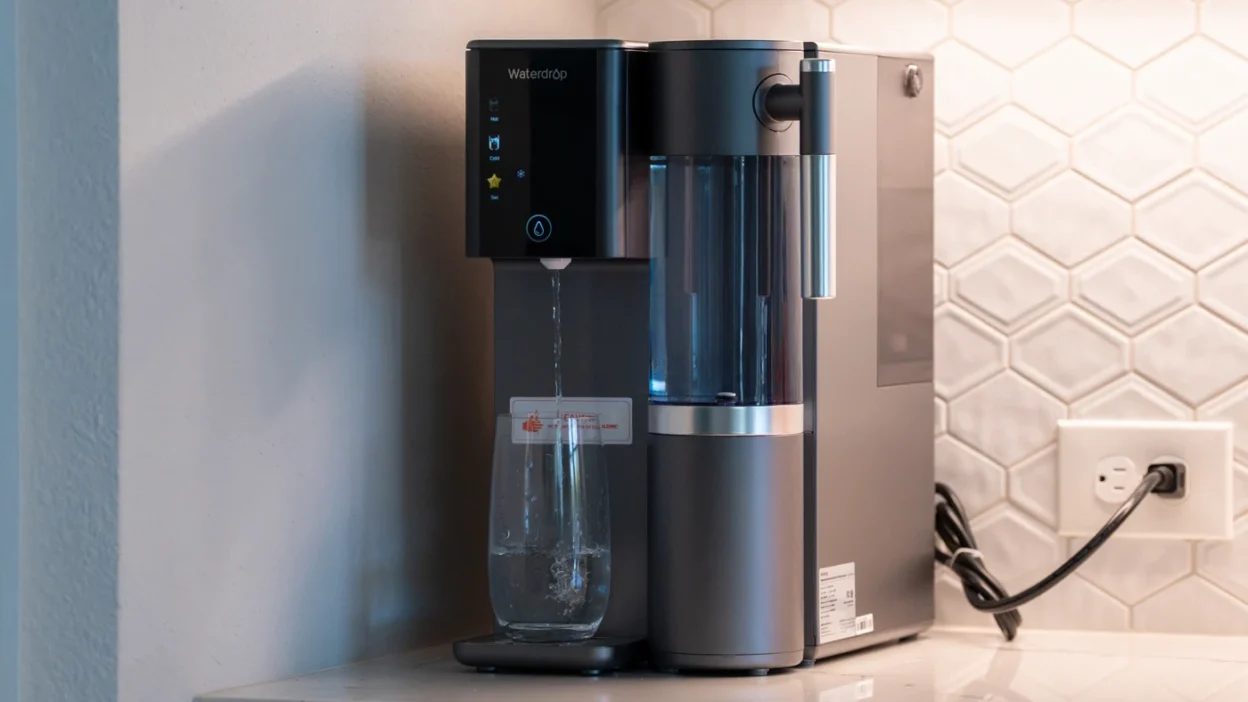
That’s basically my story with the Waterdrop A2 countertop reverse osmosis (RO) water dispenser.
Overall, it performs very well: it’s genuinely convenient, it’s quick to live with day-to-day, and it’s the kind of appliance that quietly replaces a bunch of little routines (kettle, cold pitcher in the fridge, etc.).
It also should be a strong option if your main goal is reducing contaminants like microplastics in your household drinking water, because RO filtration is designed to remove extremely small particles.
But… I don’t love the taste from the spout early on, and the startup experience is not exactly “wellness vibes” when you notice that new-unit off-gassing smell.
Here’s how it’s been for me, pros, cons, and everything in between.
The big win here is convenience. There’s no install, no under-sink project, no extra faucet like some larger more expensive RO systems require.
You fill it, plug it in, and it becomes “the water station” in the kitchen, and because it does hot, cold, and room temperature water, it gets used constantly.
You can’t really judge this unit until you’ve done the initial flush properly.
The manual’s flushing section makes it pretty clear this is a process, and it can take over 30 minutes. It also warns that moving tanks/filters interrupts the flush cycle.
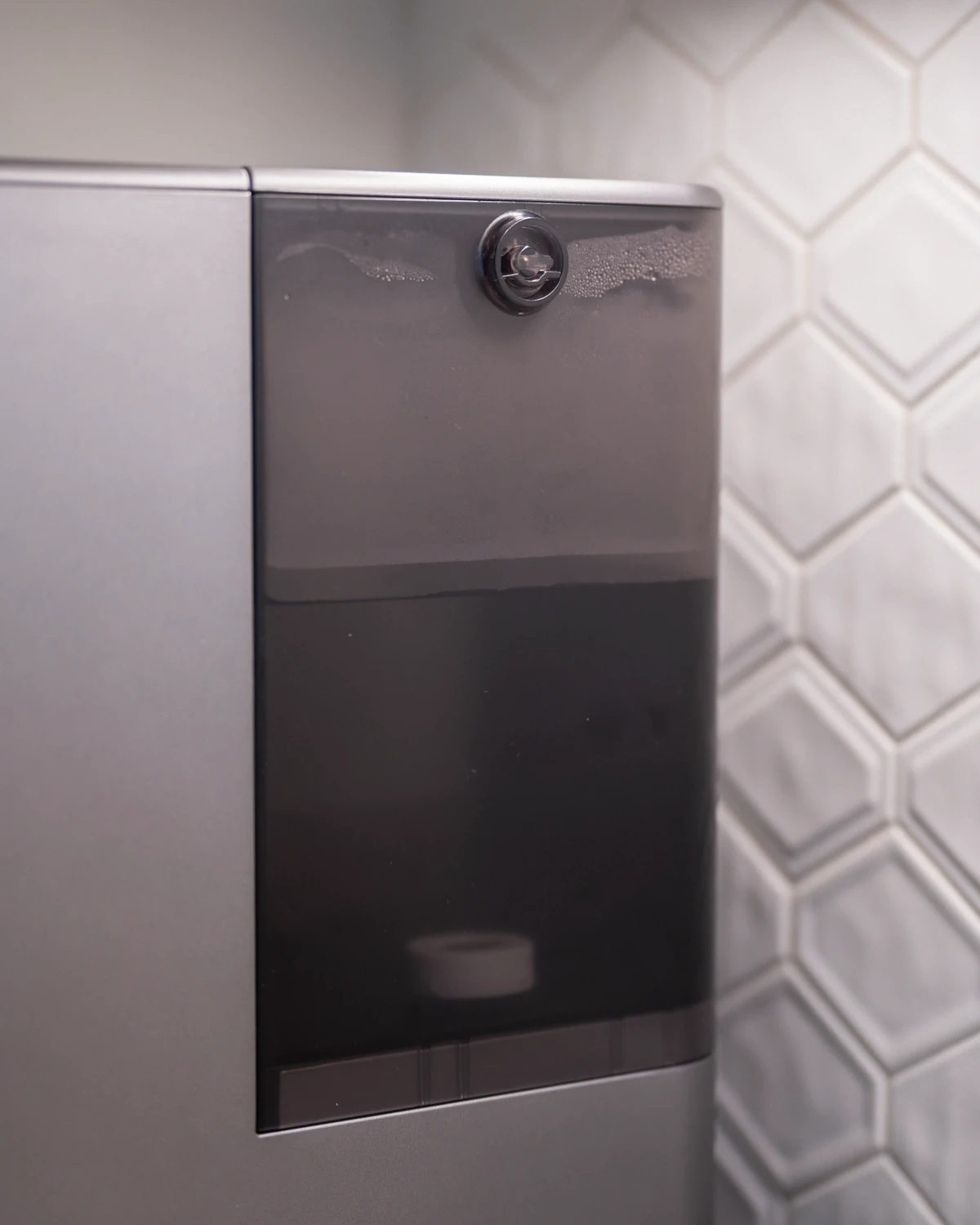
In my case it took about 35 minutes for the full flush to complete before I was properly up and running. Slightly tedious, but I get why it exists.
One practical tip from my side: follow the video demo (just scan the QR code on the instruction booklet) rather than the paper instructions, which didn’t make that much sense to me.
This was the most “wait… what?” moment for me during setup.
On first startup, there’s that new plastic / off-gassing smell. It’s counterintuitive when the whole reason you bought it is health and clean water.
For me, it faded with flushing and a bit of time, but I’d still plan for it, or at least prepare yourself to not feel buyers remorse because it does go away after a day. Some tips:
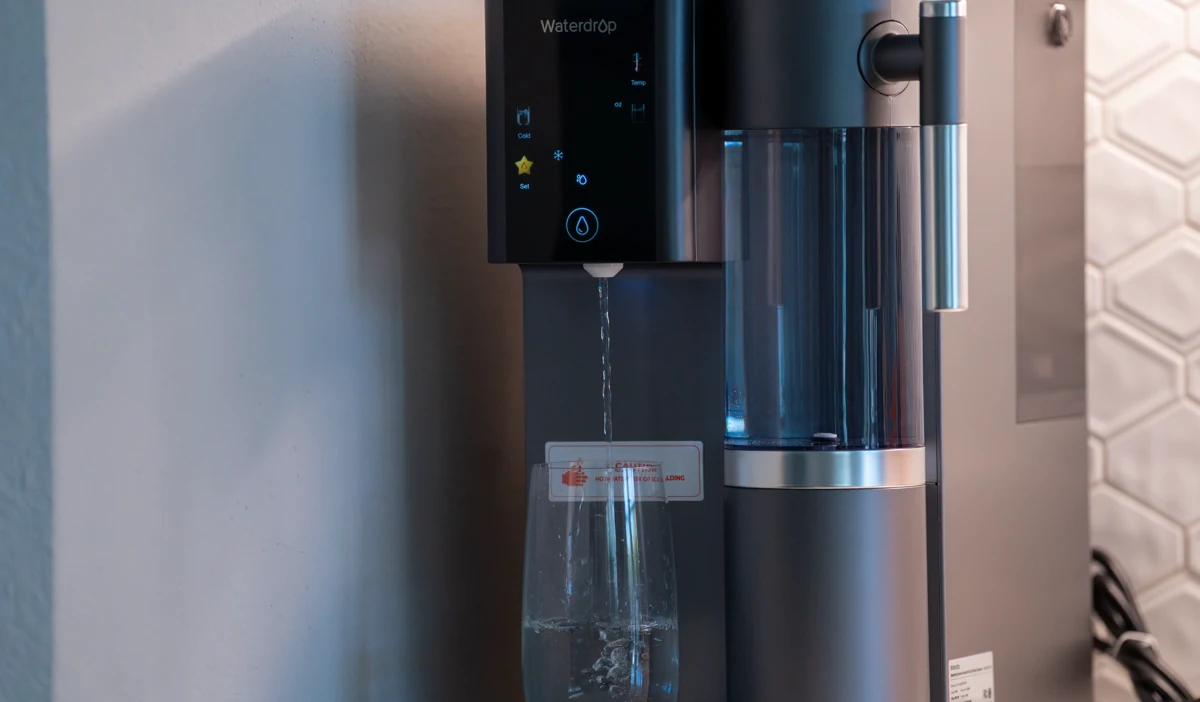
Here’s my honest experience:

Why the difference? Well, the pitcher path is effectively “cleaner” sooner, while the spout and internal lines need 2-3 complete flush cycles to fully settle in and run through the machine parts, then the taste stabilizes.
The filter is described as including a carbon block, which is the part of most filtration systems that helps with chlorine/odor taste.

But even with carbon involved, RO water can taste “thin” or “flat” because it strips out a lot of dissolved minerals.
That’s not a defect so much as the nature of the reverse osmosis filtration process.
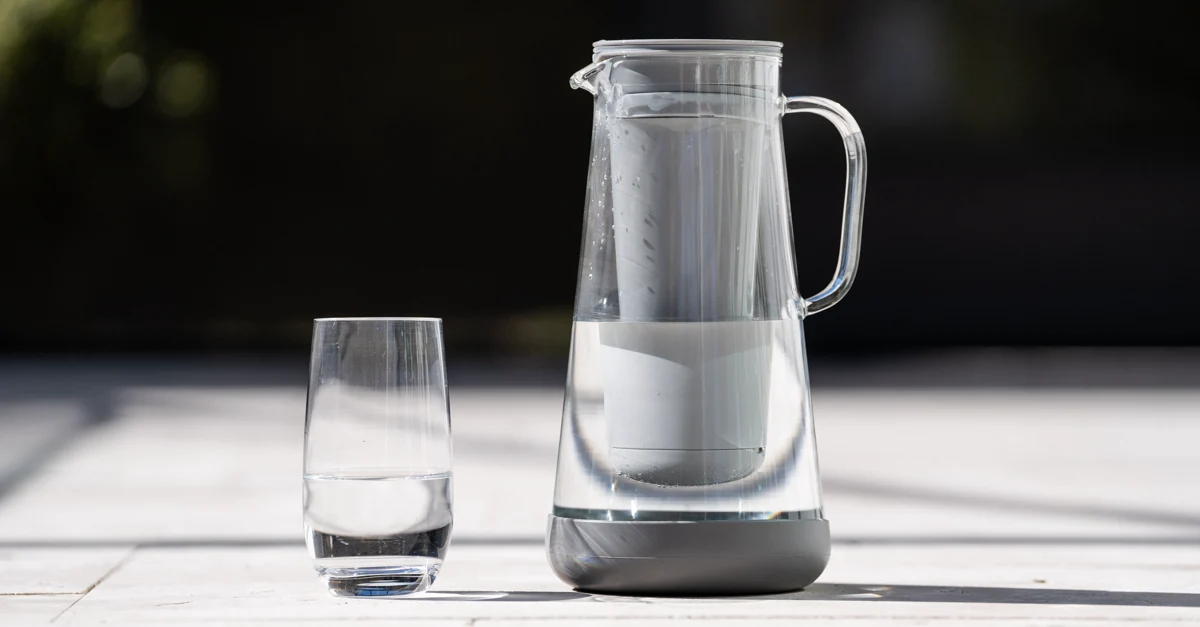
If you love the crisp taste of mineral water, some RO systems will always feel a bit neutral unless they add minerals back in; in which case you’ll be better off with a filter pitcher like the Lifestraw Home 7-Cup Pitcher (reviewed here).
If you want to improve taste without changing systems, what I’ve found helps:
If your main mission is reducing microplastics for your family’s drinking water, reverse osmosis is the best route to take, right now.
Microplastics are generally defined as plastic pieces smaller than 5mm, and they can be down into the micrometer scale. Waterdrop’s stated RO membrane spec is 0.0001μm, which is extremely fine.
My take: this is one of the more “defensive” filtration approaches you can take at home for particle reduction, as long as you keep up with basic maintenance and don’t skip the flushing/replacement process.
The temperature range is genuinely useful (59°F to 203°F listed).
In daily use, I like having:
That said, I’d love a mid-height shelf for cup placement.
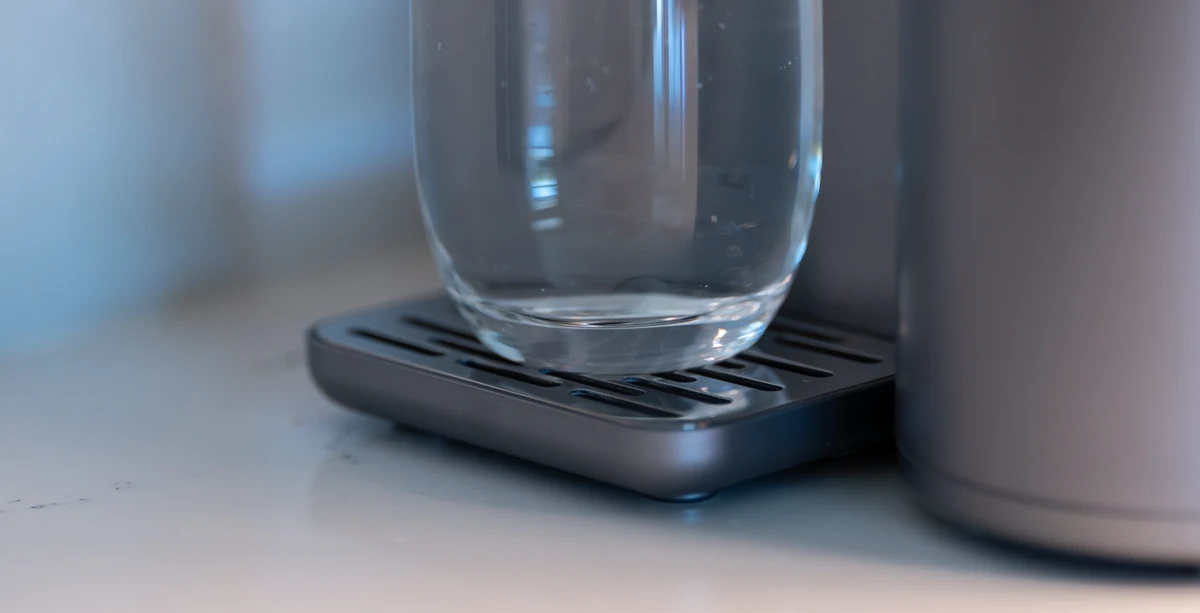
With hot water, a more supported cup position would feel safer (less splash risk). With cold water, it’d just feel cleaner and more controlled.
I also like how you can set portion sizes, easily switch temperature modes, and store favorites for quick use later.
When the cooling is active or the RO process is running, it’s not quiet. It’s not roaring all day, but when it’s working, you’ll hear it.
If you’re putting this in a silent office, a nursery-adjacent space, or you’re sensitive to intermittent appliance noise, that’s worth knowing.
On another note, one thing I didn’t appreciate until using it daily is that this isn’t a passive pitcher-style filter. It heats, cools, and runs RO, and the manual lists 1530W rated power (with 60W for refrigeration), so it behaves more like a small appliance when it’s working.
I also like knowing it’s backed by a one-year warranty, and there are clear operating limits (like TDS < 500 ppm and feed-water pH 6.5–8.5) that are worth checking if you’re unlucky enough to have tap water with pH levels outside of this range, or you’re on a well.
If you want a countertop RO system that’s easy to live with, the Waterdrop A2 does its job very well for the price.
It’s convenient, it replaces multiple daily habits, and the filtration approach is the main reason I’d pick something like this for family drinking water.
I’d recommend it for someone who prioritizes clean-water convenience and wants RO-level filtration without installing anything under your sink.
If you’re extremely taste-sensitive (or you love mineral water), just be ready for a short “break-in” period and the reality that RO water can taste a bit flat even when filtration is doing exactly what it’s meant to do.