Best magnesium for sleep in winter: what the evidence actually supports (and realistic recovery benefits too)
Forms, dosing, food sources, and tempering the hype around magnesium glycinate for sleep.



The Chirp Halo is what happens when a TENS/EMS unit gets redesigned for real life.
Instead of wires and a controller dangling off your waistband, Halo uses two slim wireless “pucks” that snap magnetically onto gel pads, with a small remote that runs the session.
The payoff is simple, it takes a tool that can feel fiddly and makes it easy enough that you’ll actually keep using it – this is a commonality with all the Chirp products I have reviewed to date.
Halo is positioned for drug-free pain relief, soreness, tightness, and general muscle recovery, and it’s also sold as HSA/FSA eligible.
Halo combines TENS (transcutaneous electrical nerve stimulation) and EMS/NMES (electrical/neuromuscular muscle stimulation) in one wireless system (Chirp has termed this SignalWeave), controlled by a remote and optionally supported by an app for pad placement tips.
Halo is built around two well-established electrotherapy approaches.
TENS is primarily aimed at pain modulation.
One widely taught explanation is gate control; stimulation of non-pain sensory pathways can reduce how strongly pain signals are transmitted in the spinal cord.
There’s also evidence that certain TENS patterns can activate the body’s own pain-relief pathways, including opioid-mediated mechanisms.
EMS/NMES is aimed at muscle activation.
It stimulates motor nerves to produce involuntary contractions, which is why it’s used in rehab settings and sometimes for circulation support (think “muscle pump” effects and movement of fluid).
Chirp’s SignalWeave™ is their proprietary way of blending TENS- and EMS-style stimulation within preset programs, so you’re not choosing technical parameters, you’re choosing a “feel” and adjusting intensity instead.

The Double kit is the one I’d point most people toward, because two pucks makes it much more practical to treat both sides of the body (or two areas) in one session. In the box you get:
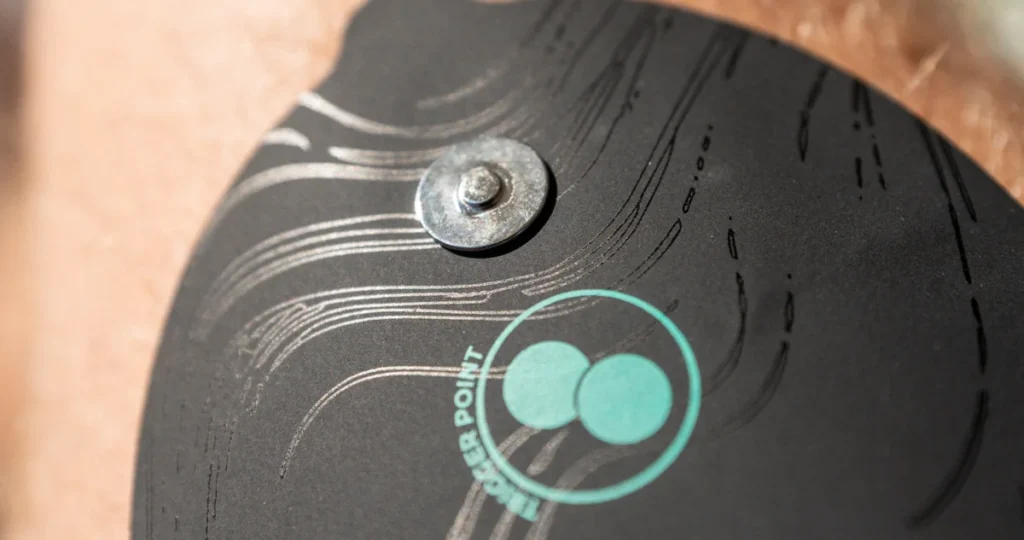
2x Halo pucks, 1x wireless remote, 1x portable charging case, 4x Spot pads, 2x Lower Back pads, 2x Trigger Point pads, 2x extension cables (so one puck can run two pads)
The whole design revolves around reducing friction. The pucks are compact and magnetically attach to pads, so there are no wires to snag, twist, or pull off mid-session.
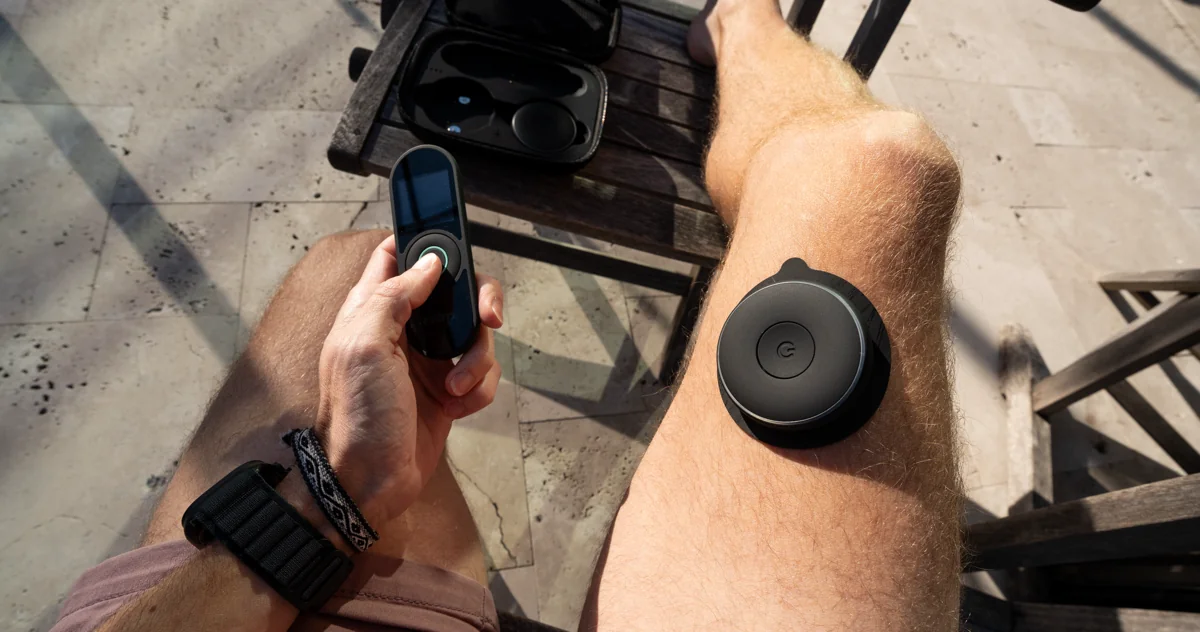
The charging/carry case is a big part of the experience too. It keeps everything together and recharges the pucks (and the remote), which makes Halo feel more like a system you can live with than a gadget you forget in a drawer.
Halo is quick to get going; to start, snap the puck to a pad, place the pad, pick a program on the remote, and dial up the intensity until it feels right.
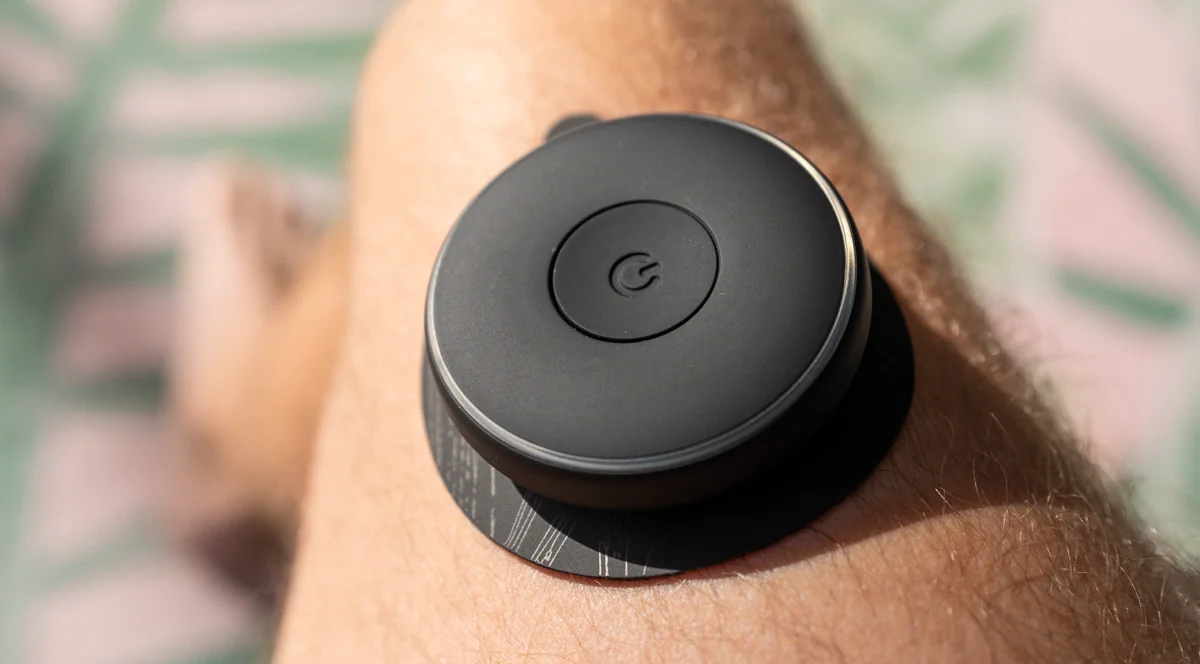
Once you’ve done it a couple of times, it’s the sort of setup you can do in under a minute.
The app side is optional, but it’s useful early on because it reduces guesswork on where to put pads for common trouble spots (lower back, shoulders, knees, neck, etc.).
After you’ve found your preferred placements, you may not open the App much, but it’s still handy when you want to treat a new area.
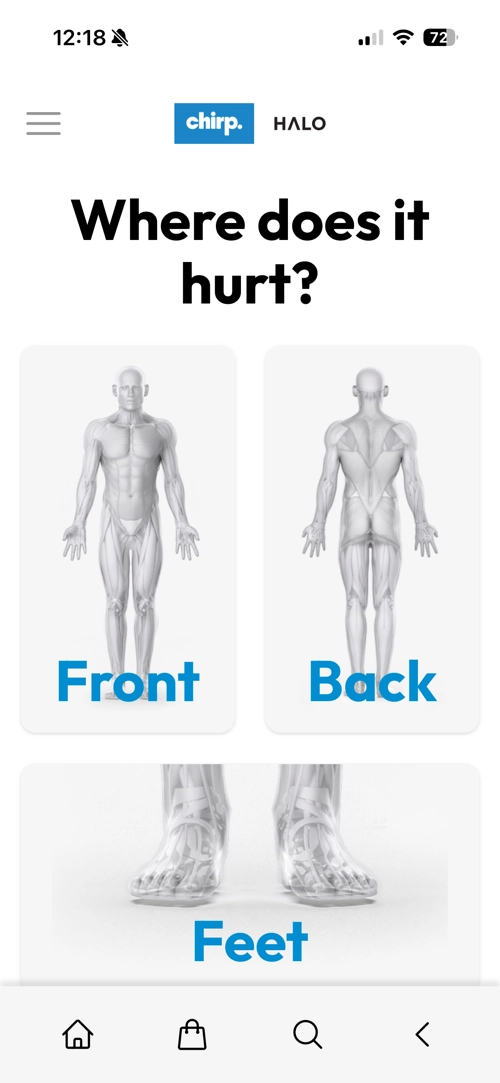
It’s by no means perfect, and is essentially just a website running in an app, but maybe this will improve in time.
Halo delivers low-voltage electrical pulses through skin pads, which interact with sensory nerves (TENS) and motor nerves (EMS/NMES).
The practical outcome is usually one of two sensations: a lighter, “busy” tingling/tapping feel (more typical of TENS-style stimulation), or a more obvious contraction/pulsing feel (more typical of EMS/NMES-style stimulation).
Chirp frames the Halo experience around preset programs that blend both approaches, rather than making you set technical parameters yourself. I like this, as it takes the guesswork out of using it.
Halo uses six preset programs, and you adjust intensity up to 50 levels so you can really dial in the right amount easily. The preset names are: Pain Relief, Massage, Squeeze, Thump, Stretch, Woah Nelly.
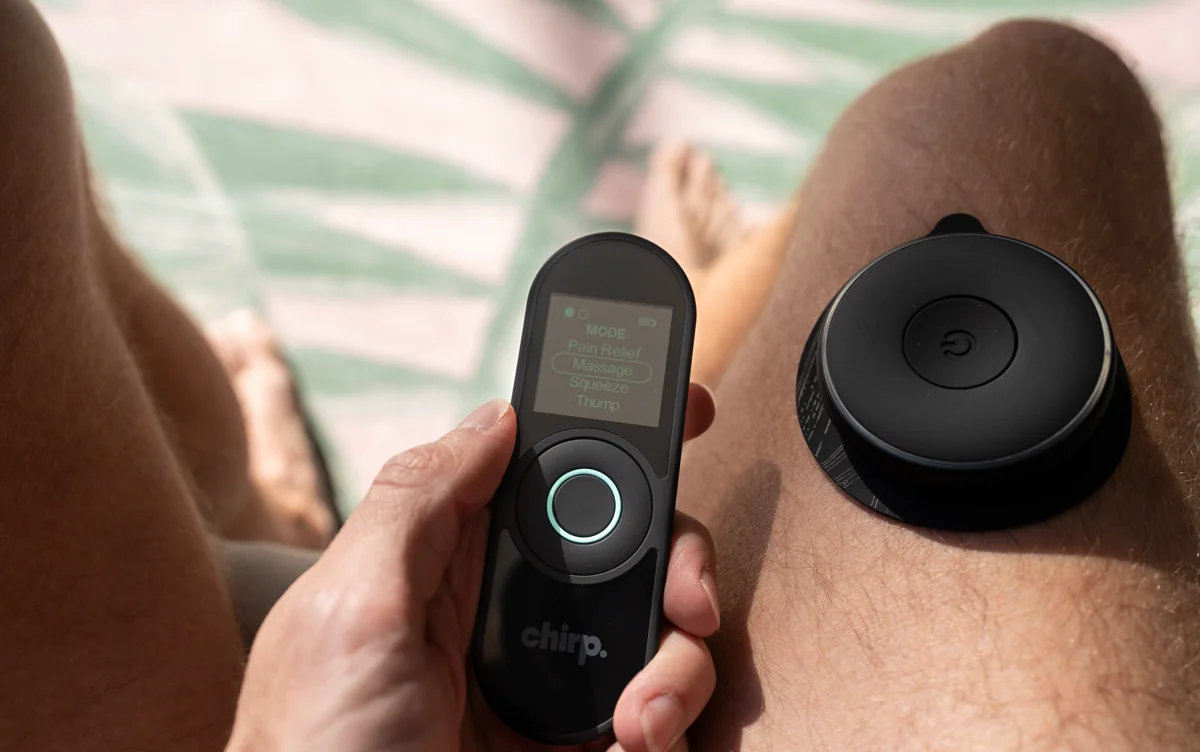
In day-to-day use, the control you’ll care about most is intensity.
The mode names help you quickly find a sensation you like, but it’s fair to say that some modes can feel more similar than the labels suggest, especially if you keep intensity in a similar range.
My favorites are pain relief, squeeze and thump – Woah Nelly is a little bit much for me as you’ll see in my video demo below…
The biggest difference I feel with Halo versus a traditional wired stim unit is that it doesn’t feel like I’m setting up a treatment.
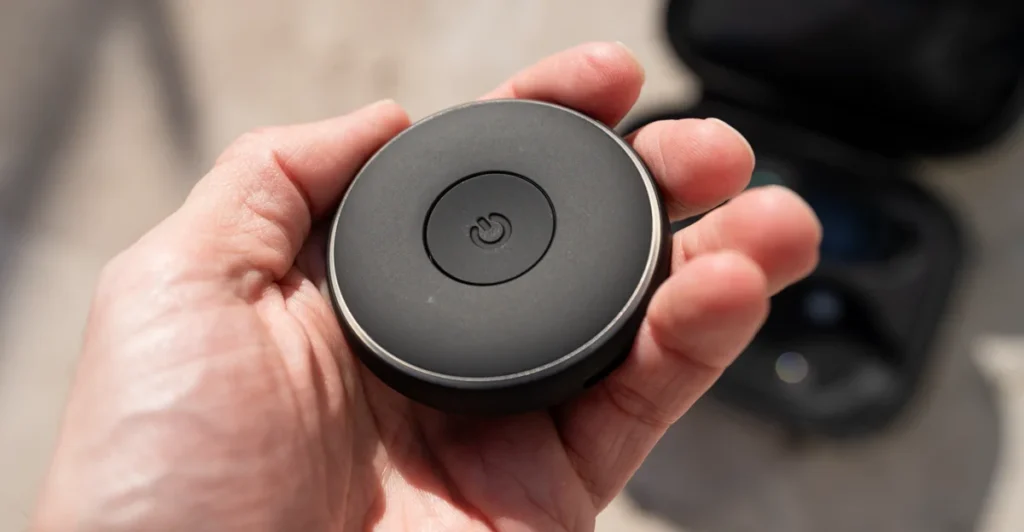
This isn’t the first wireless TENS machine I’ve reviewed (Compex for example, also creates the Mini Wireless TENS machine), and it’s not a new concept, but Chirp has simplified the product to feel more ‘consumer appropriate’.
Because the pucks snap on magnetically, and there are no cables pulling or tangling, it’s easy to run a session while you’re sat at a desk, stretched out on the couch, or moving around the house.
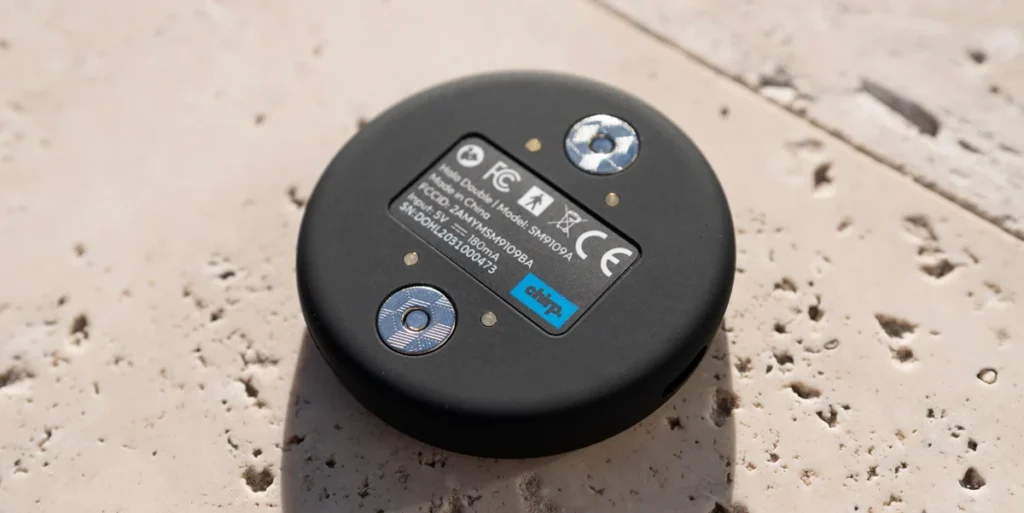
That convenience matters more than it sounds, because it lowers the barrier to doing this consistently, especially on those days when you’re tight but can’t be bothered with a whole recovery routine.
Consistency is key with treatment like this.
Halo’s presets blend TENS- and EMS-style stimulation, so the sensation tends to sit somewhere between two familiar feelings: a lighter, busy “tingle/tap” sensation (more in the pain-modulation lane) and a more obvious “contract and release” sensation (more in the muscle-activation lane).
Run through the chapters in my demonstration video below to get a sense of what each mode does in real life.
When you’re using it post-run or after a long day sitting, that second feel is the one that can make an area feel like it’s “woken up” a bit, like you’ve encouraged a gentle muscle pump without doing more work.
In practice, I treat the six presets more like shortcuts to a general sensation than totally distinct programs.
I’ll pick the one that matches what my body wants in the moment (lighter and calmer versus stronger and more muscular), then rely on intensity to fine-tune it.
That keeps the experience simple: choose the vibe, then adjust the strength until it’s firm but controlled; enough to feel effective, not so strong that you’re bracing through it.
So if i feel like i have aches, I’ll go for ‘pain relief’, if I want to speed up recovery after an intense workout, I go for ‘thump’.
The 50 intensity levels give you a lot of room to scale sessions gradually.
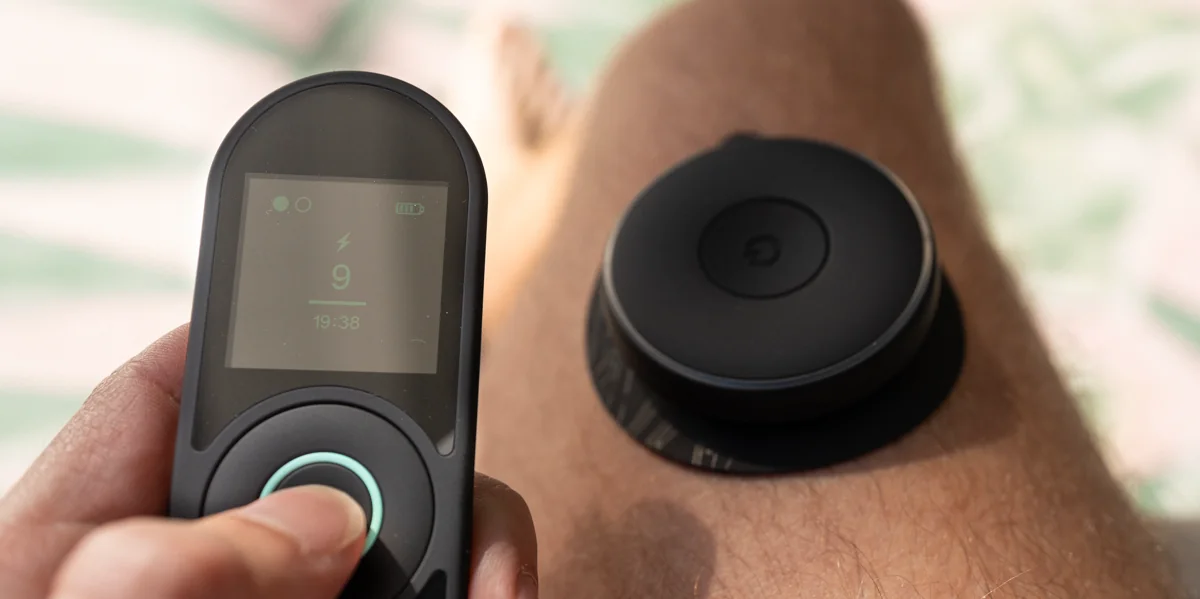
That’s important because the “right” intensity changes depending on where you place pads, how sensitive that area is, and what you’re doing while wearing it.
I’ve found Halo works best when you build up slowly over the first minute or two, settle into a steady level, then nudge it up again if your body adapts mid-session (which is pretty normal with electrical stimulation).
Pad placement is a big part of whether a session feels smooth and targeted or slightly awkward.
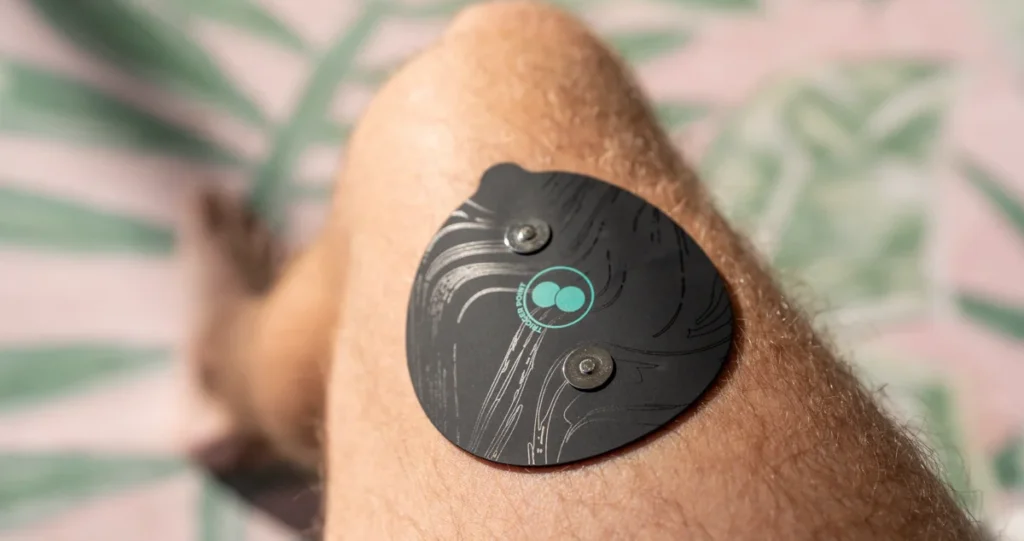
When the pads are positioned well, the stimulation feels focused and purposeful; when placement is slightly off, you can end up feeling the current “spread” in a way that’s less comfortable.
This is where the app guidance is useful early on, because it helps you get your first few placements dialed.
Over time, you’ll likely develop your own go-to placements for your most common problem areas.
With the Double kit, you’ve got two pucks, which is ideal for working both sides (both calves, both shoulders) or two separate areas in the same session.
You can expand coverage using the extension cables so one puck runs two pads, but it still feels like a targeted system rather than something designed for multi-zone, whole-body sessions.
For most people, that’s fine, Halo shines when you pick one or two areas and give them proper attention, then rotate to the next spot later.
If you’re on a tight budget and you plan to use it most days, the ongoing pad replacements are the main reason to hesitate here because you get up to 20 uses per pad, give or take, depending on how oily your skin is where you place the pads.
You may also want to look elsewhere if you need high-end programmability or multi-zone coverage beyond what two pucks can realistically provide
High end programability, I would say is for advanced users however, or those who maybe just want the TENS function for treating neuropathy type pains, without the EMS muscle contraction features.
And, as with any electrical stimulation device, some people should avoid use or speak with a clinician first (for example: implanted devices like pacemakers, certain cardiac conditions, pregnancy, epilepsy, etc.). Always follow the manufacturer guidance.
The Chirp Halo is one of the more “livable” TENS/EMS systems I’ve tested.
The wireless pucks and charging case solve the biggest issue with traditional units; friction. And that alone can be the difference between something you use twice and something you use consistently.
The one thing that holds it back from being a clean, universal recommendation is the pad reality: if you’re a frequent user, pad longevity and replacement cadence become part of the ownership experience and it’s the same for any TENS/EMS device like this.
It’s definitely worth $200 when you consider the competition, and I highly recommend it as an option if you do need at-home treatment like this.
I recommend buying these at goChirp.com for competitive prices on recovery tools + often sales up to 50% off • Relief Club membership perks • Free shipping on $75+ • Easy 30-day returns • New email sign-up: 10% off
And remember to go in with one simple approach: keep sessions short, build intensity gradually, and treat it as a support tool you can repeat consistently when your body feels like it needs a reset. -Alastair