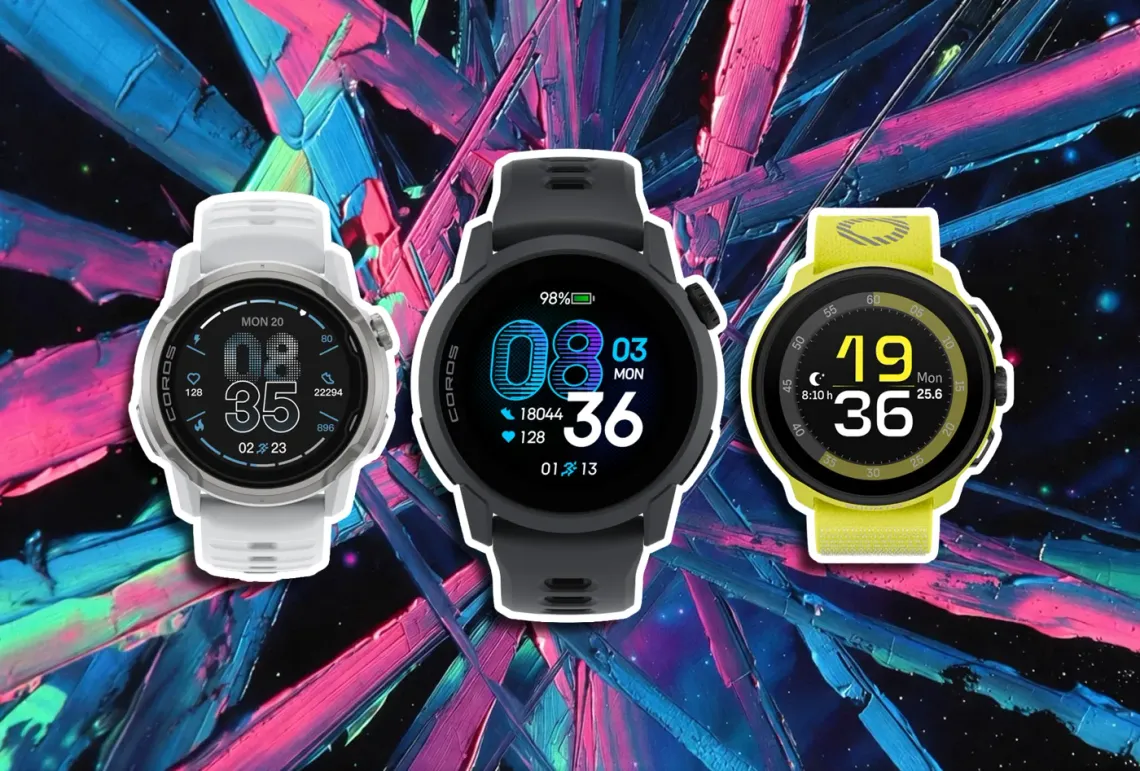
I tried the COROS NOMAD for a month: Pros, cons, and my key takeaways

A rugged adventure watch with big battery, full maps, and fishing tools that make more sense for trail days, hikes, and off-grid trips than for everyday smartwatch fans (unless you just love the style, like I do!).
COROS NOMAD review
Trail & Kale is reader-supported. If you purchase through links in this article, we may earn a small affiliate commission. Learn More.

The COROS NOMAD is the watch you pick when you care less about AMOLED glow and more about whether your GPS, maps, and battery are still there ten hours into a wet, windy day in the hills.

COROS calls it their “adventure” watch, sitting somewhere between a rugged Garmin Instinct and a full-on mapping watch, but at a price that undercuts both.

It launched in August 2025 as the more approachable, outdoorsy sibling in the COROS lineup, with less titanium and sapphire, more polymer and practicality, and honestly I think this is the style I like the most, in terms of ‘look’.

On paper it’s a $349 do-everything tool for hikers, trail runners (or road runners!), bikepackers, kayak anglers, and anyone who likes the idea of voice notes and fishing tides living on their wrist.

The NOMAD absolutely nails battery life, GPS, and mapping for the money. It also brings some genuinely fun fishing and journaling features that will appeal to a certain type of outdoor nerd.

At the same time, it feels basic if you’re expecting smartwatch polish or the kind of “wow” you get from AMOLED adventure watches.

I tried the COROS NOMAD for a month: Pros, cons, and my key takeaways 1 - Trail and Kale | Trail Running & Adventure

So the real question becomes: are you the kind of person this thing is built for? Read on, and let me help you determine that..

Key specifications

The NOMAD is COROS’s rugged, single-size adventure model with a 47mm diameter case, it feels lighter than it looks, and it’s built to take some serious knocks.

Key things to know:

  • Price: $349 at coros.com
  • Weight: roughly 49g (with Nylon band), 61g (with silicone band)
  • Battery (real-world reports): ~50 hours with All Systems GPS, ~34 hours with Dual-Frequency + All Systems, ~20–25 days of daily wear with smarter settings
  • Display: 1.3″ color MIP, 260×260, Hardened mineral glass
  • Materials & build: Polymer case with aluminum bezel, 5 ATM water resistance
  • Storage & maps: 32 GB onboard, Global offline topo + landscape + streets + POIs, Turn-by-turn navigation, Back-to-Start
  • GPS & sensors: All Systems GNSS (GPS, GLONASS, Galileo, Beidou, QZSS), Optional Dual-Frequency mode, Barometric altimeter, Gen 3 optical HR, HRV, SpO2, wrist temp
  • Adventure features: Voice pins and adventure journal with 3D flyovers, Dedicated fishing modes with tide, moon, and catch logs
  • Smart features: Bluetooth calls/text alerts (no speaker, just beeps/vibes), Camera control, find phone, MP3 playback only (no streaming, no NFC)
  • Charging: Proprietary dongle (not backwards-compatible with older COROS; ~80% in 1 hour)

It’s clearly built as a value adventure platform: plenty of battery, full maps, and enough sensors to make a multi-day trip feel effortless from a tracking point of view.

How to set it up (the settings I changed right away)

Like the APEX 4 (review here), the NOMAD, to some degree, lives or dies on how you set it up in the first week.

Out of the box it’s of course super useable for most people, but tweaking a few things makes it much more “set and forget” for long days outdoors.

The first setting I’d touch is GPS mode.

I tried the COROS NOMAD for a month: Pros, cons, and my key takeaways 2 - Trail and Kale | Trail Running & Adventure

The watch defaults to All Systems, which is a nice balance of accuracy and battery.

For canyons, dense forest, or downtown routes with tall buildings, there’s a Dual-Frequency mode that tightens tracks down to the ±2–5 m level in independent testing but it costs you around 30% of your battery endurance.

For most runs and hikes, I’d leave it in All Systems, then bump up to Dual-Frequency for races or big navigation days.

Next is altimeter calibration.

I tried the COROS NOMAD for a month: Pros, cons, and my key takeaways 3 - Trail and Kale | Trail Running & Adventure

If you’re using this as a true mountain watch, calibrating the barometer before a hike or long trail run will keep your vertical gain numbers tight, and that makes your post-run data far more satisfying (and a bit more truthful).

On the health side, their latest generation of optical HR sensor tracks 24/7 by default.

I tried the COROS NOMAD for a month: Pros, cons, and my key takeaways 4 - Trail and Kale | Trail Running & Adventure

To unlock that 20-plus day battery life people are reporting, you’ll want to change HR sampling to every 5–10 minutes in the watch settings, and leave SpO2/HRV enabled overnight.

COROS Heart Rate Monitor

When it’s freezing out or you’re doing interval work, pairing the NOMAD with the COROS HR Monitor Strap (review here) is still worth it; like most wrist sensors, the NOMAD can lag in the cold and at high intensity movement.

Mapping is where the setup gets fun: there’s 32 GB of storage to fill with topo and street maps.

I tried the COROS NOMAD for a month: Pros, cons, and my key takeaways 5 - Trail and Kale | Trail Running & Adventure

You download regions over Wi-Fi within the app as tiles. The download process is fast and smooth.

Once those are on the watch, it’s well worth enabling turn-by-turn prompts, route deviation alerts, and Back-to-Start in case your adventure gets more adventurous than planned.

GPX import via Strava or AllTrails works well enough, and it’s easy to route your favourite local trails onto the watch.

I’d also tweak display and backlight early.

Auto-brightness with gesture activation keeps the MIP display readable in sun and saves battery, and Night Mode helps in low light.

I tried the COROS NOMAD for a month: Pros, cons, and my key takeaways 6 - Trail and Kale | Trail Running & Adventure

One annoyance is that you can’t keep the backlight always on during activities; it still relies on wrist raise, which can be hit-and-miss at dawn but this is to preserve battery life, so I get why COROS has done that.

Finally, it’s worth spending time on profiles and voice pins.

You can set up custom pages, up to 8 data fields per screen, for trail running, hiking, MTB, or even kayak and fishing modes. Mapping tide, wind, temperature, Effort Pace, and vertical speed into those layouts is where the NOMAD starts to feel tailored to your kind of adventure.

Then, assigning the Action button to record voice pins with geotagged notes turns the watch into a pocketable notebook for places and moments you don’t want to forget.

Performance review

Design, build, and comfort

I tried the COROS NOMAD for a month: Pros, cons, and my key takeaways 7 - Trail and Kale | Trail Running & Adventure

The NOMAD looks like a classic adventure tool: slightly chunky, slightly tactical, and more “let’s get muddy” than “wear it with a suit”.

The polymer case and aluminum bezel help keep the weight down, so even though the watch is around 47 mm, it’s surprisingly comfortable on the wrist due in part to the silicone strap design and weight of the device.

Runners with smaller wrists may still find it a bit big, but many hikers and trail runners describe it as “light enough to forget about” on 16-hour days.

Mineral glass won’t be as bombproof as sapphire, and some users do report scratches over time, but that’s part of the trade at this price point.

I tried the COROS NOMAD for a month: Pros, cons, and my key takeaways 10 - Trail and Kale | Trail Running & Adventure

In terms of resilience, it sits closer to a Garmin Instinct than a premium titanium watch – and that’s exactly where COROS positions it.

I tried the COROS NOMAD for a month: Pros, cons, and my key takeaways 11 - Trail and Kale | Trail Running & Adventure
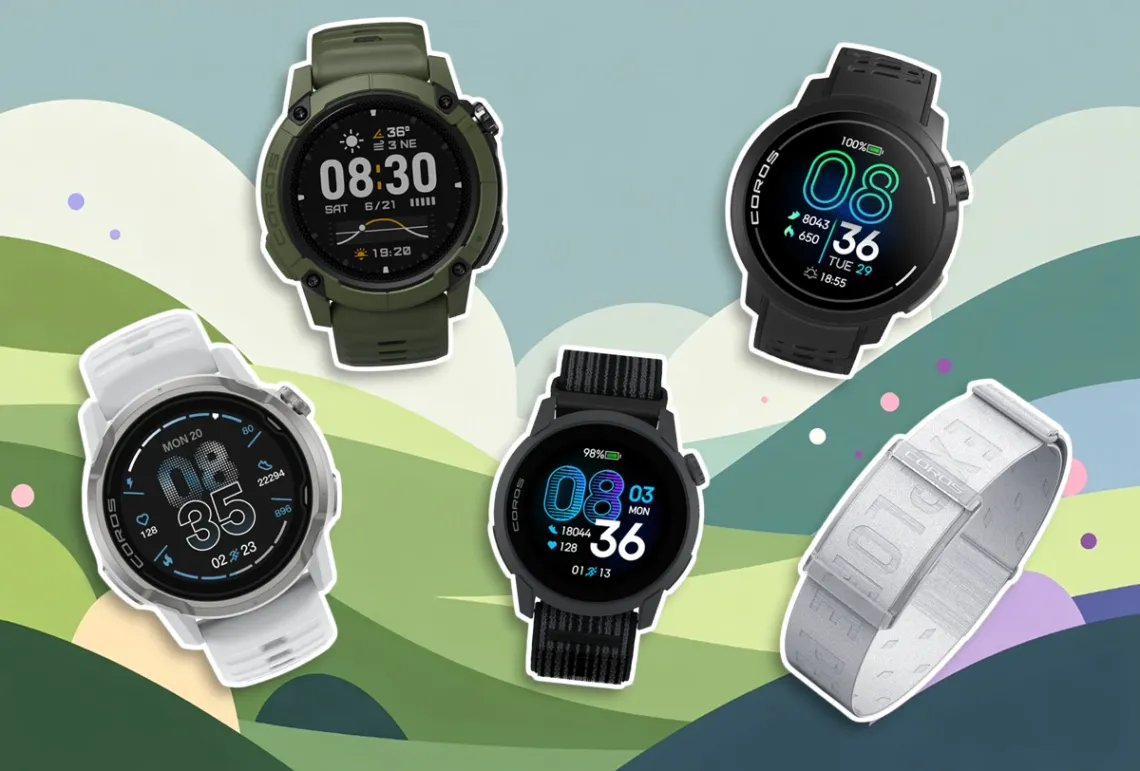
Compared to some other popular Sport watches right now (from left to right): Apple Watch Ultra 3 (review here), COROS NOMAD, COROS APEX 4 (review here)

Battery life: built for long weekends, not just long runs

Battery life is where the NOMAD punches hard, as with all COROS sports watches.

In real-world use, 50 hours of GPS in All Systems mode and roughly 34 hours with Dual-Frequency enabled mean you can run a 100-miler, ride a long gravel event, or disappear into the backcountry for a long weekend without hunting for a power bank.

Daily wear in the 20–25 day range is realistic once you’ve dialed in the HR sampling and notifications that I mentioned earlier.

Charging with the dongle is quick enough that you can plug in during breakfast or post-run and see a meaningful jump.

I tried the COROS NOMAD for a month: Pros, cons, and my key takeaways 12 - Trail and Kale | Trail Running & Adventure

Overall, it’s easily in that category of “forget about battery most of the time,” especially if you’re coming from a traditional smartwatch background, like the Apple Watch.

GPS, altitude, and tracking

The combination of All Systems GNSS and optional Dual-Frequency gives the NOMAD very solid tracking performance.

Urban canyons, tree-covered trails, and rolling hills all get clean tracks with minimal blow-outs.

Vert numbers line up well with more expensive watches, and the barometric altimeter handles shifting weather without drifting all over the place once calibrated.

I have read that open-water swim and MTB users also report that tracks stay impressively stable, which matters if you’re swapping between sports or plan to use this as an all-round outdoor watch, not just a running tool.

Maps, navigation, and route behaviour

If there’s one reason the NOMAD feels like a bit of a disruptor in this price bracket, it’s the maps.

I tried the COROS NOMAD for a month: Pros, cons, and my key takeaways 13 - Trail and Kale | Trail Running & Adventure

Having 32 GB of global offline topo, street, and POI data on a $349 watch, with smooth zoom and pan via the crown dial, is a big deal for people used to breadcrumb-only devices at this price.

On imported routes, turn-by-turn guidance works well most of the time.

You don’t get ClimbPro-style climb breakdowns or ETA fields like you might see on a high-end Garmin, so if you live for those metrics you’ll miss them here.

But for most hikers and trail runners, the combination of a live map, deviation alerts, and a clean breadcrumb overlay gives enough confidence to explore without constantly checking your phone.

Back-to-Start and the compass view round out the navigation story nicely for more exploratory days.

Training, recovery, and everyday metrics

The NOMAD uses the same COROS training ecosystem as the more expensive watches: EvoLab training load and status, HRV trends, sleep tracking, SpO2, and daily readiness cues.

I tried the COROS NOMAD for a month: Pros, cons, and my key takeaways 14 - Trail and Kale | Trail Running & Adventure

It’s not as deep or hand-holding as some of Garmin’s training readiness features, but it’s clean and focused in a way that’s appealing if you’d rather make your own decisions based on the data.

I tried the COROS NOMAD for a month: Pros, cons, and my key takeaways 15 - Trail and Kale | Trail Running & Adventure

The optical HR sensor is solid for steady efforts and mixed terrain, though you’ll see the usual wobbles during hard intervals or in cold weather – nothing unique to COROS there.

I tried the COROS NOMAD for a month: Pros, cons, and my key takeaways 16 - Trail and Kale | Trail Running & Adventure

Nightly HRV and SpO2 give a decent sense of how you’re recovering from big days out, and the Wellness widget pulls stress and sleep together into something you can actually glance at without falling into a data rabbit hole.

Fishing modes, voice pins, and the “adventure” personality

This is where the NOMAD steps away from being “just another rugged GPS watch”.

I tried the COROS NOMAD for a month: Pros, cons, and my key takeaways 17 - Trail and Kale | Trail Running & Adventure

The dedicated fishing profiles, tide and moon forecasts, sunrise/sunset,drift alerts, and catch logs are niche but genuinely useful if your time outdoors is split between running trails and sitting in a kayak or on a riverbank. It’s the kind of feature most watches don’t even bother to attempt.

Voice pins and the adventure journal (also found in the APEX 4) push in the same direction.

Being able to drop a geotagged note mid-run or mid-hike, then later view that as part of a 3D flyover with photos attached, gives the watch a more story-driven feel, and I think that’s where the real value lies for most people.

It’s not essential for performance, but it’s surprisingly compelling if you like to document the places you go.

If you don’t care about hiking, fishing, pins, or journals, some of this will feel like fluff. But for the right user, it’s part of what makes the NOMAD fun to live with.

Smart features and where it falls short

The NOMAD deliberately stops short of true smartwatch territory.

I tried the COROS NOMAD for a month: Pros, cons, and my key takeaways 18 - Trail and Kale | Trail Running & Adventure

There’s no NFC for payments, no music streaming, no app store but most people probably don’t actually care about that.

You get Bluetooth notifications, basic call alerts, beeps and vibrations, simple camera control, and offline MP3 playback if you’re willing to manage files the old-school way.

The MIP display is readable outside but looks flat indoors, and the raise-to-wake backlight behaviour during early morning runs can be mildly annoying.

There’s also no flashlight, which is quickly becoming one of those “once you’ve had it, you miss it everywhere else” features on night runs and camp setups.

None of these are dealbreakers if you see this as a tool, not a smartwatch. But they do define the boundaries of what the NOMAD is trying to be.

My verdict

The COROS NOMAD is very clearly an adventure-first watch. It’s not chasing AMOLED screens or lifestyle features. Instead, it’s focusing on:

  • a rugged, tactical/outdoor aesthetic
  • long, reliable battery life
  • solid GPS and vertical accuracy
  • full-fat offline maps at a price point most adventure watches don’t touch
  • plus a handful of niche but genuinely cool tools like fishing modes and voice-driven journaling

If your time outside looks like a mix of long trail runs, hikes, backpacking trips, bikepacking days, maybe some kayak fishing or coastal exploring, the NOMAD makes a lot of sense.

So who is it really for?

  • The hiker who wants a watch they can wear for a week in the mountains without thinking about charging.
  • The trail runner who wants maps and battery without paying premium prices.
  • The multi-sport outdoor person who actually gets excited about tide charts, moon phases, and pinning that perfect campsite from their wrist.

If that sounds like you, the COROS NOMAD is one of the most compelling and best value-for-money adventure watches you can get at this price, right now.

Thanks for reading, and keep on exploring! -Alastair

Previous Article

The Best Places for Trail Running in California

Next Article

15 Best Wellness Gifts 2026 – Recovery, Sleep & Daily Calm for Everyone

Subscribe to our Newsletter

for reviews, stories, and guides about the best gear, healthy food, and life outdoors.

Pure inspiration, zero spam ✨