The Apple Watch Ultra 3 is the watch you buy when you want one device to handle almost everything: running, hiking, diving, sleep tracking, notifications, payments, safety, and satellite messaging when things go wrong.
It’s a rugged, eco-conscious evolution of the Ultra 2 with a brighter screen, longer battery life, smarter health tracking, and now built-in satellite communications.
As an all-round smartwatch, it’s brilliant. As a running watch, it’s very good, but still not the clear winner in a crowded vertical.
If your priority is maximal battery life, rich training tools, and flexible navigation for big endurance days, there are still reasons to stick with a dedicated sports watch from Garmin, Suunto, or Coros.
Key specifications
- Price: $799 at Amazon.com
- Case size & material: 49mm aerospace-grade titanium, 3D-printed with recycled content. Weight: 61g (watch only)
- Display: 1.92″ LTPO3 OLED, up to 3,000 nits, wide-angle Retina, sapphire crystal
- Water & dust resistance: WR100 (recreational diving to 40m), IP6X dust-proof
- Battery life (Apple claims): Up to 42 hours of normal use, Up to 72 hours in Low Power Mode, Up to 14 hours of outdoor workout with full GPS + HR, Up to 35 hours of outdoor workout in Low Power Mode with reduced samples
- GPS: Precision dual-frequency GPS (L1 + L5)
- Connectivity: Wi-Fi, Bluetooth, GPS + Cellular (5G RedCap), satellite SOS and messaging
- Key health features: Hypertension notifications, sleep score, sleep apnea notifications, ECG, blood oxygen, Vitals app, cycle tracking, temperature sensor
- Safety features: Emergency SOS (including via satellite), fall detection, crash detection, 86dB siren, Check In, Medical ID
Performance review
Design, build, and comfort
The Apple Watch Ultra 3 still looks and feels like a piece of purpose-built equipment rather than a fashion watch, especially when you set tool specific watch faces.

The 49mm titanium case, flat sapphire crystal display, and big knurled crown all lean into that tool-watch aesthetic.

It feels bomb-proof on the wrist and has the specs to back it up: 100m water resistance, dive computer support, and a case designed for some knocks and scrapes but not all.
I have already managed to take some paint of the sharp edges of my Black Ultra 3 but that’s ok, it looks more rugged now! 🙂

I have been having a lot of fun tracking ocean tides, and temperatures since we started our family tradition of going in the sea each weekend.
The flip side is size and weight but many outdoor watches also feel weighty, when they don’t use plastic casing.

At 61g, plus band, it’s solid, and on medium to small wrists it can feel heavy but this is something you get used to over time.
The Trail Loop is the most comfortable option for running and daily wear as it’s light, breathable, and easy to micro-adjust in order to ensure the HR monitor registers as accurately as possible when you’re on the move.

I opted for the Alpine loop as I like how it looks in the day to day, which is how I’ll be using my Watch Ultra 3, most of the time.
I may have to buy the Trail Loop at some point even though the $100 price tag for a new one feels ridiculously overpriced…
If you’re planning to sleep with it for overnight tracking, you’ll definitely notice it more than a slimmer Apple Watch or a lighter dedicated running watch.

I can live with that trade-off, but it’s something to consider if you have smaller wrists or wear it with shirts and formal clothes a lot.
Display, faces, and interaction
The display is one of the Ultra 3’s biggest strengths.
At up to 3,000 nits and with the new wide-angle OLED setup, it stays bright and readable even when you glance from an angle mid-run.
In strong sun, rain, or low light, it’s easy to read pace, heart rate, or navigation prompts without squinting.
Where people really customize things is in watch faces and complications:
- Most people gravitate toward Modular Ultra or data-heavy faces for training, with complications like sleep score, training load, waypoints, and weather.
- You can set different faces for work, workouts, and outdoor trips, and keep the more minimal faces for everyday life, like I do.
- Always-on display can show ticking seconds, which is handy for timing rest intervals or quick tasks.
If you train outdoors a lot, I’d recommend setting up a “run face” that prioritizes battery-relevant info (like Low Power Mode state, GPS, activity rings, weather, and workout shortcuts) and a simpler face for more relaxed days.

Navigation around watchOS 26 is smooth and responsive, but there’s a lot packed in here.
Features like sleep score, hypertension notifications, or certain fitness views can be buried in menus.
Compared with Garmin or Suunto’s more focused training interfaces, Apple leans heavily toward versatility over simplicity.
Battery life, charging, and the settings people actually tweak
Battery life is where a lot of people start, and Apple knows it. The Ultra 3 is a genuine step up over previous Apple Watches:
- Real-world use: Around 1.5–2 days with always-on display enabled, notifications, GPS runs, and sleep tracking.
- Low Power Mode: Realistically pushes that into 2–3 days if you’re conservative with GPS and brightness.
- Workouts: Apple quotes up to 14 hours with full GPS and HR; around 35 hours in low-power workout mode.


It’s still nowhere near a Garmin Fenix or Coros Vertix for multi-day, no-charge expeditions but in smartwatch terms, it’s very strong.
Some setting that you may find yourself wanting to tweak, include:
- Always-on display: Turning it off or using Low Power Mode during long races or big days out.
- Low Power Mode for workouts: Fewer samples, more battery. Good for long hikes but less ideal for tight interval analysis.
- Charging habits: I top up during a shower or breakfast. Fast charging makes that viable
The Apple Watch Ultra 3 takes about 75 minutes to charge from 0% to 100% when using the included Apple Watch Magnetic Fast Charger to USB-C Cable and a 20W (or higher) USB-C power adapter.

0-80% takes 45 minutes, as that’s the ‘fast-charge’ phase.
If you want a watch you can wear all week through a stage race or multi-day mountain trip without thinking about power, you’ll still be happier with a high-end Garmin, COROS, or Suunto.

If you’re used to daily charging with a normal Apple Watch, the Ultra 3 will still feel liberating.
Health, fitness, and training features
This is where the Ultra 3 really sets itself apart from pure sports watches.
Its health tracking goes far beyond the typical running metrics most athletes are used to.
The watch can flag potential hypertension after about a month of baseline data, giving you a heads-up about chronic high blood pressure before it becomes a bigger issue.
You can log your actual blood pressure in the Health app with a cuff, which makes conversations with your doctor a lot more meaningful.

Sleep score leans heavily on consistency and total duration, so it can feel a bit picky if you sleep in, but it’s still useful for spotting patterns.
Sleep apnea notifications, on the other hand, sit firmly in the “important to know” category and could be significant for anyone who’s been unsure about their nighttime breathing.
Features like ECG, blood oxygen measurements, and the Vitals app round out the broader picture, helping you understand how your body is trending day to day.

From a runner’s perspective, the fitness tools are solid, reliable, and polished, but not as deep as what you’d get from brands like Garmin or COROS.
Dual-frequency GPS and Apple’s optical heart-rate sensor perform well for most everyday runs, and the new auto track detection cleans up oval data nicely if you run at the track.
Custom Workouts, reminders to breathe, training load, and Heart Rate Zones are all genuinely helpful for structuring sessions, but they still stop short of the coaching-style guidance you get with Garmin’s training readiness, suggested workouts, or long-term load analysis.

Workout Buddy adds voice cues and motivation during runs, though it feels more like an encouraging nudge than a full training system, so I don’t use it myself.
There are some quirks to be aware of.
Heart-rate readings can be a little slow to lock on or can drift when you’re doing high-intensity intervals. Sleep score also doesn’t integrate everything, (HRV, for example) in a way that performance-driven athletes would really appreciate.
But for most health-conscious, active people who run, ride, and train regularly, the overall package is excellent. If you’re looking for every advanced metric tied into a marathon or ultra-focused plan, the more specialised sports watches still have the edge.
Navigation, mapping, and third-party apps
Navigation is one of the biggest reasons not to call this the best running watch.
On the plus side:
- Offline maps with turn-by-turn directions are now built-in.
- Dual-frequency GPS is accurate on trails, in cities, and under trees.
- Backtrack and waypoints in the Compass app are genuinely useful when you’re wandering off the beaten path.

However:
- There’s no native full route-following in the Workout app to match what Garmin and Suunto do.
- Trail and topo data can be limited, especially outside core regions.
- For serious trail navigation, you’re still leaning on third-party apps like WorkOutDoors or Komoot, which eat more battery and add complexity.
If you mostly run familiar local routes, this won’t bother you. If you travel for trail races, love exploring new routes, or do big point-to-point efforts, this limitation is noticeable.
Satellite, connectivity, and “phone-free” use
The Ultra 3’s satellite features are a genuine upgrade for people who spend time off-grid.
Emergency SOS via satellite lets you contact emergency services from your wrist when you’re out of cellular and Wi-Fi range.

Messages via satellite support simple two-way texting and location sharing with contacts in supported regions, and ‘Find My’ via satellite means your location can be shared even when you’re away from networks.
Setup still happens via the iPhone, and there are limits (no photos, text-only, time to acquire satellite), but for solo hikers, trail runners, and travelers, the peace of mind is huge.
On the everyday side, 5G cellular plus music, podcasts, Apple Pay, and full notifications make it easy to leave your phone behind on runs or gym sessions.
This is where Apple absolutely outclasses most dedicated running watches: it feels like a mini iPhone on your wrist rather than a sports computer with some smart features bolted on.
Action button, gestures, and personalization

The Action Button is one of the most important settings to get right:
Common setups include:
- Start/stop a workout – this is how I use mine
- Mark laps or segments
- Trigger the flashlight
- Launch a favourite app (like a map or WorkOutDoors)
Raise-to-speak Siri, double-tap gestures, and shortcuts for smart-home control all add up to a very fluid everyday experience too.
This is part of why people migrating from Garmin or Suunto often stick with the Ultra, the interaction just feels more natural in the day to day.
I love how it also integrates with my beloved Tonal 2, and Tesla Model 3!

I have even been using it for some pool swimming to test out the auto lap function.

You open the workout app, select pool swimming, set the lap length, press start, and go! Auto lap tracking works much better in full length pools but still does a very good job in small recreational pools too.
The only notifications I have on my Ultra 3 are time sensitive ones, otherwise the watch would quickly get too distracting for me.
My verdict
The Apple Watch Ultra 3 is, in my view, the best all-round smartwatch you can buy if you’re already in the iPhone ecosystem and you live an active life.
It’s a rugged everyday companion with real safety benefits, excellent health tracking, and enough battery life to finally feel reliable for runners, hikers, and travelers.
As a pure running watch, though, it still sits just behind the leaders. Limited native route-following, shorter battery life than the true adventure watches, and less training depth make it harder to recommend as the ultimate choice for ultrarunners or data-obsessed marathoners.
If you want one device that does almost everything exceptionally well: work, workouts, safety, music, payments, health, then the Ultra 3 is easy to justify.
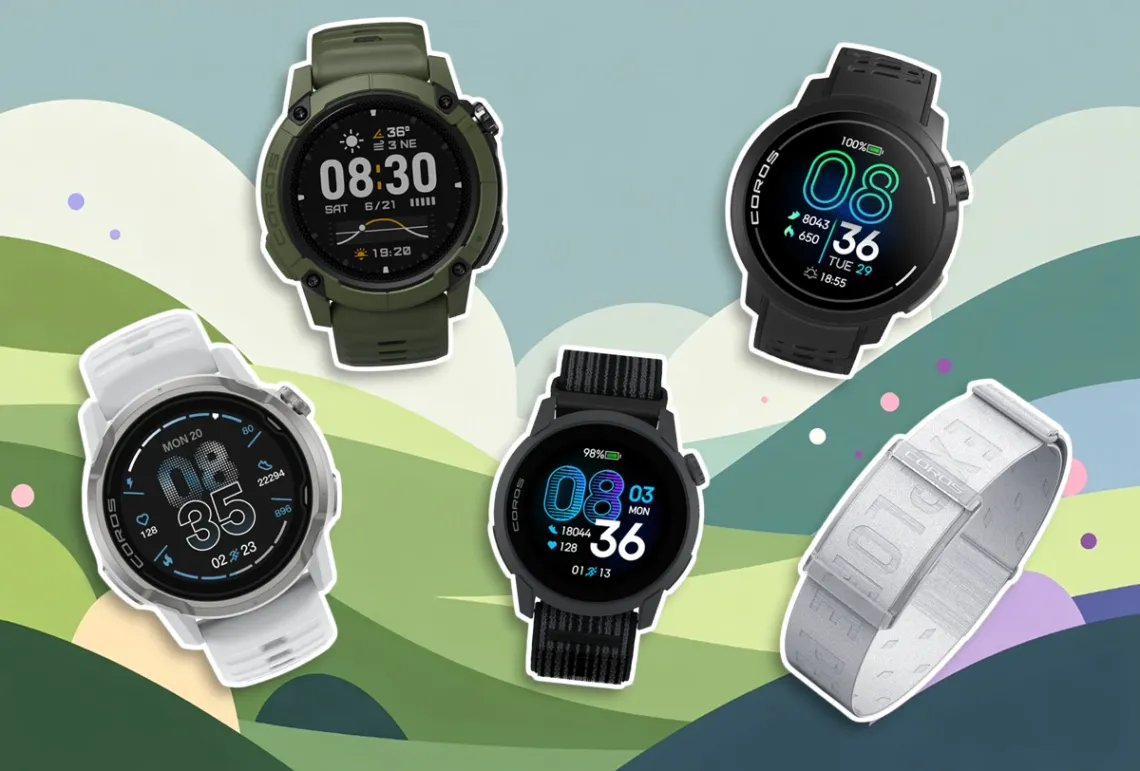
If your world revolves around long races, big mountain days, and squeezing every bit of insight from your training data, a high-end Garmin or COROS still makes more sense as your primary running watch.